Concrete Recycling Denver: Contractor’s Guide to Savings
The truck is loaded, the crew is waiting, and somebody asks the question too late: “Can this concrete go to recycling, or is this now mixed waste?”
That’s how jobs get expensive in Denver. Not because concrete recycling is difficult, but because crews treat it like a haul-off decision instead of a site management decision. If the pile stays clean, the load usually has value. If it gets mixed with dirt, trash, wood, and washout slurry, the same material turns into a problem.
On the clean jobs, the difference is obvious. The demo crew knows where concrete goes. The operator knows which pile is for rebar-heavy chunks and which pile is for mixed debris. The finish crew has a defined washout area before the first chute gets rinsed. The superintendent keeps receipts, confirms facility requirements, and closes out the job without scrambling for paperwork.
That’s what concrete recycling denver should look like. It’s not an environmental talking point. It’s basic field discipline that protects schedule, avoids rejected loads, and keeps usable material from turning into contaminated waste.
Your Guide to Concrete Recycling in Denver
A lot of Denver jobs start with good intentions and break down at the first messy phase. Demo begins, chunks of slab start piling up, and everyone assumes the recycler will sort it out later. That’s where newer subcontractors get burned. Recycling facilities want recyclable concrete, not a pile of concrete blended with mud, form trash, lunch waste, and hardened washout.
The cleanest jobs run differently from the first day. The site team marks staging areas early, separates metal from concrete as work progresses, and keeps wet washout operations away from dry recyclable stock. That sounds simple because it is. What makes it hard is inconsistency. One laborer tosses mixed debris into the concrete pile and now every load after that needs a second look.
Field rule: If you wait until haul-off day to decide what’s recyclable, you already gave up control of cost and compliance.
In Denver, that loss of control shows up fast. A messy site slows loading, creates disputes over what belongs in each bin, and raises the odds that a facility rejects the load or downgrades what would have been clean material. A clean site moves faster because every trade knows the system.
There’s also a reputation issue. General contractors remember which subs leave behind organized stockpiles and which ones leave a gray soup around the pour area. If you want repeat work, your crew has to handle concrete like a managed material stream, not leftover mess.
The practical takeaway is straightforward:
- Separate early: Keep clean concrete separate from mixed demolition debris from the start.
- Control moisture and slurry: Wet contamination ruins otherwise recyclable material.
- Assign responsibility: One foreman or lead needs to own the concrete recycling plan.
- Document loads: Receipts and load tracking matter just as much as cleanup.
Good recycling in Denver starts on the ground, not at the gate of the recycling yard.
Understanding Denver's Recycling Mandates
The compliance problem usually starts before the first load leaves the site. A crew breaks out slab, stacks concrete next to mixed demo, and washes tools wherever there is space. By the time someone calls the recycler, the material stream is already compromised and the paperwork trail is thin. In Denver, that is how a recyclable load turns into a disposal problem.
Denver treats construction and demolition recycling as a jobsite management issue, not a courtesy. As explained in Perks Deconstruction’s guide to Denver contractor recycling requirements, local ordinances require contractors to separate recoverable materials such as concrete, wood, and metal, and the broader waste volume from demolition keeps that requirement in focus. The practical point for a superintendent is simple. If concrete is going to be recycled, it needs to stay clean from the moment it is broken out, and washout slurry needs its own containment plan from day one.
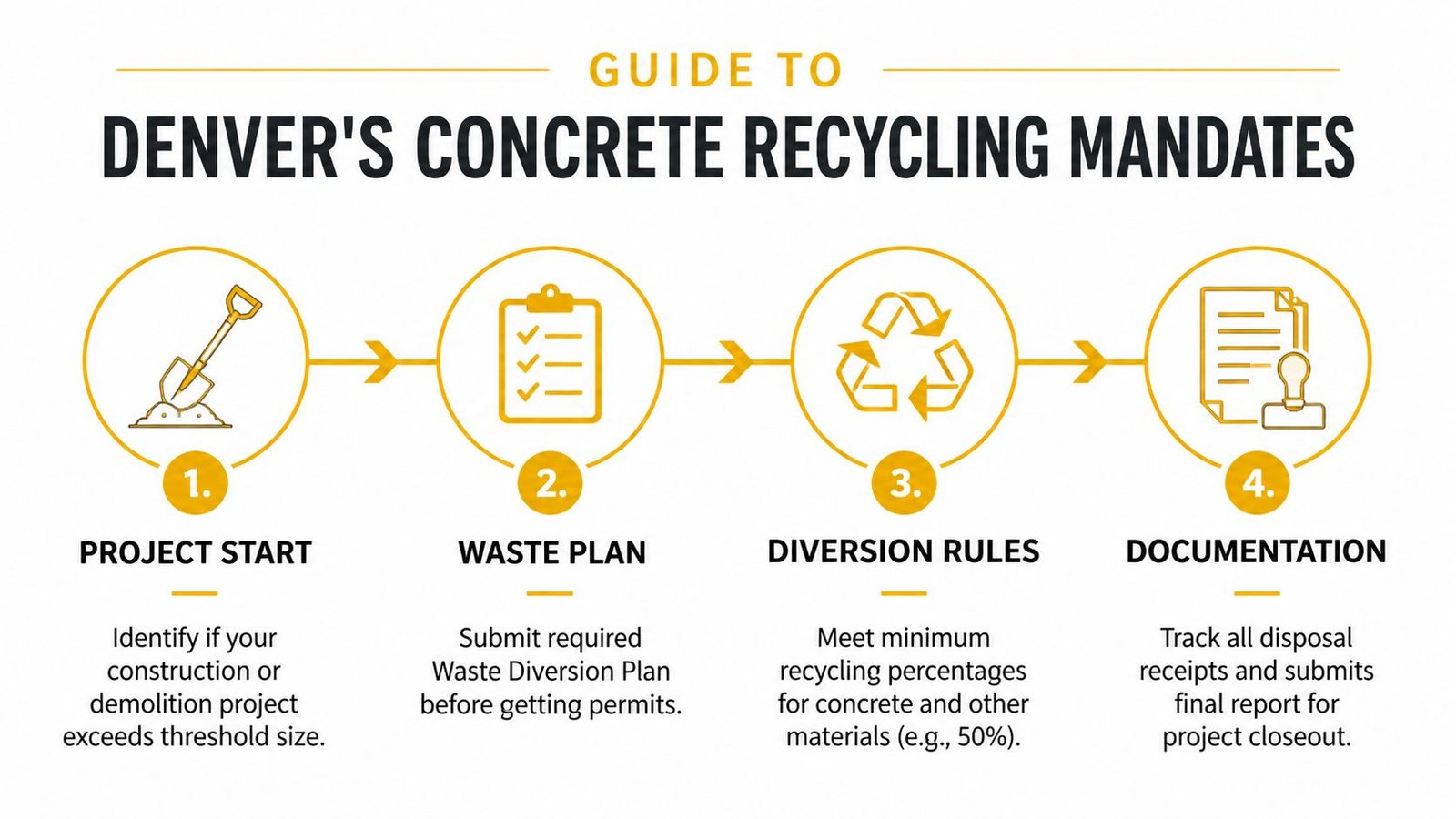
What the city expects on a real job
City reviewers and inspectors want to see an organized material handling process that can be documented at closeout. On site, that usually comes down to a few basic controls:
Separate concrete from mixed debris at the source
Clean breakout concrete should have a designated pile or bin. Once it is mixed with trash, soil, or untreated wood, recycling options narrow fast.Set up the site to keep recyclables clean
Layout matters. Stockpiles, bins, truck access, and washout areas should be planned so wet slurry does not run into dry recyclable material.Keep load records from the start
Tickets, weight slips, and haul receipts need one home. If nobody owns that file, closeout turns into a scramble.Control washout like any other regulated waste stream
Recyclers take broken concrete. They do not take responsibility for unmanaged slurry left on your grade, in the gutter, or in a storm drain inlet.
That last point is where crews get burned. Concrete recycling starts on the job site, and washout containment is part of the recycling workflow because slurry contamination can ruin otherwise clean material and create a separate compliance issue.
Where contractors get into trouble
The failure points are predictable.
- One pile for everything: Concrete gets blended with rebar ties, packaging, soil, or wood because nobody marked a dedicated area.
- Washout set too close to recyclable stock: Slurry migrates into the concrete pile or across travel paths, turning cleanup into rehandling.
- Late calls to haulers or recyclers: The job creates material before anyone confirms acceptance standards, haul requirements, or documentation.
- Loose recordkeeping: Drivers leave with tickets, receipts end up in glove boxes, and nobody can prove what was recycled.
I have seen jobs lose time and money on all four. The pattern is usually the same. The site team treats recycling as something to sort out at the end, instead of building it into setup, crew instructions, and daily cleanup.
Denver’s recycling rules are easiest to meet when the site plan accounts for concrete breakout, haul-off, and washout containment before work starts.
The crews that stay out of trouble are not doing anything fancy. They assign responsibility, keep concrete clean, contain slurry, and save every load record. That is how you meet the mandate without paying for the same material twice.
The Financial and Environmental Benefits
A Denver crew feels the cost of concrete recycling long before a recycler weighs the truck. The money is made or lost on the site. Keep demolished concrete clean, keep washout contained, and the material has a better chance of staying in the recycling stream instead of turning into mixed waste.
Recycled concrete is not a fallback product when the spec allows it. It is a practical aggregate option for base, fill, and other approved applications, and it can reduce both disposal costs and replacement material costs. As noted in Colorado Aggregate Recycling’s recycled asphalt and concrete specifications, properly processed recycled concrete is used as a tested aggregate product, and recycled base is often priced below virgin aggregate.
That price gap matters, but purchase price is only part of the job cost.
| Cost area | Poor recycling workflow | Managed recycling workflow |
|---|---|---|
| Material handling | Extra sorting and rehandling on site | Cleaner staging and faster loading |
| Aggregate purchasing | More reliance on virgin base | More opportunity to use recycled base where specified |
| Disposal risk | Greater chance of rejected or downgraded loads | Better chance of accepted clean loads |
| Closeout | Missing records and disputes | Cleaner documentation trail |
The biggest savings usually come from avoiding preventable waste. If broken slab stays free of wood, trash, soil, and slurry, crews spend less time rehandling piles, fewer loads get downgraded, and estimators have a better shot at buying recycled material back into the project where the plans permit it.
I have seen jobs miss this by looking only at haul-off. That is too narrow. A good recycling plan can affect demo cleanup, trucking, imported base, and closeout paperwork all at once.
Performance still has to match the application. Recycled concrete works because the facility processes it to a usable gradation and shape, not because someone wants a green talking point. On the right scope, crushed concrete compacts well and serves as a solid base product. On the wrong scope, or without approval from the spec and geotech requirements, it creates avoidable arguments in the field.
The environmental side is straightforward. Recycling concrete keeps heavy material out of the landfill and reduces demand for newly quarried aggregate. For Denver contractors, that benefit counts most when it is backed by clean loads, valid tickets, and a site setup that prevents slurry from contaminating recyclable stock.
That last part gets overlooked. If washout water and cement slurry spread into the concrete pile, the job can lose both ways. The recycler may reject or downgrade the load, and the site may still have a stormwater or housekeeping problem to fix. Clean concrete and compliant washout containment protect the same budget line.
How to Prepare Your Site for Recycling
The best example in Denver is still the old Stapleton Airport redevelopment. That project repurposed 6.5 million tons of concrete from former runways, and 98% of demolished materials were recycled through planned separation and crushing, according to Front Porch’s report on what happened to the old Stapleton concrete. Most jobs won’t touch that scale, but the lesson is exactly the same on a school remodel, retail pad, or roadway patch.
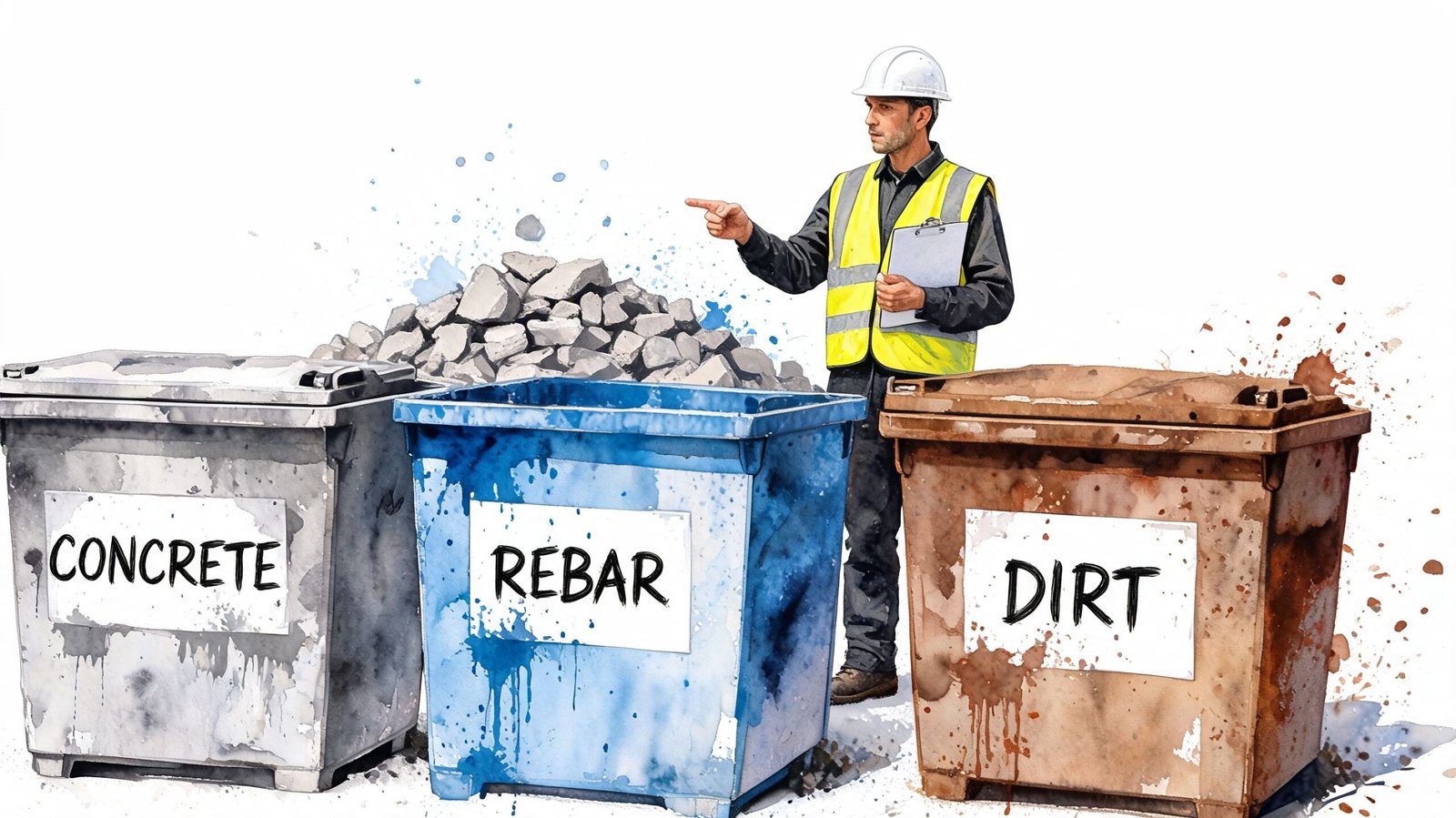
Set the site before demolition starts
Concrete recycling gets easier when the layout makes bad decisions harder. Before the first slab is broken, decide where each material stream goes and make it visible to every trade.
A practical setup usually includes:
- A clean concrete area for broken slab, curb, or pavement with minimal dirt and no trash
- A metal recovery area for rebar and other scrap separated during processing
- A mixed debris zone for material that clearly doesn’t belong in recycling loads
- A washout area placed away from dry recyclable stockpiles
Don’t rely on verbal instructions alone. Mark the zones. If the site is tight, use temporary barriers, cones, or signage so the labor crew doesn’t have to guess.
Give the subs a simple rule set
Subcontractors don’t need a long policy memo. They need a short set of instructions that hold up under production pressure.
- Concrete stays clean: No wood, no pipe wrap, no food waste, no insulation.
- Rebar is handled intentionally: Don’t assume every recycler wants the same prep condition.
- Dirt matters: A little tracked soil happens. A bucket of muddy demolition spoil changes the load.
- If it’s wet, it stays separate: Chute wash, pump wash, and slurry residue never go onto the rubble pile.
That last point is where a lot of jobs fail. Dry material management and wet waste management are different systems. Treating them as one system usually contaminates both.
Keep one person accountable
Sites that recycle well usually have one lead who owns the process. That might be the superintendent, assistant superintendent, or a foreman on a smaller crew. The key is that someone checks the piles every day and corrects bad habits before they spread.
The crew won’t remember the recycling plan if the site lead only talks about it at the preconstruction meeting.
If a load is headed out, that same lead should confirm the material is what the receiving facility expects. It’s faster to reject a bad load at the site than to pay for trucking, wait in line, and get turned away at the scale.
The Stapleton job worked because separation wasn’t an afterthought. It was built into the operation. Smaller Denver jobs need the same mindset, just with fewer acres and fewer trucks.
Mastering Washout and Slurry Containment
Most concrete recycling problems in Denver don’t start with the broken slab. They start at washout.
Facilities may accept clean rubble, but washout slurry is a different waste stream. Henderson Pit’s facility information is useful for understanding that gap. Clean rubble may have a place to go, but washout management isn’t handled for you. That’s why slurry containment is one of the most overlooked parts of a workable concrete recycling denver plan.
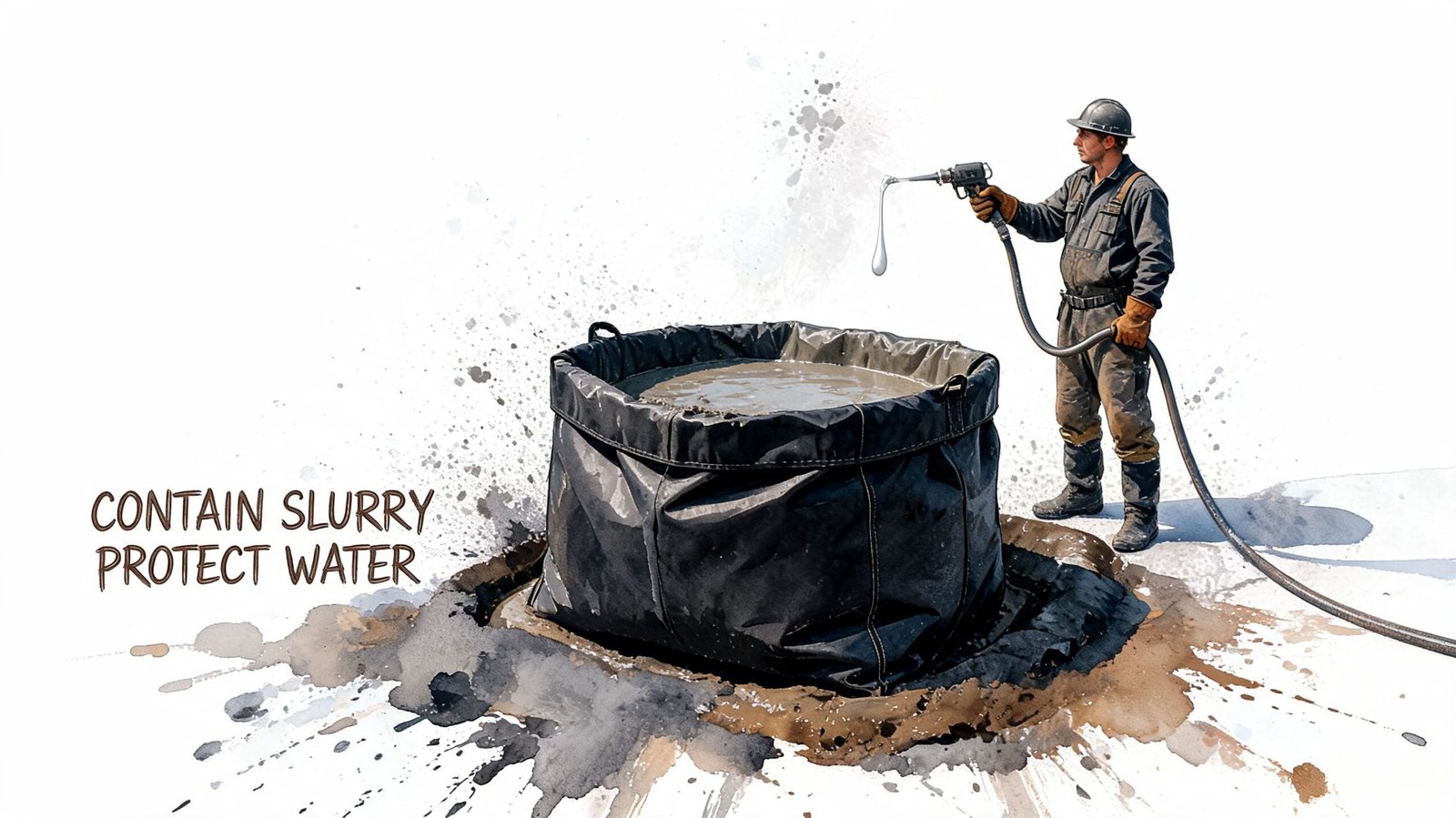
Why slurry creates bigger problems than crews expect
A lot of crews look at washout and see “just water with some cement in it.” That’s the wrong mindset. Slurry migrates, stains, hardens in the wrong place, and can move off site if you let it hit stormwater pathways. It also contaminates recyclable concrete stock when laborers dump rinse-out where they shouldn’t.
The practical consequence is simple. Once slurry hits the wrong area, you now have two problems:
- the washout itself is unmanaged
- the dry concrete pile may no longer be clean enough for straightforward recycling
That’s why inspectors pay attention to washout. A sloppy washout area tells them the crew is not controlling concrete waste as a whole.
What proper washout looks like on site
A compliant setup is boring, and that’s the point. The washout area should be chosen before pours begin, placed where trucks and pump crews can use it, and kept separate from drains, inlets, and recyclable stockpiles.
The workflow should look like this:
Place a dedicated containment unit before the pour
Don’t improvise with a random pit or scrap lumber box once the trucks arrive.Direct all chute, pump, and tool wash into that containment area
One location. No side dumping. No “just this once” rinse behind the trailer.Keep labor crews trained on what belongs there
Wash water, slurry, and concrete residue go in. Trash doesn’t.Protect nearby recyclable rubble from overspray and runoff
If your washout is uphill from your concrete pile, your layout is wrong.Plan removal and final handling before the unit fills up
The best containment setup still fails if nobody arranged service or pickup.
The role of containment capacity
Containment needs to match the operation. On some sites, a smaller setup works for tool cleanup and light finishing residue. On larger pours or active concrete crews, site managers often need a larger option, including washout pans in the 72' x 72' x 24' size range that hold ~441 gallons, based on the business context provided for equipment commonly used by contractors in this market.
That capacity matters because undersized containment pushes crews back into bad habits. If the pan fills too quickly or sits too far from the work, someone will dump outside it.
Keep the washout area convenient enough that the right choice is also the easy choice.
What doesn’t work
Crews still make the same mistakes over and over:
- Using the dirt as a washout area: That turns the site into a contamination zone.
- Letting rinse water run across pavement or gravel: It hardens where you don’t want it and creates cleanup work.
- Dumping washout near recyclable concrete piles: That lowers material quality.
- Assuming the recycler will take everything together: Clean rubble and wet waste are not the same load.
Good washout containment protects more than compliance. It preserves the value of the concrete you plan to recycle. If you want cleaner loads, fewer arguments at the facility, and less chance of stormwater trouble, start by controlling the wet side of the work.
Working with Denver Recycling Facilities
By the time the truck is loaded, most of the important decisions have already been made on site. The facility piece should be the easy part. If it isn’t, the load usually wasn’t prepared correctly.
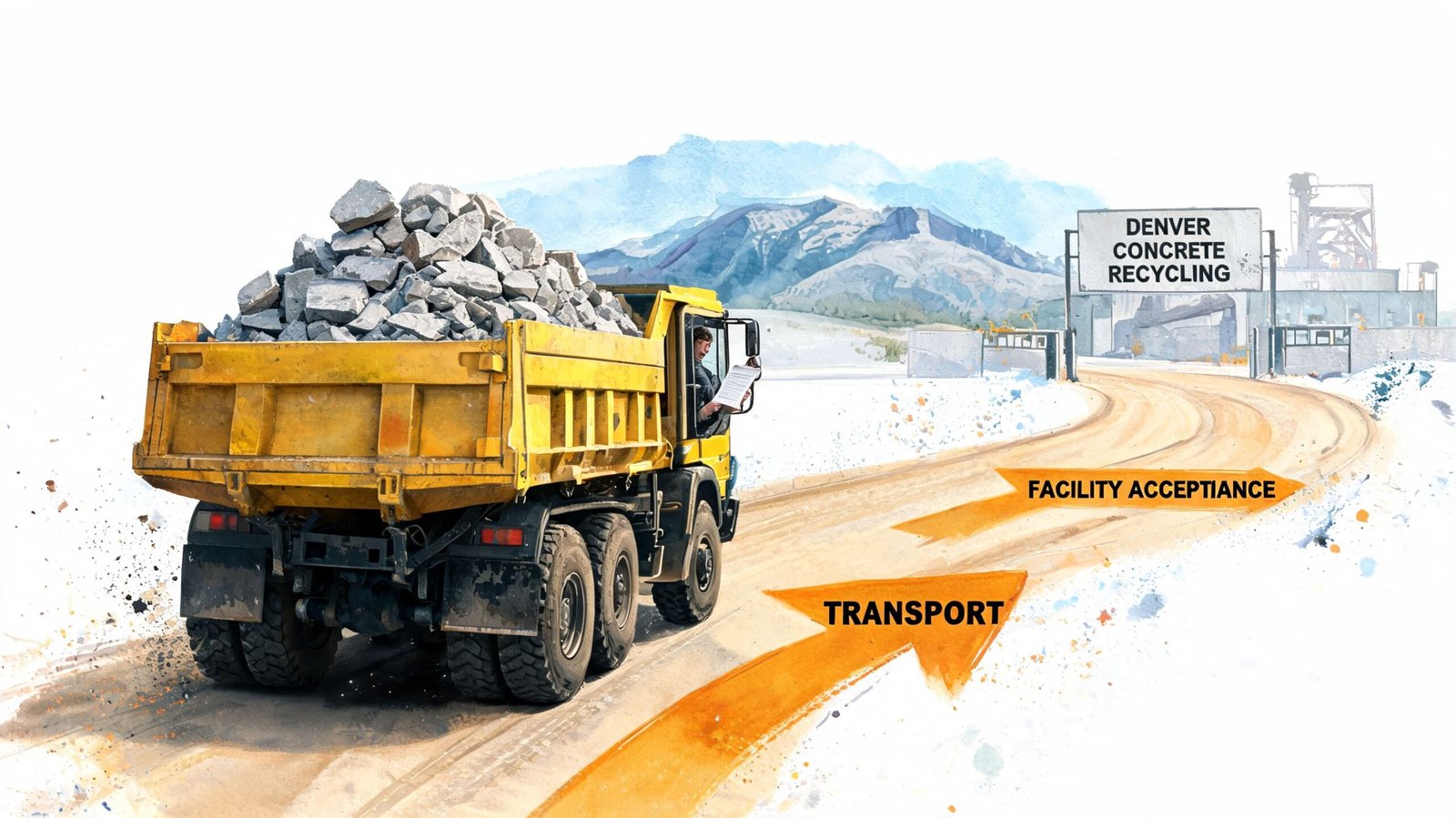
Know what you’re hauling before you call
In the Denver area, facilities may handle different combinations of concrete, asphalt, and concrete with embedded steel. Some yards are set up for cleaner, simpler loads. Others can process more heavily reinforced or mixed masonry streams if the material still falls within their acceptance rules.
Before dispatch, confirm four things with the receiving yard:
- Material type: Clean concrete, reinforced concrete, asphalt, or mixed mineral debris
- Contamination level: Dirt, trash, wood, and other non-mineral material are the usual deal-breakers
- Load size and truck type: Not every site and facility handles traffic the same way
- Documentation needs: Some projects need tighter recordkeeping for closeout
Why loads get rejected
The biggest mistake is assuming the facility will clean up site discipline problems. They won’t. If a load arrives with obvious contamination, the operator may reject it, downgrade it, or direct it somewhere more expensive.
That’s not the yard being difficult. It’s how they protect processing quality and stay within their own operating requirements. If your crew mixed dry rubble with trash or slurry, the facility is seeing your field problem at the scale house.
A simple handoff checklist
Use this before every outbound load:
| Check | What to confirm |
|---|---|
| Material | The load matches the facility’s accepted stream |
| Cleanliness | No obvious trash, excessive dirt, or wet washout contamination |
| Prep | Rebar and oversized pieces are handled per facility instructions |
| Paperwork | Driver has the job info needed for tickets and tracking |
If you’re sending repeated loads from the same project, keep one point of contact on your side and one at the yard. That avoids confusion when drivers rotate or conditions change.
The easiest loads to place are the ones that look exactly like what the recycler expected when you called. That starts with sorting on site and ends with a truck carrying only what belongs there.
Build a Compliant and Profitable Workflow
The crews that do this well don’t treat recycling, washout, hauling, and documentation as separate chores. They build one workflow and stick to it.
Start with site layout. Separate clean concrete from mixed debris. Keep metal and dirt out of recyclable piles. Set the washout area before the pour, not after the first rinse. Train subs with short, direct rules they can follow under production pressure. Confirm facility requirements before the truck leaves. Keep your receipts and load records organized from day one.
That workflow does two things at once. It protects compliance in a city that expects documented material separation, and it protects margin by keeping recyclable concrete usable. When the site is disorganized, you pay twice. First in cleanup and delays, then again in rejected loads, wasted material, and preventable disputes.
Concrete recycling denver works best when the superintendent treats slurry containment with the same seriousness as demolition sorting. If the wet side of the work is uncontrolled, the dry side eventually gets contaminated too. Clean recycling starts with clean operations.
Frequently Asked Questions About Concrete Recycling
Does rebar have to be removed before concrete goes to a recycler
Not always before transport, but you need to know the receiving facility’s rules. Some facilities can handle reinforced concrete within their processing system. Others want cleaner loads or specific prep. The wrong move is guessing. Call ahead and describe the material accurately.
Why would a facility reject a concrete load
Colorado guidance requires facilities to remove contaminants from incoming loads within 30 days, manage material in specific piles, and prove the suitability of the end product, according to Colorado’s asphalt, brick, and concrete recycling guidance. That’s why loads with excessive dirt, trash, wood, or other debris may be rejected. The facility has to protect product quality and its own compliance.
Can I dump hardened washout chunks with recyclable concrete
Treat hardened washout residue carefully. If it’s clean, separated, and accepted by the receiving facility, it may fit their mineral material stream. If it’s mixed with trash, liner fragments, or other contamination, it can cause problems. Don’t assume hardened means recyclable. Confirm acceptance first.
Ask the recycler about washout residue as its own material category. Don’t lump it into your concrete load without checking.
What’s the biggest mistake on small jobs
Small crews often think recycling rules only matter on large commercial sites. In practice, smaller jobs get into trouble because they have less room, fewer containers, and more temptation to use one pile for everything. Tight sites need clearer separation, not less.
Can concrete rubble and slurry be managed the same way
No. Broken concrete and washout slurry are different waste streams and should be handled differently. Rubble can stay valuable if it remains clean. Slurry needs containment and controlled handling so it doesn’t contaminate stockpiles or create stormwater issues.
What should I tell a driver before sending a load out
Give the driver the job name, destination, material type, and any special notes about load condition. If the site has multiple stockpiles, make sure the driver knows which one is approved for haul-off. A rushed pickup from the wrong pile can undo a full day of careful separation.
Is concrete recycling worth the hassle for routine work
Yes, if you manage it from the start. On routine work, the hassle usually comes from bad planning, not from recycling itself. Crews that assign clear staging zones, protect washout areas, and confirm facility requirements early usually find the process straightforward.
If your crew needs a reliable way to contain slurry before it contaminates recyclable concrete or creates stormwater headaches, Reborn Rentals provides washout containment equipment built for active construction sites. Their rental options make it easier to place the right pan on site before the pour, keep washout controlled during the job, and maintain a cleaner workflow from placement through final cleanup.