Concrete Recycling Salt Lake City Utah: Contractor’s Guide
You’re probably dealing with the same mess most Salt Lake crews hit at some point. The pour is done, demo is underway, there’s broken slab stacked near the fence line, the pump truck has leftover washout, and somebody asks the question too late: “Where are we taking all this?”
That’s where jobs either stay clean and profitable, or start bleeding time and money. In concrete recycling salt lake city utah, the difference usually comes down to three things. Keep the concrete clean, contain the slurry correctly, and send the load to the right place the first time.
Salt Lake County has pushed contractors toward recycling instead of dumping for good reason. Clean concrete can become usable aggregate again. Dirty loads get slowed down, rejected, or turned into a compliance problem. If you’re running a site in the valley, concrete recycling isn’t a side task. It’s part of production.
Why Concrete Recycling is Non-Negotiable in SLC
A Salt Lake demo job can go sideways fast if the concrete plan starts at the landfill gate instead of on site. The slab gets broken out, the loader pushes it into a mixed pile, the pump truck washes out too close to the rubble, and now one waste stream has turned into three problems. The recycler may reject it, the hauler charges for delays, and the crew burns half a day fixing a mess that should have been prevented before the first bucket hit the ground.

In Salt Lake City, concrete recycling is usually the lower-friction path if the material stays clean. Once dirt, trash, wood, and washout slurry get mixed in, disposal costs rise and your options narrow. That is the part crews sometimes miss. Recycling is not only about where broken concrete ends up. It starts with how you contain slurry, protect the stockpile, and set up the load for the facility that will take it.
Salt Lake County and the surrounding market have already pushed contractors in that direction. Mobile crushing and local aggregate reuse are standard parts of the work, not a specialty move. Clean concrete can come back into the construction cycle as base, fill, or recycled aggregate. Mixed debris usually comes back as extra handling, extra trucking, and extra gate time.
What the Bangerter project proved
The Bangerter Highway work made the case in plain terms. On the Bangerter Highway 4700 South project, UDOT recycled approximately 15,000 cubic yards of 30-year-old concrete pavement on-site, then reused it as road base for the same job, cutting truck traffic and emissions according to UDOT’s project report on recycling old Bangerter concrete.
That matters on private jobs too.
If UDOT can keep material on site, process it, and put it back to work on a major road project, local contractors should at least be planning for a clean recycling stream on parking lots, multifamily pads, retail tear-outs, and municipal flatwork. The scale changes. The logic does not.
Practical rule: If concrete can stay in the local construction cycle as base, fill, or recycled aggregate, it usually carries more value than a mixed waste load headed to disposal.
Why crews feel the difference in the field
The benefit shows up in production first. Clean piles load faster. Haul tickets are simpler. Yard conversations get shorter because the driver is not arguing about contamination or free water in the box. On a busy Salt Lake site, that time savings matters as much as the disposal rate.
There is also a compliance side that ties directly into the rest of the workflow. Broken concrete and washout management are connected on the ground, even if crews treat them as separate tasks on paper. If slurry runs into the rubble pile or hardens around the loading area, you have created a disposal problem and a stormwater problem at the same time. Proper washout containment keeps recyclable concrete cleaner, keeps the site safer to work, and helps avoid the kind of runoff issue that gets attention for the wrong reason.
On local jobs, the pattern is consistent:
- Separate concrete at the point of removal: Do not let recyclable concrete start life in a mixed C&D pile.
- Keep slurry contained from day one: Washout belongs in designated containment, not near haul routes or stockpiles.
- Remove obvious contamination early: Wood, trash, insulation, and excessive soil are cheaper to control on site than at the facility.
- Match the material to the outlet: If the load is likely headed for crushing and reuse, protect it like a recyclable product, not debris.
Crews that run concrete this way usually save money twice. They avoid unnecessary disposal costs, and they avoid rework caused by poor containment and bad load prep. That is the gap a lot of articles skip. In Salt Lake, the recycling decision is tied to the whole contractor workflow, from where the chute water goes to which truck leaves the gate with a clean load.
Prepping Your Site for Efficient Concrete Segregation
The cheapest concrete to recycle is the concrete you didn’t contaminate in the first place. Most rejected loads start with bad site prep, not bad intentions. Somebody breaks out slab, pushes it into soil, mixes in lumber, or lets pump washout run near the pile. After that, every next move gets slower.
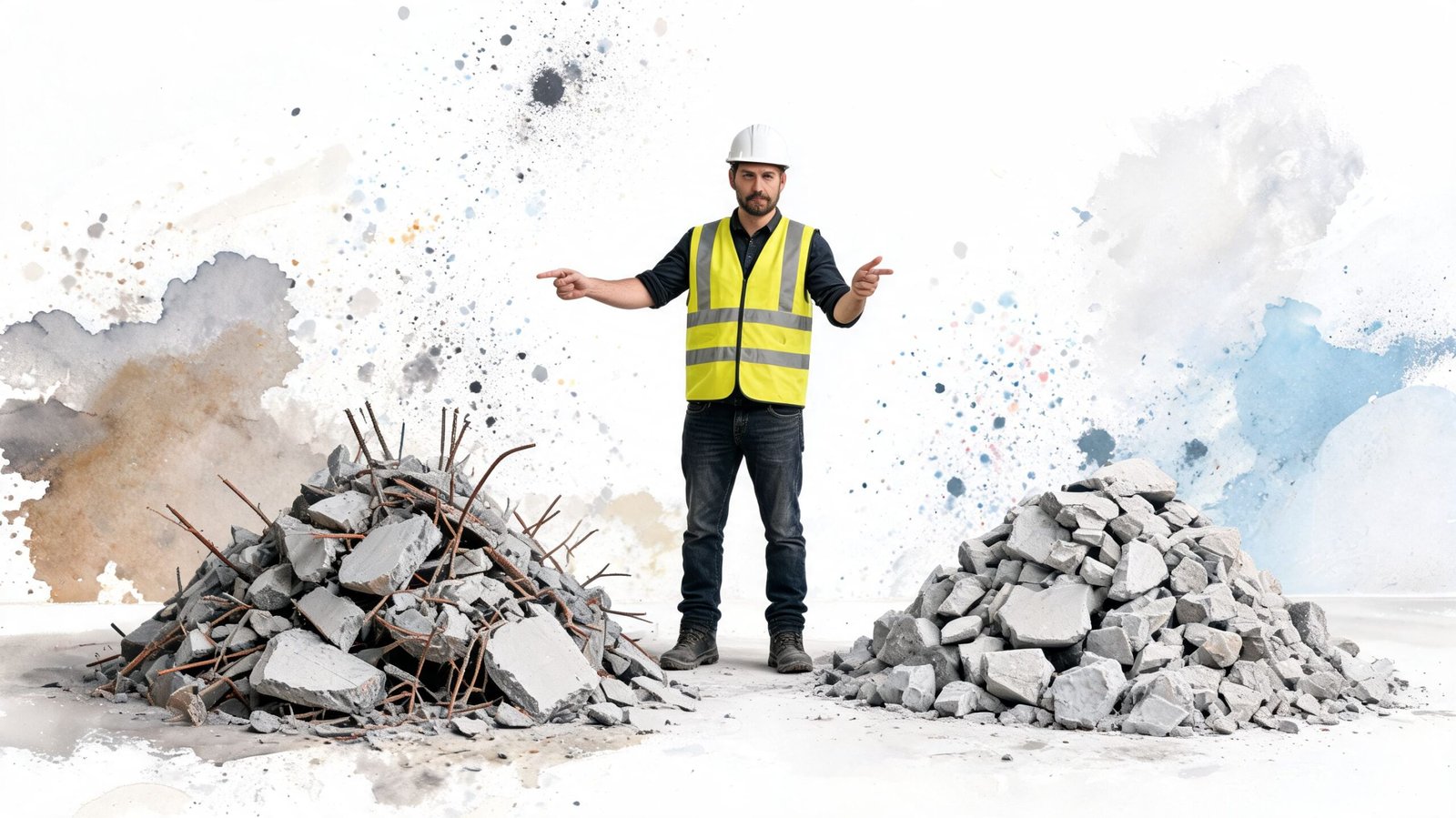
A clean recycling workflow starts before the first bucket hits the slab. Lay out where broken concrete goes, where steel gets staged, where trucks can access the pile, and where washout containment sits so it doesn’t interfere with traffic or contaminate recyclable material.
What clean segregation looks like
On most sites, you want concrete in its own stream. That means no wood, no plastic, no trash, no insulation, and as little soil as possible. If you’re demoing pavement or flatwork, have the operator place broken concrete in a dedicated stockpile instead of windrowing it across the site.
Rebar is a manageable issue when it stays attached to concrete or gets staged separately. It becomes a bigger problem when loose steel gets mixed through the pile and catches every bucket tooth and loader edge. Pull what you can cleanly. Don’t waste time trying to hand-detail every chunk if the recycler or crusher can handle embedded metal, but don’t leave a tangled mess either.
A practical field sequence usually looks like this:
- Break and stage by material type: Keep slab, asphalt, and mixed demolition separate.
- Protect the pile from dirt contamination: Don’t use the concrete stockpile as a general laydown area.
- Create a clear access lane for loading: Haulers lose time when they have to back around scattered debris.
- Stage metal intentionally: Keep loose rebar, mesh, and cutoffs out of the travel path.
Where contractors get into trouble
The biggest mistake isn’t usually the concrete pile. It’s the washout. Crews finish a pour, then let truck chute rinse-out or pump slurry collect in an improvised area. That runoff migrates into soil, spreads across the working surface, and starts contaminating adjacent material.
Under updated 2025-2026 Utah SWPPP rules, fines for non-compliant concrete washouts can exceed $5,000 per violation, and proper containment can help recycle 70-90% more slurry than traditional dirt pits, aligning with Utah DEQ’s goal to cut landfill use by 25% according to ACE Disposal’s Salt Lake City concrete washout guidance.
Don’t let the last ten minutes of a pour create the most expensive compliance issue on the site.
Site prep choices that save money later
Good segregation doesn’t require fancy theory. It requires discipline. The foreman, pump operator, labor crew, and hauling coordinator all need the same plan before the work starts.
Use these field habits:
- Mark the recycling pile location clearly: Keep it on stable ground where loaders and dump trucks can work without chewing up the area.
- Set washout containment before concrete arrives: If containment shows up after the pour, crews will improvise.
- Keep fines and slurry away from reusable rubble: Once the pile gets muddy and saturated, recycling gets harder.
- Assign one person to watch the material stream: Somebody has to stop trash, forms, and packaging from landing in the wrong pile.
A new contractor usually thinks the recycler is doing most of the work. They are doing a lot of the processing, but the site determines whether the load is easy to process or a headache. Clean separation at the point of generation is what keeps the rest of the chain efficient.
Containing and Managing Concrete Slurry and Washout
Concrete slurry is where otherwise competent crews get burned. Not because it’s complicated, but because people still treat washout like a side issue. It isn’t. On active Salt Lake projects, washout is one of the fastest ways to turn a controlled job into a compliance problem.
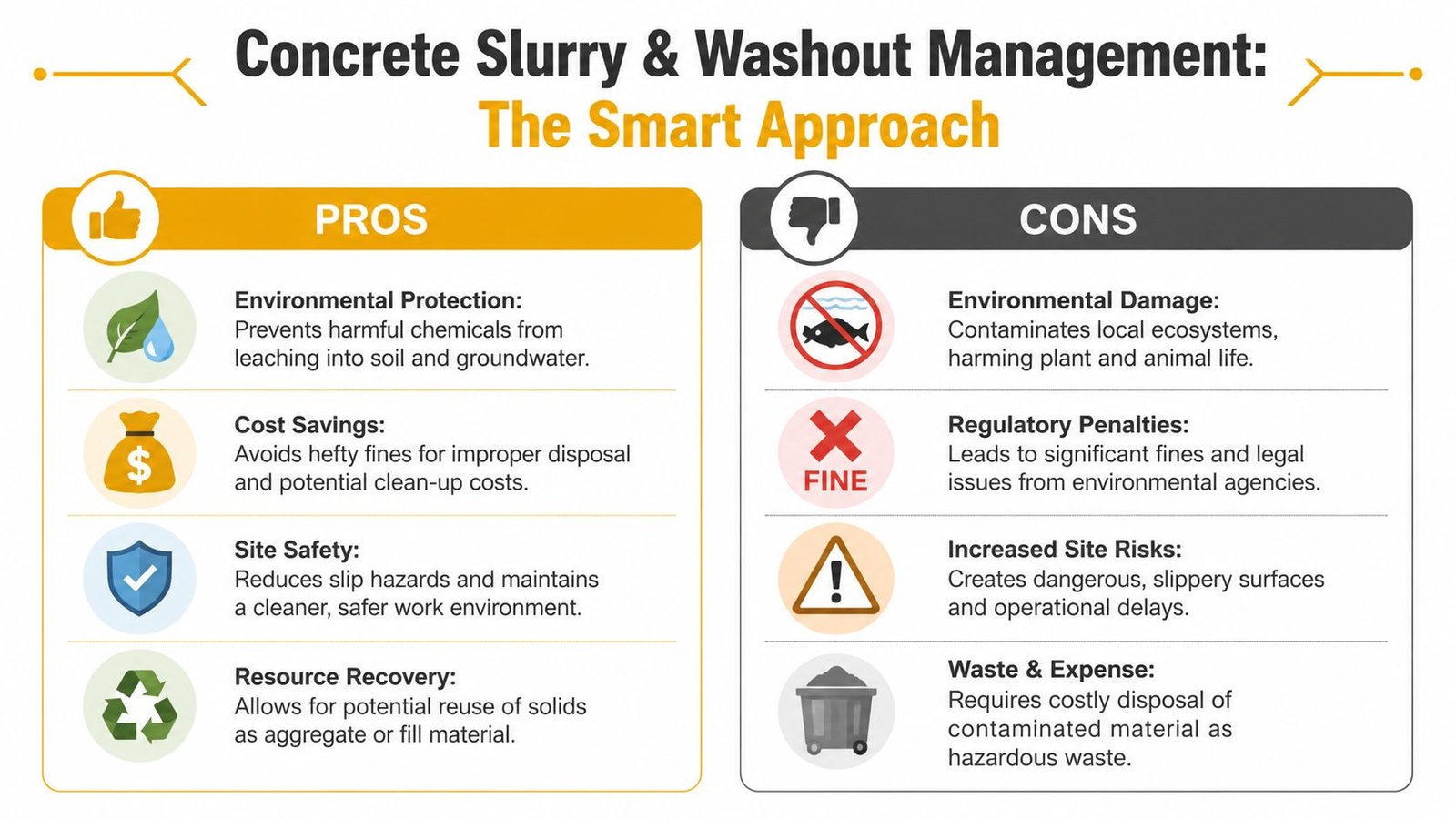
The old method was a dirt pit somewhere near the pour. That might have passed casual jobsite logic years ago, but it creates too many variables. The pit isn’t lined, runoff escapes, solids mix into soil, and cleanup becomes a second disposal task. You also lose control over what can be recovered.
Why purpose-built containment wins
A washout pan or container gives the crew a defined target. Truck chutes, pump washout, and small-tool rinse water all go to one place. The solids settle where they can be managed. The surrounding surface stays cleaner, which protects both the haul roads and the recyclable concrete stockpile.
That matters operationally as much as it matters for compliance. A clean site moves better. Laborers aren’t walking through paste. Equipment operators aren’t dragging hardened waste across the work zone. The superintendent isn’t trying to explain why gray runoff reached an inlet.
There’s also a direct recycling benefit. When slurry is captured instead of dumped into bare ground, you preserve the option to separate solids from other waste streams instead of turning everything into contaminated fill.
How to set up washout containment correctly
Containment only works if you place it where crews will use it. Don’t tuck it into a corner that trucks can’t reach and expect operators to carry washout farther than necessary. Put it on accessible, stable ground with room for approach, rinse-out, and pickup.
For larger pours or pump work, a larger containment pan is easier to manage than several improvised small spots. The publisher context for this topic notes rental pans available in 72' x 72' x 24' formats with about 441 gallons of liquid capacity and substantial load capacity. That kind of setup is useful when you need one designated washout point that the whole crew can find and use consistently.
A practical placement checklist:
- Keep access simple: Put containment where ready-mix and pump crews can reach it without crossing active pedestrian paths.
- Protect drains and low spots: Don’t locate washout uphill from areas where overflow would create runoff risk.
- Separate it from recyclable rubble: Washout should be close to the pour, not next to the concrete recycling stockpile.
- Plan pickup before it’s full: Overflow is a planning failure, not a disposal problem.
Field advice: The best washout container is the one the crew can see, reach, and use without stopping production.
What doesn’t work
A few methods consistently create trouble.
- Unlined dirt pits: They’re messy, inconsistent, and hard to close out cleanly.
- Random rinse areas behind the pump: Operators use them when no formal plan exists.
- Shared mixed-waste zones: If washout, broken concrete, and trash all land in one area, none of it is easy to manage afterward.
- Late placement: If containment arrives after the pour starts, the site already has a bad habit forming.
The strong approach is simple. Treat washout as a rental and logistics item, not a cleanup item. If the containment is delivered on time, sized for the work, and placed where the crew naturally flows, compliance becomes routine instead of reactive.
Choosing a Salt Lake City Concrete Recycling Facility
A loaded truck sitting at the edge of the site while someone calls around for a drop location burns time fast. Good recycling jobs in Salt Lake City are decided before the first bucket goes into the trailer. The facility, the load standard, and the washout plan all need to line up, because recyclers want usable concrete, not a mixed cleanup problem.
Salt Lake County has steady demand for clean broken concrete headed back into aggregate use, as noted earlier. That helps contractors, but only if the material arrives in a condition the yard can process. A recycler is set up to crush and separate. It is not set up to sort out wood, trash, dirt, and hardened washout chunks from a sloppy stockpile.
What recyclers want from your load
Start with the actual gate question. Ask what material the yard accepts, what contamination gets a load rejected, whether rebar can stay in, whether asphalt must be separated, and what their preferred piece size is. That five-minute call saves a truck cycle and a disposal upcharge.
Clean plain concrete is the easiest load to place. Some facilities can work with embedded rebar. Mixed demolition debris is where jobs get expensive. If operators see soil, insulation, painted debris, lumber, trash, or slurry-coated rubble, they may reject the load or reclassify it at a higher rate.
Use this screen before dispatching:
| Facility Name | Primary Materials Accepted | Notes for Contractors |
|---|---|---|
| Conrock | Crushed concrete for recycled aggregate processing | Best fit for clean concrete headed into aggregate reuse. Confirm load cleanliness, rebar limits, and gate hours before trucks roll. |
| Mobile crushing provider | On-site broken concrete from larger demo or redevelopment work | Fits projects with enough volume, room for equipment, and a plan to reuse or stockpile processed material. |
| Mixed C&D or aggregate recycler | Concrete, and sometimes other mineral-based materials such as dirt or asphalt | Verify separation rules before dispatch. Mixed loads create the most gate disputes. |
How to avoid a gate rejection
Gate rejections usually start on site, not at the recycler. If the crew loads from a pile that also caught trash, mud, and washout residue, the driver is the one who finds out at the scale house.
Inspect the load before it leaves. That means the foreman, operator, or superintendent looks at what is in the truck, not what the job assumed was in the pile.
Common rejection triggers include:
- Dirt-packed rubble: Heavy soil contamination lowers the value of the load and slows processing.
- Loose trash in the bucket: Bottles, plastic wrap, lunch waste, and form hardware should be removed before loading.
- Mixed asphalt and concrete: Some yards accept both materials, but many require separate loads.
- Washout contamination: Hardened slurry, wet residue, and washout solids mixed through recyclable concrete are a sign the site did not control containment properly.
That last point matters more than newer contractors expect. If washout containment was handled correctly during the pour, the recycling pile stays clean. If crews rinsed out beside the rubble pile or let slurry run into demolition concrete, disposal choices narrow fast and costs go up.
A recycling yard processes material that was managed correctly on site. It does not fix a bad separation plan.
Matching the facility to the job
The right outlet depends on volume, site access, and what condition the concrete is in by the time trucks are ready. A small flatwork removal on a tight city lot usually needs a recycler with quick gate turnaround and simple acceptance rules. A large redevelopment site may save money with mobile crushing if there is enough room to stage, process, and reuse the product. Civil work often falls somewhere in the middle.
Distance matters, but it is not the only factor. A nearby yard that rejects one out of every five questionable loads is more expensive than a slightly longer haul to a facility that matches your material stream and schedule. The best choice is the one that fits the whole workflow: clean breakout, controlled washout, predictable loading, and a gate that accepts what your site is producing.
Transport Logistics and Cost Considerations
The hauling plan decides whether your recycling program is efficient or just well-intended. A lot of jobs lose money between stockpile and gate because nobody worked through truck access, load quality, terrain, and turnaround time before the first load rolled.
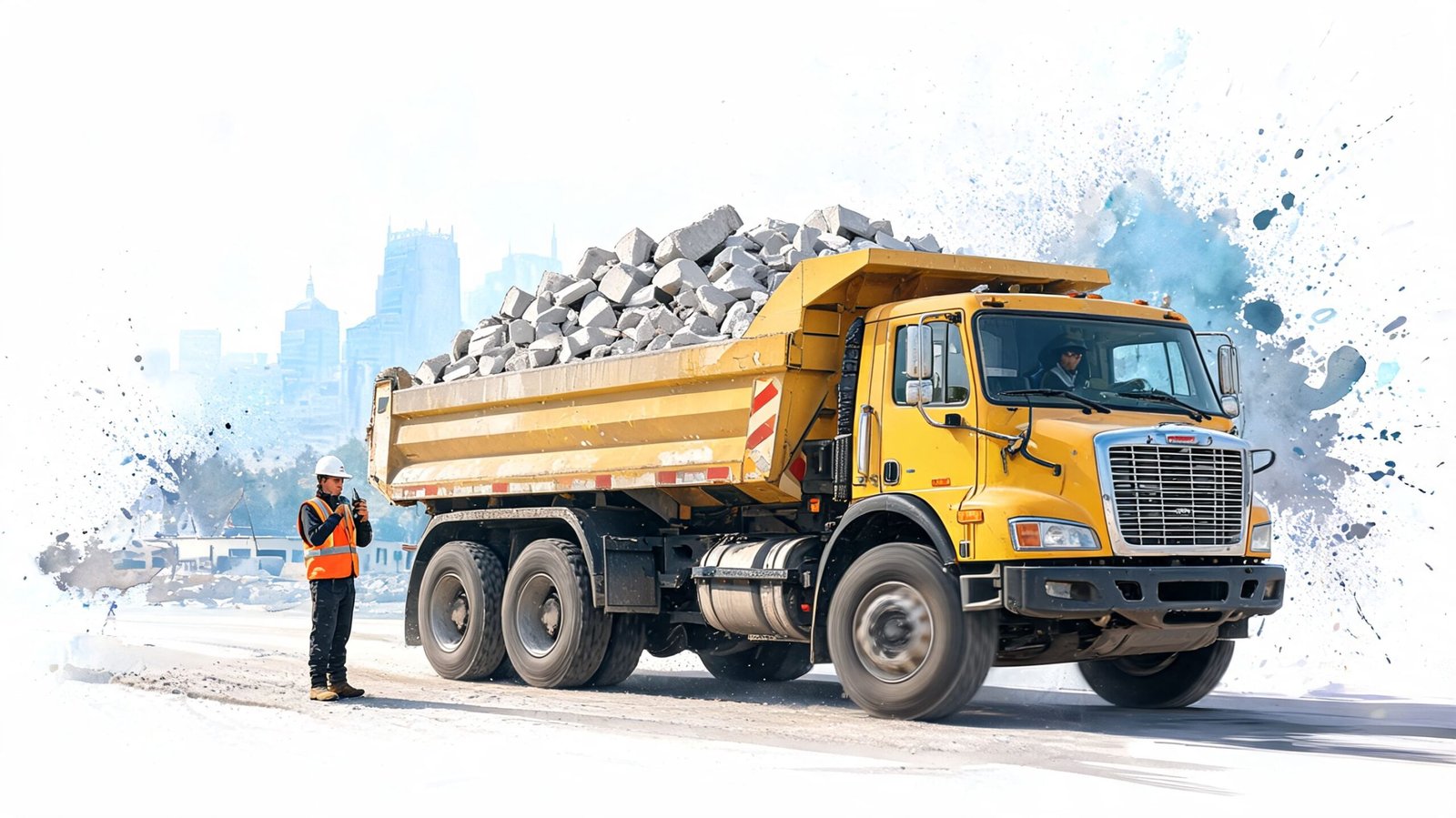
In Salt Lake County, mobile crushing services have operated at $30-60 per unit in regional practice, and on-site processing can support faster reuse than hauling material away, as described in the earlier county recycling reference. But that doesn’t automatically mean crushing on site is always the right answer. The better option depends on volume, access, and whether the project can use the recycled product on site or nearby.
When hauling out makes sense
Hauling to a recycler is usually the cleanest answer for smaller jobs, tight urban sites, and work where the concrete is already broken, separated, and easy to load. If your stockpile is accessible and the load is clean, straight haul-out keeps the site moving.
This approach works well when:
- The site has limited room: You don’t have enough area for a crusher, processed stockpiles, or additional equipment movement.
- The quantity is moderate: There’s enough material to justify recycling, but not enough to set up processing on site.
- The project needs fast cleanup: Removing broken concrete quickly clears space for grading, forming, or utility work.
The hidden cost in haul-out is bad access. If trucks have to fight rough terrain, tight backing zones, or muddy approaches, your loading time goes up and production drops.
When on-site crushing earns its keep
On-site crushing starts to make more sense when the project has enough concrete volume and enough room to stage operations safely. It also helps when the job can reuse the crushed material as base, fill, or subgrade support.
According to CRI Utah’s recycling process details, on-site crushing can cut hauling needs by 50-70%, but contractors should budget an additional $10-20/ton for operations on rough terrain. The same source notes that processed RCA must have less than 2% fines to meet UDOT reuse specifications.
That tells you the trade-off. Crushing can reduce truck dependence, but the site has to support the operation. If the terrain is rough, staging is poor, or the crew can’t keep material clean enough for spec, the theoretical savings disappear.
A practical cost comparison mindset
Don’t look at disposal in one line item and hauling in another. Look at the whole sequence:
| Option | Best fit | Main advantage | Main risk |
|---|---|---|---|
| Haul clean concrete to recycler | Smaller or medium jobs with decent truck access | Fast site cleanup and simple coordination | Multiple trips if volume is larger than expected |
| On-site mobile crushing | Larger projects with room to stage and reuse material | Reduced hauling and immediate reuse potential | Terrain, setup complexity, and quality control |
| Mixed disposal approach | Jobs with both clean concrete and contaminated material | Keeps recyclable material out of the waste stream | Poor crew discipline can send too much into mixed waste |
A few field realities matter more than spreadsheets:
- Loader rhythm matters: If trucks wait on the loader, your hauling cost is climbing even if the recycler is close.
- Pile location matters: A stockpile at the back of a congested site costs more to load than one near the gate.
- Moisture and fines matter: Muddy, sloppy material is harder to process and less likely to meet reuse standards.
- Reuse plan matters: Crushing on site is much stronger when the project can consume the product.
The most cost-efficient jobs are usually the ones where demolition, washout containment, loading, and destination were planned as one chain. If one link is improvised, the whole process gets expensive.
Best Practices for Compliance and Troubleshooting
Good concrete recycling work in Salt Lake City doesn’t come from one smart decision. It comes from a clean chain of custody. The crew separates material correctly, slurry stays contained, haulers know the destination, and the final load matches what the receiving yard expects.
When that chain breaks, the problems are predictable. Loads get rejected. Stormwater notes start showing up. The site burns labor hours rehandling material that should’ve moved once.
The checklist that prevents most problems
Keep the process simple enough that the field can follow it.
- Document the waste stream: Keep load tickets, pickup notes, and basic records showing where concrete and washout material went.
- Inspect piles before loading: Don’t assume the pile stayed clean after lunch, after rain, or after another trade crossed the area.
- Separate questionable material early: If you uncover contaminated soil, painted debris, or mixed waste under the slab, isolate it instead of hoping the recycler accepts it.
- Coordinate washout and demo crews: If these operations overlap without a plan, contamination spreads fast.
Fixing common jobsite failures
The first common failure is a pile that slowly turns into a catch-all debris zone. The fix is physical separation and accountability. Move the recycling pile away from general traffic, mark it, and tell one person they own it.
The second is late washout planning. If the trucks arrive before containment is in place, the crew will improvise. At that point, you’re reacting to a mess instead of preventing one.
The third is assuming every facility handles every load. They don’t. One phone call before dispatch is cheaper than one rejected truck after dispatch.
Keep recyclable concrete, slurry containment, and haul logistics tied together in the same pre-task plan. When crews split those decisions apart, the site usually pays for it later.
What experienced contractors do differently
Experienced crews don’t just ask where the broken concrete is going. They ask what condition it needs to be in when it gets there. That question changes how they demo, where they stockpile, how they protect the area from dirt, and how they manage washout.
That’s the part many new contractors miss. Concrete recycling salt lake city utah isn’t only about finding a recycler. It’s about building a workflow where the material stays recyclable from the moment it’s broken until the moment it’s processed.
If you do that, recycling becomes one of the cleaner parts of the job. If you don’t, it becomes another expensive cleanup.
If you need a cleaner way to handle washout on Salt Lake jobs, Reborn Rentals provides concrete washout containment rentals that help crews keep slurry controlled, sites organized, and compliance planning simpler from delivery through pickup.