Construction Trash Container Rental: A Contractor’s Guide
Monday morning on a live project exposes bad container planning fast. The demo crew has tear-off piling up by the fence. The concrete finisher wants a washout area before the first chute swings over. A hauler is backing in with limited room, and the superintendent is watching the weather because one wrong placement can turn runoff into a compliance problem before lunch.
That is why construction trash container rental belongs in the site logistics plan from day one. It affects truck flow, labor efficiency, inspection risk, and cleanup pace. If the container setup is wrong, crews lose time walking debris across the site, access points choke up, and wet concrete residue ends up in places it never should have reached.
On active jobs, the biggest mistake is treating every container like it serves the same purpose. A general debris roll-off handles wood, drywall, packaging, and mixed construction waste. A concrete washout container handles slurry, rinse water, and high-pH residue that can leak, harden, or contaminate soil and stormwater controls. They solve two different field problems, and mixing them usually creates a third problem no one budgeted for.

A lot of rental advice stops at dumpster size. That misses the part that gets contractors in trouble. Dry debris is mostly a hauling and volume question. Concrete washout is a containment, handling, and regulatory question. One container clears the site. The other keeps slurry managed, crews compliant, and the job from turning a simple cleanup issue into a stop-work conversation.
Introduction
Most jobs need two waste plans running at the same time. The first handles ordinary construction debris like wood, drywall, packaging, roofing tear-off, and mixed demolition. The second handles concrete washout, slurry, and rinse water that can’t be treated like dry debris. If you combine those plans, you create headaches that show up in hauling, contamination, and compliance.
A standard roll-off works like a site-wide wheelbarrow. It centralizes bulk debris and keeps labor moving. A washout pan or box does a different job. It contains liquid-heavy residue, keeps alkaline material from hitting soil, and gives crews a defined place to clean out equipment before that mess spreads across the pad.
Practical rule: If the material can leak, flow, or change character after rain, stop calling it “just trash.”
New project managers often focus on container size first. Size matters, but material type matters sooner. Dry framing waste can fool you by taking up volume. Concrete residue fools you in the opposite direction. It doesn’t look like much at first, but it gets heavy fast, sticks to everything, and creates downstream problems if it’s placed in the wrong container.
The smartest jobs treat container rental the same way they treat access roads or laydown areas. It gets decided early, shown on the site logistics plan, and adjusted when the work shifts. That’s what keeps cleanup from becoming rework.
Beyond the Bin Understanding Container Types
The word “dumpster” causes more confusion on a construction site than it should. On paper it sounds simple. In practice, you’re usually dealing with at least two different systems: roll-off containers for general C&D debris and specialized washout containment for concrete-related waste.
Construction and demolition debris makes up 25% to 45% of the total solid waste stream by weight in the U.S., and the broader waste collection industry was valued at $76.6 billion in 2023, according to industry statistics compiled by WiFiTalents. That volume is exactly why choosing the wrong container type creates expensive friction so quickly.
General debris roll-offs
A roll-off is the workhorse. It handles the material most crews think of first:
- Wood and framing scrap: offcuts, pallets, trim, temporary bracing
- Drywall and interior demo: board, studs, insulation, flooring
- Roofing tear-off: shingles and related debris when the weight stays within limits
- Packaging and mixed site waste: cardboard, plastic wrap, and day-to-day job trash
Roll-offs shine when the waste is bulky, fairly predictable, and loaded in batches. Demo days, roofing days, and rough cleanup phases are where they earn their keep.
But they’re still governed by two realities. First, they have transport limits. Second, they’re not designed to be open settling ponds for slurry.
Concrete washout containers
Concrete washout containers exist because wet residue is a different animal. It’s not just “heavy waste.” It’s a mix of slurry, rinse water, residue, and solids that can migrate if you leave it unmanaged. Brooms, chutes, pumps, wheelbarrows, and finishing tools all create this stream.
A washout container is containment, not just storage. That distinction matters.
Wet concrete waste behaves less like demo debris and more like runoff waiting for a path.
If a crew rinses into a general roll-off, several things usually go wrong at once. Liquid pools where the hauler doesn’t want it. Fine material contaminates the rest of the load. Weight concentrates unevenly. Then someone has to explain why the container contents don’t match what was ordered for disposal.
What works and what doesn’t
Here’s the field version.
What works
- Separate streams early: dry debris in one system, washout in another
- Assign ownership: one foreman responsible for each container area
- Post simple rules: what goes in, what stays out, who calls for swap-out
What doesn’t
- One-bin thinking: telling every trade to use the same container
- Last-minute washout plans: deciding after the first pour starts
- Mixing wet and dry waste: the load gets harder to haul, sort, and approve
The real trade-off
A general roll-off gives flexibility. A washout container gives control. Jobs need both, but not in equal quantities at every phase. During demolition, the roll-off carries the load. During slab, curb, pump, or finishing work, washout control becomes the issue that can bite you fastest.
Treat the roll-off like the site’s bulk hauler. Treat the washout pan like a containment device with a disposal function attached. Once a manager understands that split, a lot of bad decisions disappear before they happen.
Sizing Up Your Debris A Guide to Capacities and Dimensions
A container order goes sideways fast when the estimate is based on what the pile looks like at 4 p.m. from the gate. Drywall scrap can look like a mountain and still haul easily. Broken concrete can sit below the top rail and still get rejected for weight. Size the rental by two numbers every time. Cubic yards and tons.
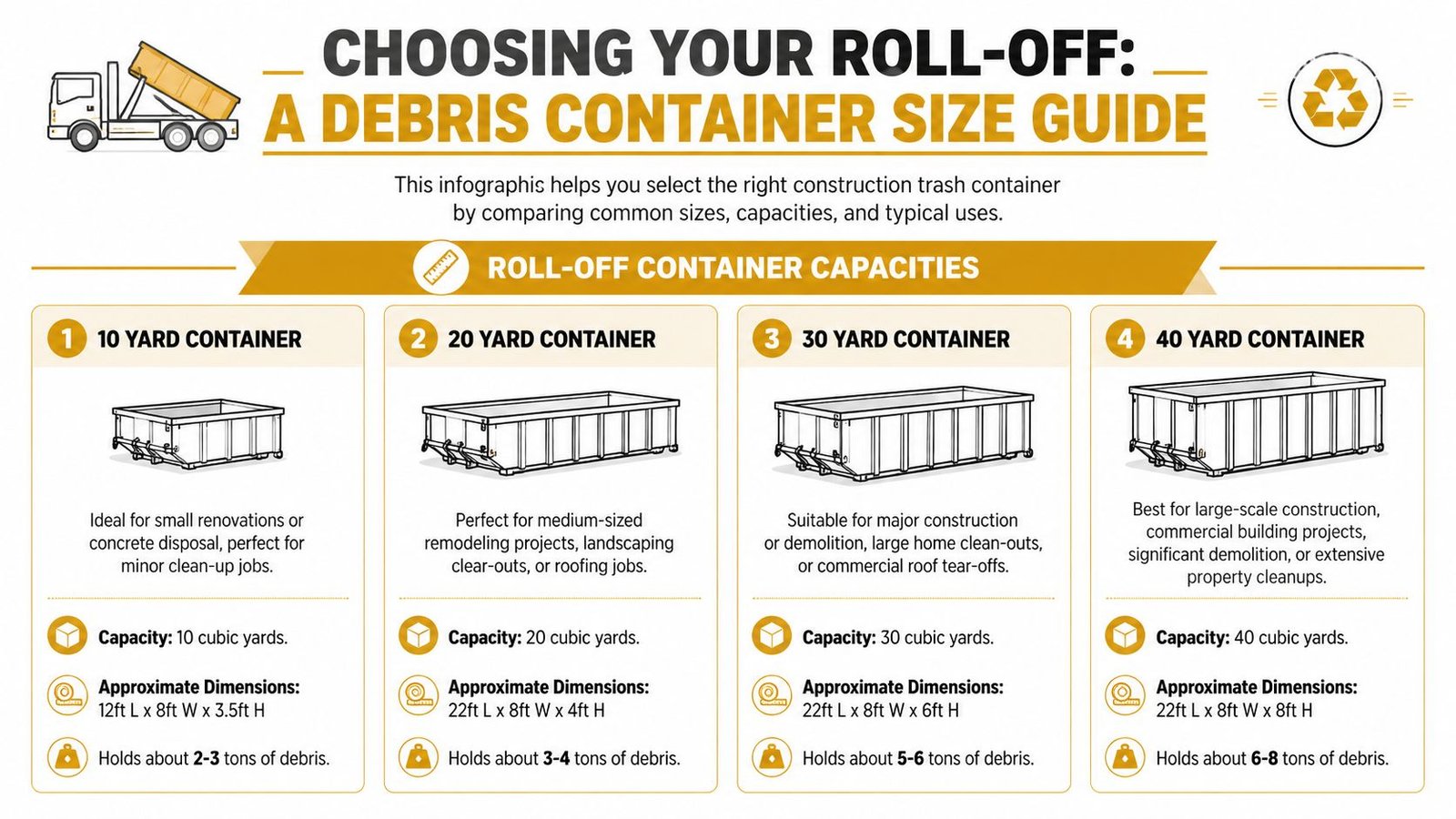
A standard 20-yard roll-off dumpster typically measures about 22 feet long by 8 feet wide by 3.5 to 4.5 feet tall, holds roughly 4 to 8 pickup truck loads or 110 to 130 kitchen-sized trash bags, and carries a maximum weight limit of 5,000 to 8,000 pounds, according to Texas Disposal’s dumpster rental guide. The same guide notes that overage fees can run $50 to $150 per ton, and wet concrete at about 150 pounds per cubic foot can push a 20-yard container to its weight limit with only 3 to 4 cubic yards of material.
That is the mistake that burns new project managers. They order for volume, then get billed for weight.
Volume lies when the material is dense
Light debris usually fills the box before the load reaches its limit. Lumber offcuts, insulation, cardboard, and packaging behave that way. Dense debris does the opposite. Concrete, block, brick, dirt, and soaked roofing can overload a container long before it looks full.
That is why a half-full box can still be the wrong box.
A 20-yard roll-off works well for mixed renovation debris because the material stream is varied and usually lighter by cubic yard. It works poorly for careless concrete disposal. Sidewall height does not change what the truck can legally haul, and it does not change what the receiving facility will accept.
Field check: If the material came out of the ground, the slab, or the masonry wall, check weight first.
Common roll-off sizes in practice
Crews rarely choose containers by spreadsheet alone. They choose by waste behavior, loader access, swap frequency, and how much space the site can give up without choking deliveries.
| Container Type & Size | Typical Dimensions (LxWxH) | Volume Capacity | Best For |
|---|---|---|---|
| 10-yard roll-off | Smaller footprint, often low-wall | 10 cubic yards | Small remodels, selective demo, dense debris in controlled amounts |
| 20-yard roll-off | About 22' x 8' x 3.5-4.5' | 20 cubic yards | Roofing, medium renovations, mixed C&D debris |
| 30-yard roll-off | About 22' x 8' x 6' | 30 cubic yards | New-build cleanup, larger interior demo, commercial renovation |
| 40-yard roll-off | Tallest common roll-off profile | 40 cubic yards | Large-scale construction, bulky light debris, major demolition cleanup |
| Concrete washout pan | Low-profile containment unit | Liquid and slurry containment | Pump washout, chute rinse-out, finishing cleanup, slurry control |
The selection rule stays simple. Put dense material in smaller, controlled loads. Put bulky, lighter material in larger boxes.
Why washout sizing follows a different logic
A washout container is not a smaller version of a debris dumpster. It is a containment tool first. The sizing decision depends on rinse water, slurry volume, crew access, and how long concrete operations will continue before service or pickup.
That changes the layout plan. A tall roll-off can make sense for loose demolition debris because vertical space helps. A washout pan usually works better with a lower profile and usable footprint so pump crews, finishers, and chute operators can hit the target without splashing material over the edge. On a busy slab day, that practical difference matters more than the published capacity.
As noted earlier, washout rentals are often priced and sized differently from general debris containers. The point is not to squeeze slurry into the cheapest available box. The point is to keep wet concrete residue contained, serviceable, and separate from the dry waste stream.
A better way to choose
Before placing the order, sort the waste by how it behaves on the truck and on the ground.
Bulky and light
Framing scrap, drywall, insulation, packaging. These usually justify a larger roll-off because they consume space faster than weight.Dense and dry
Broken concrete, block, brick, soil, roofing tear-off. These need smaller containers or tighter loading control because weight becomes the limit.Wet and reactive
Slurry, chute rinse-out, pump wash water, finishing residue. These belong in dedicated washout containment, not mixed debris.Mixed and uncertain
This category causes the most avoidable trouble. If the stream is undefined, split it before the first load instead of hoping one container will cover it.
Good sizing is not about ordering the biggest box available. It is about matching the container to the material, the phase of work, and the disposal path. On a well-run site, the debris roll-off handles production waste and the washout container handles slurry control. Once those two jobs are separated, hauling gets cleaner, crews waste less time, and expensive surprises show up a lot less often.
Staying Compliant Navigating Environmental Regulations
Most crews hear acronyms like EPA, SWPPP, and NPDES and tune out because it sounds like office paperwork. On site, it’s simpler than that. The rules exist because water moves. If washout water, slurry, or residue gets into soil or drainage paths, the problem doesn’t stay where the pour happened.
Concrete-related waste is the issue that catches people off guard. The residue is highly alkaline. It doesn’t look dramatic when it’s sitting in a puddle next to a form stack, but it becomes a compliance issue the second runoff can carry it.
Globally, construction waste recycling reached 76% in 2024, but concrete slurry recycling lagged at 45% because of poor containment. The same source notes that non-segregated or improperly contained loads can incur 20% to 30% higher disposal fees and can expose contractors to fines under evolving regulatory frameworks, according to WM’s construction and demolition guidance. That’s the cost of treating a containment problem like an ordinary trash problem.

What those acronyms mean on a real job
You don’t need to be an environmental lawyer to manage this well.
- EPA: the federal regulator that sets broad environmental expectations
- SWPPP: your stormwater game plan for how the site prevents pollutants from leaving the work area
- NPDES: the permit framework tied to stormwater discharges and inspections
For a superintendent or PM, the practical question is this: Can rain or rinse water move this material off the controlled area? If the answer is yes, container choice is no longer optional.
Where jobs usually get burned
The common failures are rarely complicated.
- No dedicated washout location: crews improvise behind the pump or near the curb
- Mixed waste streams: slurry goes into a general debris container
- Bad timing: the washout unit arrives after the pour starts
- No maintenance: the containment area overfills or hardens into a useless block
Compliance starts before the first truck unloads, not when the inspector drives in.
Read the invoice like a risk document
A rental invoice can tell you a lot about whether your planning is tight. Even without line-by-line legal language, a manager should expect these core pieces to shape cost:
| Invoice Component | What it usually covers | Why it matters |
|---|---|---|
| Base rental | The container for the agreed rental period | Your starting budget number |
| Delivery and pickup | Transport to and from site | Affects scheduling and access planning |
| Tonnage or disposal | What the material stream weighs or how it’s processed | Where mixed or contaminated waste gets expensive |
| Special fees | Extra handling, prohibited material, difficult access, rush service | Usually the part that surprises people |
If the invoice structure is vague, assume the site conditions will decide the final number. If the provider is clear about access, contents, and contamination rules, budgeting gets much easier.
The cheapest-looking container isn’t cheap if it creates runoff exposure, mixed-load disposal issues, or a service delay during active concrete work. On a live project, compliance is just disciplined logistics with consequences attached.
Decoding the Invoice A Breakdown of Rental Costs and Fees
Two projects can order the same size container and end up with very different invoices. That’s because the rental isn’t just the box. You’re paying for time, hauling, disposal, and the risk the hauler takes on based on what you load and how easy your site is to service.
A clean invoice usually breaks down into a few understandable parts. There’s the rental charge for the agreed period. There’s delivery and pickup. Then there’s the part many PMs underestimate: disposal-related charges tied to what the container contains when it leaves.
The charges that cause the arguments
The biggest disputes usually come from assumptions that were never checked.
- Weight-related charges: a container can look fine and still exceed what the hauler priced for
- Contamination charges: mixed loads are harder to process than clean streams
- Access-related fees: if the truck can’t get in cleanly, service gets slower and more expensive
- Extended time on rent: a container that sits because nobody called for pickup keeps costing money
This is why experienced supers ask the same unglamorous questions every time. What material is going in? What is excluded? What triggers extra charges? Is the site accessible on the service day?
Two jobs, same container, different outcome
Job one puts a roll-off near the only clean delivery lane because it looked convenient on a sketch. By midweek, the framing truck has to back around it, the laborers take the long way to dump debris, and pickup gets delayed because another subcontractor parked in front of the swing path. Nobody thinks of this as a container cost, but it is. It shows up in wasted labor, truck wait time, and schedule drag.
Job two places the container where crews can reach it without crossing active equipment routes, and where the hauler has a straight path in and out. Pickup happens when expected. The site stays cleaner. Nobody is burning time solving a preventable traffic problem.
A bad container location turns one rental into three problems: labor waste, access conflicts, and service delays.
What to ask before approving the order
Keep it simple and direct:
What material stream is this price based on
Mixed C&D, dense debris, or specialized washout handling all price differently.What site conditions can change the total
Tight gates, soft ground, and after-hours coordination matter.What happens if the project runs longer than planned
You need to know the extension terms before the container overstays.Who signs off on swap-outs or pickups
If that isn’t assigned, containers sit too long or get removed at the wrong time.
A good PM reads the invoice before the order and the site plan before delivery. That’s where most rental savings come from.
Strategic Site Placement for Safety and Efficiency
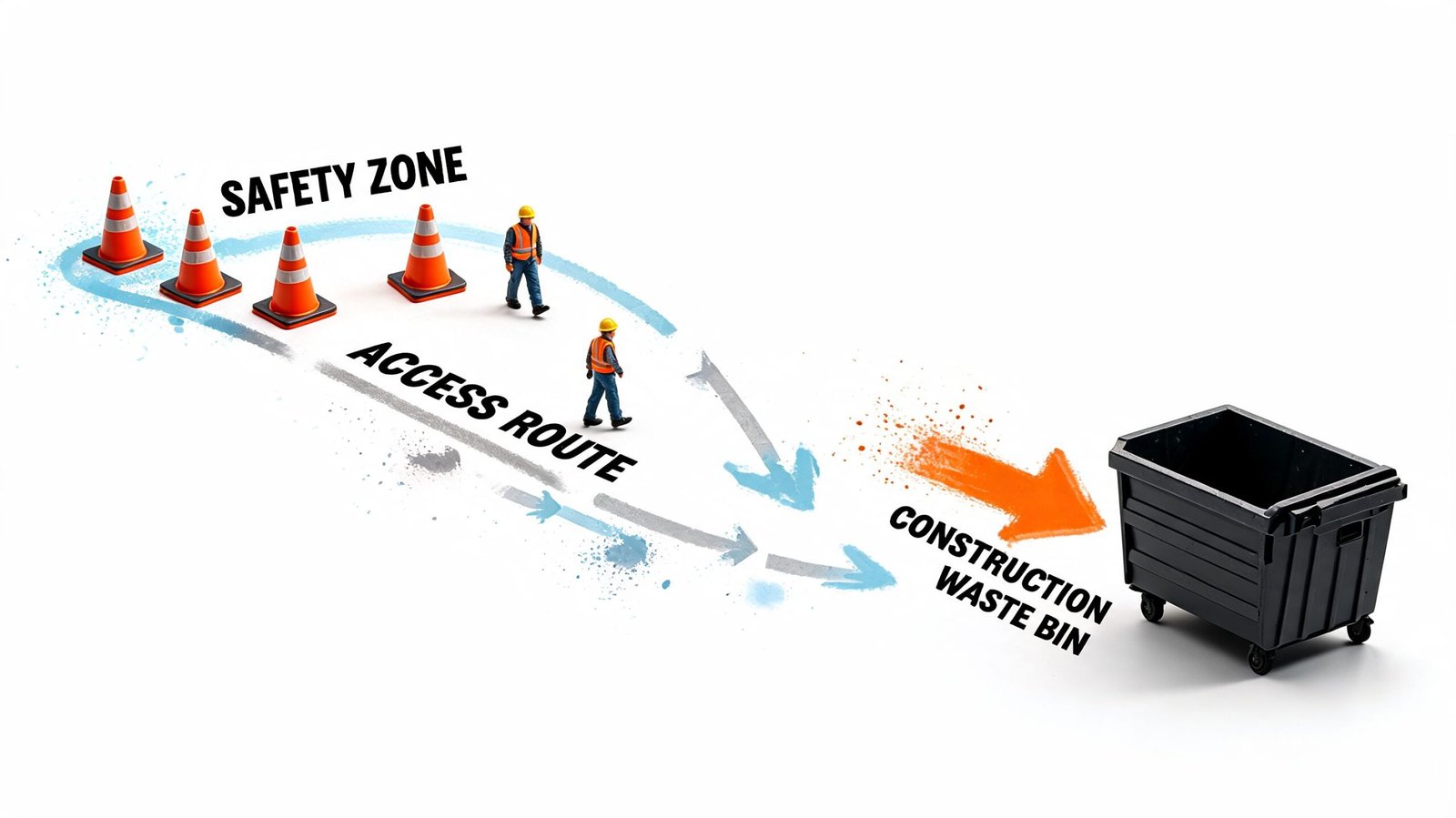
Container placement should be handled like crane setup or laydown planning. If you treat it as an afterthought, the whole site starts working around a bad decision. The right spot shortens walks, reduces clutter, and keeps truck movements predictable. The wrong spot puts a steel obstacle in the middle of everything.
Pre-rental placement checklist
Before you book a construction trash container rental, verify these points on the site itself, not just on a plan set:
- Truck approach: confirm the driver has enough room to enter, turn, and exit without threading a needle
- Ground conditions: use stable, level placement areas that won’t rut or shift under load
- Crew path: place the container close enough that laborers will use it instead of creating side piles
- Utility conflicts: keep clear of known underground utilities, septic areas, and sensitive surfaces
- Trade interference: don’t block material delivery lanes, pump setup, or scaffold access
- Service window: make sure pickup can happen even when the site is busy
A container should be easy for two groups to use: your crew and the hauler. If either group struggles, the location isn’t right.
Separate your debris zone from your washout zone
Jobs either look controlled or sloppy. General debris belongs where cleanup labor can reach it fast. Washout containment belongs where concrete crews can use it immediately without crossing traffic or improvising near drains and soil edges.
Those zones can be near each other, but they shouldn’t overlap. Dry debris attracts everybody. Washout needs discipline.
Put the roll-off where many trades can reach it. Put the washout unit where one muddy operation can stay contained.
What good placement looks like
A strong setup usually has a few visible traits:
- Clear perimeter around the container
- Short walking distance from active work
- No backing surprises for service trucks
- No conflict with emergency access or deliveries
- Enough room for loading without workers standing in traffic paths
Good placement feels boring, and that’s exactly the point. Nobody talks about it because it isn’t causing problems.
Your Go-To Rental Guide A Contractor's Checklist and Reborn's Process
Most rental mistakes happen before anyone clicks “order.” The provider can only work with the information you give them. If the PM gives a vague scope, guesses at the waste stream, and forgets to mention site access issues, the container may still arrive, but the plan won’t hold up once work starts.
This part is where a contractor should get practical and a little skeptical. Ask better questions up front. Keep the answers in writing. Treat the order like a field coordination item, not a quick admin task.
The gap in the market is real. Many container listings still focus on general debris while missing concrete washout needs, even though concrete washout non-compliance appears in 15% of NPDES inspections, and some markets have seen a 25% surge in washout rentals after infrastructure work increased, according to Vail Honeywagon’s industry summary. That tells you why a generic dumpster conversation often falls apart on concrete-heavy jobs.
The contractor checklist before ordering
Have these answers ready before you contact any rental company:
- Project phase: Are you doing demolition, framing, roofing, flatwork, pump work, or finish cleanup?
- Waste type: Is this dry mixed debris, dense heavy debris, or concrete washout and slurry?
- Placement area: Where exactly will the unit sit, and can a truck access it without site gymnastics?
- Schedule: What day does the work start, and when will the container be needed?
- Service expectation: Do you need a one-time drop, swap-outs, or pickup on short notice?
- Site conditions: Is there rough terrain, tight access, or any surface sensitivity the driver needs to know about?
If the answers are fuzzy, the order is premature.
The questions to ask the rental provider
You want straightforward answers, not polished sales language.
What exactly is included in the listed rate
Ask about the rental period, delivery assumptions, and any listed surcharges.What materials are prohibited or require special handling
This matters most when the project includes slurry, wet residue, or mixed heavy waste.How are access issues handled
Tight gates, soft ground, urban congestion, and timing restrictions should be discussed before dispatch.How do we communicate during the job
Busy crews don’t want a support maze. They need a fast channel for confirming availability, scheduling, and pickup.What does the ordering workflow look like
If the process is clunky, field coordination usually becomes clunky too.
What a clean rental process should look like
For contractors, the best process is the one that removes uncertainty. Reborn Rentals is built around a simple sequence of Cart → Details → Checkout, which fits the way field teams work. You select the equipment, set dates and location details, then complete the order without a long back-and-forth.
That matters because concrete work often moves fast. Schedules shift. Crews need quick answers on sizing, availability, and placement. Reborn Rentals supports that with multiple communication channels, including Messenger, WhatsApp, email, QR-based contact sharing, and scheduled callbacks, so crews can confirm logistics without slowing down the day.
Why that process works in the field
The useful part isn’t just speed. It’s clarity.
- Daily pricing is visible up front: that helps PMs budget before they commit
- Dates and delivery details are built into the order flow: fewer missing pieces
- Notes on possible added charges are transparent: teams can account for delivery, rough terrain, or express needs
- The catalog is specialized: washout pans and containers are presented as purpose-built tools, not generic bins
For a contractor handling slurry, that specialization matters. A listing that clearly identifies washout options is already ahead of many rental pages that still blur the line between debris hauling and slurry containment.
What to keep in your field notes
Once the order is placed, write down the items that tend to get lost in text messages and memory:
- Delivery date and window
- Exact placement instructions
- Who on site will receive the driver
- Approved waste stream for that unit
- Pickup trigger or swap-out threshold
- Provider contact method the crew will use
That small discipline prevents the usual site confusion where one foreman thinks the pan is for pump rinse-out only, another crew starts tossing trash into it, and nobody knows who requested pickup.
The hard-won lesson
A lot of people still treat container rental like office admin because the order happens on a screen. On site, it behaves more like logistics planning. The right rental supports production. The wrong one creates cleanup labor, disposal disputes, and compliance exposure.
For ordinary debris, the goal is controlled removal. For concrete washout, the goal is controlled containment first, removal second. Keep those two jobs separate, and most of the avoidable trouble disappears.
If your project includes concrete pours, slurry, or washout compliance concerns, Reborn Rentals offers specialized washout containment with straightforward ordering, clear daily pricing, and practical support channels that fit how contractors work in the field.