Dumpster for Dirt: A Contractor’s Guide to Weight & Cost
The excavator starts cutting, the truck backs in, and by mid-morning you've got a spoil pile that looks manageable until you remember one detail. Soil doesn't behave like regular jobsite debris. It loads fast, it weighs out before it fills up, and it can wreck your budget if you order the wrong container.
That's where a lot of projects go sideways. Rental pages talk about dumpster sizes in cubic yards, but with dirt, the primary problem is usually weight, not visible space. One market summary puts it plainly: the hardest part of dirt disposal is often estimating weight, not volume, and that gap leaves contractors exposed to overage charges and rejected loads when they rely on size marketing alone (Louisiana Waste Solutions on dirt disposal guidance gaps).
A good dumpster for dirt plan starts with tonnage, haul access, and disposal rules. Get those right and the rest gets easier. Get them wrong and you'll pay for a bigger box that still can't leave the site legally.
Planning Your Dirt Disposal Strategy
Most dirt jobs begin with a bad assumption. Someone sees a pile, eyeballs the footprint, and orders a container based on how much space the material seems to take up. That works with light demo debris. It doesn't work with soil.
The first call should answer three questions before anyone books a dumpster for dirt. What kind of soil is it, how much of it is coming out, and where can the hauler place and remove the box? If you can't answer those, you're still guessing.
Start with the excavation, not the container
Think from the cut outward. A footing dig, trench run, patio removal, drainage repair, or grading correction all create different loading patterns. Some jobs produce clean soil that can go into a dirt-rated container. Others produce mixed material with roots, chunks of concrete, brick, or trash. That distinction matters because disposal sites and haulers usually don't treat mixed loads the same way they treat clean fill.
Before ordering, sort the work into practical categories:
- Clean excavation spoil: soil, fill, or sod kept separate from trash and demo debris
- Mixed earth material: dirt blended with roots, rock, concrete, asphalt, or scrap
- Questionable material: anything that may trigger a disposal question because of staining, odor, or site history
Field rule: If the crew has to ask whether a load counts as clean dirt, it probably needs a disposal conversation before pickup day.
Build the plan around hauling limits
The safest dirt disposal strategy is usually not “one big dumpster.” It's controlled loading into a container that the hauler can transport without weight trouble. That means you need a provider that clearly approves dirt-only loads and gives you a defined weight cap.
On most jobs, the best workflow looks like this:
- Estimate the excavation volume
- Convert that estimate into likely weight
- Match the load to a dirt-approved container
- Stage the container where the driver can access it cleanly
- Keep soil segregated from other debris from the first shovel
That last step saves more headaches than people think. Once the crew starts tossing in wood, broken pipe, packaging, or demo scraps, the load can stop being a straightforward dirt load and become a classification problem.
Why Dirt Is a Heavyweight Contender
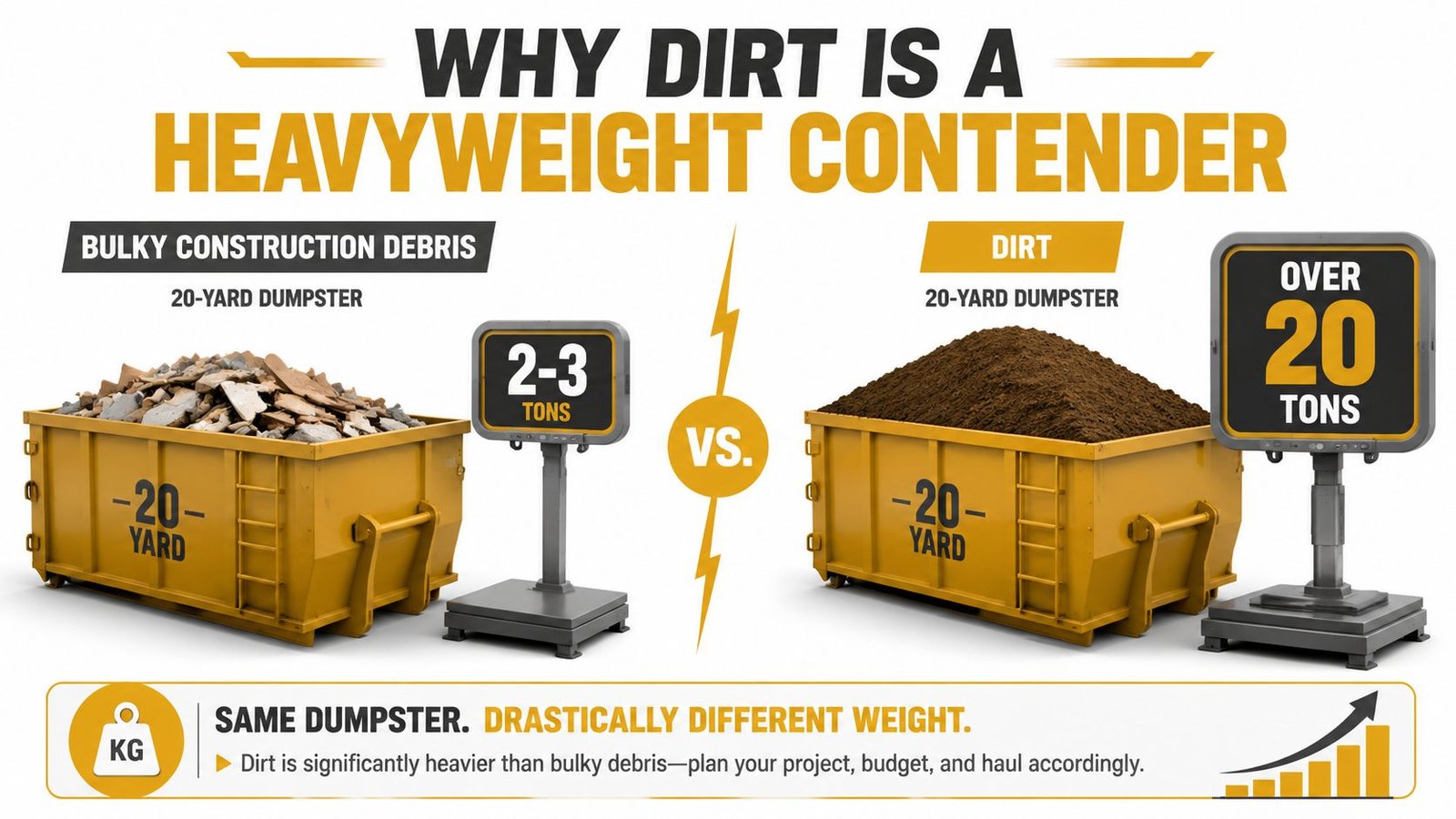
A dumpster for dirt looks ordinary sitting on site. The problem starts when people treat it like a regular construction can. Dirt packs densely, holds moisture, and pushes the truck's legal hauling limits long before the container looks “full.”
Density changes the whole job
The easiest way to explain it is a shoebox comparison. A shoebox of feathers and a shoebox of lead may take up the same space, but nobody expects them to weigh the same. Dirt is the same issue on a larger scale. The container's volume tells you how much airspace exists. It does not tell you what the truck can haul.
Industry guidance notes that dirt can weigh about 2,200 pounds per cubic yard depending on moisture content, and some estimates for wet or compacted soil reach 3,000 pounds per cubic yard (Frontier Waste on estimating cubic yards and soil weight). That's why a modest amount of wet spoil can become a transport problem in a hurry.
What haulers actually care about
Drivers don't get judged by how neatly the dumpster is filled. They get judged by whether the load is safe to tarp, safe to lift, and legal to haul on public roads. That's why dirt containers often have special restrictions that don't apply to ordinary renovation debris.
Here's what usually causes trouble on site:
- Wet soil after rain: heavier than the estimator expected
- Compacted excavation spoil: denser than loose fill
- Over-enthusiastic machine loading: fast way to exceed the cap
- Mixed material in the box: harder to classify and harder to dump cleanly
Haulers worry about axle weight and road legality long before they worry about whether you used every cubic yard you paid for.
Why standard dumpsters often fail on dirt jobs
A general construction dumpster is built for mixed debris patterns. Dirt behaves differently. It settles, shifts little, and eats payload capacity immediately. That's why many providers steer contractors toward dedicated soil or dirt dumpsters instead of standard mixed-debris boxes. The issue isn't marketing. The issue is transport reality.
If the crew understands one thing, make it this: a dirt container is a weight-controlled hauling tool, not a giant open hole for spoil. Once that clicks, ordering gets smarter and pickups go a lot smoother.
Choosing the Right Dumpster by Weight Not Volume
The common mistake is ordering up. A superintendent thinks there's a lot of dirt, so they request a larger box. For soil, that can backfire. A bigger container gives you more physical space, but it doesn't override truck and axle limits.
A practical guide from Hometown Waste says a dumpster for dirt should be chosen by weight capacity, not volume. It notes that a typical 10-yard dirt dumpster is capped at 10 tons, while a 20-yard dirt dumpster may be capped at 15 tons, and filling a 20-yard container completely with dirt would create an illegally overweight load (Hometown Waste on dirt dumpster weight caps).
The working rule for container choice
On dirt jobs, the smallest approved container is often the safest one. Not because you want more hauls, but because a smaller box forces the crew to stay inside realistic payload limits.
The same industry guide also notes dirt averages about 1.25 tons per cubic yard, and recommends choosing the smallest container that stays under the provider's cap while leaving 12 inches of freeboard for safe hauling. That freeboard matters. If the driver can't tarp it safely or the material crowns above the rail, the pickup may not happen.
Dirt dumpster size versus actual payload capacity
| Dumpster Size | Approx. Volume | Typical Weight Limit (Tons) | Effective Dirt Capacity (Cubic Yards) |
|---|---|---|---|
| 10-yard | 10 cubic yards | 10 | About 8 cubic yards at 1.25 tons per cubic yard, with room for safe hauling |
| 20-yard | 20 cubic yards | 15 | About 12 cubic yards at 1.25 tons per cubic yard, with room for safe hauling |
That table is the point most rental ads skip. A 20-yard box may be physically larger, but for dirt it does not mean you can dump 20 cubic yards of soil into it.
What to use in the field
Use this sequence before you order:
- Estimate spoil volume: get a realistic cubic-yard count from the excavation scope
- Convert volume to weight: multiply by the expected soil density your hauler uses
- Check the provider cap: make sure the rated dirt container can take the load
- Leave headspace: keep material below the top rail and maintain freeboard
- Split loads early: if the estimate is close to the limit, plan more containers instead of gambling on one
Practical rule: Dirt jobs punish optimism. If your estimate is close to the cap on paper, the real load will usually be worse once moisture and compaction show up.
Why the 10-yard often wins
The 10-yard container is common on dirt-only work for a reason. It aligns better with hauling limits and keeps crews from overloading by accident. On a small excavation, trench cleanup, or landscaping removal, it's easier to manage, easier to place, and less likely to turn into an overweight pickup dispute.
Navigating Permits Contamination and Disposal Rules
A dumpster for dirt can be the right size and still create a problem if the placement is wrong or the load isn't acceptable at the disposal site. Many newer project managers are often surprised by these issues. The container isn't just a hauling decision. It's also a compliance decision.

Placement rules come first
If the dumpster sits on private property, approval is usually simpler. If it has to go on a street, alley, sidewalk edge, or any other public area, the city may require a permit and may limit where and how long it can stay. The exact process depends on the local jurisdiction, so don't rely on what worked on the last job in another town.
Check these items before delivery:
- Street placement: ask the city whether a right-of-way or temporary occupancy permit is required
- Traffic flow: make sure the box won't block driveways, fire access, or site deliveries
- Surface condition: confirm the drop area can support the loaded container and the truck
- Pickup path: verify the driver has room to approach, load, and exit without backing into a trap
Clean fill means clean
The disposal side is where classification matters. “Clean dirt” sounds simple until crews start loading. In practice, the hauler or disposal site may reject a load if it contains roots, mixed demolition debris, trash, treated wood, pipe scraps, or anything that suggests the soil isn't clean fill.
That's why dirt should be segregated at the source. Don't let the laborers use the dirt box as a convenience can for loose site debris. One mixed shovel here and one broken stake there may not look like much from the ground, but it can change how the load gets priced or where it can be dumped.
Red flags that deserve a phone call first
Some conditions should stop the job long enough to confirm disposal requirements:
- Stained or odorous soil
- Former industrial or service-station property
- Excavation near tanks, piping, or unknown fill
- Visible non-soil material throughout the spoil
- Stormwater-sensitive sites with strict erosion and sediment controls
If there's any question about contamination, don't wait for the driver to make the decision at pickup. Call the provider and the disposal outlet before loading the first bucket.
SWPPP and site housekeeping matter
On projects with stormwater controls, soil handling affects more than dumpster billing. Loose spoil tracking across pavement, runoff from stockpiles, and sloppy loading around drains can all create compliance trouble. Keep the dirt area contained, keep runoff paths in mind, and maintain a clean loading zone around the container. Good disposal planning supports the broader site plan. It doesn't sit outside it.
Mastering Site Logistics for Delivery and Loading
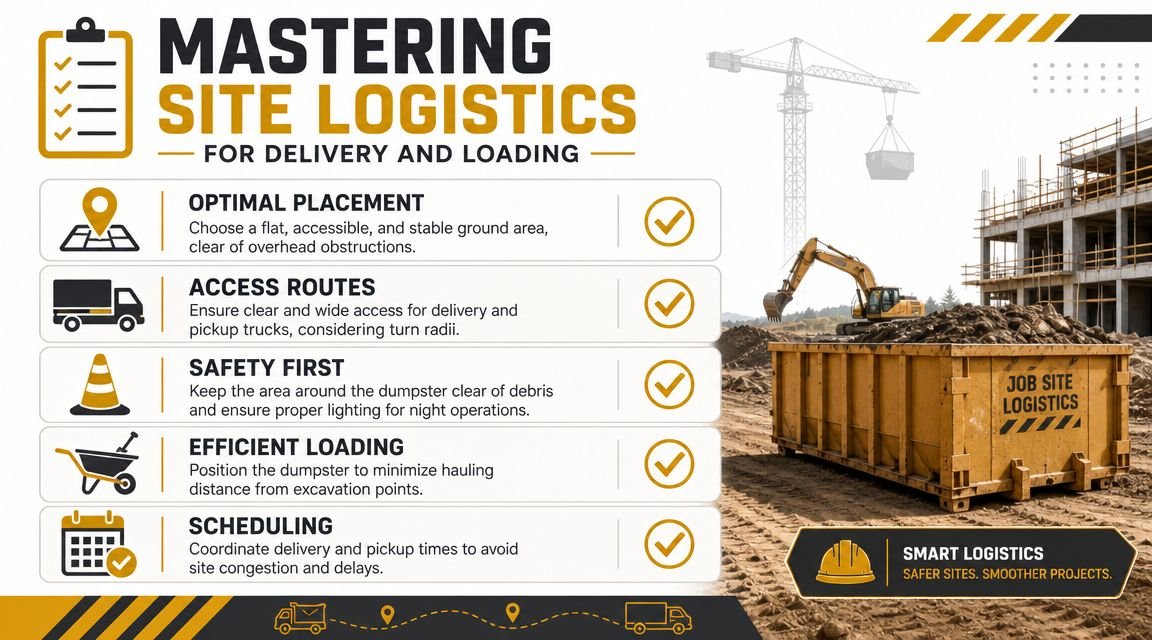
A dirt-rated roll-off is only useful if the truck can get in, set it down, and come back for it without a fight. Site logistics decide whether the rental works or becomes an expensive obstruction.
Pick the spot with the truck in mind
Crews often choose placement based on the shortest walk from the excavation. That matters, but access for the roll-off truck matters more. The driver needs straight approach room, space to raise and lower the container, and a stable area that won't shift under weight.
A poor spot usually has one of these problems:
- Soft ground: wheels sink, container settles, pickup gets risky
- Tight gate or turn: truck can't line up cleanly
- Low wires or branches: delivery becomes unsafe
- Slope: container loads unevenly and pickup gets harder
If the only available area is finished concrete or asphalt, protect it before the drop. Plywood or timber under contact points can reduce marking and surface damage. It's a simple move that prevents arguments after pickup.
Load for transport, not just for disposal
The machine operator can ruin a dirt load in minutes. A few quick buckets piled in the center may look efficient, but uneven loading makes the container harder to haul safely. Spread the material across the floor and keep the load level from front to back.
Use this field checklist while loading:
- Keep it even: don't cone the spoil in one spot
- Stay below the rail: the driver needs room to tarp the load
- Watch moisture conditions: wet dirt changes the math fast
- Keep out mixed debris: no pipe, lumber, packaging, or demo scraps
- Assign one person to monitor the fill level: someone has to say stop
The fastest-loading crew isn't always the most efficient crew. One overweight or rejected container wipes out the time they thought they saved.
Coordinate the pickup before the box is trapped
Sites change fast. Material deliveries show up, trades stack pallets, and suddenly the hauler's pickup path is blocked. Reserve a clear lane from the street to the container and keep it open until the box leaves.
Here, simple communication helps:
| Site item to confirm | Why it matters |
|---|---|
| Delivery and pickup window | Prevents overlap with concrete trucks, pumps, or steel deliveries |
| Gate access | Avoids trip charges when the driver can't enter |
| Equipment parked nearby | Keeps the roll-off truck from getting boxed in |
| Ground condition after rain | Reduces the chance of a failed pickup |
A dirt dumpster should move through the site like any other planned operation. It needs access, timing, and control. Treat it like an afterthought and it will act like one.
Decoding Costs and Exploring Alternatives
The advertised rental price is rarely the whole dirt disposal cost. With a dumpster for dirt, the invoice usually turns on one issue: whether the actual load matched the quoted assumptions.
A national rental provider says the 10-yard dumpster is the most common option for dirt-only loads, with a typical weight limit of 10 tons, and notes national average pricing can range from approximately $300 to $794 (Dumpsters.com on dirt dumpster rental pricing and limits). That range should tell you one thing immediately. Price without terms doesn't tell you much.
What you're actually paying for
Dirt rentals are usually built around one of two pricing approaches. The first is a flat rate with a stated weight allowance. The second is a base rental plus disposal charges that rise with weight. Neither model is bad, but both require clarity before you book.
Ask for the quote in plain language:
- What material is approved
- What weight is included
- What happens if the load is over
- What happens if the load is mixed
- What happens if the driver can't pick it up
Those last two items are where “cheap” quotes become expensive. A mixed load may be reclassified. An inaccessible or overloaded container may trigger a dry run or trip charge. If the crew stacks soil above the rail, pickup can fail even before weight gets discussed.
Common cost traps on dirt jobs
The avoidable charges usually come from field behavior, not from hidden math.
- Overage charges: the load weighs more than the included cap
- Contamination charges: the dirt includes debris the disposal site won't accept as clean
- Trip charges: the driver arrives but can't safely remove the box
- Delay costs: the excavation sits open while you sort out a replacement or reload
A cheap base price can still lose if the provider isn't clear about these points up front.
Pricing only matters after the material, weight cap, and pickup conditions are nailed down. Until then, you're comparing partial information.
When a roll-off isn't the best tool
Some dirt jobs are better handled another way. If the volume is large and the excavation is continuous, direct loading into dump trucks may fit the operation better than repeated roll-off swaps. If the removal needs to happen in phases, a controlled stockpile area may buy time and keep the active work zone open. If the soil quality is uncertain, specialized handling may be smarter than loading first and arguing later.
The right choice depends on the site, the timeline, and the disposal outlet. A roll-off dumpster works well when the job needs contained spoil management, predictable staging, and simple pickup. It's not the answer for every excavation.
Your Dirt Dumpster Rental Checklist
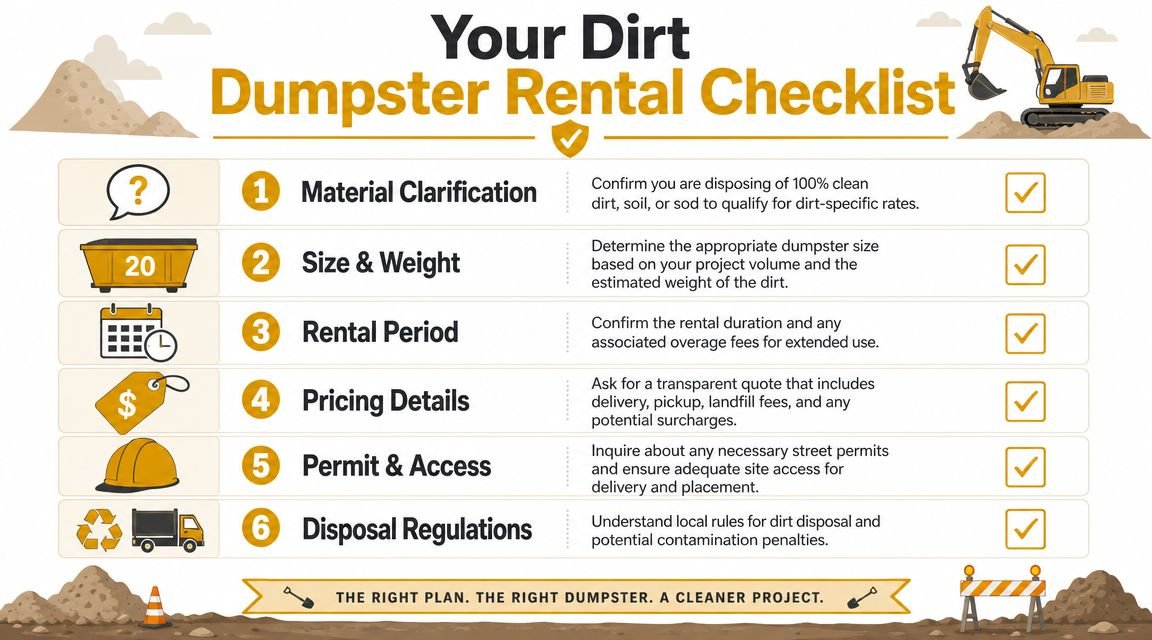
By the time you call for a dumpster for dirt, you should sound like someone who already knows where the problems happen. That changes the quote you get. It also tells the rental desk you're less likely to create a pickup dispute.
Confirm the container and the site fit
Dumpster sizes are fairly standardized in major markets. The City of Phoenix lists common sizes that include 10-yard at 13' x 8' x 4', 20-yard at 23' x 8' x 5', and 40-yard at 23' x 8' x 8', which is useful for site planning and checking that the delivered equipment matches the order (City of Phoenix dumpster dimensions and common sizes).
Before booking, verify:
- The physical footprint: make sure the drop zone fits the container dimensions
- Approach clearance: check gates, swing room, overhead lines, and tree limbs
- Ground condition: confirm the box won't sit on unstable or saturated surface
- Excavation distance: place it close enough to control labor, but not so close that it blocks work
Questions to ask the rental provider
Use this list in the call. It addresses key issues quickly.
Is this container approved for dirt-only loads?
Don't assume every roll-off can be used the same way.What's the weight limit for this dirt dumpster?
You need the exact cap tied to the quoted container.How do you define clean dirt or clean fill?
Ask what happens if there are roots, sod, rock, or stray debris in the load.What are the overage, contamination, or trip charges?
If the provider can't explain them clearly, keep asking.How high can we load it?
Confirm the top-rail rule and safe hauling requirements.What delivery conditions would prevent pickup? At this stage, access problems become evident, averting subsequent costs.
Last-minute field checks
The morning of delivery, walk the route the truck will use. Then walk the spoil area. Most dirt dumpster problems come from things everybody assumed somebody else had already checked.
A quick pre-drop review should include:
- Surface protection in place if needed
- One crew lead assigned to control what goes in
- A separate pile or bin for non-soil debris
- Pickup path kept clear of parked equipment and material
- Driver instructions written clearly if the site is busy
A clean dirt load starts with site discipline, not with paperwork. If the crew loads the wrong material, the quote you negotiated stops mattering.
Use this checklist every time and you'll stop treating dirt disposal like a simple dumpster order. It's a hauling plan, a compliance task, and a cost-control move all at once.
If your project also needs a reliable way to manage concrete washout alongside excavation and cleanup, Reborn Rentals is worth a look. They focus on concrete washout containment with straightforward booking, clear daily pricing, and equipment built for active construction sites, which makes it easier to keep the site organized and support cleaner compliance from pour day through pickup.