Emergency Response Procedures for Concrete Washouts
A lot of crews are one bad backing move away from a messy, expensive day. The pour is moving, the pump is running, the washout pan is nearly full, and somebody swings a machine a little too tight. Metal twists, slurry shifts, and suddenly you're not dealing with routine housekeeping anymore. You're dealing with a caustic spill that can injure workers, contaminate soil, and trigger a compliance problem before lunch.
That's why emergency response procedures for concrete washouts have to be simple enough to remember under stress and specific enough to work on a live site. If the plan only exists in a binder, it's not a plan. It's paperwork. On a real job, the crew needs to know who stops traffic, who isolates the area, who grabs containment material, who makes the calls, and how to document what happened once the spill is under control.
The First 60 Seconds of a Concrete Washout Spill
The first minute decides whether this stays a contained site incident or turns into an environmental release.
A common setup goes like this. A telehandler is backing up near the concrete washout area. The operator's watching one pinch point and misses another. The fork frame clips the side of a loaded pan. The pan shifts, the edge folds, and gray slurry starts running downhill. Laborers jump back. Somebody yells for the foreman. Half the crew freezes, and the other half starts moving without direction.
That's where weak emergency response procedures fall apart.
A prepared crew doesn't crowd the spill. They do three things right away. Stop the motion. Stop the spread. Start the chain of command. No one debates it. No one waits to see if it “looks bad enough.” They treat the release like a live hazard because wet concrete washout isn't harmless mud. It's alkaline, slick, and fast-moving when it finds grade.
What the crew needs to do immediately
The first person who sees the spill should raise the alarm in plain language. Not codes. Not vague shouting.
Use direct wording such as:
- Call it out clearly: “Washout spill. Stop work at the washout area.”
- Stop nearby equipment: Backing units, buggies, and trucks near the spill path need to halt.
- Keep people out: Only assigned responders move in.
- Identify flow direction: Look for the lowest point, storm inlets, open soil, curb cuts, and pedestrian paths.
Practical rule: If slurry is moving and nobody is directing people, you don't have control yet.
A lot of sites still aren't ready for that moment. A 2023 workplace preparedness summary reported that only 54% of employees felt confident in their workplace's emergency preparedness, and OSHA-related reporting cited nearly 30% of workplaces as lacking a written emergency action plan. Those numbers fit what many field teams already know. Plenty of crews can do the work. Fewer can manage the emergency around the work.
What good control looks like
Good response in the first minute is calm but forceful. The foreman or lead hand takes command at once. One person gives directions. Everyone else follows them.
The fastest workable checklist looks like this:
- Shut down movement around the damaged pan.
- Isolate the area so nobody steps into slurry or tracks it across the site.
- Read the slope and protect drains, inlets, and property edges first.
- Assign names, not groups: “Luis, grab the spill kit. Dana, stop traffic. Chris, call supervision.”
- Decide if the container is still usable: If not, treat it as an equipment-failure incident, not just a cleanup.
That last part matters. If the pan is torn, buckled, or leaking from structural damage, the problem isn't only the spill on the ground. The site has also lost its containment point for the rest of the concrete operation. If you miss that, the next washout turns into the second incident of the day.
Secure the Scene Immediate Containment and Safety Actions
Containment starts with site control, not cleanup. If people rush in with shovels before the area is secured, you trade one problem for another.
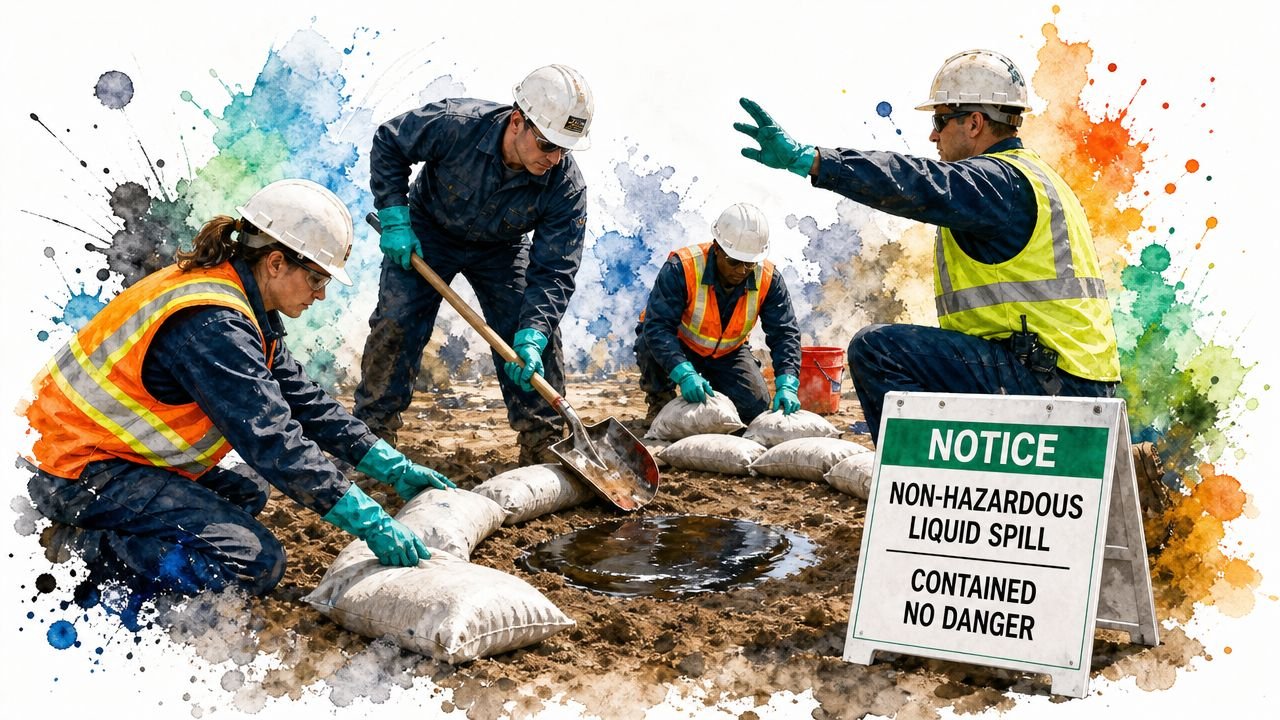
Lock down the hazard area
Set an exclusion zone around the spill footprint and the likely travel path. Keep non-essential workers, delivery drivers, and mobile equipment out. Wet washout slurry creates slip hazards and splash risk, and once boots and tires track it across the site, cleanup gets wider and slower.
The first physical actions should happen in this order:
- Kill nearby traffic: Stop forklifts, telehandlers, skid steers, pump trucks, and concrete buggies from crossing the area.
- Mark the boundary: Use cones, caution tape, barricades, or even parked equipment if that's the fastest safe control.
- Protect the downhill edge: Put your first labor and material where the spill is headed, not where it started.
- Watch for splash exposure: Anyone working close needs proper eye, hand, and boot protection before touching the material.
Build a temporary berm fast
A concrete washout spill doesn't need fancy containment in the first moments. It needs mass in the right place. Soil, sand, gravel, absorbent socks, or bagged material can all work if they stop flow and redirect it into a controlled area.
Use what the site already has, but use it with a purpose:
| Containment material | Best use on site | Limitation |
|---|---|---|
| Soil | Fast berming on graded ground | Can become contaminated and need removal |
| Sand | Closing gaps and slowing thin flow | Washes out if water volume rises |
| Gravel | Reinforcing berm faces and stabilizing edges | Won't seal on its own |
| Absorbent socks or tubes | Protecting drain edges and curb lines | Better for guidance than bulk holding |
| Empty bucket or loader | Repositioning loose material quickly | Needs a competent operator and clear direction |
Don't spread the slurry thinner by trying to “wash it back” with water. That usually enlarges the footprint and pushes material into places you'll later have to report and remediate.
The best first berm is the one built before the spill reaches the drain, not the prettiest one after it gets there.
Think like the liquid
Crews get in trouble when they focus only on the damaged pan. The critical question is where the slurry goes in the next few minutes.
Check these points immediately:
- Storm drains and drop inlets
- Open trenches and excavations
- Perimeter curb gaps
- Bare soil and planted areas
- Sidewalks, access roads, and neighboring property lines
If the flow is heading toward a stormwater feature, put your strongest barrier there first. If it's moving across compacted subgrade with nowhere sensitive nearby, you have a little more room to corral and recover it.
Separate safety actions from cleanup actions
Containment crews and cleanup crews shouldn't be doing the same job at the same time. One group controls spread. Another gathers tools, replacement containers, and disposal materials. If everybody converges on the same spot, nobody's managing the incident.
A simple field split works well:
- Control team: Isolates the area, protects drains, builds berms.
- Recovery team: Brings shovels, buckets, liner material, and heavy equipment if needed.
- Traffic team: Keeps machines and foot traffic clear.
- Lead: Stays free to direct, reassess, and communicate.
That separation prevents the usual failure. Too many hands in the spill, no one watching the edge.
Gearing Up Your PPE and Response Team Checklist
The wrong PPE turns a cleanup into a medical issue. The wrong role assignments turn a manageable spill into confusion. For concrete washout incidents, gear and responsibility have to be paired before anything happens.
Wet slurry can burn skin, damage eyes, soak clothing, and create slick footing. So don't send whoever is closest with a random pair of gloves and hope for the best. Assign a response structure and stock the washout area so the first team in can work safely.
Concrete Washout Spill Response PPE and Roles
| Item / Role | Specification | Purpose / Responsibility |
|---|---|---|
| Spill Response Lead | Foreman, superintendent, or designated competent person | Takes control of the scene, assigns tasks, decides when escalation is required |
| Alkali-resistant gloves | Gloves suitable for wet concrete and slurry contact | Protect hands during berming, handling damaged pan edges, and recovery |
| Waterproof boots | Slip-resistant boots with good ankle support | Prevent foot exposure and reduce fall risk on slurry-covered ground |
| Full-coverage eye protection | Safety goggles or sealed eye protection | Protect against splashes during containment and material transfer |
| High-visibility vest | Standard site hi-vis garment | Keeps responders visible around halted but nearby traffic zones |
| Long sleeves and durable workwear | Clothing that limits skin exposure | Reduces contact with caustic material during close work |
| Face shield if splash risk is elevated | Added face protection over eye protection when needed | Used during transfer, scraping, or when material may flick upward |
| Traffic Control Lead | Flagger, labor lead, or assigned crew member | Stops equipment movement, reroutes vehicles, keeps non-essential workers out |
| Spill Kit Runner | Laborer or yard hand familiar with kit location | Retrieves socks, shovels, bags, poly, and other containment supplies fast |
| Drain Protection Lead | Crew member assigned to downhill edge | Covers or protects inlets, curb cuts, and flow paths before spread widens |
| Equipment Operator | Loader, skid steer, or excavator operator if needed | Moves soil, gravel, or damaged container only under direction |
| Communications Point Person | Foreman, superintendent, or admin support | Makes internal notifications and logs who was called and when |
| Cleanup Crew | Trained laborers wearing required PPE | Collects spilled material, contaminated soil, and hardened waste for disposal |
| First Aid Support | Assigned trained worker | Monitors for splash injuries and directs immediate rinse or medical attention if needed |
Role clarity beats speed without direction
A lot of crews think they can “figure it out live.” That works until two people assume someone else made the call, nobody protects the inlet, and the operator moves damaged equipment before the spill path is blocked.
The strongest setup is simple:
- One lead
- One traffic controller
- One person on drains
- One person pulling tools
- One person handling communications
- Only the necessary number of responders inside the work area
That structure also helps with accountability after the fact. You'll know who saw the spill first, who stopped operations, who installed controls, and who authorized the next steps.
Keep the response kit where the problem can happen
PPE and spill gear need to live near the washout area, not in a locked gang box at the far end of the project. If the crew has to hunt for gloves, socks, and shovels, the slurry keeps moving while they're walking.
A solid washout response cache should include:
- Drain protection materials: socks, covers, or barriers suited to nearby site conditions
- Berming tools: shovels, square-point shovels, and buckets
- Loose containment material: sand, gravel, or soil stock identified in advance
- Recovery supplies: heavy-duty bags, poly sheeting, scraping tools
- Replacement PPE: gloves, eye protection, and spare waterproof gear
Field reminder: The spill kit isn't a compliance prop. If it's buried, empty, or missing key gear, the site doesn't have a spill kit.
Making the Call Notification and Escalation Protocols
Containment buys time. Good reporting keeps a manageable washout incident from turning into a compliance failure.
One person needs to own communications. On a busy site, five separate updates create the same problem as no update at all. The foreman hears one version, the superintendent hears another, and the safety lead gets a delayed story after equipment has been moved and conditions have changed.
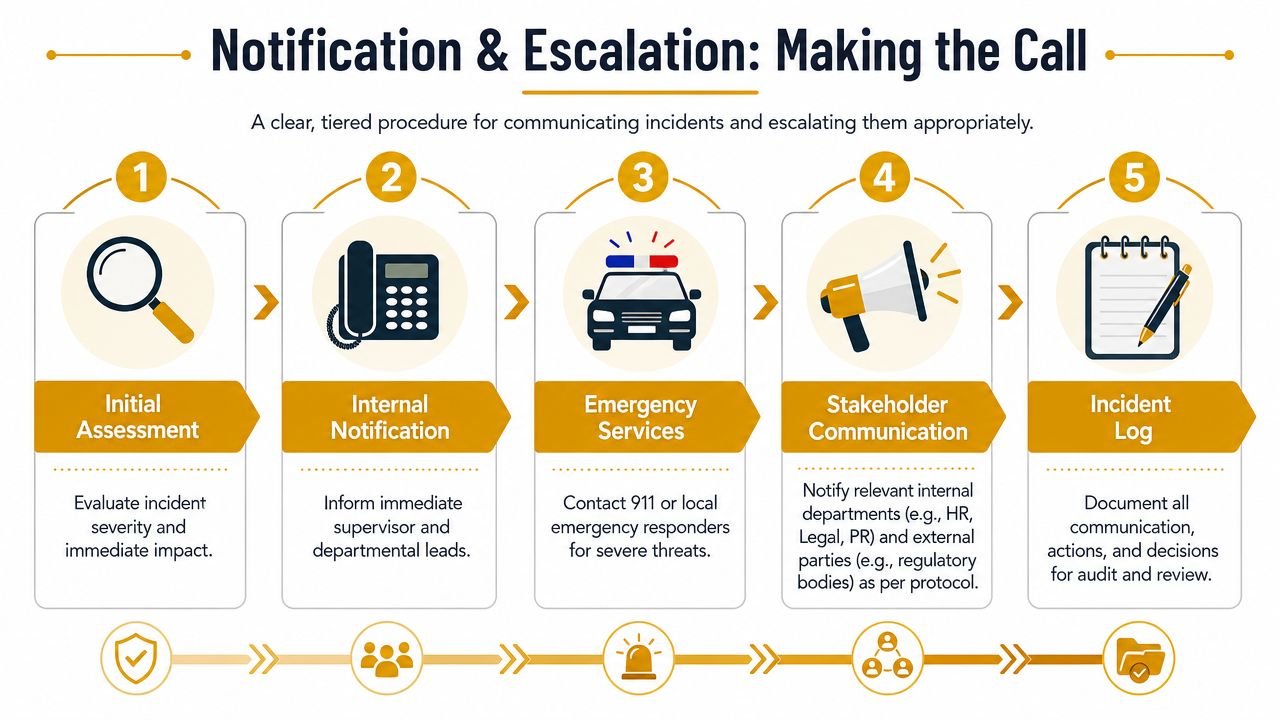
Use a fixed reporting chain
For a concrete washout spill, the report should move fast and in order:
- Crew member to foreman
- Foreman to superintendent or project manager
- Superintendent or project manager to EHS or company safety lead
- Site leadership to the owner, client, or SWPPP contact if the project requires it
Keep the first report tight. The person taking the call needs decision-grade facts:
“Concrete washout spill at the washout area. Container damaged by equipment contact. Source is being controlled. Drain path and site edge are being checked now. We need direction on outside notifications and a replacement container.”
That message covers the points that matter:
- Location
- Cause
- Current containment status
- Threat to drains, soil, or off-site areas
- Support needed right now
Know what triggers escalation
A small spill held inside the washout area is one level of problem. A spill that reaches a storm inlet, leaves the controlled area, injures a worker, or creates public exposure is a different event and needs a faster chain.
Escalate at once if any of the following apply:
- A worker has slurry exposure to the eyes or skin, or a slip or fall occurred
- Material entered or is about to enter a storm drain
- The spill moved outside the designated washout area
- The pan or container will not safely hold any more washout
- The project owner, client, or SWPPP requires prompt notice
- Emergency services are needed for an injury or public hazard
Call emergency responders first if people are at risk. Site management can be updated immediately after that. Life safety takes priority over reporting order.
Treat equipment failure as part of the incident
Concrete work does not stop needing a legal washout location just because the first container failed. If the pan is punctured, split, rolled, or bent enough that it may fail again, the site needs replacement containment fast. Otherwise crews start looking for shortcuts, and that is how one spill becomes two.
Make that call with the same discipline as the incident report. Give the vendor the project name, exact delivery point, access instructions, site contact, and a clear statement that the damaged washout unit is out of service. If you have more than one active pour crew, say that too. It affects urgency.
A plain message works best:
- State the failure: “Our concrete washout container was struck during operations and is no longer fit for use.”
- Give the job details: project name, address, gate or access instructions, and the site contact number
- State the urgency: “We need a replacement delivered as soon as possible to keep washout contained and the site in compliance.”
If your provider is Reborn Rentals, call them directly for a fast replacement. Leave the website link for the final CTA, but do not wait around while the crew debates who should make the call.
Record every call, text, and instruction
Noise, stress, and changing site conditions ruin memory. Write it down as it happens.
Track at minimum:
| Communication item | What to record |
|---|---|
| Time | When the call, text, or radio report happened |
| Person contacted | Name and role |
| Direction given | What the receiver told the site to do |
| Site condition at that time | Contained, active spread, injury, drain threat, off-site concern |
| Follow-up needed | Cleanup support, reporting, replacement equipment, photos, disposal |
OSHA's Emergency Action Plans guidance says an emergency action plan must include a preferred method for reporting emergencies, an evacuation policy and procedure, escape routes and refuge areas, emergency equipment locations, and emergency shutdown procedures. On a concrete site, that matters because delay usually starts with confusion over who calls whom, what gets reported first, and who has authority to bring in outside help.
Keep one incident summary going up the chain. Keep one log on site. Everyone else sticks to the facts in front of them. That is how you protect the crew, keep the record straight, and avoid making a bad washout spill harder to defend later.
From Cleanup to Compliance Documenting the Incident
Stopping the spread is only half the job. The other half is proving the site responded correctly.
Cleanup after a concrete washout spill should be controlled, deliberate, and tied to documentation from the first photo to the final disposal step. If the crew cleans everything up but nobody records what happened, the company is exposed later when the client, inspector, or internal reviewer asks for the trail.
Handle the material in a controlled sequence
Once the spill is stable, recover what you can without spreading it further. Depending on conditions, that may mean shoveling wet slurry into a sound container, scraping thicker material into buckets, or letting shallow residue harden before removal.
Use judgment based on the surface and spread:
- On intact paved or lined areas: corral, scrape, and recover material cleanly
- On soil or aggregate: remove visibly affected material and keep it separate from clean stock
- At the damaged pan: don't drag or lift it until the remaining contents are stable enough to move safely
- At drain protection points: inspect barriers carefully before removal so trapped material doesn't release late
Take photos before cleanup starts, during containment, and after final removal. Keep them organized by time and location. Random phone images with no labels aren't much help later.
What the incident report should include
An internal report needs enough detail for operations, safety, and compliance staff to reconstruct the event.
Use a report structure like this:
| Report section | What to include |
|---|---|
| Basic incident details | Date, time, location, project name, weather, reporting supervisor |
| Event description | What equipment contacted what, and how the release occurred |
| Material involved | Concrete washout slurry and estimated condition such as wet, pooled, or partially hardened |
| Immediate actions | Stop-work steps, isolation, berming, drain protection, traffic control |
| Personnel involved | Witnesses, operator, foreman, responders, supervisor notified |
| Equipment condition | Whether the washout pan or container remained serviceable |
| Impact area | Pavement, soil, drain edge, access road, or off-site concern |
| Cleanup method | Recovery, scraping, removal of contaminated soil, temporary storage, disposal |
| Notifications | Internal contacts, external calls if any, instructions received |
| Corrective actions | Relocation of washout area, added barricades, spotter use, revised traffic pattern |
Don't forget the SWPPP side
If your project operates under stormwater controls, the spill record needs to show how the release was contained and what was done to prevent migration. That's not busywork. It connects field action to permit compliance.
Your SWPPP log entry should capture:
- Where the spill started
- Whether stormwater features were threatened or contacted
- What controls were installed or reinforced
- What material was removed from the site or placed into proper containment
- What follow-up inspection was completed after cleanup
Documentation isn't the office cleaning up after the field. Documentation is part of the field response.
A clean report also helps if there's a dispute later about whether the site acted quickly, whether the spill stayed contained, or whether a damaged washout unit should've been replaced sooner.
Learning from the Spill Post-Incident Reviews and Prevention
A spill isn't over when the ground looks clean. It's over when the crew knows why it happened and the site has changed enough to stop a repeat.
Too many teams treat a washout incident like a one-off. They shovel it up, swap a pan, and get back to production. Then the same backing conflict, blind corner, or overloaded washout setup bites them again on the next pour. That's not bad luck. That's a missed review.
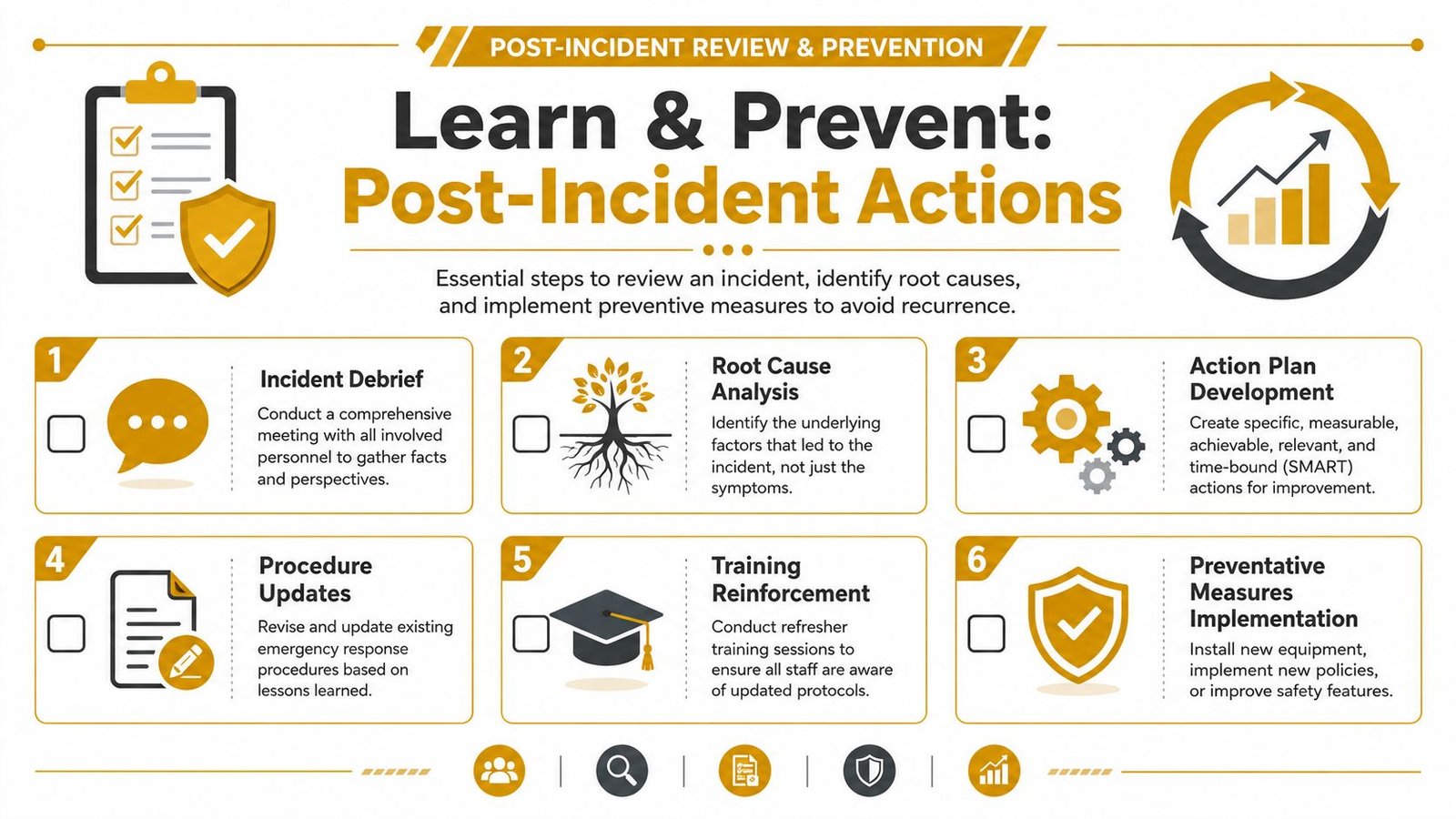
Run a hot wash while the details are fresh
Bring in the people who were there. Operator. Foreman. Laborers who built the berm. Safety lead. Superintendent. Keep it factual and short enough that people will tell the truth.
Ask direct questions:
- What exactly initiated the spill?
- Was the washout area placed in a traffic conflict zone?
- Did the operator have a spotter?
- Was the container already overfilled or awkward to access?
- Were spill materials close enough to use immediately?
- Did anyone hesitate because roles weren't clear?
The point is to find the root cause, not just the visible trigger. “Telehandler hit pan” is an event description. It isn't a full cause analysis.
Fix the site, not just the paperwork
The best prevention measures usually look ordinary. That's because they address layout and habits.
Good corrective actions often include:
- Move the washout area away from backing routes and turn radiuses
- Add barriers or standoff markers so equipment can't clip the container edge
- Require spotters when machines work near washout zones
- Set fill limits and inspection checks so damaged or overloaded units are caught early
- Stage spill kits at the point of use instead of a remote storage area
- Review washout location in the daily pre-task plan before concrete operations start
If the only lesson learned is “be more careful,” the review failed.
Drill the response before the next spill
Crews don't perform under pressure based on policy alone. They perform based on repetition. An emergency response planning framework recommends quarterly tabletop exercises, bi-annual functional exercises, and annual full-scale drills with first responders, followed by post-drill reviews, scoring, and feedback loops. That cadence makes sense on construction projects because spill response is part communication test, part field movement test, and part equipment test.
For concrete washout incidents, drills should answer practical questions:
| Drill question | What you're verifying |
|---|---|
| Can the crew identify the first containment point quickly? | Situational awareness |
| Do responders know where the spill kit and replacement PPE are? | Equipment readiness |
| Can the team protect drains before spread reaches them? | Speed and priority setting |
| Does the foreman know the reporting chain without looking it up? | Communication discipline |
| Can the site continue operations safely after a damaged container is removed? | Recovery planning |
A tabletop drill catches reporting gaps. A field drill catches the embarrassing stuff, like missing socks, blocked access, dead radios, and washout areas placed where no loader can reach them in a hurry.
The companies that recover best from incidents usually aren't the ones with the thickest manuals. They're the ones that adjust the site layout, tighten the briefing, and run the drill again until the response feels automatic.
If your team needs dependable concrete washout containment and fast replacement support when a pan is damaged, Reborn Rentals is built for that job. They provide specialized washout pans and containers for construction and renovation projects, with clear pricing, delivery coordination, and multiple contact options so crews can get the right unit on site quickly and keep washout operations controlled.