How Much Do Roll Off Dumpsters Cost? A 2026 Price Guide
Roll off dumpster rentals in the U.S. typically run $426 to $857 per week, with a national average of $642 per week. That's the right starting number, but the final bill moves a lot based on dumpster size, location, debris type, and how long you keep it.
If you're pricing a job right now, this is usually where the confusion starts. You call for a quote, hear a number that seems workable, and then later find out the invoice includes weight issues, extra days, disposal adjustments, or delivery conditions nobody explained clearly up front. That's why newer contractors often underestimate waste costs.
The practical question isn't just how much do roll off dumpsters cost. It's what will this dumpster cost on my jobsite, under my site conditions, with my material, in my market. That's the number that matters when you're building a bid or trying to protect margin on a tight schedule.
Budgeting Your Project The Right Way
A contractor prices a bathroom remodel, carries one flat dumpster allowance, and the job still goes over budget. The container rate looked reasonable. The invoice did not. Extra tonnage, a few added days, and a tricky drop location can turn a decent quote into a margin leak fast.
The right way to budget a roll off is to build the number the same way the hauler builds the bill. Start with the quoted rental rate, then test the parts that usually change: size, material, rental period, and jobsite conditions. Those are the cost drivers that move the final total, not just the advertised price.
A rough national benchmark can help with early planning, as noted earlier. For estimating a real job, the better question is simpler: what is included in this quote, and what gets billed later?
Practical rule: Do not carry a dumpster as one flat line item unless the quote spells out tonnage, rental days, delivery terms, and overage charges.
Build your estimate the way the invoice will hit
A usable dumpster budget should cover four checks before you schedule delivery:
- Material in the container: Mixed junk, green waste, roofing tear-off, concrete, and demolition debris are priced differently because disposal costs differ.
- Time on site: A standard rental window works only if the project stays on sequence. Delays from inspections, weather, or trade coordination usually show up as daily extension charges.
- Drop conditions: A clean driveway delivery is one price. Street placement, alley access, soft ground, gated sites, and dense urban routes can add labor, permits, or trip complications.
- Weight exposure: Newer contractors often miss the actual number here. Heavy debris can fit inside the box long before it fits inside the included tonnage.
That last point matters more than many first quotes make clear. A 20-yard container full of light renovation debris and the same 20-yard container full of shingles or plaster do not cost the same to dump, even if the rental rate looks similar up front.
The goal is not to chase the cheapest quote. The goal is to get a number you can trust in your bid. If the provider cannot explain what triggers extra charges in plain language, treat the quote as incomplete.
Roll Off Dumpster Costs by Size and Weight
A bad size choice usually shows up twice on the invoice. First in the base rental, then again in weight overages or extra hauls.
That is why container pricing has to be read on two axes at once. Cubic yards tell you how much space you are renting. Weight limits tell you how much material that price covers. A 20-yard box can be cheap for light renovation debris and expensive for roofing, plaster, or masonry once it hits the scale.
Average weekly pricing by size
National averages move up as container size increases, and construction loads usually price higher than general waste because disposal costs are higher for heavier, dirtier material. Use ranges like these as a starting point only. The final number still depends on included tonnage, rental period, and what the landfill will accept.
| Dumpster Size (Yards) | Average Weekly Cost (General Waste) | Average Weekly Cost (Construction Debris) | Included Tonnage | Best For |
|---|---|---|---|---|
| 10 | $503 | $598 | Varies by provider | Small cleanouts, small remodel debris, yard waste |
| 15 | $588 | $628 | Varies by provider | Moderate cleanouts, small renovation work |
| 20 | $620 | $844 | Varies by provider | Flooring, roofing, medium remodels, light demolition |
| 30 | $732 | $916 | Varies by provider | Large renovation projects, major cleanouts |
| 40 | $863 | $1,076 | Varies by provider | Commercial work, large demo, bulky high-volume waste |
Mixed-use averages also rise steadily by size, from the low $500s for a 10-yard container to the low $900s for a 40-yard container, as noted earlier. The pattern matters more than any single national average. Bigger boxes cost more up front, but the cheapest size on paper is not always the lowest total-cost option.
Match the bin to the job, not just the debris pile
A 10-yard dumpster works well for tight sites and controlled waste streams. Use it for small interior tear-outs, isolated bathroom or kitchen work, and cleanouts where the crew is not generating debris across multiple trades at once.
A 20-yard dumpster is the default starting point on a lot of residential jobs because it balances footprint and capacity. It fits many reroofing jobs, flooring replacement, and moderate remodels without taking over the driveway or forcing constant swap-outs.
For 30-yard and 40-yard containers, volume is usually the reason to upgrade. Large additions, commercial build-outs, whole-home renovations, and bulky light debris can justify the extra space. Dense material changes that decision fast. If the waste stream includes shingles, tile, concrete, mortar, wet dirt, or heavy demo, a smaller box with more frequent pulls can be cheaper than one oversized container with overweight charges.
For heavy debris, choose based on tonnage exposure first and volume second.
Weight matters more than many new contractors expect
Weight is the part newer estimators miss because you cannot see it the same way you see a full container. Two dumpsters can look equally loaded and bill very differently at the dump.
Construction and demolition debris often costs more than household junk or yard waste in the same size range. The reason is simple. Heavier material raises hauling and disposal costs, and some loads require stricter handling or cleaner separation. That difference is one of the main reasons the quote you approve can drift away from the invoice you receive.
Crews also need clear loading rules before the box arrives. Heavy debris should stay below the top rail, and some materials should not be mixed at all. If the field team treats every roll-off like a general junk box, the rental rate stops being useful.
What works on active jobs
A few habits keep this category under control:
- Choose by material first if the debris is dense.
- Use larger containers for bulky, lighter waste such as drywall, framing offcuts, and packaging.
- Separate loads where possible instead of mixing everything into one container.
- Ask for the included tonnage in writing, not just the container size.
- Confirm what the hauler considers a full load before crews start tossing debris.
The practical mistake is ordering by sight alone. A pile may look like it needs a 30-yard dumpster, but if the material is dense, the lower-cost plan may be two smaller pulls with cleaner loading and less weight risk.
The Hidden Fees That Inflate Your Final Bill
Many dumpster prices are presented as a flat rate. This sounds straightforward, but it often conceals the variables that determine what you pay. Treat an un-itemized dumpster quote the same way you would treat an un-itemized phone bill. If you cannot see the components, you cannot tell what is fixed and what could change.
Flat rate rarely means simple
One transparent example shows why. In a Heartland Recycling Services dumpster price breakdown, a $500 charge was made up of $175 for delivery, $175 for pickup, $115 for disposal, and only $35 for a 3-day rental.
That's the kind of breakdown contractors need more often. Without it, you can't tell whether you're comparing rental cost, hauling cost, or dump cost when you review competing quotes.
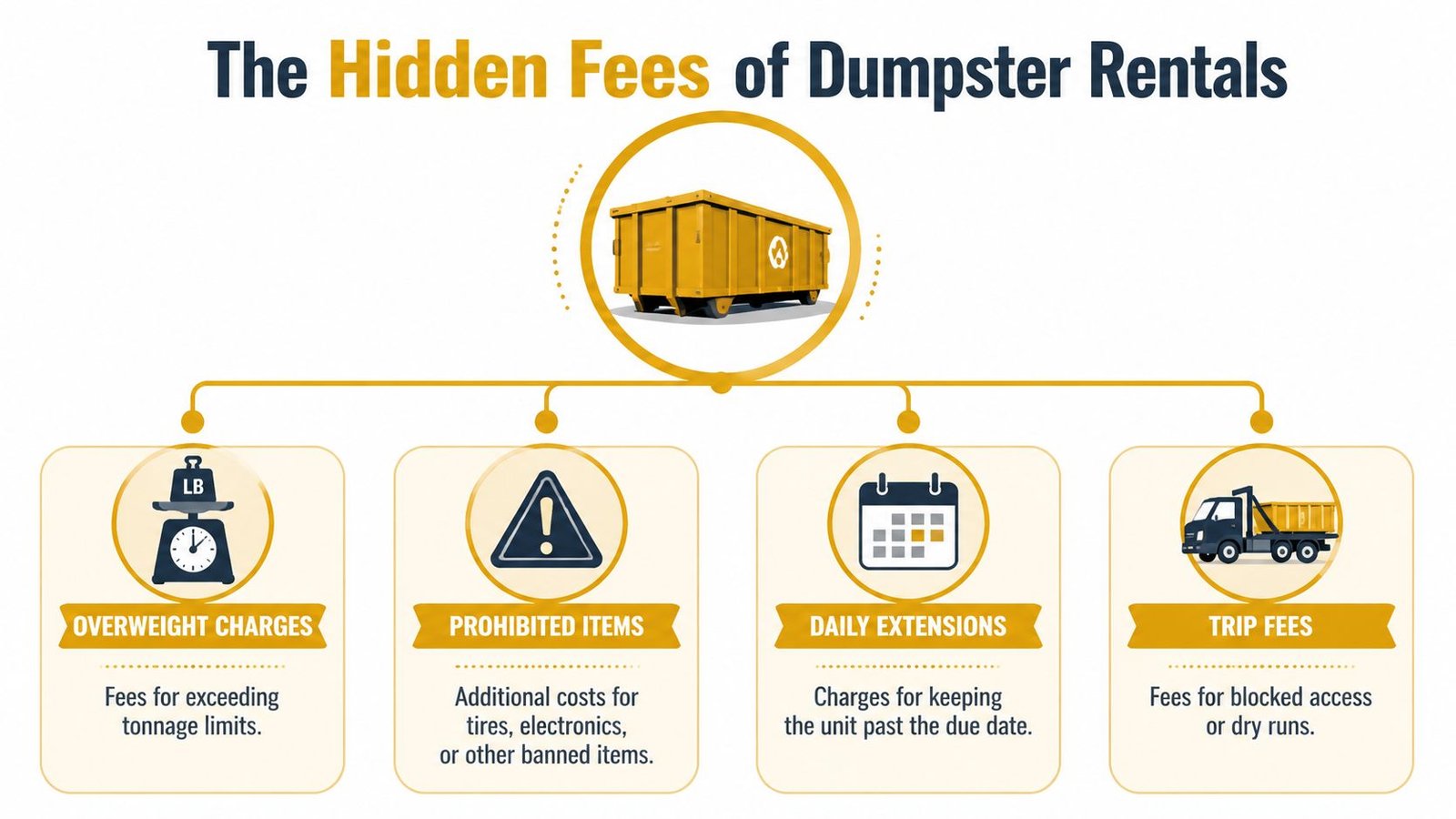
Four charges that catch people off guard
The most common cost inflators aren't mysterious. They're just poorly explained before the drop-off.
- Overweight charges: If your load exceeds the included allowance, the overage can change the economics of the whole rental. This happens often with roofing tear-off, masonry, dirt, and demolition debris.
- Daily extensions: A short rental window looks affordable until the project slips. Weather, inspections, access delays, and change orders all make this common.
- Prohibited items: Tires, electronics, hazardous material, and certain specialty waste streams can trigger added charges or a rejected load.
- Trip fees: If the driver can't place the dumpster or return pickup fails because access is blocked, you can get billed for the attempt.
Why invoices grow even when crews did nothing “wrong”
This is the part newer contractors need to hear. Most dumpster overages don't happen because somebody was careless. They happen because the field crew and the quote weren't aligned.
A superintendent may load the bin exactly as the job requires. Then the hauler bills extra because the material mix was heavier than expected, the pickup got pushed, or access changed after other trades boxed in the truck path.
Ask for the provider's fee triggers in writing. If a charge applies because of weight, blocked access, restricted items, or extra time, you want those rules before the container arrives.
How to protect your budget before booking
Use this checklist when comparing quotes:
- Ask what the quoted price includes. Specifically ask whether it includes delivery, pickup, disposal, and a defined rental period.
- Ask what changes the price after delivery. Weight, extra days, failed pickup attempts, contaminated loads, and relocation requests are the usual suspects.
- Ask which materials are restricted. Don't rely on assumptions from the last hauler you used.
- Ask whether the site conditions matter. Tight alleys, soft ground, parked cars, gates, and slope can all affect service.
The more itemized the quote, the more predictable the job cost. If the provider resists giving details, that's usually the detail you need most.
How Location and Debris Type Affect Your Rental Cost
Two jobs can use the same dumpster size and still price very differently. That usually comes down to where the project is and what's going into the box. Contractors who miss those two variables tend to think the hauler changed the price arbitrarily. In most cases, the market and the material changed the price.

Geography changes the hauling math
Regional pricing spreads are real. Swivl market-by-market dumpster pricing shows Chicago at $350 to $800, while New York can run as high as $1,415, with local dump fees of $100 to $115 per ton contributing to the higher cost.
That difference isn't just about “big city pricing.” Haulers price around local disposal costs, route density, traffic, labor realities, and demand. Urban work can mean higher dump fees and more difficult truck logistics. Remote work can mean longer delivery routes and less scheduling flexibility.
A provider serving a dense market may have higher landfill costs. A provider serving a spread-out rural area may burn more time and fuel on transport. Either way, the final number reflects the operating conditions.
Debris type is not a small detail
Material classification matters as much as geography. The same Swivl data notes that construction materials typically increase pricing by 20% to 30% over household waste because of weight.
That means the question isn't just, “Do I need a 20-yard container?” It's also, “Is this 20-yard load old drywall and trim, or is it dense tear-out and demolition?”
Household junk tends to be easier to price because it's lighter and more predictable. Construction and demolition debris brings more disposal cost, more risk of overweight conditions, and sometimes more restrictions at the receiving facility.
What this means on actual jobsites
If you're bidding across multiple municipalities, don't carry one standard dumpster allowance for every location. It's too blunt. Waste pricing should move with the market you're working in.
Use a different approach for each of these:
- Urban infill jobs: Expect tighter access, potentially higher dump costs, and less tolerance for schedule slippage.
- Suburban renovation work: Access is often easier, but HOA rules, driveway placement, or neighborhood restrictions can affect service.
- Rural projects: Delivery can be simpler on-site but more expensive operationally because of travel distance.
The best dumpster quote is local, debris-specific, and tied to your actual service window. Generic national pricing is useful for planning, but it won't replace a job-specific quote.
Real-World Cost Scenarios and Key Questions to Ask
The best way to understand dumpster cost is to apply it to jobs that look like your own. Not as a perfect prediction, but as a budgeting method. The point is to stop treating waste as a vague allowance and start treating it like a scoped service.

Scenario one: Small interior remodel
A small interior remodel usually starts with a 10-yard or 15-yard conversation. If the waste stream is mostly light renovation debris and the crew keeps it clean, a smaller container often works better than oversizing.
The practical move here is to confirm whether the quote assumes general waste or construction debris. If the hauler priced light mixed material and your crew loads dense demolition debris, the “cheap” container can turn expensive fast.
Scenario two: Mid-size renovation with heavier debris
Moderate renovations often land in 20-yard territory because the volume feels safe. That logic can be sound, but debris type starts to dominate the cost at this stage. Flooring tear-out, tile, plaster, roofing, and demo waste behave very differently from packaging and framing offcuts.
For this kind of job, I'd rather see the provider spell out the included weight terms than offer the lowest sticker price. The cheaper quote only wins if the load matches the assumptions behind it.
Scenario three: Large fit-out or major cleanout
A large fit-out, estate cleanout, or commercial turnover can justify a 30-yard or 40-yard dumpster because the priority is site flow. Crews need room to keep moving, and overflowing smaller bins slow the whole operation.
The catch is that large containers invite mixed waste. Once everyone starts tossing everything into one box, the risk of prohibited items, overloaded material, or disposal complications goes up. Operationally, bigger is convenient. Financially, bigger needs tighter supervision.
Questions every contractor should ask before signing
Bring these questions into every rental call:
- What exactly is included in the quoted price? Ask them to separate container rental, hauling, and disposal.
- What material did you base this quote on? “Construction debris” and “general junk” are not interchangeable categories.
- What triggers added charges? Get the list in plain language.
- What happens if pickup is delayed or blocked? You need to know who owns that risk.
- Are there restricted items for this load type? Confirm before the crew starts loading.
- What size would you recommend for this exact scope? Good providers will usually tell you where customers commonly overbuy or underbuy.
A solid quote sounds specific. If the provider answers in generalities, the bill usually gets specific later.
Smarter Waste Management and Cost-Saving Alternatives
There's a point where smarter waste planning matters more than squeezing another small concession out of the rental rate. That's especially true if your company uses dumpsters constantly or handles specialized waste streams.
When renting stops making sense
For frequent users, the rent-versus-buy discussion is worth having. According to YourDocket's dumpster purchase and rental comparison, renting a 10-yard dumpster weekly at an average of $522 adds up to more than $27,000 annually, while purchasing one for around $3,900 can create a break-even point in under 8 weeks of continuous use.
That doesn't mean every contractor should buy dumpsters. Ownership creates its own responsibilities, including storage, transport, maintenance, and operational coordination. But if you're running continuous work and renting the same size over and over, it's worth doing the math instead of defaulting to habit.
The cheapest dumpster is sometimes the wrong tool
This matters even more with concrete-related work. A standard roll-off is built for bulk debris, but not every waste stream belongs in it. Wet slurry, washout material, and concrete residue create a different compliance problem than dry construction debris.
On sites with concrete placement, pumping, or finishing, crews often need containment that matches the waste stream, not just a bigger box. Trying to use one general dumpster for everything can create disposal issues, cleanup headaches, and preventable compliance risk.
In practice, better waste management means separating materials early, using the correct containment for the task, and keeping the site organized enough that crews don't improvise with whatever container is nearest. That's what keeps costs predictable.
If your project includes concrete washout, don't force a standard debris solution to do a containment job it wasn't designed for. Reborn Rentals provides concrete washout pans and containment equipment with clear upfront pricing, practical delivery options, and a straightforward booking process that helps crews keep sites clean and compliant. You can review available equipment and schedule service through Reborn Rentals.