Recycling Glass Albuquerque: 2026 Complete Guide
If you're standing in your kitchen with a box of empty pasta sauce jars, or cleaning up a renovation and staring at a stack of old window panes, the same question comes up fast: where does this glass go in Albuquerque?
That's where people usually get tripped up. Recycling glass in Albuquerque isn't one system. It's really two different decisions. Homeowners deal with food and beverage containers that belong in the city's drop-off program. Contractors and property managers deal with architectural glass that usually needs a separate disposal plan. If you treat those as the same thing, you create contamination, wasted trips, and sometimes a mess nobody at the drop-off site can accept.
Why You Can't Recycle Glass Curbside in Albuquerque
A common complaint is simple. If glass is recyclable, why can't it go in the blue bin with everything else?
Albuquerque's answer is operational, not philosophical. The city doesn't collect glass curbside because broken glass can contaminate the rest of the recycling stream. When glass shatters in collection trucks and sorting lines, it mixes with paper, cardboard, and other recyclables, which lowers material quality and makes recovery harder. That's why the city sends residents to drop-off sites instead of picking glass up at the curb.
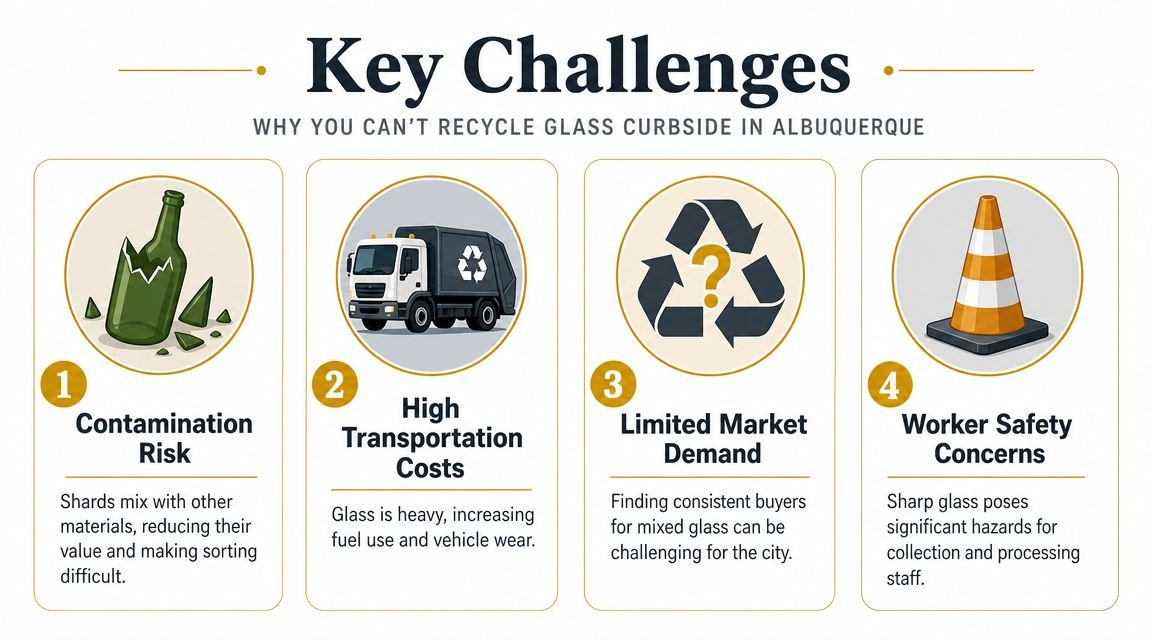
The local system is bigger than some residents realize. Albuquerque has 16 recycling drop-off sites, and all but one accept glass, according to local KRQE coverage on the city's glass recycling program. That same report says the city recycled 7 million pounds of glass in 2018. So glass recycling exists here. It just isn't built into curbside pickup.
What the city is trying to prevent
The easiest way to understand the rule is to think about what happens after pickup.
- Broken shards spread fast: Once glass breaks inside a mixed load, workers and machines have a harder time separating clean paper and cardboard.
- Material quality drops: Cleaner streams are easier to market and recycle into new products.
- Collection gets more complicated: Running separate curbside routes for glass adds its own logistical burden.
- Safety becomes part of the problem: Sharp fragments raise handling risks for crews and sorting staff.
Practical rule: Albuquerque's drop-off model is built around keeping glass separate before it becomes a contamination problem.
Why that trade-off makes sense locally
You might still prefer curbside. It's a common preference. But the city made a quality-first decision.
Nationally, glass recycling already struggles when collection systems mix materials too aggressively. In practice, source separation gives glass a better chance of becoming usable cullet instead of damaged mixed residue. Albuquerque's system asks residents to do more work up front so the recovered material has a better chance of staying useful.
That doesn't make the system convenient. It does explain the logic. Once you understand that, the next step is making sure you bring the right glass, prepared the right way.
Identifying and Preparing Your Glass for Recycling
The city's glass program works best when residents keep it simple. Container glass is the safe category to focus on. If the item held food or drink and looks like a standard bottle or jar, it's usually the type you should think about for drop-off. If it came from a construction project, cookware set, or decorative household item, slow down before you toss it in.
What usually belongs in the glass bin
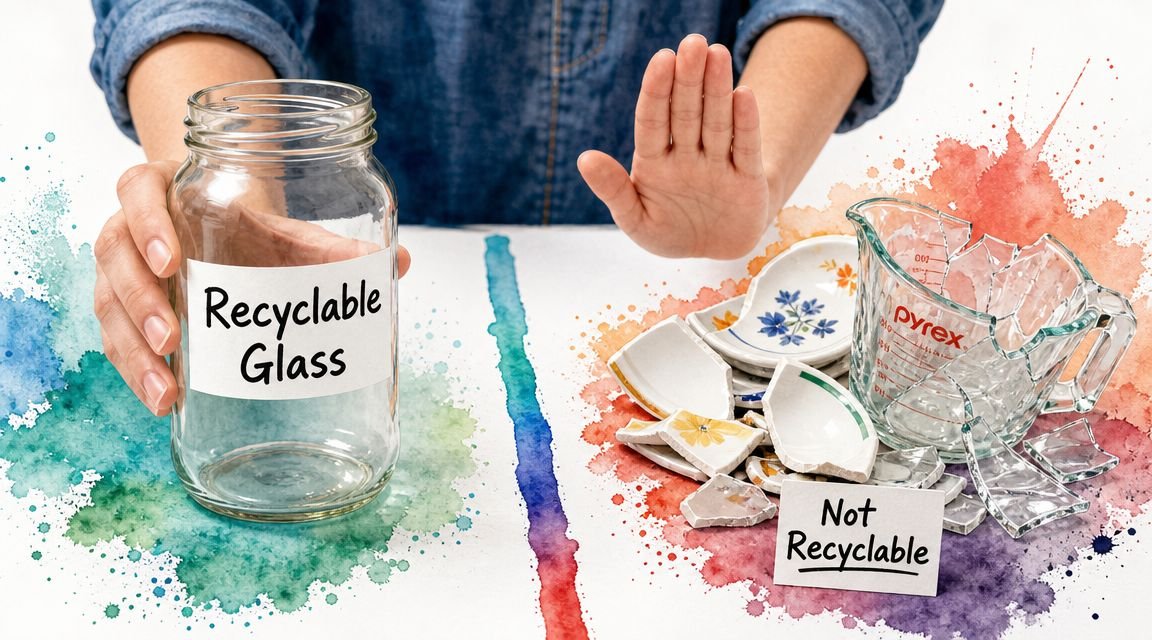
For most residents, the yes-list is short:
- Food jars: pasta sauce, salsa, jam, pickle, and similar jars
- Beverage bottles: soda, juice, beer, wine, and similar containers
- Common container colors: clear, brown, and green bottles and jars
What should stay out
Mistakes often occur because standard glass recycling programs are usually designed for container glass, not every glass-like item in your house.
Keep these out unless you've confirmed a separate local outlet:
- Pyrex and oven-safe cookware
- Ceramics
- Mirrors
- Window glass
- Tempered or plate glass
- Light bulbs
The reason is practical. Different glass products are made for different uses, and they don't all process the same way. Construction and specialty glass need separate handling.
If you're unsure, don't guess at the bin. One wrong load of specialty material causes more problems than one glass item in the trash.
How to prep glass before drop-off
Preparation doesn't need to be perfect. It does need to be clean enough that you're not adding food waste or extra contamination.
Use this routine:
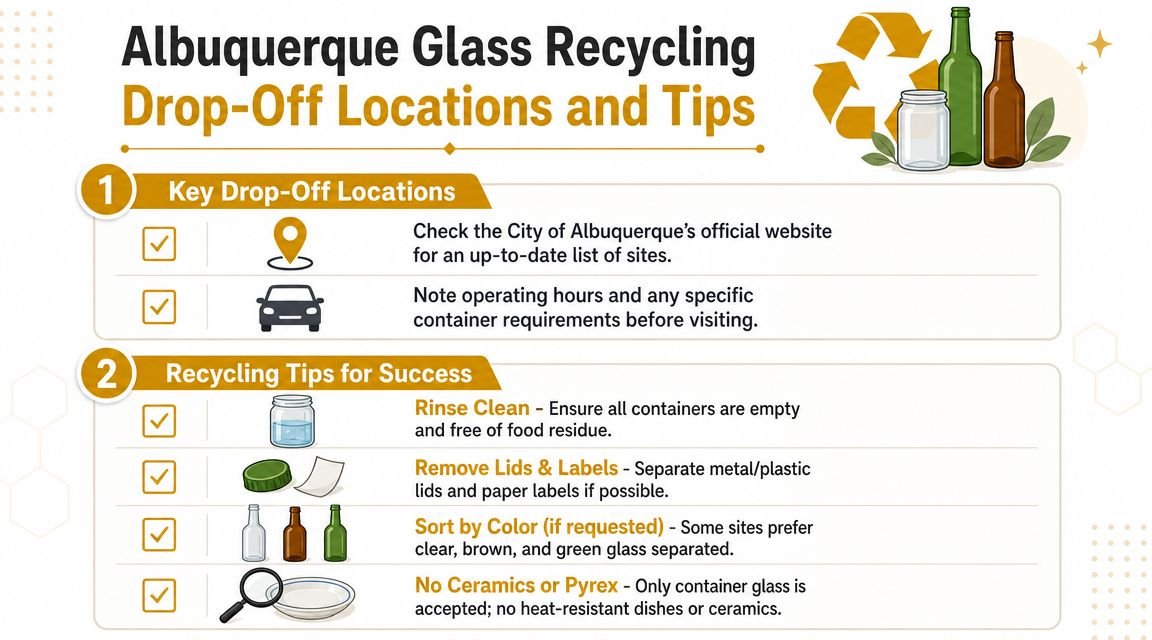
- Empty the container fully. No liquid, no food, no cigarette butts, no random trash.
- Give it a quick rinse. You don't need dishwater perfection. You do need to remove residue.
- Take off lids and caps. Separate metal and plastic pieces from the glass.
- Set aside non-container pieces. If it's broken cookware or window glass, don't mix it in with jars.
A common local mistake is saving everything in one garage box for months and then sorting at the bin. That usually leads to rushed decisions. It works better to keep one container at home just for recyclable bottles and jars, and a second one for questionable items until you verify what they are.
Albuquerque Glass Recycling Drop-Off Locations and Tips
The primary challenge with recycling glass in Albuquerque isn't the idea. It's the trip.
The city uses drop-off collection, not curbside pickup, so convenience matters a lot. Local reporting notes that all 10 city drop-off sites accept glass, but District 6 still lacks a nearby site, which means some residents drive across town to recycle. That same reporting also notes that a popular container can be “always full,” which is exactly the kind of real-world issue people run into when they try to do the right thing through the current system. You can read that local perspective in this Nob Hill reporting on Albuquerque glass recycling access and full bins.
How to find the right site before you leave
Don't rely on memory if it's been a while since your last trip. Site access, hours, and bin conditions can change.
Before loading your car:
- Check the city's current location tool: Use the City of Albuquerque recycling drop-off map to confirm the site you want is still active for your trip.
- Keep the load simple: Group bottles and jars together so unloading is quick.
- Avoid mixed cleanout runs: If you're also hauling paint cans, yard waste, or renovation debris, separate that before you leave home.
What works best at the bins
There's a difference between theoretical instructions and what practically makes the trip easier.
A few habits save time:
| Situation | Best move |
|---|---|
| You're making a weekend trip | Go early or choose a less busy part of the day |
| You have a large amount of glass | Box it so you can unload quickly and move on |
| You arrive and the bin is full | Don't stack glass beside the container |
| You're not sure an item qualifies | Keep it in the car until you confirm |
One of the worst habits at drop-off sites is leaving glass on the ground when the container is packed. That creates a cleanup problem and usually means broken shards in the parking area.
“If the glass bin is full, make it someone else's problem” is exactly the attitude that turns a useful drop-off site into a hazard.
What to do when the container is full
This happens often enough that you should plan for it.
Use a backup approach:
- Try another nearby site the same day if your route allows.
- Take the glass back home if the site is overloaded and you don't have time for another stop.
- Combine trips strategically with errands so you're not making a dedicated cross-town run every time.
- Store glass safely between trips in sturdy boxes or buckets where it won't break.
For apartment residents and small businesses, this matters even more. If storage space is tight, frequent smaller runs usually work better than one giant load that leaves you stuck if the bin is full.
Disposing of Construction and Architectural Glass
Residential bottle recycling and construction glass disposal are not the same job. Contractors who treat them the same way create problems for everyone downstream.
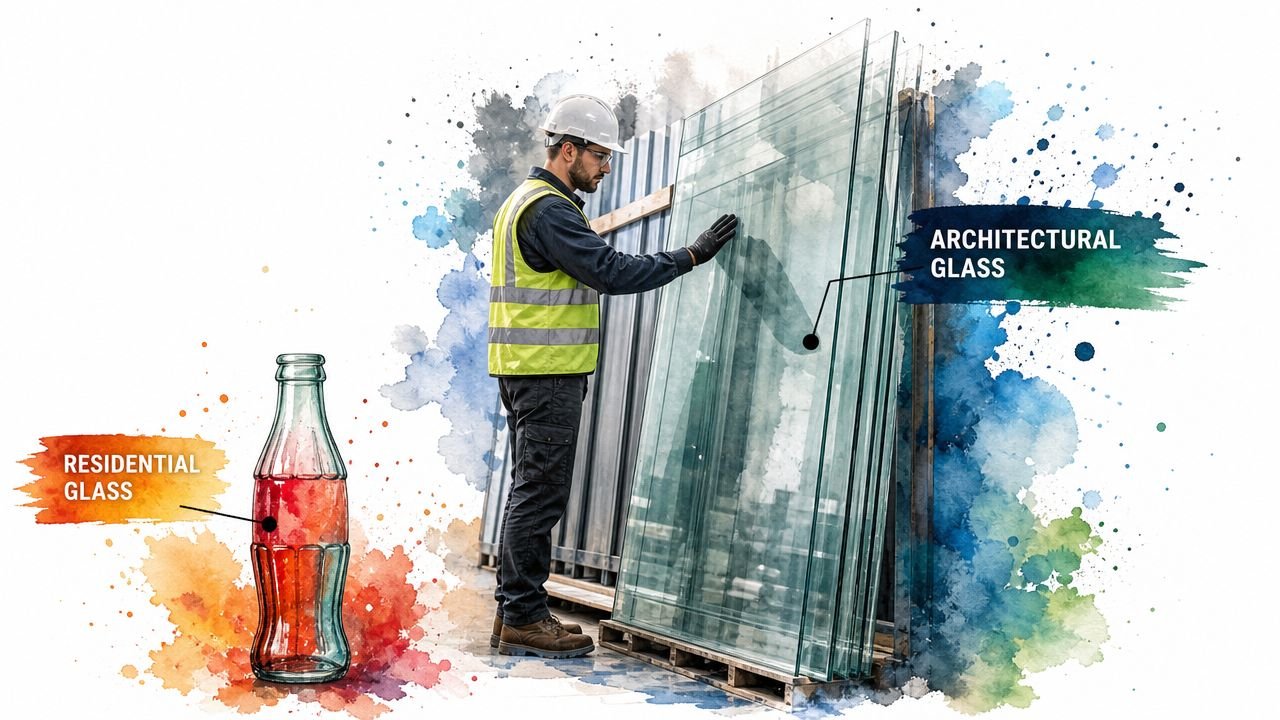
Old windows, mirrors, tempered panels, door glass, and other architectural materials don't belong in the city's residential drop-off bins. Those bins are built around container glass. Construction glass has different handling needs, and in many cases the key issue isn't whether the material is technically recyclable. It's whether you have a practical, compliant outlet that can take it cleanly and safely.
Why contractors need a separate plan
The economics are part of the problem. New Mexico recycling guidance notes that glass is heavy, expensive to move, and may be worth only about $10/ton before transportation, as explained by Recycle Gallup's discussion of glass recycling economics and alternative uses. Once you're dealing with demolition debris instead of jars and bottles, sorting and transport become more expensive and more specialized.
That's why the right question on a jobsite usually isn't “Can this go in the public glass bin?” It's “What's the most responsible outlet for this material based on type, quantity, breakage, and hauling cost?”
A workable decision path for jobsite glass
For contractors, this is the cleaner approach:
- Separate container glass from architectural glass immediately. Breakroom bottles and renovation debris should never share a disposal pile.
- Identify the glass type before hauling. Window units, mirrors, and tempered pieces often need different handling from ordinary container glass.
- Call private waste or C&D handlers first. Ask specifically whether they accept window glass, door glass, insulated units, or mixed broken glass.
- Ask about beneficial reuse options. Some material may be better suited for industrial uses such as cullet in construction or filtration media, rather than standard bottle-to-bottle recycling.
What professionals should avoid
A rushed cleanup creates the biggest disposal mistakes.
Don't do these:
- Don't send window glass to a residential drop-off bin.
- Don't mix shattered glass with general recyclable loads.
- Don't assume “glass is glass.” That logic fails quickly in real processing systems.
- Don't wait until demo day to make calls. By then, material is often mixed, dirty, and harder to divert responsibly.
On construction sites, good waste handling starts before demolition starts. Glass needs its own plan, just like concrete washout, metal, or clean wood.
Beyond Recycling Is Reuse or Reduction Better
A lot of people assume recycling is always the best outcome. It isn't.
Glass is infinitely recyclable without quality loss, and it can become new bottles and jars in as little as 30 days according to EPA glass material data that also cites industry context on recycled glass turnaround. But the bigger national picture is still sobering. In 2018, the U.S. generated 12.3 million tons of glass waste, recycled 3.1 million tons, and landfilled 7.6 million tons, for a recycling rate of 31.3%.
That's a reminder that recycling alone doesn't solve the waste problem. It helps. It matters. But it works best when it starts with a cleaner stream and a smaller pile.
Why source separation still matters
There's one place Albuquerque's system gets something important right. Cleaner collection gives glass a better shot.
Reporting on glass recycling system performance notes that only about 40% of glass from single-stream collection is recycled into new products, compared with roughly 90% from multistream systems, according to WEMU's summary of the difference between single-stream and multistream glass recovery. That doesn't make drop-off convenient, but it does support the basic logic of keeping glass separate.
When reuse or reduction makes more sense
For households, reuse is often the easiest win. A sturdy jar can store screws, leftovers, dry goods, or shop hardware. If you reuse the container, you avoid a trip and delay replacement packaging.
For purchasing, reduction means paying attention before the waste exists:
- Choose refillable options when they fit your routine
- Buy larger containers if that reduces the number of glass items you bring home
- Avoid specialty glass items that become hard-to-handle waste later
- Use durable non-disposable storage instead of collecting more jars than you'll realistically reuse
For contractors and property managers, reduction shows up in procurement. Order materials carefully, protect panes during delivery and staging, and avoid turning reusable or salvageable glass into mixed debris by careless handling.
Frequently Asked Questions About Glass Recycling
What should I do with broken glass from a bottle or jar
If it's ordinary container glass but already shattered, handle it carefully and think about safety first. If your local drop-off site accepts glass and you can transport it safely in a rigid container, that may still be possible. If the shards are mixed with trash, dirt, or other materials, disposal may be the safer route. Don't dump loose broken glass into your car or leave it beside a full bin.
Do I need to separate glass by color in Albuquerque
Some programs prefer separation, but local residents should follow the instructions posted at the site they use. If a location asks for color sorting, do it there. If the site doesn't require it, don't overcomplicate the trip.
Are lids, caps, and corks okay to leave on bottles
No. Remove lids and caps before drop-off. Metal and plastic closures should be separated from the glass. Corks also shouldn't be treated as glass just because they came from a bottle.
Can I recycle windows, mirrors, or shower door glass with bottles and jars
No. That material belongs in a separate construction or specialty disposal stream, not the residential glass drop-off container. If you're managing a remodel, treat architectural glass as jobsite waste that needs a dedicated outlet.
Reborn Rentals helps contractors keep jobsites clean and compliant where disposal planning matters most. If your project includes concrete work, washout containment is just as important as separating glass, metal, and other debris. You can reserve equipment directly through Reborn Rentals for straightforward delivery scheduling and specialized washout containment support.