Master Construction Risk Management Strategies
You're probably reading this with a live project in motion. Trucks are moving, crews are stacked tight, weather is turning, and somebody is already asking whether the pour can be pushed an hour. On jobs like that, risk doesn't arrive as a dramatic headline. It shows up as one missed delivery, one unsigned change, one sloppy washout area, one tired operator making a bad call near the end of the day.
That's why good contractors don't treat risk management as office paperwork. They treat it like site control. If you can see trouble early, assign it, and respond before it spreads, you protect schedule, margin, compliance, and reputation all at once. If you can't, the job starts managing you.
Why Risk Management Is Your Most Important Tool
Monday starts with a routine concrete pour. By lunch, the washout area is overflowing, slurry has tracked toward a storm drain, the inspector is on site, and the crew that should be forming the next section is dragging straw wattles and shovels across the mud. Nobody planned to lose half a day that way. Jobs lose time and money that way every week.
That is what risk looks like on a construction site. Usually it is not one dramatic event. It is a series of ordinary misses that stack up until they hit production, compliance, or cash flow.
Risk management is the tool that keeps those misses from turning into claims, delays, and cleanup costs. The structure is simple: risk identification, risk assessment, risk treatment, and risk monitoring/reporting. Done right, that cycle turns vague concern into assigned action. It connects boardroom language like exposure and contingency to field decisions like where trucks wash out, who checks berms before rain, and what gets fixed before the inspector sees it.
What separates solid sites from chaotic ones
Well-run sites do not avoid every problem. They spot problems while they are still cheap to fix.
That usually starts with direct questions before work begins and again when conditions change:
- What can hurt people? Open edges, traffic conflicts, unstable access, poor housekeeping.
- What can drain the budget? Rework, idle labor, missing materials, weak subcontractor coordination.
- What can trigger compliance trouble? Washout runoff, sediment tracking, incomplete documentation, permit misses.
- What can damage trust? Sloppy finishes, neighbor complaints, repeated schedule slips.
Practical rule: If a risk can affect safety, money, schedule, or compliance, it belongs on your radar before it lands on your incident log.
Experienced superintendents and project managers work this way because they have seen the trade-off firsthand. Ten minutes spent setting a washout pan in the right spot, briefing drivers, and assigning inspections can save hours of cleanup, a notice of violation, and an owner call nobody wants.
The problem is common well beyond construction. Nearly 75% of enterprises reported at least one critical risk event in the prior year, according to Secureframe's 2025 risk management statistics roundup. On a job site, that same pattern shows up as repeated operational hits. Weather, deliveries, equipment, documentation, runoff control, and crew coordination all have a way of failing at the worst possible time if nobody owns the risk early.
What risk management protects
A working risk program protects more than the crew.
It protects margin when material prices shift or rework starts eating labor. It protects schedule when one missed prep item could stall three trades behind it. It protects compliance when concrete washout, dewatering, or stormwater controls are handled like planned operations instead of last-minute cleanup. It protects reputation because owners and inspectors remember which contractor stays ahead of problems.
I have seen jobs with good people, solid subs, and decent schedules still get bent out of shape because the team treated risk as paperwork instead of site control. Once that happens, the day gets consumed by reaction. Foremen stop building and start chasing. PMs stop planning and start explaining.
Here is the plain version. If the site is always improvising, the site is already paying for unmanaged risk.
The Five Core Risk Management Strategies
A muddy access road after two days of rain. A concrete pour with no confirmed washout setup. A subcontractor ready to mobilize, but the insurance paperwork is thin and nobody checked the exclusions. Those are three different risks, and they do not need the same response.
That is the point of using the five core strategies correctly. Risk management is not about piling on controls everywhere. It is choosing the right treatment for the actual exposure, then making that choice visible in the field. Industry guidance commonly groups those treatments into avoidance, reduction or mitigation, transference, acceptance, and contingency planning, as described in MetricStream's overview of risk management strategies.
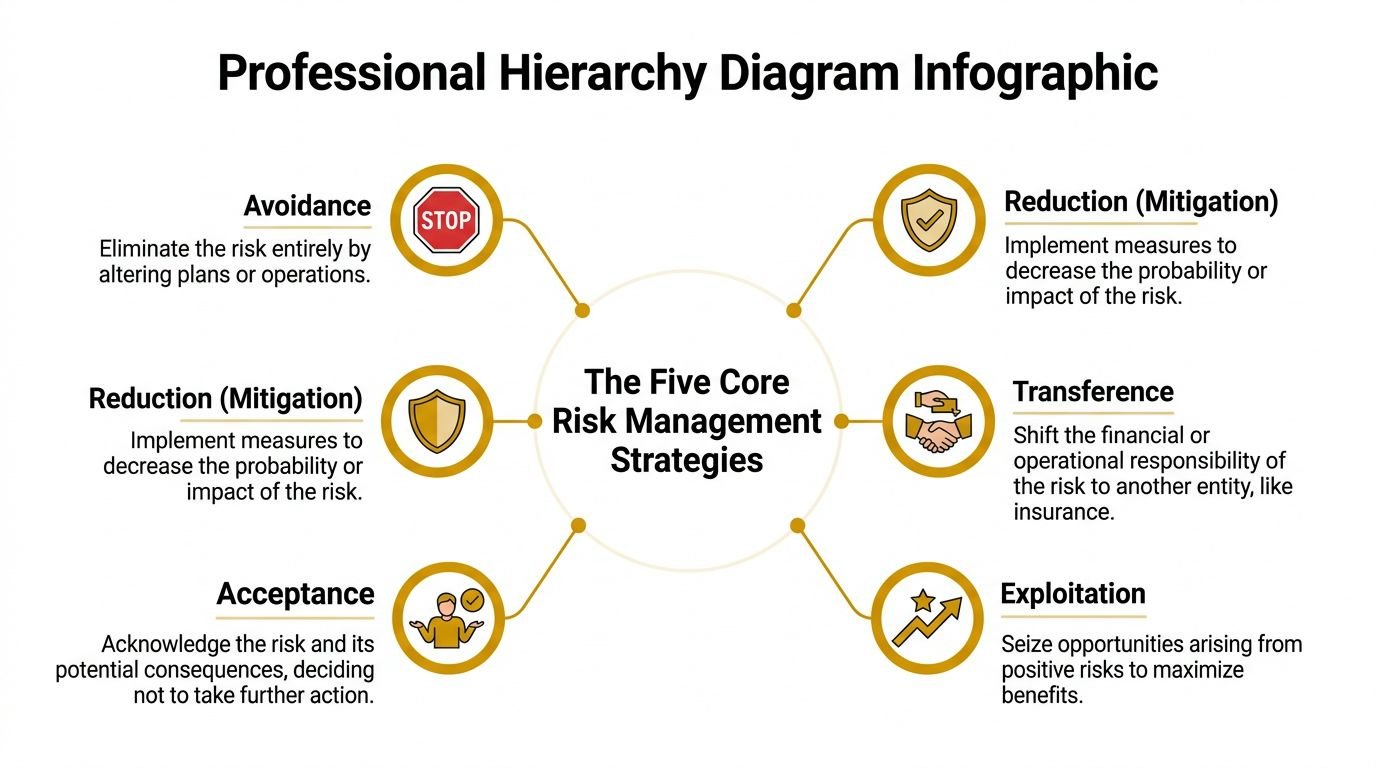
Avoidance
Avoidance means changing the plan so the exposure never gets a chance to hurt you.
If the haul route will turn to soup under loaded trucks, stop pretending stone can be added later after the first few deliveries rut it out. Change the route, stabilize it before traffic starts, or stage materials somewhere that does not tear up the site. If a scope carries contract language, subsurface uncertainty, or environmental obligations your team cannot realistically control, avoidance may mean not bidding it at all.
That can feel expensive on bid day. It is often cheaper than carrying a bad risk all the way into execution.
Reduction or mitigation
Mitigation is the strategy construction teams use every day, whether they call it that or not. You keep the work, but you lower the odds of failure or limit the damage.
On a real site, that means putting controls in before they are needed. Install perimeter protection before runoff starts. Set washout pans before the first truck washes chutes. Check access, staging, and drainage before production crowds the site. Tighten pre-task planning, inspect equipment, confirm deliveries, and put hold points on work that can create expensive rework if it goes wrong.
Good mitigation is specific. "Be careful" is not a control. "Washout pan at the pour area, lined, signed, and emptied on schedule" is a control.
Transference
Transference shifts part of the financial burden or specialized performance risk to another party better set up to carry it.
That usually means insurance, subcontract terms, indemnity language, bonding, or hiring a specialty contractor that does the work every week instead of twice a year. If a dewatering discharge needs tight handling, or a hazardous material scope requires expertise your team does not have, transference can be the smart move.
Use this one with clear eyes. A certificate of insurance helps after a loss. It does not prevent slurry from leaving the site, and it does not save the schedule if the wrong sub shows up unprepared.
Acceptance
Acceptance is a deliberate decision that a risk is small enough, likely enough, or costly enough to treat that the team will carry it.
Minor weather drift is a common example. So is a low-dollar material substitution issue that has little downstream effect. The key is documenting the choice and the threshold. If rain delays under half a day are being accepted, the superintendent and PM should both know that before the week starts.
Unplanned acceptance is just neglect with a nicer label.
Contingency planning
Some risks deserve a response plan even after you have done the preventive work.
Abstract risk theory needs to become field procedure. If a washout pan overflows, who contains it, who documents it, and who calls the SWPPP contact? If a crane pick gets bumped by weather, what work can slide forward without creating trade conflict? If a critical delivery misses its slot, what crew gets reassigned instead of standing idle?
As noted earlier from the same MetricStream guidance, organizations with tested response plans perform better when something goes wrong. Construction is no different. Crews do better with a rehearsed backup plan than with panic and group texts.
One more field-tested point
Another framework used in operational risk management includes exploitation for positive risk, meaning you intentionally use favorable conditions when they show up, as discussed in SentinelOne's explanation of risk management strategies. On a job site, that can mean pulling a pour ahead by a day because weather opened up, inspectors are available, and the crew is staffed.
That is still risk management. It is not just defense. It is choosing where to protect margin, where to spend money, and where to act fast because conditions finally line up.
Four Key Risk Areas on Every Construction Site
Most site managers already know where trouble lives. The problem is that it often stays scattered in people's heads. One foreman is worried about manpower. Another is worried about access. The PM is worried about cost code bleed. The SWPPP inspector is looking at runoff. Nobody's wrong, but nobody's looking at the full board.
A practical way to organize it is to sort risk into four job-site buckets.
Safety risk
This is the most obvious category, but it still gets managed inconsistently.
A trench edge without proper protection. A pump hose laid where crews are crossing. Backing vehicles moving through a tight shared access point. Temporary power routed in a way that invites damage. These are everyday site conditions that can turn into injuries fast.
Safety risk also includes the public side. On urban jobs, pedestrian routing, fencing gaps, tracked mud, and unsecured materials can create exposure beyond your own crew.
Financial and schedule risk
Jobs often incur hidden financial losses.
It starts with familiar things. Scope creep with no clean paper trail. A sub who says they're ready but isn't staffed. Materials arriving late or arriving wrong. A sequence that looked fine in the office but falls apart once trades stack on top of one another.
Then you get the secondary damage:
- Idle labor: Crews standing while equipment, inspections, or preceding work catches up.
- Compressed follow-on work: Trying to recover schedule by crowding tasks into the same window.
- Rework: Installing before conditions are ready, then tearing out what should've waited.
Environmental and compliance risk
This bucket gets underestimated until an inspector, owner, or municipality gets involved.
Concrete washout is a classic example. If slurry ends up where it shouldn't, the problem jumps from “housekeeping” to environmental exposure quickly. The same goes for sediment leaving the site, fuel handling, stockpile controls, or permit conditions nobody reviewed closely enough during mobilization.
A clean site isn't just nice to look at. It usually tells you the controls are being managed by people who know where the real liability sits.
Documentation belongs here too. A control that exists but isn't maintained, inspected, or communicated can still leave you exposed.
Reputational risk
This one doesn't show up on many formal logs, but it changes who hires you again.
Poor finish quality. Repeated punch-list items. Neighbor complaints. A superintendent who always says, “We'll fix it later.” Owners remember that. Inspectors remember that. Good subcontractors remember that too.
Here's how the four areas usually show up together:
| Risk area | What it looks like on site |
|---|---|
| Safety | Injury exposure, unsafe access, traffic conflicts, housekeeping failures |
| Financial and schedule | Delay, rework, labor inefficiency, weak change control |
| Environmental and compliance | Washout problems, runoff, permit violations, inspection issues |
| Reputational | Quality misses, complaints, disorder, loss of owner confidence |
Most site blowups don't stay in one bucket. A washout miss becomes a compliance issue, then a schedule issue, then a reputation issue. That's why good risk management strategies connect the whole operation instead of treating each problem as separate.
Controlling Financial and Schedule Risks
Friday afternoon, the slab is ready, the pump is booked, and the steel detail revision finally lands in someone's inbox. Nobody wants to stop the job. So the crew keeps pushing, the supplier says they will “do their best,” and the PM plans to sort out the paperwork on Monday. That is how margin starts bleeding out of a project. Not from one disaster, but from a chain of small calls made under pressure.
On site, cost risk and schedule risk usually travel together. A late approval turns into idle labor. Idle labor leads to overtime. Overtime leads to rushed work, lower productivity, and rework. By the time the team calls it a tough job, the money is already gone.
The first step is to identify the exposures that can move the job, not the ones that just generate noise. On most projects, the repeat offenders look familiar:
- Scope creep: Extra work starts before pricing, approval, or schedule effect is pinned down.
- Subcontractor weakness: A trade partner buys the job low, then falls behind on manpower, coordination, or supervision.
- Material uncertainty: Long-lead items, substitutions, fabrication errors, and delivery slips.
- Sequencing conflict: The schedule works in a meeting but breaks down once crews, equipment, and access start competing in the field.
- Regulatory or owner-driven changes: New requirements land after procurement and labor plans are already committed.
Treating all five the same is a mistake. Some risks need a note in the meeting minutes. Some need daily attention from the superintendent, PM, and purchasing team until they are under control.
A simple screen helps sort that out. Teams can use probability distributions, cost and schedule risk analysis, sensitivity analysis, and Expected Monetary Value or EMV, as described in Planview's discussion of risk management techniques.
In practice, EMV comes down to likelihood multiplied by impact. A risk with a decent chance of happening and a serious cost or schedule hit belongs near the top of the list. A dramatic but unlikely issue does not deserve the same effort just because it sounds scary in a meeting.
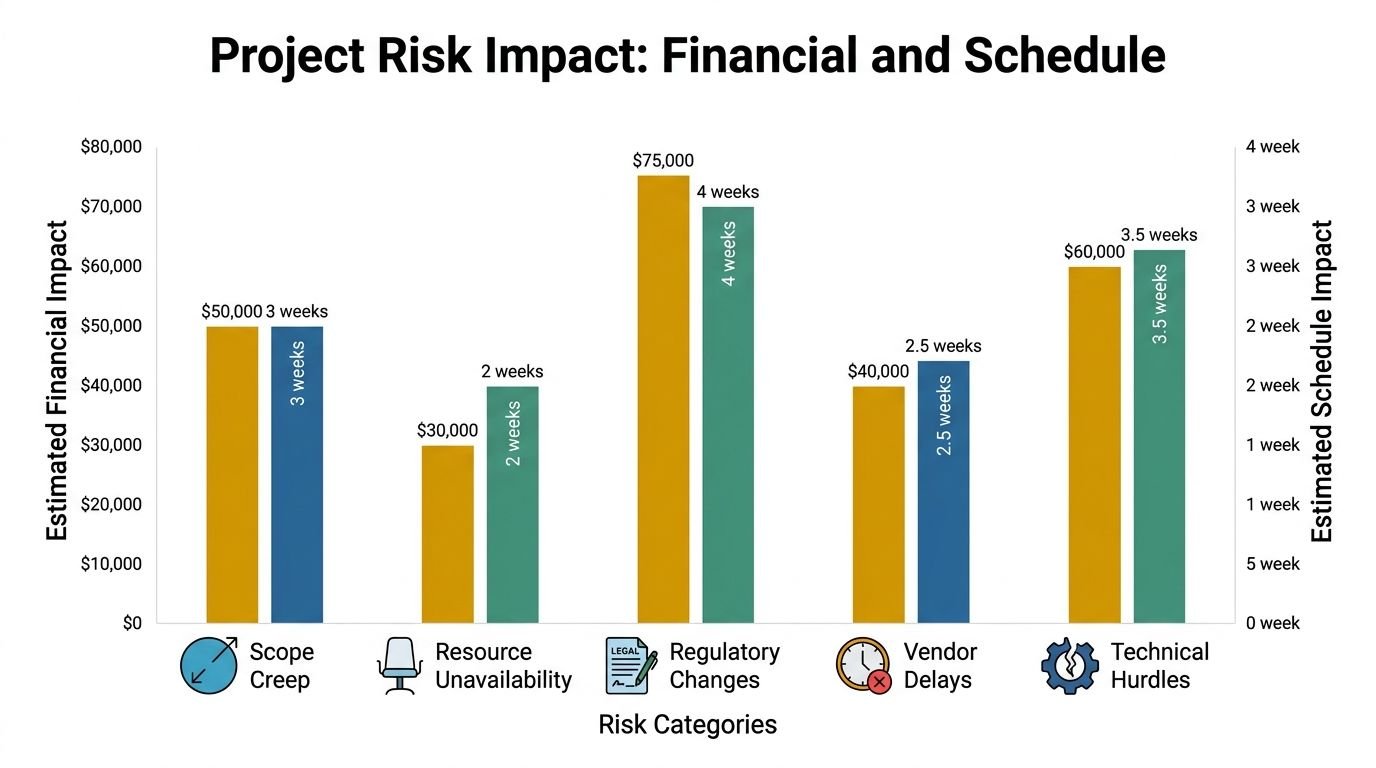
Use that logic in a working table the team can review fast:
| Risk | Likelihood | Impact on cost or time | Priority action |
|---|---|---|---|
| Steel delivery drift | Medium | High schedule impact | Escalate vendor tracking, resequence prep work |
| Unpriced owner revision | High | Medium to high cost impact | Stop scope bleed, document change immediately |
| Secondary sub manpower dip | Medium | Medium schedule impact | Confirm staffing plan, line up backup labor options |
That table works because it forces decisions. It tells the superintendent where to press in the field and tells the PM where paperwork, calls, and vendor pressure need to happen today.
The controls that protect jobs are not fancy. They are disciplined.
- Tight contract language: Clear scope limits, notice requirements, and responsibility lines before the work starts.
- Early buyout review: Check lead times, exclusions, staffing assumptions, and production capacity, not just the low number.
- Live change order management: If the work changes, document it before crews bury the cost.
- Short-interval planning: Weekly look-aheads expose delay, access conflicts, and labor gaps early enough to do something useful.
I have seen teams spend an hour arguing over a minor backcharge while a delayed submittal places two weeks of procurement in jeopardy. That is poor risk control. Attention should go to the items that can damage cash flow, productivity, and finish dates.
Good financial risk management is field management with priorities. Rank the exposure, assign the action, and follow it until the risk drops. That is how you protect the budget, keep the schedule honest, and avoid making expensive decisions in a panic.
A Practical Guide to Environmental Risk Mitigation
On many jobs, environmental compliance gets treated like a side file. It sits next to the permit board, everybody agrees it matters, and then production pressure pushes it down the list. That's backwards.
Environmental control is one of the clearest signs of whether a site is effectively managed. When the washout area is right, tracking is under control, housekeeping is tight, and spill response is understood, the rest of the operation is usually in decent shape too. When those basics are loose, other controls are usually loose with them.
Concrete washout is a daily operational risk
Concrete work creates one of the most common site exposures because slurry and wash water are easy to underestimate. Crews are focused on the pour, pump setup, finishing sequence, traffic flow, and cleanup. If washout isn't planned as part of that same workflow, it gets handled on the fly.
That's when problems start.
Improper washout can contaminate soil, move off the work area, create drainage issues, trigger inspection problems, and force emergency cleanup nobody budgeted for. It also sends a bad message to owners and regulators. A site that can't control its washout doesn't look professional, no matter how good the forming looks.
The practical fix is simple. Treat washout as a planned control, not a leftover task.
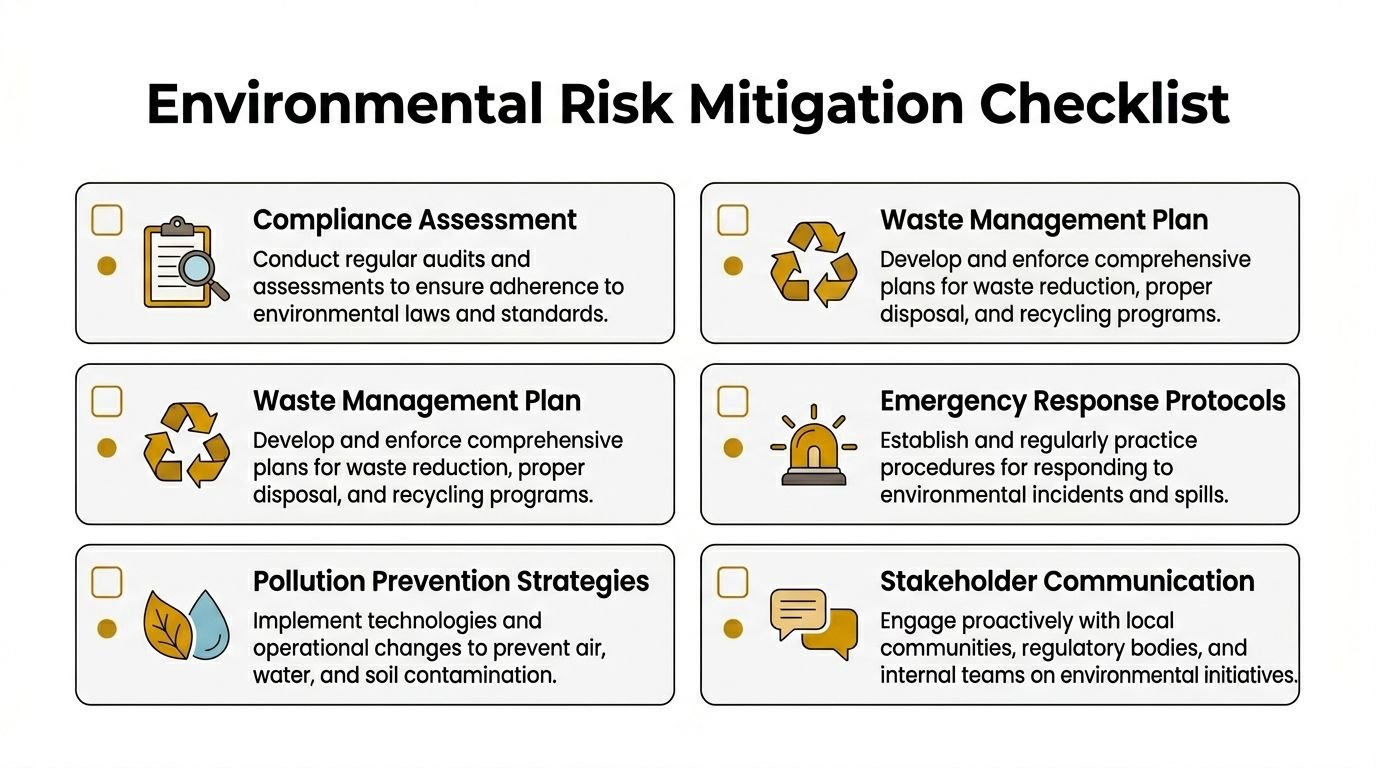
A workable washout SOP
If I'm reviewing a site for environmental risk, I want to see a standard operating pattern, not improvisation.
Pick the location early
Set the washout area before the first truck arrives. Place it where drivers and pump crews can use it without crossing active hazards or creating congestion.Use proper containment
Temporary berms and makeshift holes invite failure. Dedicated containment, such as washout pans or containers, gives the crew a visible, repeatable target.Mark it clearly
If the driver has to ask where to wash out, the control isn't ready. Signage and obvious placement matter.Assign responsibility
Somebody owns setup. Somebody checks capacity. Somebody confirms cleanup or swap-out timing. Shared responsibility usually means no responsibility.Inspect during active concrete operations
Don't wait until end of shift. Check the area while trucks are cycling and while the pump crew is still moving.Close the loop after the pour
Make sure residue, splatter, and surrounding access areas are left controlled and clean.
What to check on every pour day
Use a short checklist the field can keep up with.
| Check Point | Status (Yes/No) | Notes |
|---|---|---|
| Washout location designated before pour | ||
| Containment in place and accessible to trucks and pump crew | ||
| Area clearly marked for drivers and crew | ||
| Capacity checked before concrete operations begin | ||
| Washout inspected during active use | ||
| Surrounding area free of overflow or tracking | ||
| Post-pour cleanup or replacement arranged |
Why containment tools matter
Dedicated pans change behavior because they make the right action easier than the wrong one. That's what good risk mitigation looks like on a construction site. Not a memo. A tool and process that crews will readily use under pressure.
For washout control, a pan gives you:
- Defined containment: Slurry goes to one managed place.
- Cleaner logistics: Drivers and pump operators aren't guessing.
- Better inspections: You can show the control immediately.
- Less secondary cleanup: Fewer surprise labor hours spent fixing preventable spread.
This is also where budgeting discipline helps. Environmental controls should be planned into the job just like fencing, dumpsters, and temporary power. If the project can budget for concrete placement, it can budget for containing the byproduct of that work.
Environmental compliance done right feels ordinary on site. That's the point. The control should be so clear that nobody needs to debate it during the pour.
The strongest environmental risk management strategies are the ones that disappear into the workflow. The crew knows where the washout is. The superintendent knows who's checking it. The site stays clean. The job keeps moving.
Building Your Site-Specific Risk Management Plan
A storm hits Friday night. By Monday morning, the haul road is soft, one low corner of the site is holding water, a concrete pour is still on the schedule, and three subs are asking who has the authority to change the sequence. That is when a risk plan either earns its keep or stays buried in the trailer.
A site-specific plan has one job. Tell the team what can hurt the project, who owns each exposure, and what happens next when conditions change. If it cannot do that in plain language, it is paperwork.
Build a simple risk register
Start with a risk register that matches the work in front of you, not a template copied from the last project. Keep it short enough to review in a real meeting and specific enough that field leaders can act on it the same day.
Use columns like these:
| Risk | Likelihood | Impact | Treatment strategy | Owner | Review date |
|---|---|---|---|---|---|
| Unstable site access after rain | Medium | High | Reduction | Superintendent | Weekly |
| Concrete washout overflow | Low to medium | High | Reduction and contingency planning | SWPPP lead | Before each pour |
| Owner-driven design revision | Medium | Medium to high | Acceptance or change control | PM | At design updates |
| Subcontractor manpower gap | Medium | High | Transference and contingency planning | PM and super | Weekly |
Write entries the way people talk on site. “Truck access fails after rain” is better than “adverse weather-related mobility constraints.” The first one gets traction in the morning huddle. The second one gets ignored.
Good registers also connect broad business risk to field controls. If the risk is washout overflow, the treatment should name the actual control, pan location, capacity check, backup container, and who inspects it before the pour. That is how abstract risk theory turns into a plan that protects schedule, margin, and compliance at the same time.
Match the treatment to the job
Picking a treatment strategy is where many plans go soft. Teams label a risk, pick a generic response, and move on. The better approach is to decide, risk by risk, whether the job should avoid it, reduce it, transfer it, or accept it, using a clear decision structure tied to business value and risk tolerance, as explained in Jitasa's guidance on risk management tips.
That choice depends on context.
An excavation next to public traffic usually calls for reduction, more controls, tighter access, more supervision, and a clear emergency response path. A finish issue in a hidden mechanical room may be accepted if fixing it adds cost and time with no real gain to the owner. A heavy pick with unusual rigging demands may be transferred to a subcontractor that has the equipment, the lift planning experience, and the insurance to carry that risk properly.
Use the same logic for environmental exposure. Concrete washout is a good example. You can avoid a bad setup by choosing a designated containment area before the first truck arrives. You reduce the risk with pans, signage, inspections, and capacity checks. You do not “accept” slurry running across the site and into a drain inlet because cleanup costs, permit trouble, and schedule disruption hit fast.
Get buy-in from the people doing the work
Plans break down when the office writes them in isolation and the field sees them for the first time after mobilization.
Bring in the people who will carry the plan:
- Superintendent: Confirms whether the risk is real under site conditions and current sequencing.
- Foremen: Point out crew movement, access conflicts, and production pressure that can make a paper control fail.
- Project manager: Ties each exposure to cost, contract language, procurement, and change management.
- Subcontractors: Confirm staffing, equipment, means and methods, and trade-to-trade interface risk.
- Compliance or SWPPP lead: Identifies permit triggers, inspection duties, and controls that need to be in place before work starts.
Name one owner for each item. Use a real person's title or name, not “team” or “operations.”
If a risk has no owner, it is waiting for an incident to assign one.
Review the register at mobilization, before high-risk phases, after major schedule shifts, and anytime site conditions change in a way that affects safety, cost, access, or compliance. That cadence keeps the plan tied to the job as it unfolds, from contract exposure at the top to slurry containment at ground level.
Measuring and Improving Your Risk Program
A risk plan goes stale fast on a live job. Monday's assumptions can be wrong by Thursday if a supplier misses a delivery, the owner changes direction, or heavy rain turns a manageable site into a drainage problem. The teams that stay out of trouble do not treat the register like a startup document. They use it to make field decisions while the work is still recoverable.
That means watching for early signs, reviewing them on a set rhythm, and pressure-checking the plan before a small problem turns into a cost hit, a missed milestone, or a compliance issue. LogicGate describes that approach as continuous monitoring, key risk indicators, and periodic stress-testing in its overview of effective risk management strategies: https://www.logicgate.com/blog/developing-effective-risk-management-strategies/.
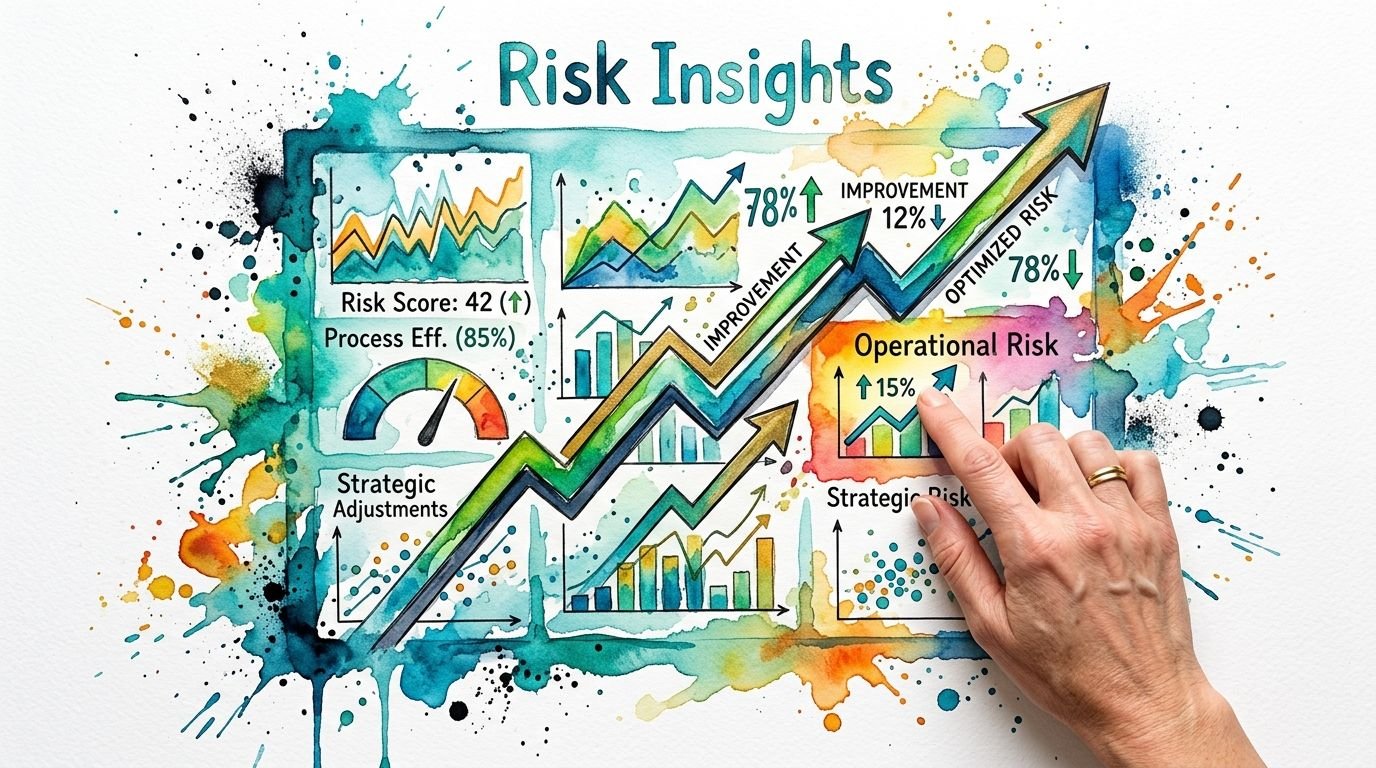
Pick a few KRIs that actually matter
A Key Risk Indicator, or KRI, is an early warning sign you can act on before the job takes the hit.
On construction work, the best KRIs are visible, boring, and tied to real consequences:
- Near-miss reports climbing: Often points to rushed sequencing, poor housekeeping, access conflicts, or weak supervision.
- Open RFIs tied to active scopes: Rework and delay usually show up next.
- Unapproved change work in progress: Margin erosion has already started.
- Repeat environmental corrections: The control may be installed, but the crew is not following it consistently.
- Subcontractor manpower drifting below plan: Schedule trouble is forming before the update meeting catches it.
Keep the list short. Five honest indicators that the superintendent and PM both respect will do more good than a twenty-line dashboard nobody believes.
Set a review rhythm that matches the job
Risk review works when it happens where decisions already get made. Field risk belongs in field conversations. Cost and contract exposure belong in project reviews. If everything gets pushed into one monthly meeting, the job will outrun the discussion.
Use a simple cadence:
| Review cadence | Focus |
|---|---|
| Daily huddle | Immediate field hazards, crew conflicts, weather, access |
| Weekly look-ahead | Schedule threats, manpower, deliveries, environmental controls |
| Monthly project review | Cost exposure, unresolved changes, major phase risks, subcontractor performance |
I have seen jobs catch a washout problem in a five-minute morning walk because somebody checked remaining pan capacity before the pour started. I have also seen jobs miss the same issue because everyone assumed someone else was watching it. The difference was not the form. It was the habit.
Stress-test the plan before the site does it for you
Stress-testing does not need a consultant, a workshop, or a slide deck. On a project site, it usually means asking the questions people avoid when the schedule is tight.
Ask them anyway:
- If weather pushes the pour, what work shifts, and who needs to know today?
- If a key material delivery slips, which crews keep working and which ones stand down?
- If washout capacity is lost mid-operation, where is the backup location and who authorizes the move?
- If the owner rejects the pending change, do we stop that scope or carry the cost risk?
That exercise turns abstract risk theory into an action plan. You are tracing exposure from top-level contract and schedule decisions down to field controls like slurry containment, access, staging, and inspections.
What improvement actually looks like
A better risk program does not remove surprises from construction. It cuts the size of the mistake and shortens the time between warning sign and response.
You can see the program improving when:
- Crews raise issues before they become incidents.
- Project managers rank risks by exposure instead of treating every problem the same.
- Environmental controls are in place before the operation starts.
- Owner updates include a response plan, cost position, and next decision point.
- Corrective actions close out fast instead of showing up on the next three inspections.
That is the standard to aim for. A good risk program protects margin, keeps the schedule more stable, and prevents field problems from becoming management problems.
If your team wants a cleaner, easier way to control one of the most common environmental risks on a concrete job, Reborn Rentals is worth a look. They specialize in concrete washout containment rentals with straightforward ordering, clear daily pricing, and practical support for delivery, timing, and site logistics, which makes it easier to build washout control into the job plan before the trucks arrive.