Roll Off Dumpster Delivery: Contractor’s 2026 Guide
It’s 6:30 a.m., the pump truck is due, one crew is stripping forms, another is waiting on cleanup, and the roll off still hasn’t been swapped. That’s how a simple dumpster order turns into a schedule problem, a labor problem, and sometimes a compliance problem.
On a working job site, roll off dumpster delivery affects more than trash removal. It affects truck access, staging space, cleanup pace, subcontractor coordination, and whether waste gets contained before inspectors, neighbors, or weather make it your problem. I’ve seen good jobs lose half a day because the box was too tall for the loading pattern, dropped where the forklift needed to turn, or rejected at pickup because the crew mixed prohibited material into the load.
Contractors deal with a different set of problems than homeowners doing a one-time cleanout. Mixed C&D debris is one part of it. Dense material, tight urban access, gate windows, street permits, overloaded boxes, contaminated loads, and concrete washout are significant trouble spots. Concrete slurry gets ignored in a lot of dumpster guides, but on commercial and civil work it can create some of the fastest, most expensive mistakes. If slurry, washout solids, or slurry-contaminated debris go into the wrong container, the disposal bill changes fast, and so does your risk.
The market size reflects how common this service is on active projects. Fact.MR reports the global roll-off container rental market is projected to reach USD 7.2 billion in 2025, with the roll-off segment holding 60.0% share, and construction applications accounting for 40.0% of demand, according to Fact.MR’s roll-off container rental market outlook.
That demand exists because roll-offs solve a real site problem. They keep debris moving out before it clogs access, slows production, or creates a safety issue. But they only work when the order matches the material, the drop-off matches the site, and the paperwork matches what is going into the box.
Choosing the Right Dumpster Size and Type
The wrong box usually shows up right after demo starts. The crew is moving fast, labor is on the clock, and then someone realizes the container ordered for light mixed debris is now taking broken block, wet mud, and washout waste. That is how a routine roll off dumpster delivery turns into overload charges, rejected pickup, or a disposal problem that lands on the superintendent.
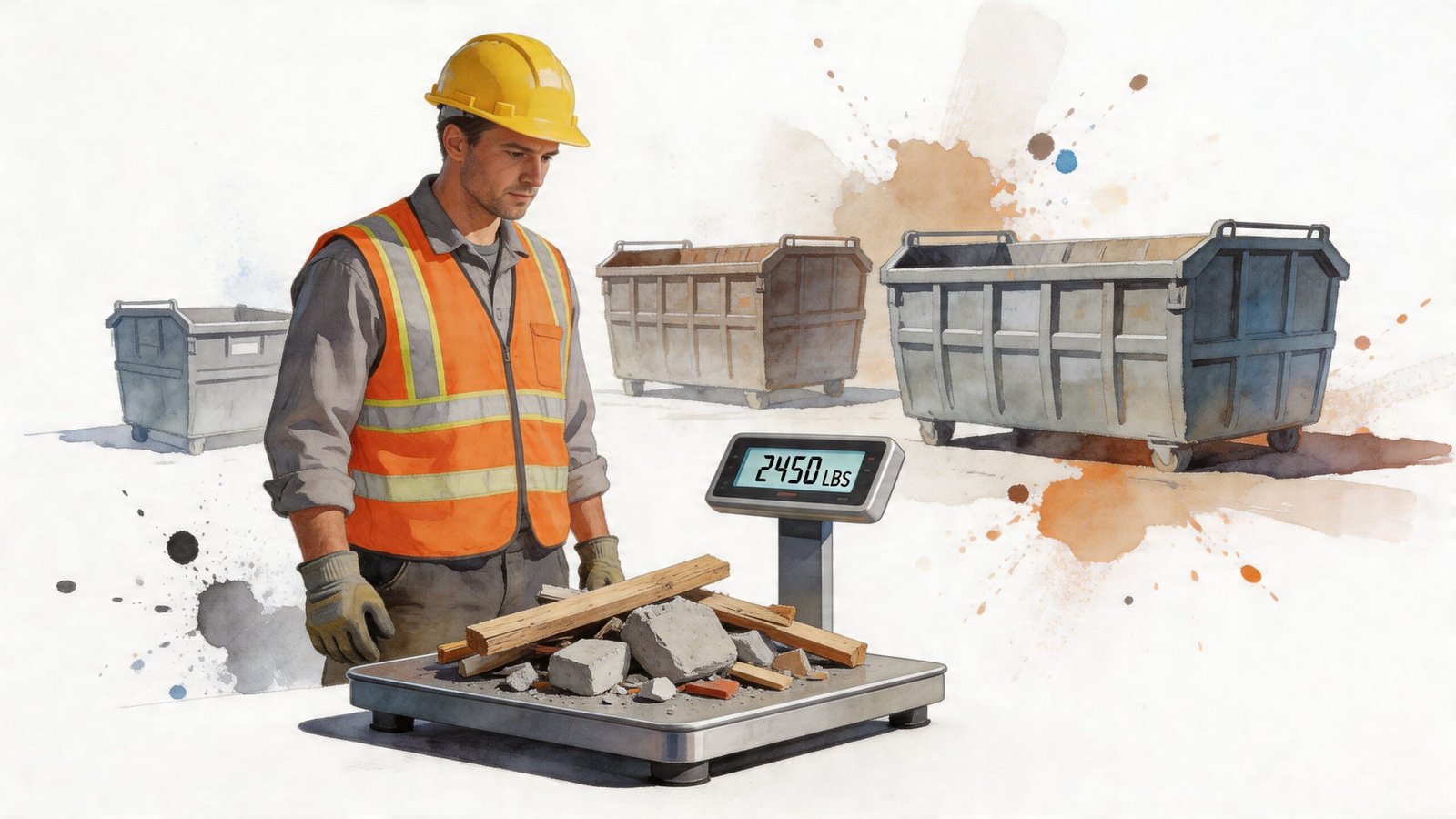
Contractors should size a dumpster by material first, cubic yards second. Volume matters on packaging, drywall, and wood scrap. Weight controls the decision on concrete, asphalt, masonry, dirt, and anything wet enough to add tons faster than the crew expects.
Match the container to the material
Start by separating the waste stream before you call the hauler.
- Light mixed construction debris: framing scrap, drywall, insulation, cardboard, ceiling tile, and general interior demo. These loads usually hit the top rail before they hit the weight limit.
- Dense inert material: concrete, brick, block, dirt, asphalt, and stone. These loads hit weight limits early, even in smaller boxes.
- Special handling material: concrete washout solids, slurry, contaminated debris, and other restricted waste. These need their own plan before the first truck arrives.
A 20-yard box is common on contractor jobs for a reason. It fits many commercial sites, works for mid-sized interior demo, and does not eat up as much staging space as a 30 or 40. It still fails fast if the crew treats it like a catch-all for heavy debris.
Order for the heaviest material expected in the box. If the scope includes a chance of concrete, block, or dirt ending up in the container, size down and confirm the weight allowance before the drop.
| Job condition | Better choice |
|---|---|
| Interior remodel with mixed debris | Standard roll-off sized for volume |
| Roofing, siding, packaging-heavy work | Standard roll-off with easy access for fast toss-in |
| Concrete or masonry demolition | Smaller heavy-material box or dedicated concrete container |
| Concrete washout and slurry | Specialized watertight containment, not a general roll-off |
Don’t confuse solid concrete with slurry
This distinction matters on active job sites.
Broken, cured concrete can often go into a dedicated heavy-material container if the hauler and disposal outlet accept it. Concrete slurry is a different waste stream. It is wet, alkaline, messy, and far more likely to create a compliance problem if a crew dumps it into a standard open-top roll-off.
A general debris box is built to haul solid waste. It is not built to contain liquid or semi-liquid washout. Slurry can leak during loading, pool in the bottom, harden unevenly, and contaminate otherwise clean debris. Once that happens, the pickup can get refused or the load can be reclassified at a much higher disposal rate.
On jobs with pump trucks, saw cutting, grinding, or regular washout activity, set up dedicated containment from day one. Do not wait until the first washout pile shows up behind the trailer.
The questions that prevent bad orders
Before placing the order, get clear answers to these four points:
- Is the load limited by volume or by weight?
- Can this material be mixed with the rest of the site debris?
- Will the hauler accept it in a standard roll-off?
- Does the job need a low-profile box, a dedicated heavy-material container, or watertight washout containment?
Crews rarely get into trouble because the dumpster was a few yards too small. They get into trouble because the wrong material went into the wrong container. That is the decision to get right first.
Decoding Upfront Pricing and Hidden Fees
Friday at 3:30, the box is full, the concrete crew is still washing out, and accounting forwards an invoice that is 30 percent higher than the quote. That usually traces back to one problem. The order was priced off a headline number, not the actual job conditions.
Contractors should read a dumpster quote the same way they read a subcontract. Scope, exclusions, unit pricing, and site conditions all matter. If a line item is vague before delivery, it gets expensive after pickup.
The average rental price is around $467, and successful roll-off businesses often capture 15% to 20% of revenue from overage fees according to Financial Model Lab’s roll-off container metrics. Providers are not hiding that model. They make steady money on turn volume, and they make extra money when the load, rental term, or site access falls outside the quote.
What the base quote usually covers
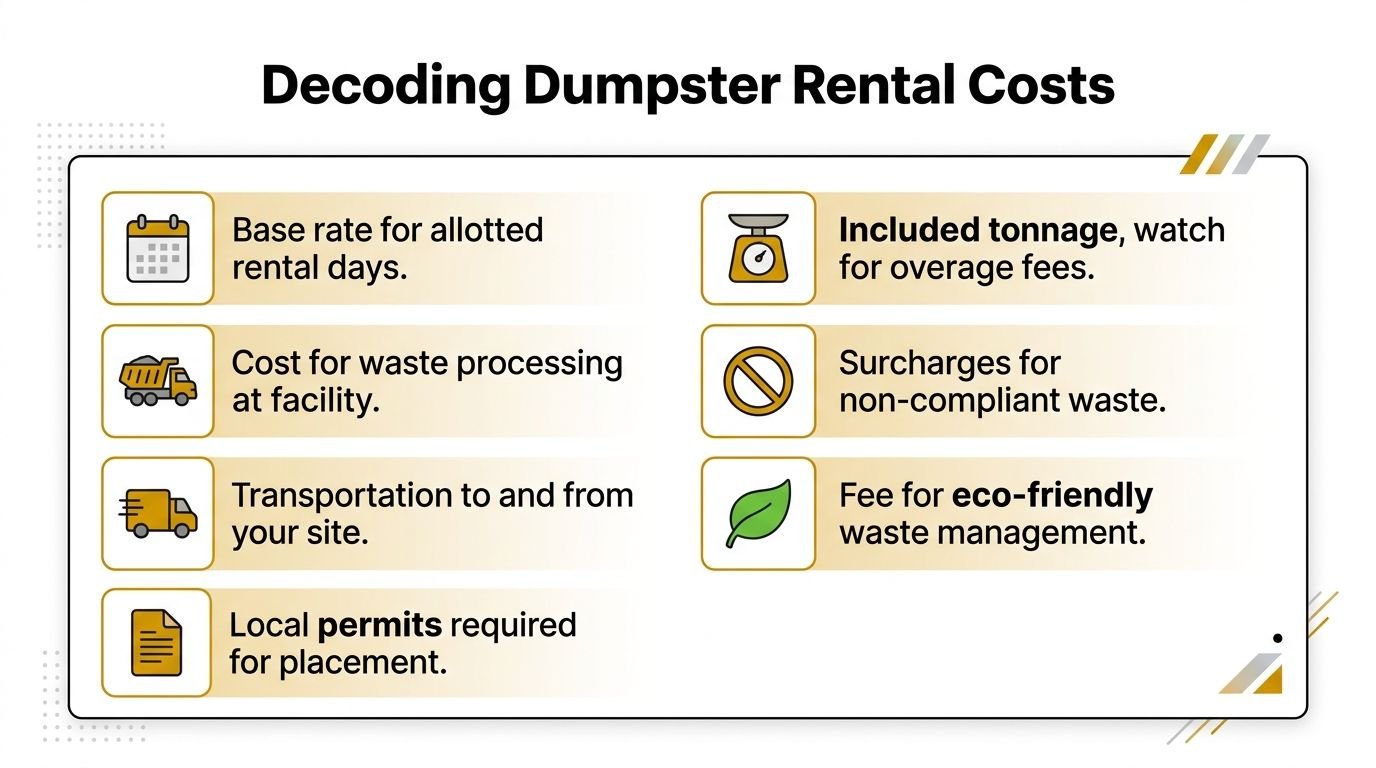
A roll off dumpster delivery quote usually includes the same core items, even if each hauler labels them differently.
Sample quote structure
Base rental
Delivery and pickup
Included weight allowance
Disposal or dump fee structure
Daily extension terms
Overage rate
Restricted material charges
Placement or access surcharges
Environmental or compliance fees
Permit responsibility
Bundled pricing is not a problem by itself. Itemized pricing is not automatically better either. The core issue is whether the quote tells you what changes the number. If it does not, ask for a revised quote before the truck rolls.
Where contractors get burned
Included tonnage is the first trap. A 20-yard box priced for mixed C&D debris becomes a different job when a crew starts dropping dense roofing tear-off, block, wet dirt, or hardened slurry chunks into it. The container may still have air space, but the weight limit is already gone.
Placement language causes the next round of fights. “Standard placement included” sounds fine until the driver sees a soft shoulder, a narrow gate, a blind alley backing move, or a laydown yard chewed up by rain and equipment traffic. As noted earlier, haulers often add rough-terrain or difficult-access charges when the site was described too loosely at order time.
Concrete work adds another layer. Wet slurry, washout residue, and contaminated rinse material are not just overweight risk. They can trigger reclassification, cleaning charges, or outright rejection if they end up in a standard debris box. On contractor sites, that is one of the fastest ways to turn a normal haul into a billing dispute with compliance attached.
Ask these questions before approving the order:
- What weight is included? Get the exact tonnage tied to that container size and material stream.
- How is overage billed? Ask for the rate per ton and whether the rate changes by disposal outlet or waste type.
- What site conditions trigger placement fees? Bring up mud, gravel, slopes, steel plates, tight turns, alley access, overhead wires, and equipment congestion.
- When do extra-day charges start? Get the rental window in writing, along with any grace period.
- Which materials change the disposal rate or get refused? Ask specifically about concrete washout, slurry solids, treated wood, roofing, mattresses, appliances, and contaminated debris.
- Who pays permit or street-use costs? Do not assume that is built into the quote.
Read the quote like a superintendent
A usable quote should answer field questions as well as billing questions.
| Quote item | What to verify |
|---|---|
| Base rental | Rental window and container type |
| Delivery and pickup | Included in price or separate |
| Weight allowance | Exact limit and accepted material |
| Overage | Billing method and documentation |
| Placement fees | Conditions that trigger them |
| Extra days | Daily rate and grace period |
| Prohibited items | List of excluded materials |
One practice saves money here. Email the hauler a short written description of the waste stream and site conditions, then ask them to confirm the quoted rate against that exact description. That creates a record. If the final bill changes, you have something better than a phone call memory.
If the provider cannot explain the invoice in plain language before delivery, expect change-order style pricing after pickup.
Financial Model Lab also notes container utilization rates of 75% to 85% as a key KPI for roll-off operators. That helps explain why rental windows stay tight and why dispatch pushes for fast turns in busy periods. The provider is managing equipment use aggressively. Contractors should manage the paperwork with the same discipline.
Mastering Delivery Scheduling and Logistics
The truck shows up at 6:45, demo starts at 7:00, and the driver cannot get through the gate because the access code changed after hours. Now the labor crew is standing around, the saw cutter is billing time, and debris starts piling where the next trade needs to work. That is how a simple roll off dumpster delivery turns into a schedule hit.
Busy seasons make that worse. As noted earlier, container availability tightens fast when exterior work, tenant improvement cleanouts, demolition, and concrete work all ramp up at the same time. If your site also has slurry solids, washout containers, or segregated loads that the hauler has to route differently, you need to schedule earlier and confirm more often.
What dispatch needs from you
Dispatch can do good work if the order is specific. Vague instructions create missed windows, relocation charges, and drivers placing the box in the one spot that works for the truck but not for production.
Give them the details that matter in the field:
- Exact drop location. Mark it on a site plan, satellite image, or phone screenshot. Include how the container door should face.
- Active site contact. Name and cell number for the foreman or superintendent who will answer when the truck calls.
- Access constraints. Gate codes, check-in procedure, delivery hours, escort requirements, flagging rules, and whether street closure timing affects entry.
- Approach hazards. Low wires, tree limbs, crane swing, tight radiuses, soft shoulders, steep grades, trench plates, or parked equipment.
- Surface type. Dirt, mud mat, gravel, asphalt, concrete, or steel plate. The driver needs to know what the truck is backing onto.
- Material plan. Tell them if this is C&D, clean concrete, roofing, dirt, or slurry solids from washout handling. Mixed loads and hard-to-handle waste streams often need different boxes, liners, or disposal routing.
- Pickup plan. State whether you expect a final haul, an on-call pull, or a same-day swap.
One missed detail can cost you a trip fee.
Timing that works on a real job site
Routine work can be scheduled once the short-term look-ahead is firm. Critical work needs more control. For phased demolition, concrete breakout, road work, and jobs with municipal access limits, confirm the order when it is placed, confirm it again the day before, and make sure the site contact knows the truck window.
Treat the dumpster like any other production item. Put it on the board. Assign one person to own it. If the box has to be there before demo, sawcutting, or cleanup starts, then it belongs in the production plan, not buried in an office email.
Dispatch can solve routing problems. Dispatch cannot fix a locked gate, a buried drop zone, or a superintendent who thought the box was coming tomorrow.
Keep logistics tied to waste generation
The best deliveries are boring. The container lands right before the crew starts generating debris, sits close enough to cut handling time, and gets pulled before it blocks the next phase.
That takes coordination between the superintendent, foreman, and project engineer or admin who placed the order. It also takes honesty about the waste stream. Concrete slurry is the classic miss. A lot of teams schedule a standard roll-off for concrete work, then realize too late that wet slurry, washout residue, and high-moisture fines may not be accepted the same way as dry inert debris. If slurry solids are part of the plan, clear that with the hauler before delivery and set the pickup sequence around how that material will be dried, contained, and documented.
That is how you avoid idle labor, reload work, and the call nobody wants from accounting after the invoice lands.
Preparing Your Job Site for a Safe Drop-Off
The driver shows up at 6:45, the crew is ready to start demo, and the box still has nowhere safe to go. One pickup is parked in the swing path, the laydown yard crept into the access lane, and the spot that looked fine yesterday turns out to be soft fill. Now the truck is waiting, labor is standing around, and the clock is running.
A safe drop-off starts before the truck reaches the gate. The best sites do one thing well. They prepare the route, the landing area, and the pickup path as one plan.

What goes wrong at the drop-off
The usual failures are not complicated. They are field coordination misses.
- The truck path is blocked by pallets, parked vehicles, gang boxes, or stacked material.
- The ground looks firm from a distance but will rut, sink, or break at the point load.
- The crew picked the closest spot to the work without checking whether the truck can back in, roll off, and pull back out cleanly.
- The box fits for delivery but not for removal after fencing, scaffold, pumps, or stored material close in around it.
- No one planned for special waste handling nearby such as concrete slurry solids, washout containers, or drying areas that need to stay separate from general debris.
Those mistakes cost real money. You get delay time, site damage, relocation labor, or a second trip when the hauler cannot service the container safely.
How to set the site up the right way
Walk the route in, not just the final spot. I do this even on sites I know well, because conditions change fast. A clear path on Monday can be blocked by rebar bundles, temp fencing, or a lift parked in the wrong place by Wednesday.
Check the whole approach. Gate width matters. Turning room matters. Overhead clearance matters more than people think. Power lines, scaffold tubes, tree limbs, temp lighting, and pump lines can all kill a drop if the driver has to raise the box where clearance is tight.
Ground conditions deserve a hard look. Fresh fill, wet subgrade, broken asphalt edges, and utility trenches are bad places to set a loaded container. If the site only gives you finished pavement or a vulnerable slab edge, put protection down before the truck arrives and confirm the hauler is willing to place on that surface.
Mark the exact location. Cones, paint, or stakes beat three people waving their hands while the driver is backing blind into a cramped area.
Placement rules that hold up on real jobs
A workable drop zone usually has these characteristics:
- Straight access in and out, or enough room for the truck to back and recover without multiple corrections.
- Stable, level ground that can handle delivery and pickup, not just an empty set-down.
- Clear overhead space for the roll-off action.
- Room to open the dumpster door safely if the crew will load heavy material with equipment or wheelbarrows.
- Separation from traffic pinch points like material gates, crane setup areas, fire lanes, and concrete washout operations.
Pickup access has to be part of the first placement decision. Contractors miss this all the time. A spot can work perfectly on day one and become unusable after scaffold goes up, masonry stock gets dropped, or the electrician parks lifts along the fence line.
The right location is the one the truck can service twice without rework, once on delivery and again on pickup.
Plan around the job, not just the box
Dumpster placement affects production. Put it too far away and labor burns time walking debris. Put it too close and it interferes with deliveries, access, or safety controls. The sweet spot is usually near the work face but outside active equipment paths and outside areas that will tighten up as the project moves.
That matters even more on concrete jobs. If the site is managing slurry solids, sawcut fines, or washout residue, keep that operation separate from the general debris box unless the hauler approved the material and the containment method in advance. I have seen crews contaminate an otherwise clean load because the slurry drying area drifted too close to the roll-off and cleanup ended up in the wrong container.
A few extra minutes of site prep beats an hour of chaos when the truck is on-site.
Proper Loading and Environmental Compliance
Friday at 3:30, the driver is on site for pickup, the box is mounded over one corner, rebar is sticking past the top rail, and somebody dumped washout chunks into the mixed debris. That load is now your problem. Crews lose time reworking it, the hauler may refuse it, and the invoice usually gets worse before the day is over.
A roll-off has to travel safely on public roads and clear the receiving facility without extra handling. That means the site needs loading rules that are simple enough to enforce and strict enough to prevent the usual mistakes.
What proper loading looks like on a real site
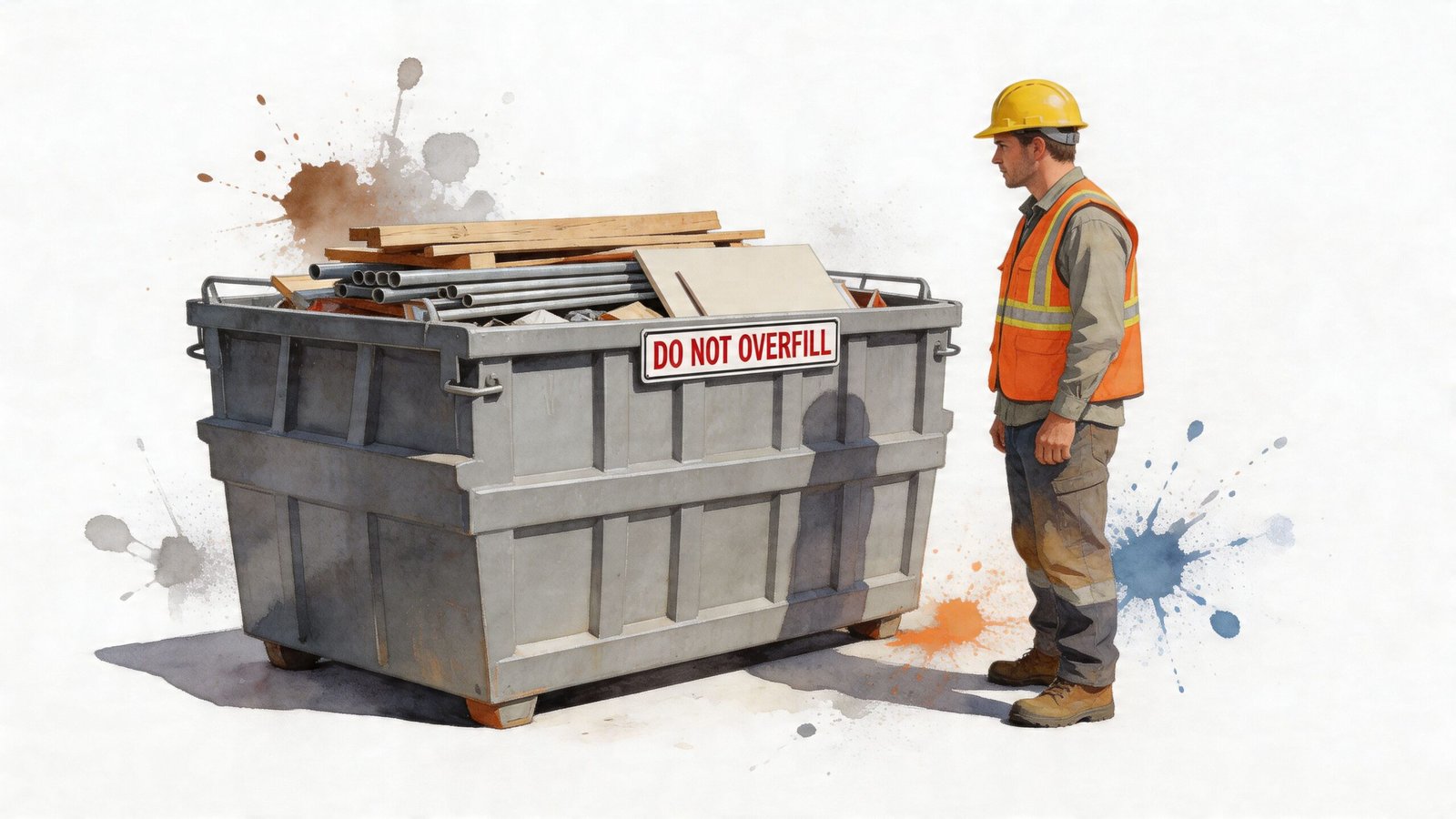
Good loading starts with weight control, not just volume. A half-full box can still be a bad load if all the dense material is packed into one end or dropped in a single corner. I tell crews to build the load flat, spread heavy debris across the floor, and keep the top line clean enough that a tarp can go on without a fight.
The day-to-day rules are straightforward:
- Distribute heavy material across the container so the truck is not carrying a lopsided load.
- Keep debris at or below the top rail so the driver can haul it legally and safely.
- Cut down bulky items when it saves air space instead of paying to haul empty gaps.
- Keep prohibited or special-handling waste out of the box because contamination turns one container into two problems.
- Use the swing door for dense material like concrete chunks, block, or roofing tear-off loaded by hand or machine.
One bad toss at the end of the shift can ruin an otherwise clean haul.
Segregation saves money at the scale house
On commercial jobs, mixed loads cause arguments because nobody prices uncertainty in your favor. If cardboard, metal, clean concrete, trash, and wet residue all end up together, the hauler and the receiving facility have to decide how to classify it. That usually means extra handling, a downgraded recycling load, or a charge that was not in the original quote.
A simple separation plan prevents that:
| Waste stream | Best handling approach |
|---|---|
| Mixed C&D debris | Standard roll-off with posted crew rules |
| Clean concrete or masonry | Dedicated heavy-material container |
| Cardboard and packaging | Separate stream if the project has room and labor to keep it clean |
| Concrete washout and slurry solids | Dedicated watertight containment approved for that material |
Labels matter. So does enforcement. A quick tailgate talk, clear signs on each container, and one foreman willing to stop the wrong load usually does more than a long recycling policy nobody reads.
The expensive mistake: washout in a general roll-off
This issue came up earlier, but it deserves its own warning because it gets mishandled even on well-run sites.
Concrete washout, slurry solids, sawcut fines, and pump cleanout residue do not belong in a general debris box unless the hauler approved that exact material and containment method in advance. The problem is not just moisture. The material can leak, harden in the container, contaminate the rest of the load, and create stormwater exposure if cleanup gets sloppy around the box.
I have seen this go wrong the same way more than once. The concrete crew keeps a washout area too close to the roll-off. Cleanup starts late, laborers shovel crusted residue and slurry-soaked debris into the nearest container, and the site loses a clean mixed load. Then pickup stalls while someone sorts out what is in the box and who is paying to deal with it.
Handle concrete waste streams as a separate operation:
- Set dedicated washout containment before the pour, not after the pump is washing out.
- Keep slurry handling away from the general debris box so cleanup drift does not contaminate it.
- Let solids cure only in approved containment and confirm disposal with the hauler before removal.
- Train labor crews on the difference between dry concrete debris and washout residue because they are not treated the same way.
Contractors who get this right usually treat washout like traffic control or erosion measures. It gets a location, a responsible trade, and a closeout plan. That is what keeps one messy corner of the site from turning into a hauling dispute, a compliance issue, or both.
Your Final Checklist for a Smooth Pickup
Pickup day is where the rental either closes cleanly or drags into one more admin problem. The final walkthrough should happen before you call for removal, not after the driver is on site.
Before you schedule the pickup
Use a short closeout checklist:
- Confirm the box is ready. If the crew still needs it for end-of-day cleanup, don’t guess. Pick a realistic pickup time.
- Check load condition. Material should be inside the container and level enough for safe transport.
- Clear access again. Equipment, fencing, deliveries, and parked vehicles tend to creep into the truck path during the rental period.
- Remove side piles. If debris has accumulated around the box, decide whether that material needs a second haul or another cleanup pass.
- Verify contact info. The on-site contact for pickup should be reachable.
What to review on the final invoice
Final billing usually changes when weight, rental duration, or handling conditions changed from the original order. That’s normal. What matters is whether the changes match the agreement.
Review the invoice against your original confirmation:
| Final bill item | What to compare |
|---|---|
| Base rental | Matches quoted container and rental window |
| Extra days | Only charged if the rental extended |
| Overage | Matches the agreed method for excess weight |
| Access or placement fees | Tied to actual site conditions disclosed or encountered |
| Restricted material charges | Supported by what was actually loaded |
If something doesn’t line up, challenge it while the paperwork and dispatch notes are still fresh.
Keep the original quote, delivery confirmation, and any text or email about changes. Most billing disputes are easier to settle when the timeline is documented.
Don’t wait until the trailer meeting
If the schedule slips and you need the container longer, call before the rental period expires. If pickup access changes because another trade fenced off the area, tell the hauler before the truck rolls. Late communication creates avoidable charges and missed service.
Good contractors close out waste service the same way they close out any subcontracted activity. They check the work area, verify the paperwork, and make sure the last invoice matches the job that was performed.
Contractors who need a better answer for concrete washout should look at Reborn Rentals. They focus on specialized washout containment for construction and renovation projects, with clear daily pricing, straightforward delivery setup, and equipment built for slurry management instead of generic debris hauling. If your site needs compliant containment without the usual back-and-forth, they’re worth calling before the next pour hits the schedule.