Rush Delivery Services for Washout Containment Rentals
The call usually comes late. The pour is locked in, the truck is booked, the inspector may show up, and someone realizes there's no washout containment on site. At that point, you're not shopping. You're trying to keep a concrete job moving without creating a compliance problem before first light.
That's where rush delivery services stop being a convenience and start being part of jobsite control. For contractors, an expedited washout pan rental isn't some unusual favor. It's a standard way to fix a planning gap, cover a schedule change, or replace equipment that got tied up on another project. The panic comes from the timing. The solution comes from having the right details ready and understanding what makes a rush order succeed.
When You Need a Washout Pan Yesterday
A missed washout pan usually isn't about negligence. It's about construction schedules changing faster than paperwork, deliveries, and internal handoffs can keep up. A pour gets moved up. A superintendent assumes another crew ordered containment. A last-minute inspector note changes the site setup. By the time someone catches it, the clock is short.
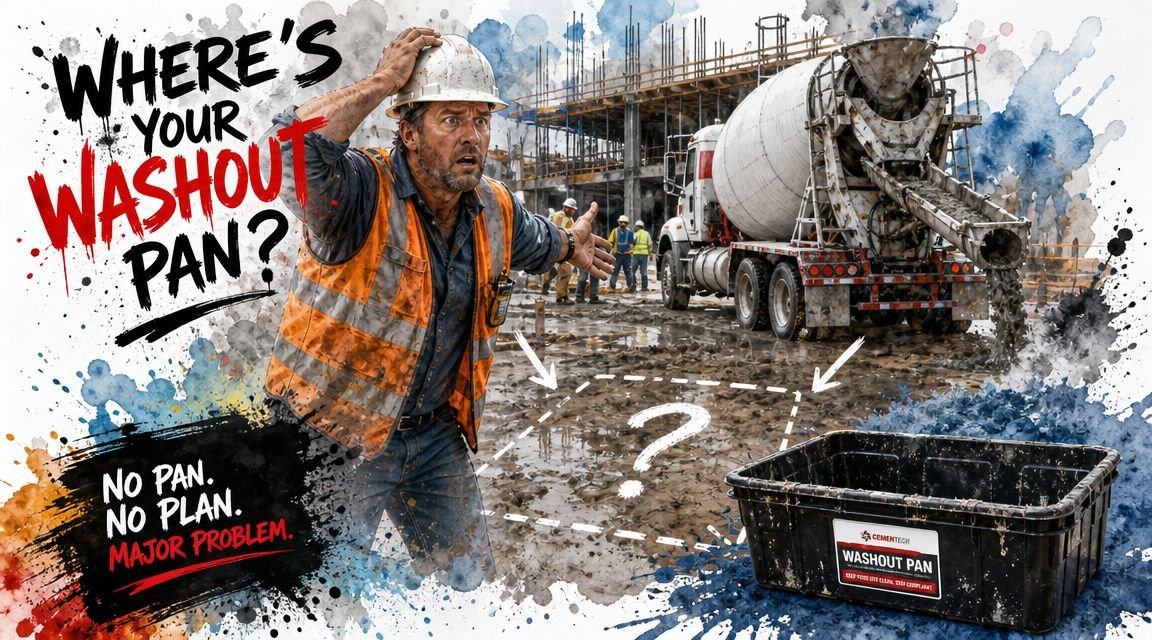
The contractor's problem isn't just “we need a pan.” The missing pan now affects several moving parts at once. The concrete supplier needs a clean receiving plan. The crew needs to know where trucks will stage. The site team needs to avoid slurry ending up somewhere it shouldn't. If the site is gated, congested, or newly developed, a basic delivery request can turn into a scramble.
What makes this a construction problem, not a parcel problem
Most content about rush delivery services talks about envelopes, retail orders, or small packages. Washout containment is different. The delivery team has to know whether the truck can access the drop zone, whether the site has rough terrain, whether a driver needs to call before entry, and whether the pan location interferes with the pour sequence.
A washout pan also sits inside a compliance workflow. It isn't just equipment arriving fast. It has to arrive where runoff can be managed, where the crew can use it, and where pickup later won't block operations.
Practical rule: A fast delivery only helps if the driver can place the pan where your concrete crew needs it without waiting on directions, gate codes, or a forklift.
This is why expedited equipment rental has become much more workable in recent years. The global express delivery market was valued at USD 319.2 billion in 2023 and is projected to reach USD 545.7 billion by 2032, according to GM Insights on the express delivery market. For contractors, that scale matters because expedited logistics are widely available in major markets instead of being limited to specialty situations.
What usually goes wrong in the first ten minutes
The first mistake is vague information. “Deliver it to the site trailer” sounds clear until the driver finds three entrances, two locked gates, and no one answering.
The second mistake is treating the order like a commodity drop instead of a site operation. A washout pan delivery should be coordinated the same way you'd coordinate a pump truck arrival or a concrete truck queue.
Common trouble signs include:
- Missing site details that force the dispatcher to call back for cross streets, gate access, or the exact drop point
- No live contact on site when the driver arrives and needs placement approval
- Wrong pan choice because the crew ordered quickly without checking expected slurry load and available footprint
- Unclear timing such as “ASAP” instead of a real window tied to the pour schedule
If you're in this situation right now, the fix is usually straightforward. Slow down for five minutes, gather the right information, then place the order in a format the dispatcher can act on immediately.
How to Request an Expedited Delivery
A rushed order usually gets won or lost before dispatch even touches it. On a concrete site, the problem is rarely “Can someone deliver fast?” The primary problem is whether the supplier has enough clean information to send the right truck, to the right gate, with the right placement instructions, on a site that may already be crowded, muddy, or access-controlled.
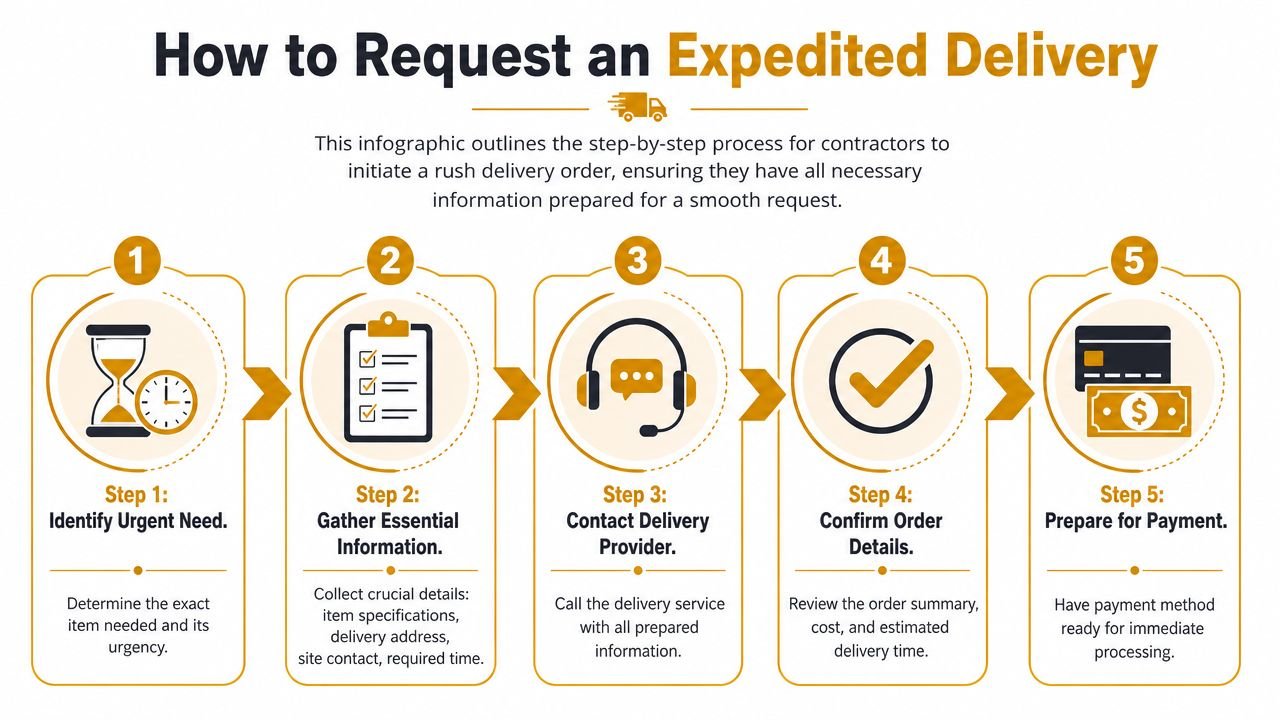
The basic workflow is straightforward: intake, confirmation, dispatch, transit, and proof of delivery. What slows it down is missing field information. Reliable Couriers explains the common breakdowns in rush delivery workflows, and the same pattern shows up on rental deliveries. The difference is that a washout pan is going to an active jobsite, not a front porch, so access and placement details matter as much as the address.
Have these details ready before you contact anyone
Keep the request tight and complete. A dispatcher should be able to read or hear it once and start building the move.
Exact jobsite address
Use the delivery address the driver will map to. If the project is in a new development, add cross streets, lot number, building designation, or any map note that prevents a wrong turn.Gate and access instructions
State which gate is open, whether the driver needs to check in, and if there are restrictions on truck size, delivery hours, or staging.Precise drop point
“Inside south gate, 80 feet past the trailer, marked washout area on the right” works. “Near the pour” does not.On-site contact who will answer
Give the superintendent, foreman, or lead who can receive the truck and approve placement. If that person is often on equipment, provide a backup number too.Pan size and site conditions
Confirm the pan size, available footprint, and whether the truck will be backing onto pavement, compacted dirt, or uneven ground. If there is soft soil, rebar, trenching, or overhead obstruction, say so upfront.Required time tied to the schedule
Give the delivery window in relation to the work. “Set by 6:30 a.m. before the first concrete truck” is much easier to dispatch than “ASAP.”
What to say on the first call
A good expedited request sounds like this:
Need one washout pan delivered tomorrow by 6:30 a.m. to [full address]. Use the south construction entrance off [cross street]. Driver must check in with the gate attendant. Drop is in the marked washout area beside the formwork. On-site contact is [name] at [cell], with [backup name] at [cell] if needed. Ground is compacted gravel. Clearance is open for a standard delivery truck.
That gives dispatch what they need to choose equipment, confirm route timing, and flag problems before the truck rolls.
If your provider accepts calls, text, email, or field messaging apps, use the channel that gets complete delivery instructions across fastest. On active projects, a pinned location, gate photo, or marked site map often prevents more delay than another phone call.
What contractors miss on urgent orders
The address is only part of the job.
Expedited washout delivery also depends on site readiness and compliance details that parcel carriers never deal with. Some sites require COI confirmation, vendor check-in, PPE rules, badge access, or a delivery contact who can escort the driver past the gate. If any of that applies, mention it during the request, not when the truck is already outside.
Payment can also hold up an otherwise workable rush order. If your company requires a PO, card authorization, or approval from the office, get that lined up while the request is being placed. Dispatch will usually not reserve a tight delivery slot indefinitely while internal approvals bounce around.
Use this pre-call check
Before you place the order, confirm these five items:
- Map-ready address and correct entrance
- Live site contact and backup number
- Exact drop location on site
- Pan size and honest ground conditions
- Payment or PO ready for approval
Fast delivery depends on clear instructions. On construction sites, clear instructions are what keep an urgent washout pan from turning into a missed pour window, a driver stuck at the wrong gate, or a second trip you did not need.
Decoding Rush Delivery Costs and Fees
Contractors rarely object to paying for speed. They object to paying for surprises. If you understand why rush delivery services cost more, it's easier to decide when the expense protects the schedule and when it's covering a preventable planning miss.
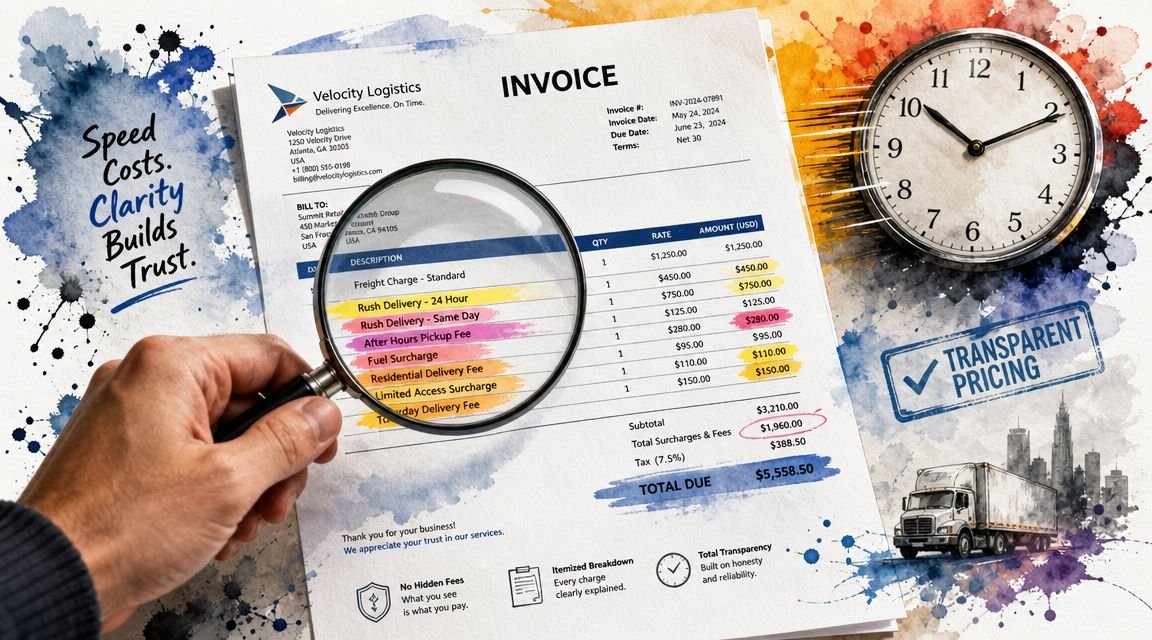
The base rental and the rush-related charges are doing different jobs. The rental covers the equipment itself. The rush portion covers the operational disruption required to move your order ahead of standard routing, assign labor on a tighter window, and absorb the inefficiency that comes with urgent dispatch.
Data backs up the basic business logic. One industry source reports that 88% of consumers are willing to pay for faster delivery services, which helps explain why premium-speed service models are now normal across logistics, including specialized B2B rentals, as noted by Elite EXTRA on rush delivery demand.
What you're usually paying for
Here's the practical breakdown contractors should expect.
| Fee type | What it usually covers | Why it appears |
|---|---|---|
| Base rental | The washout pan and rental period | Standard equipment charge |
| Express fee | Prioritized dispatch and compressed scheduling | Your order is inserted ahead of normal routing |
| After-hours or weekend fee | Labor outside normal delivery windows | Driver and coordination costs increase |
| Rough terrain fee | Extra time, equipment, or placement difficulty | The truck can't perform a simple curbside-style drop |
| Redelivery or wait-related charges | Additional trip or driver downtime | The site wasn't ready to receive the unit |
Which fees are justified and which ones signal trouble
An express fee is normal if you're asking a provider to reroute trucks, shift the day's sequence, or make room for a same-day request. An after-hours fee also makes sense if the delivery needs to happen before a dawn pour or after the site reopens.
The charge that usually frustrates crews most is the one tied to site conditions. But from the logistics side, rough terrain and failed delivery attempts are expensive. A driver can lose a large block of the day trying to place heavy equipment where access was misdescribed.
Fast service costs more because the provider is buying back time from somewhere else in the schedule.
How to keep the invoice predictable
You don't need perfect conditions. You need honest conditions.
Ask these questions before approving the order:
- Is this an express dispatch or just the earliest standard slot available
- Does the quoted price include after-hours handling if the site needs it
- Will the driver place the pan in the requested area, or only at the nearest accessible point
- Is rough terrain being assumed, or triggered only if access conditions require it
- What happens if the site contact doesn't answer on arrival
For budgeting, the cleanest internal explanation is simple. The premium isn't for the pan. It's for immediate coordination, route disruption, and delivery precision under a compressed timeline.
Realistic Timelines for Rush Rentals
Contractors get into trouble when they hear “24/7” and translate that into “guaranteed immediately.” That's not how field logistics work. Rush delivery services can move fast, but the actual timeline depends on cutoff times, driver availability, traffic, jobsite complexity, and whether your request is dispatch-ready.
One courier source notes that businesses need realistic expectations around cutoff times and failure modes during peak demand, weekends, and dense urban conditions, rather than relying on broad marketing claims about very short service windows, as discussed by Arrow Mail on rush delivery timing realities.
What a realistic timeline sounds like
On a well-run rush rental, the communication should become more specific as the order progresses.
A practical sequence usually looks like this:
- Order confirmed with equipment type, address, contact, and delivery window
- Dispatch assigned once the provider matches truck, route, and timing
- Driver en route after the unit is loaded and released
- Arrival coordination when the driver is approaching and needs final access confirmation
- Proof of delivery after placement, sign-off, photo, or both
That's very different from hearing “we'll try to get it there soon.” If the provider can't tell you which stage the order is in, your crew shouldn't assume the pan is ten minutes away.
Where promised speed usually slips
Urban congestion is one factor, but it's not the only one. The bigger issue is how much uncertainty your site introduces.
These are the delays I'd treat as most likely on urgent jobs:
- Late-day ordering when the dispatch board is already full
- Weekend or holiday requests when fewer trucks or support staff are active
- New developments where mapping and entry points are messy
- Restricted sites with guard shacks, badging, or escort requirements
- Weather and ground conditions that change where a driver can safely place equipment
If your pour starts at dawn, “delivery sometime tonight” is a weak plan. Get a committed window and a live contact protocol.
How to manage the crew while the order is in transit
The field team doesn't need constant updates. They need updates that change decisions.
Use this rule set:
- If dispatch hasn't confirmed the truck is assigned, don't tell the crew it's handled
- If the site opens at a set time, tell the provider that gate timing up front
- If the driver needs escort or placement guidance, put that person on standby before arrival
- If timing gets tight, decide early whether the pour setup can proceed or needs to pause
A realistic rush timeline is one you can build a morning around. If the communication is vague, treat the ETA as provisional until the driver is moving.
Your On-Site Prep Checklist for Fast Delivery
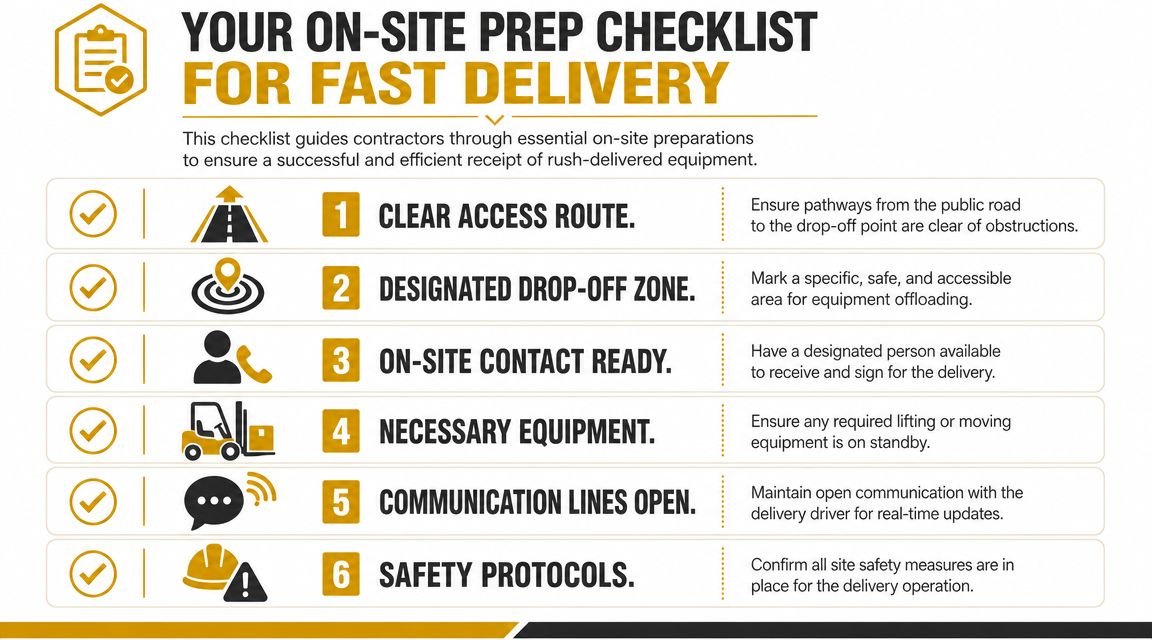
A rush order can be booked perfectly and still fail at the curb. Heavy equipment deliveries succeed on the first attempt when the site is ready to receive them. For washout pans, that means access, placement, and sign-off are already figured out before the driver turns in.
First-attempt delivery success rate is a standard logistics benchmark. In 2023, the U.S. reached 97.2%, and tools like address validation software can reduce address-related delivery issues by up to 30%, according to Parcel Perform on first-attempt delivery success rates. For contractors, the bigger lesson is operational. On-site readiness matters even more when the item is large, placement-sensitive, and expensive to redeliver.
The field checklist that prevents redelivery
Run this before the truck arrives, not after the driver calls from the street.
Clear the access route
Walk the path from public road to drop point. Look for parked vehicles, stacked material, temporary fencing, soft ground, and overhead conflicts.Mark the exact drop zone
Don't rely on verbal instructions if the site is active. Cones, paint, or a flagged location save time and prevent bad placement.Assign one receiver
One person should answer the phone, meet the driver, approve placement, and sign if needed. Multiple voices create delays.Check whether extra handling is needed
If the location requires additional lifting or repositioning, that needs to be planned before arrival.Keep communication live
A rush delivery dies quickly when the contact goes silent during a safety meeting or walks into a dead-signal area.
Site conditions that need to be disclosed early
Some conditions don't make delivery impossible. They just make it different.
| Site condition | Why the provider needs to know |
|---|---|
| Mud, slope, or uneven grade | Placement may take longer or require alternate positioning |
| Narrow gate or alley access | Truck selection and approach route may change |
| New development with poor map visibility | Driver needs directional notes and landmarks |
| Shared site with active trades | Delivery timing may need coordination to avoid blockage |
| Security gate or badging rules | The driver may need advance clearance |
The fastest way to slow down a rush delivery is to pretend the site is easier than it is.
What crews often overlook
The washout pan has to work after delivery, not just arrive. Make sure the chosen location supports actual concrete operations. The crew should be able to reach it without crossing unsafe travel paths, backing trucks into conflict points, or forcing cleanup into a corner that becomes inaccessible later in the day.
If the pan can only be dropped in a “good enough” spot because access wasn't prepared, the job inherits that problem for the rest of the pour.
Common Questions About Rush Washout Services
Contractors usually ask the same few questions once the immediate panic settles. The right answers are less about policy language and more about how field logistics work under pressure.
What happens if the rush delivery is late because of traffic or another delay
Treat the first ETA as conditional until the driver is dispatched and moving. If timing starts to slip, the useful question isn't “why is it late?” It's “what's the new arrival window, and can the driver still place it as planned when they get here?”
On tight pours, ask for two updates: confirmation when the truck is assigned, and confirmation when it's en route. If you only have an order confirmation, you don't yet have a field-ready timeline.
Can you request a rush pickup too
Usually yes, but rush pickup has its own risks. The pan has to be accessible, the contents have to match pickup requirements, and the site needs to be ready when the truck arrives. If another trade blocks the area or the unit isn't clear for removal, the pickup can turn into a wasted trip.
A good rule is to request pickup with the same level of detail you'd give for delivery. Don't assume “come get it” is enough on an active construction site.
Are rush deliveries available to remote jobs or new developments
Sometimes. The issue usually isn't distance alone. It's whether the provider can route a truck efficiently and whether the driver can find and access the site without burning excessive time. New subdivisions, infrastructure jobs, and remote commercial pads often create more dispatch friction than established urban addresses.
When the site is hard to find, send landmarks, gate instructions, and the preferred entry point up front. A pinned map screenshot can help operationally, but it shouldn't replace a written address and plain-language directions.
What if the wrong pan was ordered in a hurry
Call immediately. Don't wait for the truck to arrive if you already know the order is wrong. Dispatch may still be able to adjust before loading or before the driver gets too far into route planning.
This matters more with washout containment than with small package freight because the replacement isn't a quick handoff. A wrong-size pan can create placement problems, capacity problems, or both.
How much should you trust “same-day” claims
Trust them when the provider asks disciplined questions. Be cautious when they promise speed without asking about address accuracy, access, terrain, contact availability, or placement details. The more specific the intake, the more real the service usually is.
The strongest rush delivery services aren't the ones that sound fastest on the phone. They're the ones that surface obstacles before the truck leaves the yard.
What should you do right now if tomorrow's pour is at risk
Handle it in this order:
- Confirm the exact equipment needed
- Gather address, access, and live contact details
- Request a committed delivery window
- Prepare the drop area before the truck arrives
- Keep one person available to receive and direct placement
That sequence solves most urgent washout issues faster than repeated status calls ever will.
If tomorrow's concrete schedule depends on getting containment in place fast, Reborn Rentals offers washout containment rentals with upfront pricing, delivery coordination, and field-friendly contact options that help crews arrange urgent orders without unnecessary back-and-forth.