A Guide to Wash Out Concrete On Site
When you're working with concrete, the job isn't over until the last tool is clean. That final step—the washout—is where a lot of job sites get into trouble. You’ve got to use a designated, leak-proof system to capture all the slurry and rinse water.
This isn't just about keeping the site tidy. It's about preventing highly alkaline runoff from contaminating soil and water, ensuring your project stays compliant.
Why Proper Concrete Washout Is Not Optional
Thinking of concrete washout as just “hosing things down” is a costly mindset. I've seen it happen. It’s a critical part of site management that carries serious financial and environmental weight. Ignoring the right procedures isn't just messy—it's a direct violation of environmental laws that can slam your project with steep fines and painful delays.
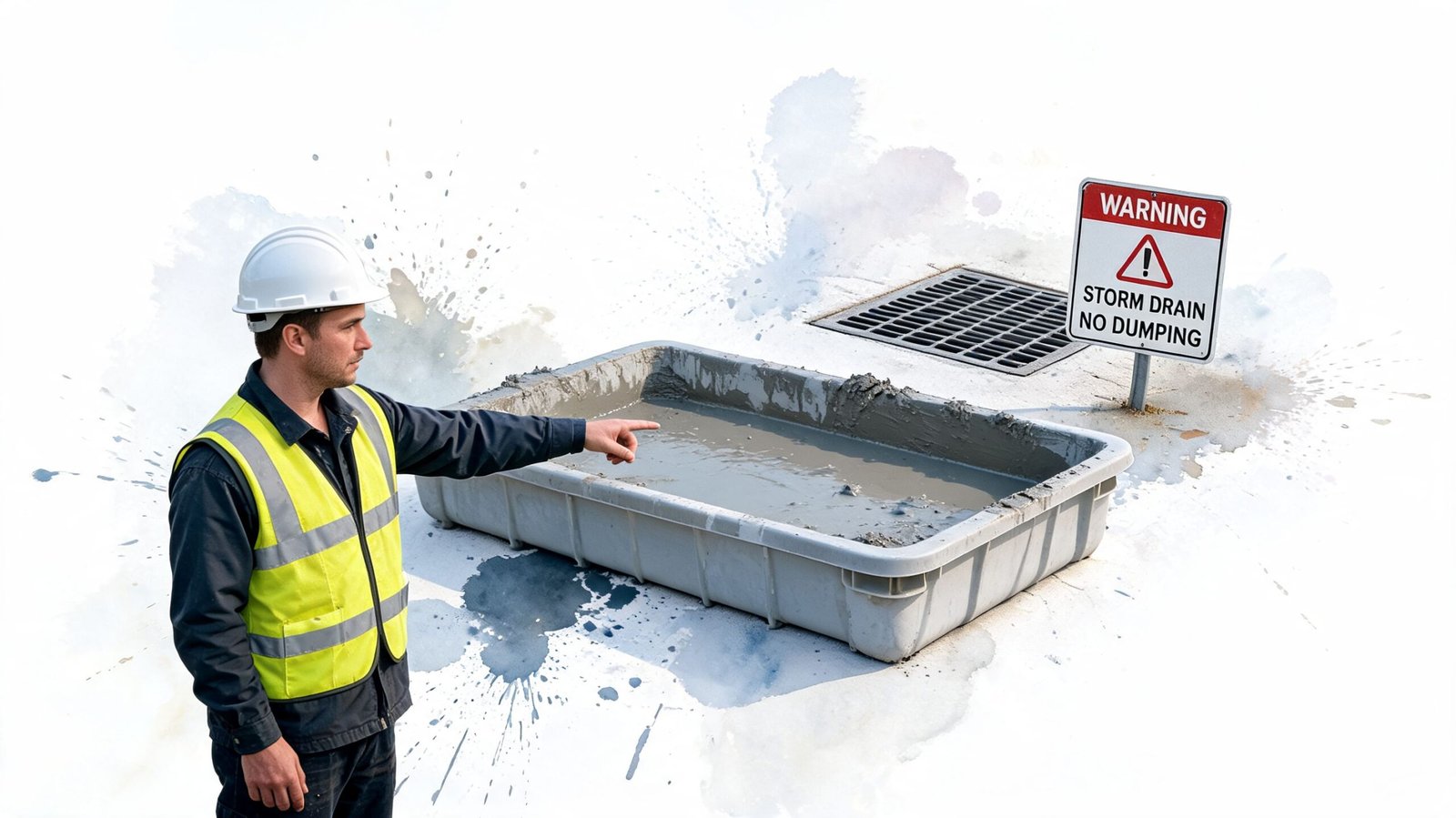
That gray, watery mess from cleaning trucks and tools is far from harmless. This slurry is a caustic, hazardous material. In fact, the EPA classifies concrete washout as a hazardous substance with a pH level near 12. That makes it almost as alkaline as liquid drain cleaner.
When that stuff seeps into the ground or flows into a storm drain, it can poison aquatic life and wreck local ecosystems for years.
Key Takeaway: Proper concrete washout isn't a "best practice"—it's a legal requirement. The fines for non-compliance will always cost you more than a simple rental containment solution.
Beyond Compliance to Site Efficiency
A solid washout strategy does more than just keep the inspectors off your back. It’s a mark of a well-run, efficient, and professional construction site. A messy site is an inefficient one, plain and simple.
Here’s what you really gain:
- Improved Safety: When you contain slurry, you're preventing slick, dangerous puddles and rock-hard tripping hazards from forming where your crew needs to walk.
- Enhanced Reputation: A clean, compliant site shows you know what you’re doing. It builds trust with clients, inspectors, and even the public.
- Streamlined Operations: A designated washout area keeps the workflow moving. No more bottlenecks or wasted time trying to figure out where to clean up. It’s organized and predictable.
By putting a clear plan in place for concrete washout, you’re making a smart investment in your project's success, safety, and reputation. A straightforward solution, like a washout pan rental from Reborn Rentals, takes the guesswork out of the equation and gives you a reliable way to handle this critical task.
Choosing the Right Washout Containment System
Picking the right washout pan isn't just about grabbing the biggest one available. It's about matching the container to your job's real-world demands to keep your site clean, efficient, and compliant. The wrong choice can either waste space and money or, far worse, lead to messy overflows and potential fines.
Think about it this way: a small residential pour with just one or two trucks has completely different washout needs than a big commercial job running a concrete pump and a steady rotation of mixers. Under-sizing your pan on a large project is a classic rookie mistake that guarantees spills.
Do a Quick Volume Estimate
Before you order, take a minute to run the numbers. A quick estimate of your washout volume is the best way to make sure you get the right pan for the job.
Here’s what you need to account for:
- Number of Concrete Trucks: A good rule of thumb is to plan for roughly 10 gallons of washout water per truck.
- Concrete Pump on Site: If you're using a pump, this is a big one. Washing out a pump hopper adds a significant amount of slurry.
- Finishing Crew Tools: This adds less volume than a truck, but it all adds up. Don't forget to factor in the water used to clean tools and wheelbarrows.
It's simple math. A job with five trucks and a pump is a completely different ballgame than a quick pour with just two trucks.
Reborn Rentals Washout Pan Comparison
Once you have a rough idea of your volume, you can pick the right pan. This table breaks down our two most popular steel washout pans to help you see how the different sizes stack up for different projects.
| Model | Dimensions | Liquid Capacity | Load Capacity | Best For |
|---|---|---|---|---|
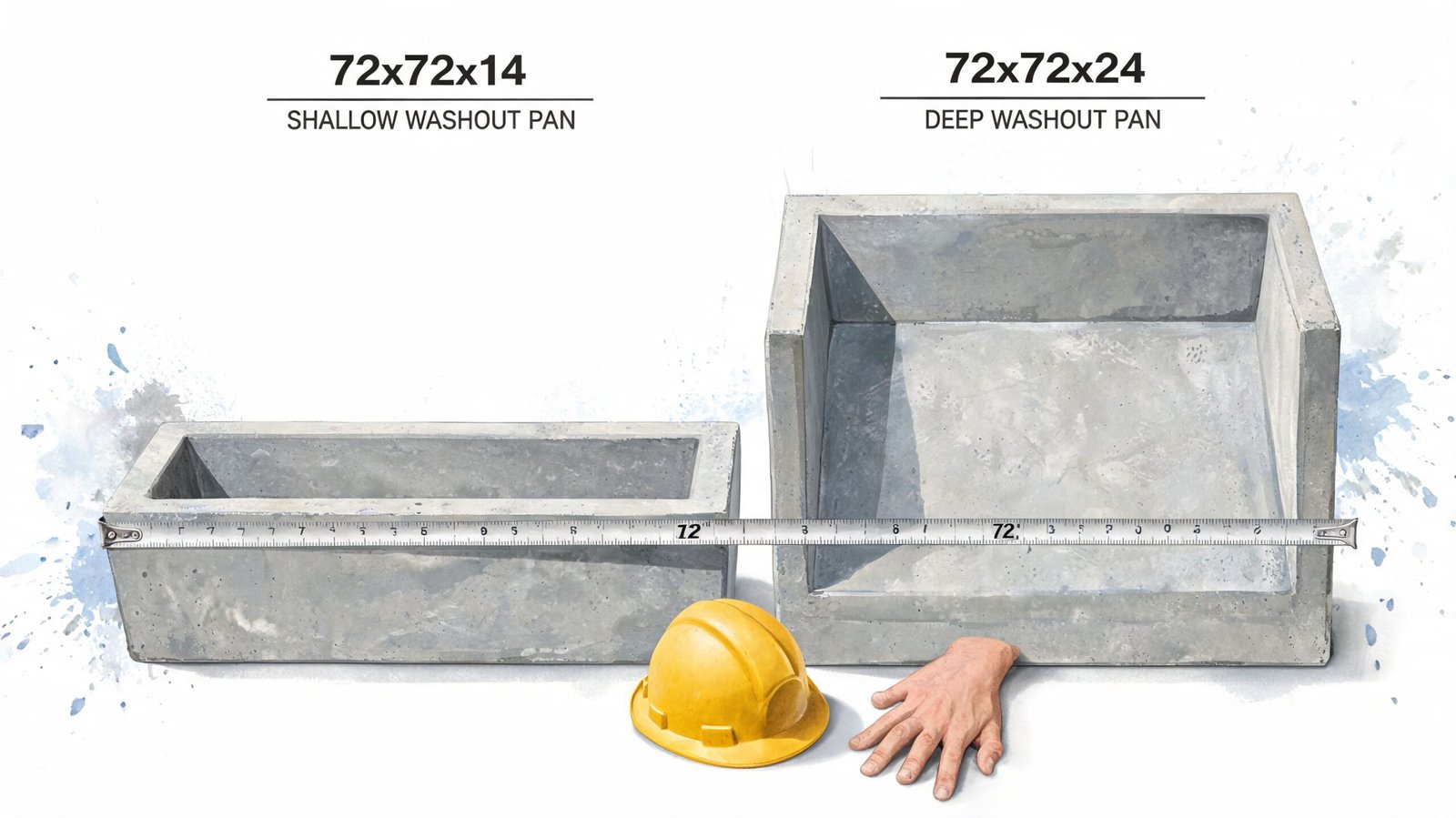
| Standard Pan | 72"x72"x14" | ~310 Gallons | 8,000 lbs | Small to medium jobs, sites with 1-4 trucks, or jobs without a concrete pump. |
| High-Capacity Pan | 72"x72"x24" | ~441 Gallons | 12,000 lbs | Large pours, sites with multiple trucks and a pump, or continuous pour schedules. |
The right choice comes down to your specific site needs and the volume you calculated earlier.
A high-capacity pan provides a crucial buffer on busy sites. The extra depth significantly reduces the risk of splashing during chute washout and contains the larger volume from pump hoppers with ease.
For most standard jobs, the 72"x72"x14" pan is the workhorse, giving you plenty of capacity without taking up too much of your site's footprint. But if you're tackling a major foundation or a continuous pour, the 72"x72"x24" pan is absolutely the smarter, safer call. When in doubt, it’s always better to have a little extra capacity than to run out.
Your Site Setup and Rental Logistics Checklist
The last thing you need on pour day is chaos. A little bit of smart prep before the first truck even rumbles onto your site can mean the difference between a smooth, profitable pour and a frantic, messy scramble. It’s all about making the washout process an afterthought, so your crew can stay focused on the concrete itself.
While booking your pan with Reborn Rentals is the easy part—a few clicks to pick your pan, set your dates, and you're done—the real groundwork happens on your site. Let's walk through it.
Preparing the Perfect Spot
Honestly, where you decide to place the washout pan might be the single most critical decision you make for site compliance. Get it wrong, and you’re setting yourself up for bottlenecks, safety issues, or even a fine. The goal is simple: find a location that’s a straight shot for the trucks but safely away from anything you don’t want concrete slurry near.
Before we deliver your pan, take a walk around your site. You’re looking for a spot with a few key traits:
- A Level and Stable Surface: This is non-negotiable. The pan has to sit flat to work correctly and avoid tipping. A sloped surface is just asking for a spill.
- Clear Truck Access: Your drivers will thank you. Make sure concrete trucks and pump trucks have a direct, easy path to the pan. You don't want them navigating an obstacle course just to wash out their chutes.
- Safe Distance from Drains: Keep it far from any storm drains, inlets, ditches, or water sources. A minimum distance of 50 feet is the standard rule of thumb and often a regulatory requirement.
Once you’ve picked your spot, mark it clearly. A few cones, some flagging tape, or a simple sign that says "Concrete Washout Area" works wonders. It takes two minutes and removes all guesswork on pour day.
Communicating the Plan to Your Crew
A perfect setup is only half the battle. If your crew and the truck drivers don't know the plan, it’s all for nothing.
Pull everyone together for a quick tailgate meeting before the pour starts. Point out the washout pan's location and make it clear: all concrete waste, from chute rinses to tool cleanings, goes in that pan. No exceptions. When everyone—from the pump operator to the finishers—is on the same page, your plan to wash out concrete compliantly actually works.
Nailing the Washout: A Guide to Clean and Compliant Execution
Okay, your washout pan is in place. Now comes the part that separates the pros from the rookies: the actual wash out concrete process. Getting this right is all about control. The whole point is to capture every bit of that caustic slurry without splattering it all over the site you just worked so hard to protect.
This takes a bit of finesse and clear communication, especially between your crew and the truck drivers. For a ready-mix truck, the driver needs to back up slowly and get that chute positioned right over the center of the pan before they start rinsing. Rushing this is the number one cause of messy, non-compliant splashes I see on job sites.
On-the-Ground Techniques
Managing the flow of washout is everything. A concrete pump hopper, for example, holds a ton of leftover material. You can’t just dump it all at once and hope for the best.
Pump Hoppers: Wash these out in stages. Let the water and slurry settle a bit between rinses. This stops the pan from getting hit with a sudden surge that could cause an overflow.
Hand Tools: Pick a corner of the pan and make it the designated spot for washing shovels, wheelbarrows, and trowels. This keeps the main area clear for the big equipment and prevents tools from getting buried in the muck.
Truck Chutes: Make sure drivers use a low-pressure water flow. Blasting the chute with a high-pressure hose is a recipe for disaster, sending alkaline water flying everywhere.
This simple graphic shows how a little planning makes the whole process run smoothly.
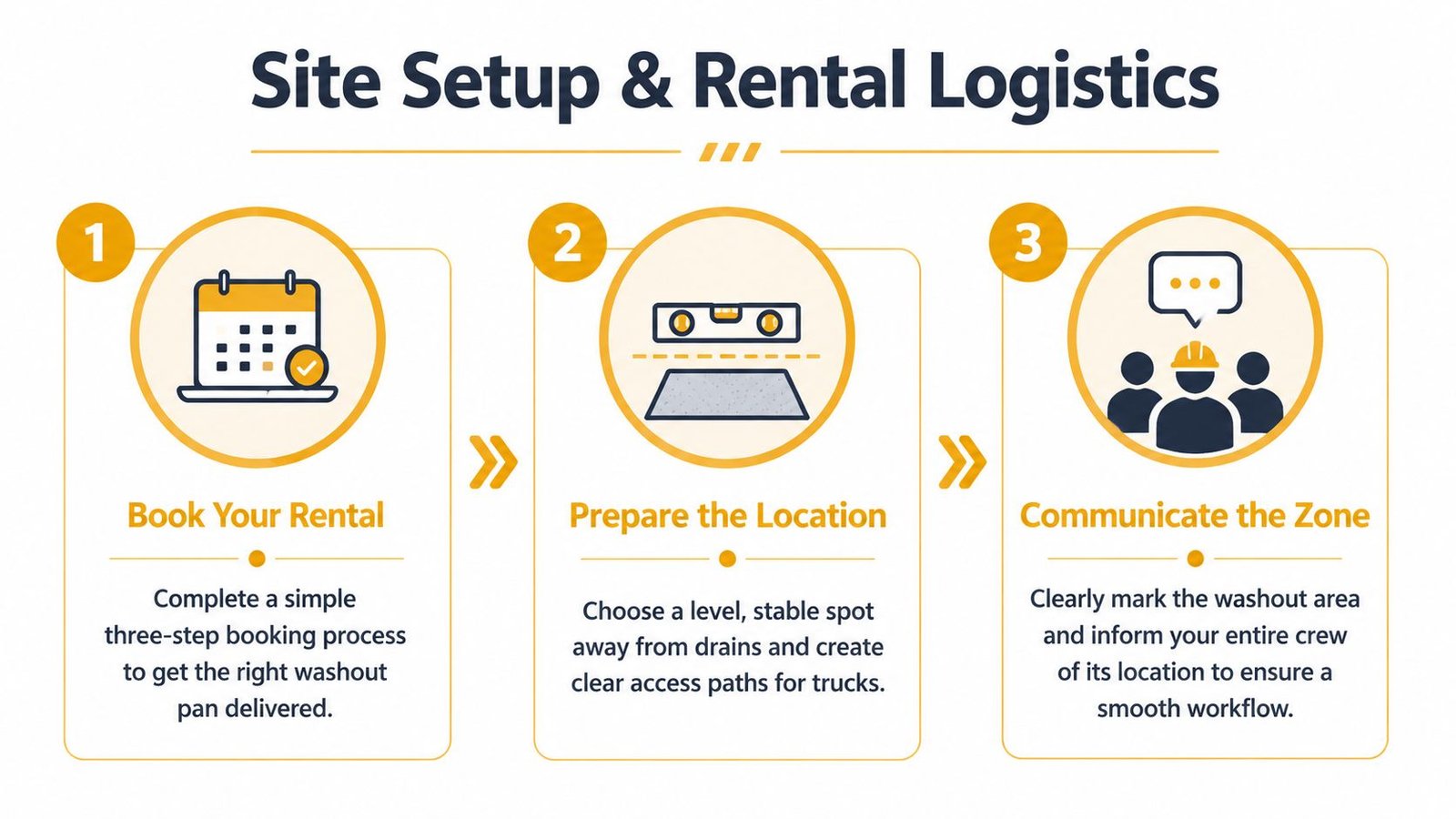
When everyone knows the plan, from booking the rental to communicating on-site, the job just flows better.
On large or continuous pours, don’t be afraid to wash out equipment periodically. Waiting until the very end can lead to an unmanageable volume of slurry, increasing the risk of overfilling the pan. A proactive approach is always safer.
By coaching your crew and drivers on these basic techniques, compliance stops being a chore and just becomes part of a professional workflow. A clean washout isn’t just about avoiding fines; it’s the mark of a well-run, professional construction site.
So, the slurry is in the pan. What now?
Honestly, the next part is the easiest. You just let nature do its thing. Over the next few days, the water will evaporate, and all those heavy concrete solids will settle and harden into a solid block.
This is the magic moment. That messy, high-pH liquid has turned into a solid, inert block of concrete. Suddenly, it’s not hazardous waste anymore. It’s just… concrete. You can break it up with a sledgehammer and haul it away without worrying about the complex regulations that come with liquid waste.
Why Full-Service Disposal Is a Game Changer
This is where a full-service rental really proves its worth. Instead of pulling your crew off their actual jobs to smash up concrete blocks and haul them away, you can make one phone call. With a provider like Reborn Rentals, we just come and pick up the entire pan—hardened concrete and all. The disposal problem just vanishes from your to-do list.
Think about what that means. You’re turning a messy, multi-step cleanup process into a single, simple task. It’s not just about making life easier; it’s about freeing up your team to keep the project moving forward, not getting bogged down in waste management.
The time saved here adds up fast and hits your bottom line directly. We’ve seen how traditional washout methods can burn through over 13 hours of driver time every single day on a 20-truck job. Using an efficient, managed system gives you those hours back, which means better fleet availability and tighter project schedules. You can see the real-world numbers and how it impacts profitability for yourself.
When it comes to the hardened waste, you have two solid, compliant choices:
- Go It Alone: You can definitely break up the concrete yourself. Just make sure you haul it to a recycling facility or landfill that’s approved to take construction debris.
- Let Us Handle It: The easier route. We pick up the pan and its contents. We then take full responsibility for making sure the material is recycled or disposed of according to all the local rules.
Answering Your Top Concrete Washout Questions
When you're running a pour, you’ve got a lot on your mind. The last thing you need is confusion about washout rules. We get these questions all the time from crews on site, so let’s clear the air on a few things.
What Happens If I Just… Don’t Use a Washout?
Look, I get it. It seems like a corner you can cut. But skipping a proper washout is playing with fire.
First, you're looking at some serious fines from the EPA and local inspectors if that slurry hits the dirt. More importantly, that caustic runoff is poison. It kills grass, trees, and anything living in nearby water. It also turns your site into a slippery, hazardous mess. It’s just not worth the risk.
Can't I Just Dig a Pit and Throw a Tarp in It?
We’ve all seen it tried. The "homemade" washout pit with a plastic liner seems like a quick and cheap fix, but it's a disaster waiting to happen.
From my experience, those liners are tissue paper on a real job site. They rip on the sharp aggregate, get punctured by equipment, and once that liner is breached, you're leaking contaminated slurry straight into the ground. That’s an automatic fail on inspection and puts you right back in the path of those hefty fines.
A purpose-built, watertight steel container is the only way to be 100% sure you've got containment. It's the difference between crossing your fingers and knowing you're compliant.
To keep your project moving, stick with the gear that’s built for the job.
How do I figure out what size washout I need? A good rule of thumb is to plan for 10 gallons of washout for every concrete truck. If you have a pump truck on the pour, you're going to need a lot more capacity. When in doubt, especially for a large pour, go with a bigger pan or schedule a mid-job swap-out. An overflow is the last thing you want.
Who’s responsible for the concrete once it hardens? The buck stops with the general contractor for all on-site waste. The good news is that a full-service rental company like us will handle the removal and legal disposal of the hardened material for you. It simplifies your site closeout and gives you one less thing to worry about.
Managing concrete washout shouldn't be a headache. Reborn Rentals provides simple, tough washout solutions that keep your site clean and the inspectors happy. Book your washout pan today and get back to what you do best—building.