What Is a Washout? Critical for Compliance in 2026
The pour is done. The crew wants to wash chutes, tools, and the pump before the material sets up. That’s the point where a lot of jobs either stay organized or start creating risk.
Most problems don’t start during the placement. They start in cleanup. Someone rinses out a truck in the wrong spot, slurry runs toward a drain, and now a routine pour has turned into an environmental issue, a paperwork issue, and sometimes a stop-work issue. That’s why every competent site plan treats washout as part of the pour, not as an afterthought.
When people ask what is a washout, on a construction site they usually mean concrete washout containment. It’s a designated, controlled place where concrete rinse water, slurry, and leftover solids go when trucks, pumps, chutes, wheelbarrows, and hand tools are cleaned. Think of it as the jobsite’s heavy-duty dishwashing station. Same purpose. Very different material. Concrete wash water isn’t harmless mud. It’s alkaline waste that needs containment, monitoring, and proper removal.
A clean washout setup does three things at once. It protects the site, keeps the project inside stormwater rules, and makes cleanup faster because everyone knows exactly where the waste goes.
Introduction What Is a Concrete Washout
The pour is finished, and cleanup starts fast. A driver needs to rinse the chute. The pump crew has residue to clear. Finish tools and wheelbarrows are still coated with wet cement paste. If the site does not have a designated washout ready before that moment, cleanup spreads wherever people can find open ground. That is how a routine concrete operation turns into a preventable site problem.
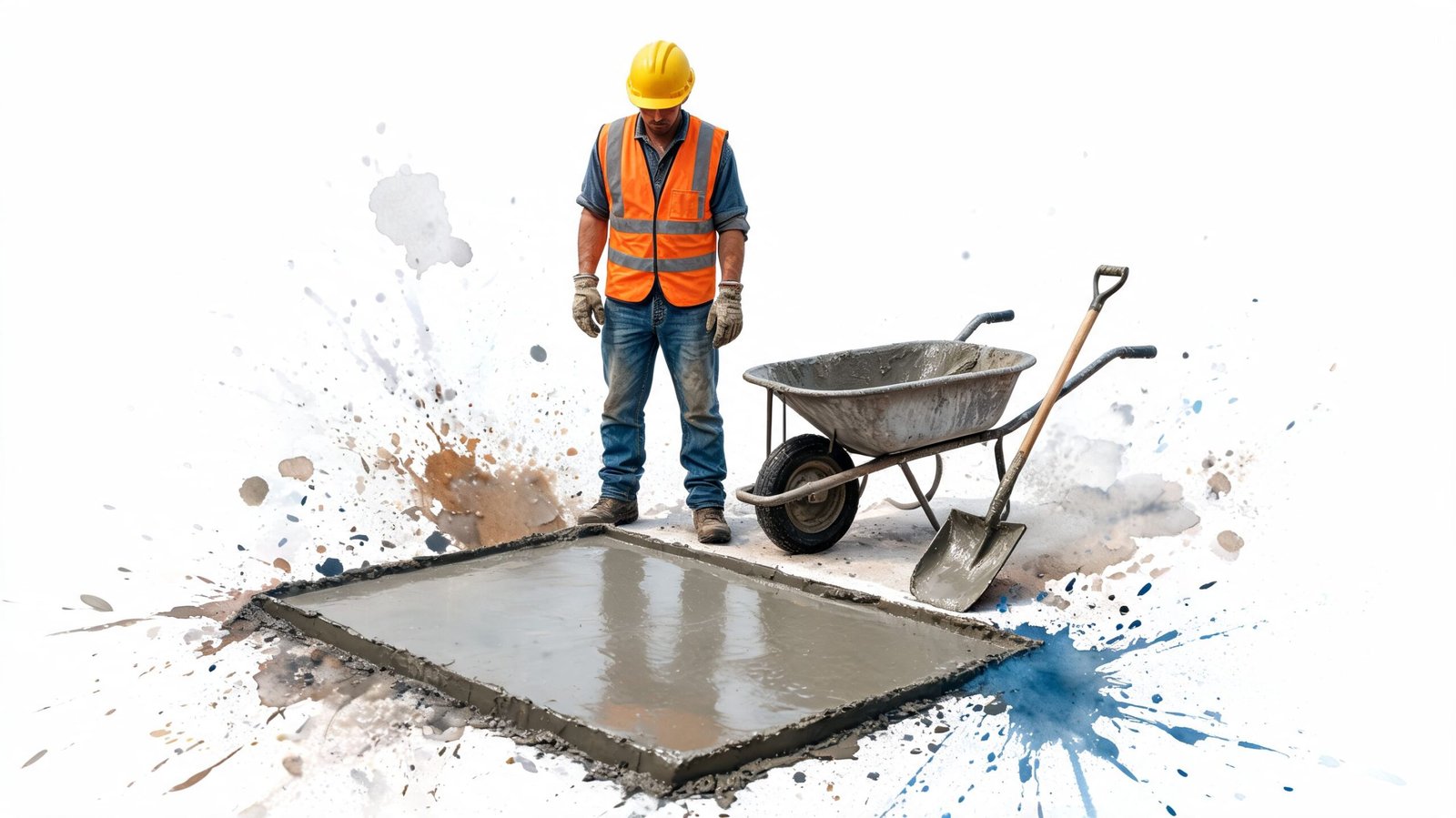
A concrete washout is a contained pan or designated lined area used to collect the liquid and solid waste from cleaning concrete equipment. That includes rinse water, cement fines, small aggregate, leftover slurry, and residue from admixtures. The purpose is straightforward. Keep cleanup waste in one controlled place so the crew can work efficiently and the project stays inside environmental requirements.
What the washout is holding
Washout material is a high-pH slurry. It can burn vegetation, damage soil conditions, and create a compliance issue if it reaches a storm drain or leaves the site. On a real job, that means the washout is not just a convenience item for the driver. It is part of the project’s containment plan.
A well-set washout area usually takes:
- Truck chute rinse water after delivery
- Pump and hose cleanout residue from placement equipment
- Tool and small equipment wash water from finishing work
- Returned concrete solids that need to cure in a controlled container
Field rule: If it came off concrete equipment during cleanup, it goes in the washout pan unless the site plan directs another approved method.
Why a defined washout setup matters early
Good washout planning saves time, labor, and headaches. Crews do not have to guess where to rinse. Drivers are less likely to dump in the wrong spot. The superintendent has one area to inspect, one vendor to coordinate with, and one cleanup stream to manage.
That is the practical side many newer project managers miss. Proper washout containment is not just a regulatory box to check. It is one of the simpler ways to keep a concrete job cleaner, faster, and easier to control. Renting the right pan, placing it correctly, and servicing it on time usually costs far less than rework, cleanup labor, or an inspection problem.
Why Washout Containment Is Non-Negotiable
A concrete truck finishes a pour, the driver rinses out on bare ground near the curb, and then it rains that night. By the next morning, what looked like a small cleanup shortcut has turned into a stormwater problem, a site cleanup task, and a conversation nobody wants with an inspector.

Washout water is highly alkaline. If it gets out of containment, it can damage soil, kill vegetation, and pollute storm drains, creeks, and detention systems. On an active project, that creates two problems at once. One is environmental exposure. The other is an avoidable operations problem that costs labor, delays cleanup, and pulls attention off the work that moves the job forward.
Experienced supers treat washout containment the same way they treat inlet protection or perimeter controls. It belongs in the site plan, the pre-pour discussion, and the daily walk.
What failure looks like in the field
Improper washout usually comes from ordinary planning mistakes, not unusual site conditions:
- No marked washout area: Drivers and pump crews use the nearest open spot.
- Bad pan location: The container is placed where runoff can leave the area during rain.
- Too little capacity: A small pan fills with slurry and hardened solids before the work is done.
- No service schedule: The pan stays in place too long and becomes an overflow risk.
- No site enforcement: One trade follows the rule, another ignores it, and the mess spreads.
That pattern shows up on projects of every size. The difference between a clean operation and a compliance issue is usually basic control.
Why regulators pay attention
Once washout leaves the container, it is no longer just housekeeping. It can become an unauthorized discharge. That matters because stormwater rules are written to keep construction pollutants out of drains and waterways, and concrete wash water is one of the easier violations for an inspector to spot.
A site can look organized and still fail here. If the pan is too close to drainage, set on poor grade, or allowed to fill too high before pickup, the job is exposed the minute runoff starts moving.
The practical reason to set it up right
Good containment saves time. Crews know where to go. Drivers are not guessing. Cleanup stays in one controlled location. The superintendent has one area to inspect and one vendor schedule to manage.
That is why rental logistics matter. The right pan in the right spot, delivered before the pour and serviced before it becomes overloaded, usually costs less than extra labor, contaminated soil removal, or a failed inspection. Proper washout containment is part of running a professional jobsite. It protects the site, keeps the project inside stormwater requirements, and makes concrete operations easier to control.
Exploring Washout Container Types and Capacities
A finisher rinses out at lunch, the pump crew washes down an hour later, and one more truck shows up before the end of the pour. If the pan was sized for a light day instead of the actual work, the washout area becomes a problem fast. Capacity decisions are field decisions.
Steel washout pans are the standard choice on active jobs because they hold up to traffic, stay visible, and can be set where trucks and crews can reach them without creating extra mess. The main differences are pan depth, liquid volume, and how much hardened material the container can hold before service or swap-out is needed.
What the specs mean in the field
Depth changes how much margin the site has. A deeper pan gives the crew more room for rinse water, slurry, and cured buildup between pickups. A shallower pan keeps the loading height lower, which can help on tight sites or lighter-duty work.
Reborn Rentals offers a common 72' x 72' x 24' washout pan with about 441 gallons of liquid capacity and 18.25 tons of solids capacity. Its 72' x 72' x 14' pan holds about 310 gallons. Those product specs show the practical trade-off clearly. More depth usually means fewer service calls, but it also means planning for a heavier loaded container and enough access for placement and removal.
Washout Pan Sizing Guide
| Pan Size (L' x W' x H') | Liquid Capacity (Gallons) | Solids Capacity (Tons) | Best For |
|---|---|---|---|
| 72' x 72' x 14' | 310 | Qualitatively suited for lighter washout volume | Small pours, retrofit work, short-duration cleanup needs |
| 72' x 72' x 24' | 441 | 18.25 | Larger pours, pump cleanout, jobs with repeated truck washout activity |
How to choose between them
Start with washout frequency. Yardage matters, but the better question is how many times crews, pump operators, and drivers will hit the pan during the work.
A smaller pan can work well for a short sidewalk job, a curb patch program, or light renovation work with controlled cleanup. A deeper pan is usually the safer call for slab pours, pump use, repeated truck rinse-outs, or multi-day concrete operations where missed service creates risk.
Use these jobsite filters:
- Number of washout events: More rinse-outs means size up.
- Pump cleanout: Pump residue fills a pan faster than many project managers expect.
- Rain exposure: Open containers need extra freeboard if weather is a factor.
- Service schedule: If pickup timing is tight or uncertain, buy margin with a larger pan.
- Access constraints: Tight gates, limited staging, or crane conflicts can justify a lower-profile option if volume stays controlled.
Choose the pan for the busiest concrete day, not the average week.
That approach keeps the washout area usable, reduces the chance of overflow, and makes rental logistics easier to manage. On a well-run project, the right container size is not just about holding waste. It cuts labor, avoids emergency swaps, and keeps compliance work tied to the actual pace of the job.
Implementing a Safe and Effective Washout Procedure
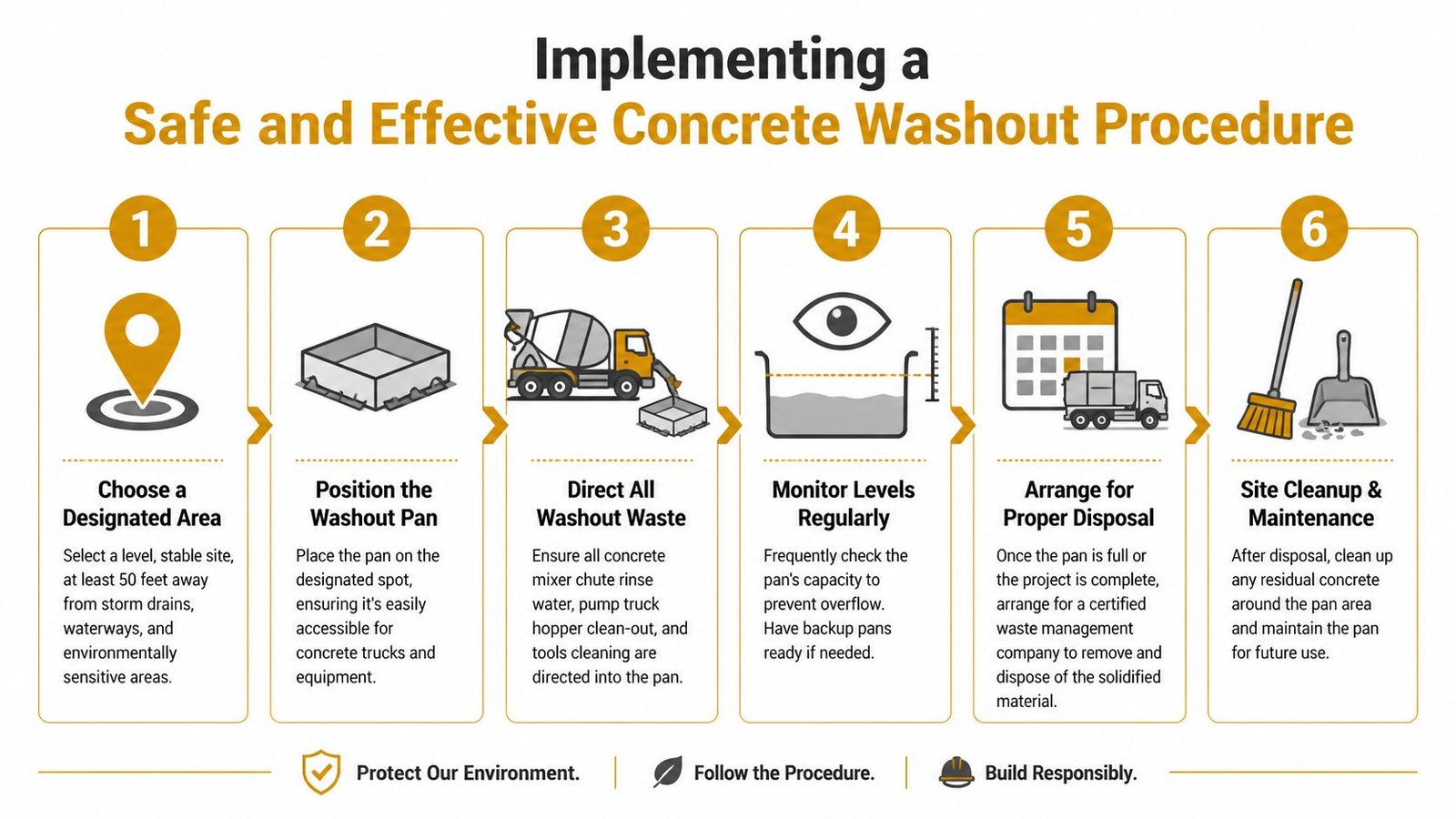
A truck rolls in at 6:30, the pump is set, and the driver asks where to wash out. If the answer takes more than a few seconds, the site is already behind. Washout control has to be decided before concrete work starts, because once crews are cleaning chutes and tools, they will use the easiest option in front of them.
Start with the ground, not the pan
Placement drives the whole procedure. A properly sized pan still becomes a problem if it sits on soft fill, at the edge of a slope, or in an area that turns muddy after rain.
The term washout also has a civil engineering meaning. It refers to erosion or failure caused by flowing water. That is a useful reminder for site prep. Ground conditions matter. A loaded washout pan puts real weight on one spot, and weak or saturated soil can let the unit settle, rack, or tilt under use. The washout article on Wikipedia) discusses that erosion context and points to FHWA HEC-18 as guidance related to scour and site stability.
On an active project, the practical takeaway is simple. Set the pan where the ground will hold it, where drivers can reach it cleanly, and where a spill will not run toward a drain or low area.
Check four things before the pan is dropped:
- Bearing surface: Use firm, level ground. Stay off recently placed backfill, soft shoulders, and edge conditions that can break down after rain.
- Approach path: Give mixer drivers and pump crews a straight, usable path that does not force bad backing angles or traffic across unstable ground.
- Stormwater separation: Keep the washout away from inlets, ditches, swales, and known runoff paths in the SWPPP or stormwater plan.
- Service access: Leave enough working room for pickup, swap-out, or cleanout without shutting down the pour area.
The daily operating routine
Good washout procedures are simple enough to survive a busy pour day.
Put the washout location on the logistics plan. Mark it in the field. Review it in the pre-pour meeting with the superintendent, pump operator, concrete foreman, and anyone directing trucks. Drivers should know the location before they rinse a chute, not after.
Then keep the field rules plain. All concrete rinse water, pump residue, tool wash, and barrow cleanup go into the designated pan. One person checks the pan during concrete operations, especially on days with multiple trucks or pump cleanout. If rain is in the forecast, inspect freeboard before the crew leaves. If the schedule is tight or volume is heavy, line up a backup pan or service call early instead of waiting for an overflow risk.
If a driver or pump operator has to stop and ask where washout goes, the plan was not communicated clearly enough.
Rental logistics help instead of slowing the job down. A pan in the right place, with a clear service plan and one person assigned to monitor it, reduces rework, keeps trucks moving, and prevents the last-minute scramble that usually creates violations.
Common mistakes that create avoidable trouble
The failures are usually predictable. They start with small shortcuts, then turn into cleanup, schedule disruption, or a compliance problem.
| Problem | What usually caused it | Better practice |
|---|---|---|
| Overflow | Pan capacity did not match actual rinse-out volume, or no one checked levels during pour days | Size for the busiest concrete activity and inspect during active work |
| Muddy access around pan | Pan was placed without considering truck and crew movement | Use firm ground and keep a stable approach path |
| Slurry outside containment | Crews washed beside the pan because positioning was awkward or unclear | Give enough room for chute and tool cleanup, and make the location obvious |
| Pan settlement or tilt | Unit was placed on soft, saturated, or poorly supported ground | Verify support conditions before delivery and after heavy rain |
What a superintendent should insist on
Washout compliance needs ownership. On a well-run site, one person checks the condition of the pan and one person has authority to call for service or a swap. Without that, everybody assumes somebody else is handling it.
Set the rules clearly:
- No rinse-outs outside the pan
- No discharge onto soil or stone
- No waiting until the pan is near failure
- No placement on questionable ground
That is not extra bureaucracy. It is basic site control. Done right, washout containment protects the stormwater system, keeps crews out of a mess, and turns a regulatory requirement into a routine part of running concrete work efficiently.
Managing Washout Disposal and Cleanout
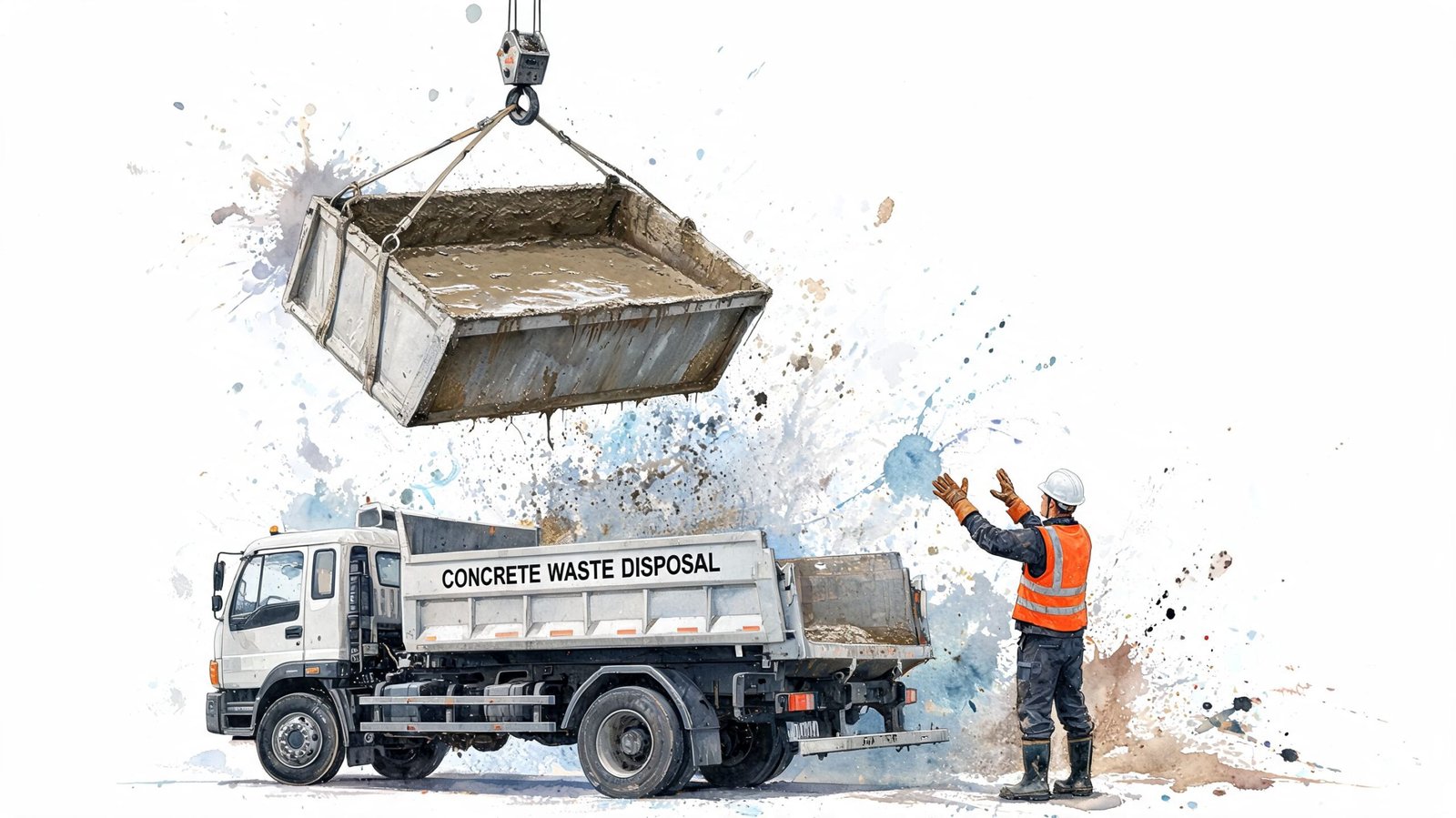
A washout pan can be set in the right spot, sized correctly, and used the right way, and still create problems if nobody plans the back end. Disposal is where good containment either pays off or starts costing the job time and money. If the pan sits too long, solids harden, liquid builds up, access gets tighter, and pickup turns into a scheduling issue instead of routine service.
What happens inside the pan over time
Washout does not stay in one condition for long. The heavy material drops first. Finer cement particles settle after that. Water separates above the solids, and the bottom layer gradually firms up.
That matters for cleanout. Fresh slurry splashes, shifts, and creates more handling risk. Material that has been allowed to settle is easier to remove in a controlled way, easier to transport, and less likely to leave a mess around the pickup area. Crews see this every week on active concrete sites.
The practical takeaway is simple. Give the container a service plan that matches how fast it is filling, not just the day it was delivered.
Landfill versus recycling
Most jobs have two disposal paths. The material is either taken out as waste or sent to a recycler that can process the concrete solids into usable material. The cleaner the washout stream, the more options you keep.
Once washout is mixed with trash, soil, wood, rebar tie wire, or general site debris, recycling gets harder and disposal costs usually go up. Clean containment helps on both fronts. It supports compliance, and it keeps the material in a condition that is easier to haul and, in many cases, easier to reuse.
I have seen the difference on jobs with tight budgets. A pan that only holds concrete washout is straightforward to service. A pan that has turned into a catch-all for site waste usually brings extra handling, extra labor, and arguments about who owns the cleanup.
Clean containment keeps disposal simple. Contaminated washout usually costs more to remove and gives you fewer disposal options.
How to keep disposal from becoming a site headache
Disposal works best when it is scheduled early and checked during the work, not after the pan is already near capacity. The PM needs to know who is watching fill levels, who calls for service, and how quickly the provider can swap or remove the unit.
Use a simple field routine:
- Inspect the pan during active concrete work
- Request service before the container gets tight on capacity
- Keep the pickup path clear for trucks or lifting equipment
- Keep trash and other debris out of the washout
- Record removal or cleanout for the project file if required
There is a real trade-off here. Calling for service too early can mean paying for capacity you did not use. Waiting too long can shut down rinse-out operations, force crews to improvise, and increase the chance of a spill or a stormwater violation. On a well-run site, the better choice is usually early, planned service. It costs less than cleanup, delays, and enforcement problems.
If the rental provider handles pickup and final cleanout, the process is more predictable for the field team. The site still needs oversight, but the work stays contained from washout to removal. That is the goal. Keep the material in one controlled container, keep the records straight, and make disposal part of the concrete plan instead of an afterthought.
Your Guide to Renting a Washout Pan FAQ
How is rental pricing usually structured
Most providers use a straightforward rental model based on the unit, the rental period, and the delivery location. Some also list possible surcharges for rough terrain, special access, or expedited requests. The important thing is transparency. You want to know the daily rate, what delivery includes, and what triggers added charges before the pan arrives.
How do I choose the right pan size
Start with the cleanup activity, not just the pour volume. Ask how many trucks will rinse out, whether a pump is involved, how long the work will run, and whether weather could add water to the container. If the project has steady concrete activity or limited service windows, sizing up is usually the safer call.
What should I ask before delivery
Confirm four things:
- Site access: Can the delivery truck place the pan where crews need it?
- Ground conditions: Is the placement area firm enough to support a loaded unit?
- Schedule: Will the pan arrive before the first concrete operation starts?
- Pickup plan: What’s the process when the pan is full or the job wraps up?
Are there extra fees contractors should expect
There can be. Common examples include difficult site access, rough terrain, and urgent delivery needs. That isn’t unusual. What matters is that the provider spells those items out early so the PM can budget accurately instead of arguing over changeable site conditions later.
What makes the rental process smooth
The smoothest rentals happen when the PM gives clean job information up front. Include the address, delivery window, site contact, access notes, and expected concrete activity. That lets the provider match the right pan and avoid wasted trips.
A washout rental goes well when the field logistics are clear before dispatch, not after the truck is at the gate.
Do small projects need a formal washout setup too
Yes. The waste stream may be smaller, but the compliance issue is the same. Small jobs often get in trouble because people assume cleanup will be minimal and skip the planning. That’s exactly when slurry ends up in the wrong place.
If you need a practical rental option for concrete washout containment, Reborn Rentals gives contractors a simple way to reserve washout pans, set dates and locations, and arrange delivery without turning compliance into a paperwork exercise. Their catalog focuses on purpose-built containment equipment for real jobsite cleanup, which helps crews stay organized, protect stormwater controls, and keep the project moving.