
Cement Recycling Seattle: Concrete Waste Management
The truck pulls off, the finish looks good, and everyone wants to move on to the next task. Then you look at the chute rinse, the pump cleanup, the slurry in the wheelbarrow, and the wash water collecting in the wrong place. That’s where a lot of Seattle jobs go sideways.
Most online advice about cement recycling seattle is really about solid concrete. Broken slabs. Clean chunks. Maybe asphalt mixed in, maybe not. That helps if you’re tearing out a driveway or hauling demo, but it doesn’t solve the problem sitting on your active site right after a pour.
Liquid concrete washout and slurry waste is a different animal. You can’t treat it like clean rubble, and you can’t leave your crew guessing about where it goes. On a Seattle site, that’s a compliance issue, a housekeeping issue, and a scheduling issue all at once. If your washout setup is sloppy, every rain event, every hose rinse, and every rushed cleanup creates more risk.
What works is simple, but it has to be deliberate. Set containment before the pour. Keep slurry separate from clean recyclable concrete. Let the waste stabilize properly. Send recyclable material to the right facility. Keep records tight enough that if an inspector asks questions, you’re not digging through texts and gate tickets at the end of the month.
Practical rule: If your plan for washout starts after the pour, you’re already late.
Introduction The Pour is Over Now What
The most common mistake on concrete jobs in Seattle isn’t bad intent. It’s assuming washout can be figured out later. A truck driver needs a place to rinse. The pump crew needs cleanup space. Finishers need somewhere to dump slurry and tool water. If that area isn’t designated before work starts, the site ends up improvising.
Improvisation is expensive. It creates extra labor, contaminated material, and confusion about what can be recycled. It also causes the problem that doesn’t show up on a disposal invoice but hurts just as much: delays when the superintendent has to stop other work and clean up a preventable mess.
What contractors usually get wrong
A lot of crews understand demo recycling. They know where to send clean broken concrete, and they know many yards won’t take loads mixed with trash, paint, or rebar unless the facility is set up for it. Where jobs still stumble is the washout stream created during active work.
That stream usually includes:
- Truck washout residue that starts as wet slurry and hardens later
- Pump and hose cleanup water that carries fines and cement paste
- Tool and wheelbarrow rinseout that looks minor but adds up fast
- Rainwater mixing with washout when containment is undersized or poorly placed
None of that belongs in a storm drain. None of it should be mixed into a clean concrete recycling pile and hoped for the best.
What actually works on Seattle jobs
The cleanest jobs treat washout like a planned scope item, not an afterthought. They assign a location, a container, a responsible crew lead, and a removal plan before the first truck arrives. That sounds basic because it is. But basic systems are what keep a site moving.
Here’s the field-tested sequence that tends to hold up:
- Pick the washout zone early. Keep it accessible to drivers and pump crews without putting it in a drainage path.
- Use impermeable containment. Pans and containers beat makeshift ground depressions on tight urban sites.
- Separate waste streams. Clean solid concrete can go one direction. Slurry and washout solids go another.
- Document removal. Save the tickets, photos, and notes while the job is fresh.
The best washout station on a site is the one every operator can find immediately, use without asking, and leave without making a mess.
Seattle's Concrete Waste Regulations You Must Know
Seattle doesn’t regulate concrete waste aggressively just to make jobs harder. The city does it because construction and demolition waste is a major part of the local waste stream. In 2023, Seattle generated approximately 350,000 tons of construction and demolition debris, and the city has kept its diversion rate above 66% since 2013. City code also requires recyclable materials from Seattle jobsites to go to Qualified Receiving and Recycling Facilities that report monthly to Seattle Public Utilities, as detailed in Seattle Public Utilities solid waste metrics and targets.

That matters on the ground because concrete waste isn’t just your disposal problem. It’s part of a citywide reporting and diversion system. If you’re managing concrete work in Seattle, you need to think in two buckets. First, what can be recycled as a construction material. Second, what has to be contained and handled before it becomes acceptable for recycling or disposal.
What the city expects from contractors
For most site teams, the practical compliance points are these:
- Use approved outlets for recyclable material. If the material is recyclable, it needs to go where Seattle recognizes that handling stream.
- Track what leaves the site. Your haul tickets and disposal records need to match the waste handling story in your project file.
- Build washout control into the SWPPP. On concrete scopes, inspectors expect to see that slurry and wash water were anticipated, not ignored.
- Keep recyclable and contaminated material separate. Once crews mix clean concrete with trash or unmanaged slurry, your options narrow fast.
Why washout gets more scrutiny than crews expect
A pile of broken sidewalk is visible. Slurry problems are less obvious until they spread. Wash water moves. It follows grade. It picks up sediment. It gets pushed around by rain and traffic. On infill sites, one bad cleanup area can affect access routes, staging zones, and drainage in a matter of hours.
That’s why the paperwork and the field setup have to match. If your SWPPP says there’s designated washout containment but the crew is rinsing into a random corner of the lot, the plan isn’t worth much.
Field note: Inspectors usually notice washout the same way supers do. They look for the low spot, the stained flow path, and the place the crew thought nobody would use.
What this means for daily site management
The takeaway isn’t complicated. Seattle’s waste rules reward jobs that can show control. If you can show where the washout went, how it was contained, and where the recyclable concrete ended up, you’re in a much stronger position than the crew trying to explain a muddy gray patch after the fact.
For site managers, that means concrete waste needs the same level of planning as erosion control, access, and utility protection. It’s not a side note. It’s part of running a professional site.
Effective On-Site Concrete Washout Containment
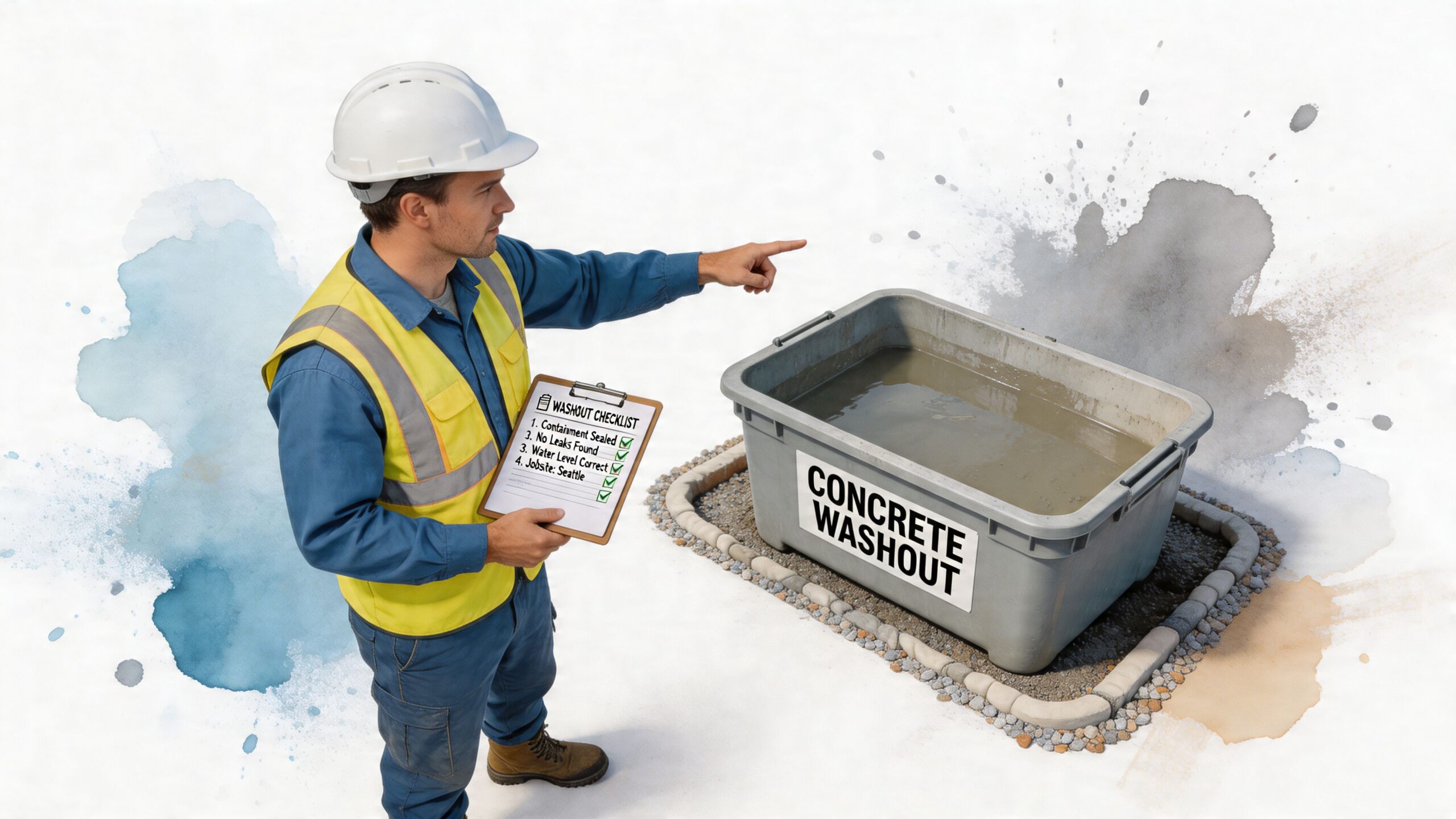
Containment is where compliance gets won or lost. If you set up the washout area correctly, disposal gets easier, records are cleaner, and your crew doesn’t waste half a day dealing with preventable mess. If you place it badly, every rinseout becomes a small emergency.
Pick the location like you expect rain
The wrong location is usually chosen for convenience only. It’s close to the pour, easy for the first truck, and terrible for the rest of the job. On Seattle sites, you need a spot that works after traffic starts cutting across the pad and after the weather shifts.
A good washout location should be:
- Accessible to drivers and pump crews without backing everyone into a bottleneck
- Away from drains, catch basins, and flow paths so an overflow doesn’t travel off the work area
- On stable ground that won’t rut, tilt, or shift under load
- Visible to the crew so people use it instead of inventing a second washout area somewhere else
If the site is tight, put extra thought into approach and turning movement. A perfect containment pan doesn’t help if the driver can’t reach it cleanly.
Size the containment for the actual scope
Undersized washout is one of the fastest ways to create extra cost. Crews fill it too early, start washing around it instead of into it, and then someone has to scramble for a second option. Larger dedicated pans give you room for truck rinseout, pump residue, and day-to-day cleanup without constant babysitting. On jobs using larger containment options, a 72' x 72' x 24' pan with about 441 gallons of liquid capacity is a practical benchmark from the rental market when you expect heavier washout demand.
That doesn’t mean every site needs the biggest pan available. It means you should match capacity to the concrete scope, the number of expected washouts, and whether rainwater could add volume before pickup.
Make the rules obvious to the crew
A washout area only works if everyone uses it the same way. That requires simple instructions, repeated often. Long toolbox talk lectures don’t fix this. Clear field rules do.
Use a short operating standard such as:
- All truck chute washout goes in the designated containment.
- Pump and hose cleanup goes to the same controlled area unless a separate station is assigned.
- No rinse water on grade, in gravel staging, or along fencing.
- If the pan is near capacity, report it before the next truck arrives.
If the laborer watching the gate doesn’t know where concrete washout goes, the site isn’t set up yet.
Manage it daily, not after it hardens
The cleanest concrete sites don’t “set and forget” washout containment. Someone checks it every day. They look at fill level, splash-out around the perimeter, rain accumulation, and whether hardened buildup is reducing usable capacity.
Daily checks should include:
- Fill level review so you don’t get surprised mid-pour
- Perimeter housekeeping to catch drips and tracked residue early
- Access condition so trucks aren’t forced into bad angles
- Rain planning if weather could reduce freeboard or create overflow risk
A neglected washout station turns into two problems. The contained waste still has to be managed, and now you also have contaminated soil or surface cleanup around it. That’s avoidable with basic attention.
Finding the Right Seattle Cement Recycling Facility
Most Seattle-area information online points contractors toward yards that take clean solid concrete. That’s useful, but incomplete. It doesn’t answer the question that comes up on active jobs: what do you do with washout solids and slurry-derived waste once it’s contained and stabilized?
The gap is real. According to Dirt Exchange recycling drop-off information, common guidance focuses on clean concrete drop-off such as Dirt Exchange at $80/yd for small pieces with no rebar and Burien Bark at $50/yd for clean concrete with no asphalt. That same pattern leaves contractors without clear public guidance for liquid slurry, which requires separate containment and handling and shouldn’t be mixed with clean recyclable solid loads.
The first sorting question to ask
Before you call any yard, identify which material you have. On most jobs, it falls into one of these categories:
- Clean solid concrete from demo or leftover hardened material with minimal contamination
- Concrete with rebar or mixed attachments that may need a facility equipped for heavier processing
- Washout solids that have dried or hardened after being contained
- Active liquid slurry that still needs controlled handling before it can move into a solid waste stream
That last category is where contractors waste time. They assume every “concrete recycling” facility handles slurry. Many don’t. They’re set up for solid material, not unmanaged liquid washout.
Seattle Area Concrete & Washout Recycling Options
| Facility Name | Accepts Solid Concrete (Clean) | Accepts Concrete w/ Rebar | Accepts Washout Solids | Estimated Cost | Key Notes |
|---|---|---|---|---|---|
| Dirt Exchange | Yes, for small clean pieces | No, based on listed restrictions | Not publicly specified | $80/yd | Listed for clean concrete pieces under stated size limits, with no rebar, trash, or paint |
| Burien Bark | Yes, clean concrete | No asphalt listed with clean concrete acceptance | Not publicly specified | $50/yd | Public guidance is focused on clean concrete only |
| DTG and Heidelberg listings | Listed as concrete recycling options | Public guidance varies by facility | Slurry details not publicly clear in the cited guidance | Qualitative only | Call ahead and describe the material exactly |
| Mixed C&D facilities | Sometimes for broader debris streams | Sometimes, depending on facility rules | Usually not a substitute for unmanaged liquid slurry | Qualitative only | Good for mixed debris, not a reason to skip containment |
What to ask before you load a truck
Don’t ask, “Do you take concrete?” That question is too broad to be useful. Ask with the material condition in mind.
Use this checklist:
- Describe the waste accurately. Is it clean broken concrete, hardened washout solids, or material with steel and trash mixed in?
- Ask about moisture condition. Some facilities are fine with hardened solids but won’t touch liquid material.
- Confirm prep requirements. Rebar, paint, wood, or oversized pieces can change acceptance.
- Verify load type and drop-off process. A yard may accept the material but only under certain conditions or equipment limits.
A five-minute call with the right description saves a wasted haul, a rejected load, and a second disposal bill.
The practical decision rule
If the material is still slurry, your first job isn’t finding a recycler. Your first job is stabilizing and containing it properly. Once it becomes a manageable solid waste stream, your options improve and your conversations with facilities get clearer.
That’s the difference a lot of “cement recycling seattle” searches miss. Recycling starts on the site, with separation and containment. If the load leaves the site in the wrong condition, the recycling conversation is already compromised.
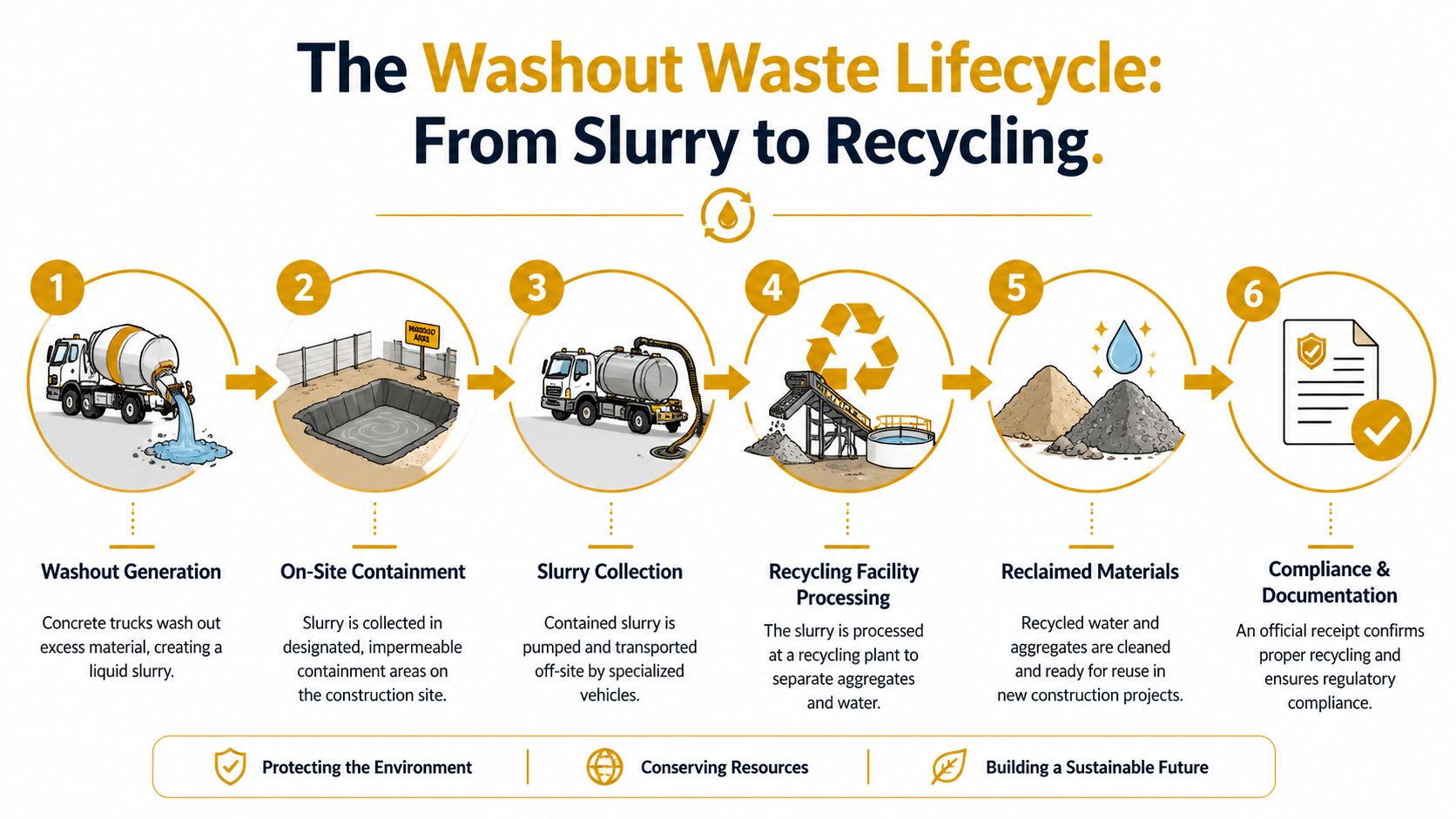
The Washout Waste Lifecycle From Slurry to Recycling
The washout process is easiest to manage when everyone on the project understands the full chain. Slurry gets generated. It’s contained. It changes state. It gets hauled. Then it gets documented. Problems usually happen when one of those steps is skipped or assumed.
What a clean workflow looks like
A disciplined washout workflow usually follows this order:
Generation on the pour day
Truck washout, pump cleanup, and tool rinse create slurry immediately. This is the moment where sites either keep control or lose it.Containment on site
The slurry goes into impermeable containment set aside for that purpose. Not onto bare ground, not into a random excavation, and not into a mixed debris pile.Stabilization
Water is managed and solids are allowed to harden or separate according to the handling plan for that site.Removal and transport
Once the material is in the right condition, it can be loaded, picked up, or hauled to the appropriate outlet.Receipt and documentation
Tickets, receipts, and internal records close the loop for the project file and SWPPP documentation.
Where jobs get jammed up
Most washout failures don’t happen at the recycling yard. They happen in the handoff between field cleanup and disposal planning. The superintendent assumes the concrete sub is handling it. The concrete sub assumes labor is handling it. Labor assumes the pan company or hauler will figure it out. Then the pan is full and nobody has a removal path.
That’s why one person needs to own the sequence from pour day through final receipt. Ownership matters more than fancy terminology.
Reality on site: Washout becomes manageable the minute one person is responsible for checking it, scheduling it, and documenting it.
Why separation matters for future recycling
There’s a bigger reason to keep washout waste clean and separate. Some emerging cement recycling technologies depend on recovering usable fine material from concrete waste. In pilot-scale trials, Cambridge Electric Cement’s process achieved 95% recovery efficiency and could reduce cement industry CO2 emissions by 50% to 70% when scaled, as reported by Chemistry World’s coverage of recycled construction waste in cement and steel production.
Those processes don’t work well with dirty, mixed, poorly controlled waste streams. They need material separation. That doesn’t mean every Seattle jobsite is feeding an advanced cement loop tomorrow. It does mean the discipline you use for washout today supports better recovery options later.
Documentation that protects you
Your records don’t need to be complicated. They need to be complete enough that someone else can follow the story after the fact.
Keep:
- Photos of the washout setup before and during the concrete operation
- Pickup or haul receipts showing where the waste went
- Daily reports or foreman notes on when the washout was serviced
- SWPPP file entries that match what happened in the field
When records and field conditions line up, disputes get shorter. When they don’t, the project team ends up reconstructing events from memory, and that rarely goes well.
Pro Tips for Reducing Costs and Maximizing Compliance
The cheapest washout waste is the waste you never generate. That doesn’t mean you can eliminate it. It means you can stop inflating it through bad habits. Most cost creep on concrete cleanup comes from excess rinse water, duplicate handling, and contaminated loads that should have stayed separate from the start.

Cut volume before it becomes a disposal problem
Start with crew coordination. Tell the ready-mix drivers and pump operators where the washout goes before they unload. If the cleanup area is assigned late, they’ll default to whatever is closest and fastest. That creates bigger cleanup zones and more material to manage.
A few practical habits make a difference:
- Sequence the cleanup. Don’t let every crew member rinse tools at random throughout the site.
- Protect clean concrete loads. Keep broken recyclable concrete out of the washout stream.
- Use one designated washout area per operation. Multiple unofficial washouts create multiple disposal headaches.
- Check containment before the next truck arrives. Overflow almost always costs more than prevention.
Keep records like you expect an audit
A lot of contractors are good at field control and weak at paperwork. That’s backwards. If your site was compliant but you can’t prove it, you’re left arguing from memory.
Use a simple closeout routine after every pour:
- Save photos in the job folder the same day.
- File haul tickets immediately.
- Add a short note to the daily report describing washout handling.
- Make sure the superintendent and SWPPP contact are looking at the same information.
Good documentation doesn’t slow a project down. It keeps small site issues from turning into long meetings later.
Think beyond disposal
Concrete recycling isn’t just about getting waste off the site. Properly recycled concrete also feeds higher-value uses. One strong example is full-depth reclamation, where recycled concrete pavement is pulverized and mixed with 2% to 5% cement to build a new road base. According to the Portland Cement Association report on full-depth reclamation with cement, that method can save 20% to 40% per mile compared with remove-and-replace methods, and long-term studies found no evidence of premature structural failure.
That matters because it changes how you think about waste. When crews keep materials cleaner and separate, they preserve more end-use options. When they mix everything together, they downgrade the material and pay for the privilege.
The professional standard
The crews that handle washout well aren’t doing anything glamorous. They’re consistent. They plan the containment, enforce one process, and close the paperwork loop. That’s what keeps a site clean and gives you more control over both compliance and cost.
Conclusion Build Clean Build Compliant
Seattle concrete work doesn’t end when the finish is done. The waste handling that follows is part of the job, and it needs the same planning as access, staging, and safety. The contractors who stay out of trouble are the ones who control washout early, keep slurry separate from recyclable solid concrete, and send material to the right place in the right condition.
That’s the main takeaway for anyone searching cement recycling seattle. The hard part usually isn’t finding a place for broken concrete. It’s managing slurry and washout on active sites without creating a compliance problem. Tight containment, clear crew rules, and clean documentation solve most of it.
Do that consistently and your site stays cleaner, your disposal decisions get easier, and your records hold up when someone asks questions.
If you need dependable washout containment on a Seattle job, Reborn Rentals offers purpose-built concrete washout pans with clear daily pricing, straightforward scheduling, and delivery coordination that fits active construction work. Their rental options are built for crews that need to contain slurry properly, keep sites organized, and simplify the path from pour-day cleanup to compliant disposal.