
Concrete Cleanout Box: 2026 Ultimate Selection Guide
The chute is rinsed, the pump is breaking down, and everyone wants to move on to the next task. That’s the moment when sites get sloppy. The leftover slurry has to go somewhere, and if your crew doesn’t have a proper concrete cleanout box in place before the pour starts, the “somewhere” usually becomes a stain on the schedule, the site, and the inspection log.
A clean site manager treats washout the same way they treat rebar placement or formwork. It’s planned before the truck arrives, not improvised after the pour. Concrete washout is caustic, it carries fine solids, and if it gets into soil or drainage paths, you’ve created a compliance problem that’s harder to fix than it was to prevent.
For a new GC, this is one of those details that separates a professional operation from a messy one. The concrete cleanout box isn’t just a container. It’s the control point for runoff, crew behavior, and end-of-day cleanup. Pick the wrong box, put it in the wrong spot, or let it overfill, and the job gets harder fast.
Introduction The End of the Pour
The end of the pour is where discipline shows up. Trucks need to wash out. Pump parts need cleaning. Hand tools, wheelbarrows, saws, and buckets all carry residue that can’t be dumped on bare ground. If you haven’t designated a washout location, crews will make one for you, and it usually won’t meet your stormwater plan.
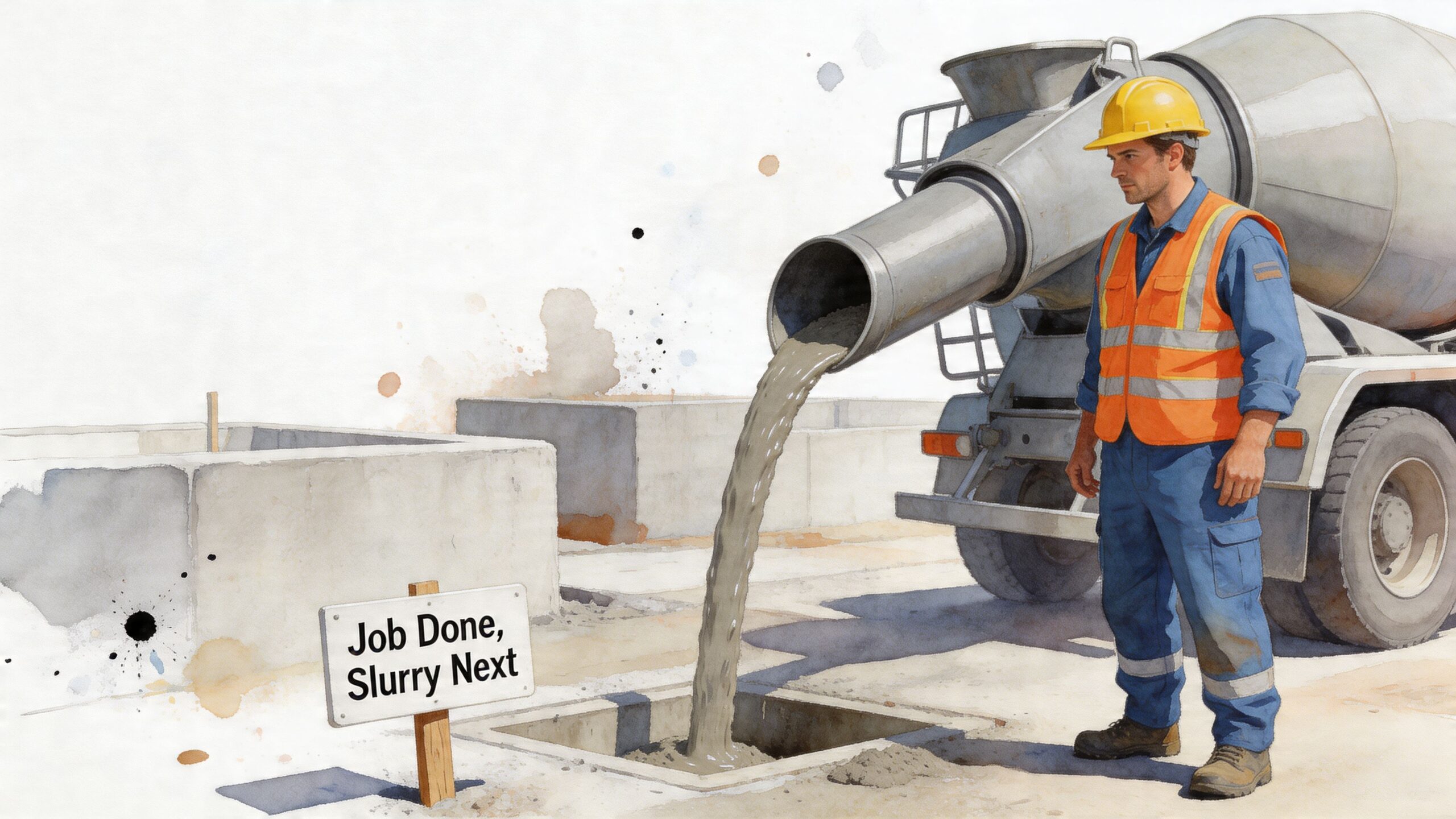
A proper concrete cleanout box solves a very specific problem. It gives crews a dedicated, contained place to wash concrete residue out of chutes, pumps, and tools without letting slurry migrate across the site. That keeps the operation cleaner and makes enforcement simple. Everyone knows where washout goes, and anything outside that box is a problem that needs to be corrected immediately.
What crews usually get wrong
The common mistakes aren’t complicated.
- No box on site before the pour: The truck shows up, work starts, and washout gets treated like an afterthought.
- The box is too small: The first few rinses are fine, then solids build up and freeboard disappears.
- The box is in the wrong place: Drivers can’t access it easily, so they wash out somewhere more convenient.
- No one owns it: If nobody checks the condition, liner, fill level, or rain exposure, small issues become spills.
Practical rule: If a driver has to ask where to wash out, your setup isn’t ready.
Good washout management isn’t glamorous, but it protects your site in three ways. It supports compliance, keeps production moving, and prevents preventable cleanup work. Those are the criteria that matter in the field.
What Is a Concrete Cleanout Box
A concrete cleanout box is the designated containment point for concrete washout on a job site. It holds the slurry, rinse water, cement fines, and leftover solids that come off truck chutes, pump lines, tools, and finishing equipment. On a well-run site, it gives every crew and driver one clear answer to the same question: where does the washout go?
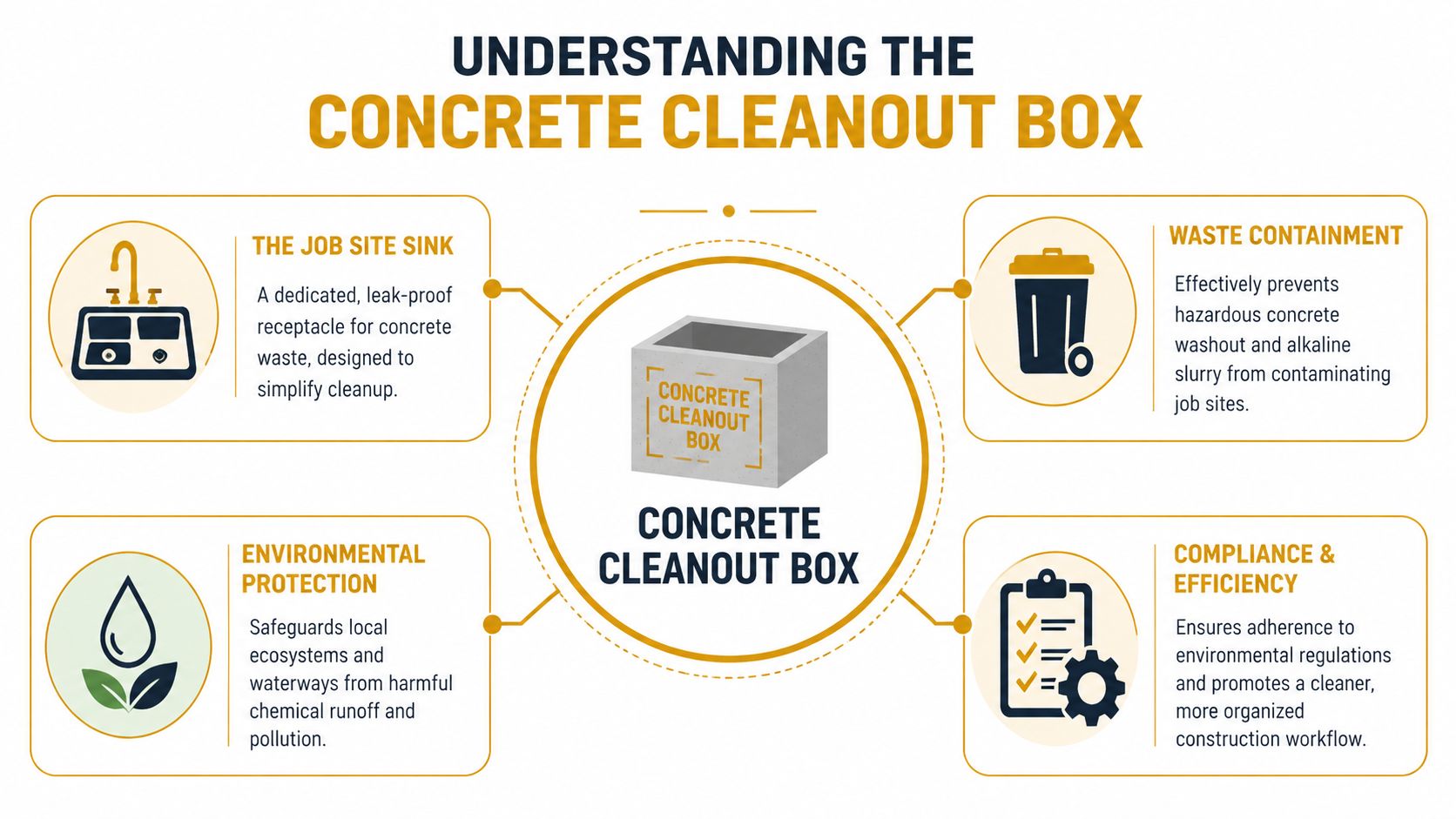
A proper box is watertight, or lined so it stays leak-proof under use. It also has to be tough enough for repeated loading, rinsing, and cleanup. That is the line between a real washout system and an improvised setup that fails as soon as the slurry level rises, the ground gets soft, or rain adds volume overnight.
The material going into the box is not harmless rinse water. Concrete washout contains alkaline liquid and suspended solids, and EPA guidance requires crews to keep that material contained so it does not reach soil, storm drains, surface water, or groundwater, as noted earlier. In practice, that means the box is doing two jobs at once. It keeps the site organized, and it serves as an environmental control.
A professional setup has a few baseline features:
- Leak-proof containment: If liquid escapes, the box has already failed.
- Safe, usable access: Drivers need to reach it without backing through congestion or soft ground.
- Enough wall height and capacity: Solids build fast, especially when trucks and pumps are using the same box.
- A service plan: Someone has to monitor fill level, liner condition, and pickup timing.
Material and size matter more than many new GCs expect. A steel cleanout box makes sense on heavier, longer-duration work where repeated use, equipment contact, and rough handling are expected. A fiberboard unit can work for shorter jobs or lighter washout demand, but only if the ground is stable, placement is protected, and the expected volume is realistic. Crews get in trouble when they choose by price alone and ignore how the box will be used.
A cleanout box also needs management. It cannot become a catch-all container for every wet trade on site, and it still needs housekeeping, inspection, and planned disposal. The simplest way to explain it is this: it is the controlled endpoint for concrete washout. If every concrete-related rinse and residue stream goes there, and the box is sized and built for the site conditions, washout stays contained and the job stays out of trouble.
Understanding Specifications and Capacities
A box that is too small fails fast. A box that is too large can still be the wrong call if access is poor, swap-out is expensive, or the site only needs short-term light-duty containment.
Capacity has to match the actual washout stream, not the line item in the concrete scope. Start with the key question on site. Are crews washing out mixer chutes only, or will the same container also take pump residue, buggy rinse water, saw slurry, coring waste, and hand-tool cleanup? That answer drives both size and material choice.
For larger operations, roll-off style concrete cleanout boxes need real volume. According to the CWPM concrete washout container spec sheet, roll-off bins must have a minimum capacity of 5 cubic yards, and a properly sized bin can support washout from approximately 350 cubic yards of a concrete pour.
Match the box to the work
On an active slab pour, a steel roll-off box usually gives you more margin for error. It handles repeated truck use, contact from equipment, and longer service cycles better than lighter disposable options. If the site has multiple trucks, a pump, and cleanup happening at the same time, a token washout container will fill early and crews will start improvising. That is where spills and violations start.
A smaller fiberboard or bag-based unit can work on the right job. Interior work, small placements, patching, sidewalk repairs, or tight urban sites often do not justify a large steel box. But those lighter units only work when the ground is stable, the placement area stays protected, and the expected slurry volume is low enough that the box will not soften, deform, or get overloaded before pickup. Price matters, but replacement costs and cleanup costs matter more.
| Box Type | Material | Typical Capacity | Best For |
|---|---|---|---|
| Roll-off cleanout bin | Steel | Minimum 5 cubic yards | Large pours, pump washout, multi-trade concrete cleanup |
| Roll-off bin | Steel | Typically 7 cubic yards | Sites that need additional washout room and centralized containment |
| Corrugated washout box | Water-resistant fiberboard or woven polypropylene components | 0.69 cubic yards or 140 gallons | Smaller jobs, light truck washouts, tight urban access |
| Washout bag | Specialized bag system | 0.70 to 0.99 cubic meters with safe working loads up to 3,000 kg | Restricted-access areas and smaller-scale containment needs |
Capacity errors that cause trouble
Field failures usually come from bad assumptions.
Counting truck washout only
The box often ends up taking more than chute rinse water. Pump prime, hose cleanout, wheelbarrow wash, and sawcut slurry can fill the container much faster than the pour ticket suggests.Ignoring solids buildup
Water can evaporate or get managed during service. Hardened paste and aggregate stay put. Usable capacity drops as residue builds, which is one reason steel boxes make more sense on jobs with repeated use over several days or weeks.Choosing size without checking access
Dimensions affect whether mixer trucks or pump trucks can reach the box cleanly. If drivers have to back through mud, parked equipment, or a congested laydown area, usage drops and the washout plan breaks down in the field.
The best box is the one crews can reach, use safely, and keep within capacity for the full work cycle.
Think in service cycles
Container volume is only part of the decision. The other part is how often the box will be cleaned, swapped, or hauled off. A steel roll-off with enough room for several days of production is usually the better fit on a big site with steady concrete activity. A smaller fiberboard unit can be the better fit on a short-duration job where access is tight and pickup happens quickly.
That is how experienced crews read specifications. Not as catalog language, but as a production plan tied to site conditions, material durability, and how much waste the work will generate.
Regulatory and Environmental Imperatives
The pour is done, the trucks are lining up to rinse out, and rain is in the forecast for the afternoon. That is when washout mistakes become expensive. If slurry leaves the box and reaches soil, a curb inlet, or a drainage swale, the problem shifts from site cleanup to stormwater noncompliance.

Concrete wash water is highly alkaline and can carry fine cement particles and metal contaminants. SWPPP controls are built around one simple requirement. Keep all washout water and solids contained in a leak-proof system, and keep them out of soil, storm drains, and surface water.
That sounds straightforward on paper. Field conditions are what cause failures.
On many sites, crews treat washout as something to handle post-pour instead of as an active control during the pour. Then the first box is too small, the liner tears, or the location is too far from the pump and trucks start rinsing wherever they can. Inspectors see the result fast. So do owners.
What compliance looks like in practice
A compliant setup does more than put a box on the site map. It has to hold the expected slurry volume, stay intact under actual use, and remain usable when the job gets busy or weather turns.
That is where material choice matters, even from a regulatory standpoint. A fiberboard box can work well on a short job with light traffic, predictable washout volume, and fast pickup. On a larger site, or any site where the box may sit through multiple pours, rough handling, or rain events, steel usually gives you a bigger margin for error. It resists impact better, handles repeated loading, and is less likely to fail when conditions get sloppy.
Size matters just as much. An undersized box is one of the fastest ways to create an overflow event. Once slurry runs over the edge, the cleanup cost starts immediately, and the inspection risk goes with it.
The consequences are usually operational first, legal second
Crews tend to focus on fines, and those are real. EPA stormwater violations can bring fines reaching $37,500 per day. But the first hit usually lands elsewhere. Labor gets pulled off productive work. A vacuum truck or cleanup crew has to be called in. The superintendent has to explain the incident, document the response, and answer for why the washout plan failed.
That is why I tell new GCs to judge washout controls by field reliability, not by minimum compliance language.
Use this checklist:
- Keep all slurry and hardened solids inside the container.
- Verify the box or pan is leak-proof before the pour starts.
- Allow for rain so freeboard remains available.
- Put the washout where drivers and pump crews will actually use it.
- Replace or service the container before it reaches a problem point, not after.
A cleanout box that crews bypass is not a control. It is a false sense of coverage.
Proper containment also helps downstream disposal and recycling. Once washout stays separated from soil and stormwater, haulers and processors have a cleaner material stream to manage. That is better for the site, better for documentation, and easier to defend if an inspector asks how concrete waste is being handled.
Choosing the Right Box Material and Type
Material choice changes how the box performs in the field, leading many buyers to oversimplify the decision. They focus on capacity alone and ignore terrain, weather, access, and how rough the crew will be on the container.
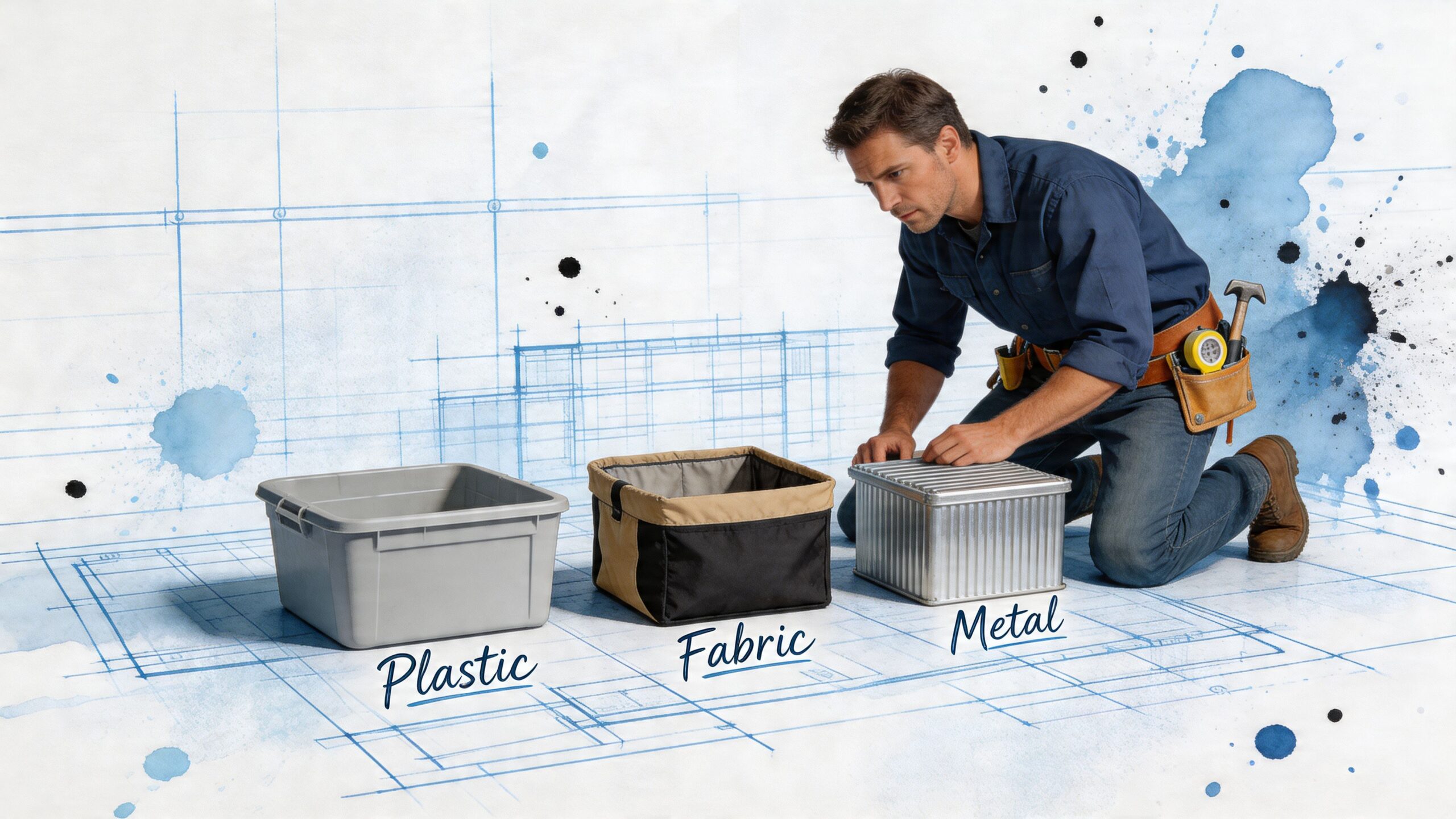
For smaller jobs, water-resistant fiberboard boxes can be a smart tool. The Outpak 4' x 4' x 14" unit described on the Outpak product page holds 140 gallons and handles 7 to 10 truck washouts. That makes it practical for lighter-duty work where mobility and setup speed matter more than maximum durability.
Steel pans and roll-off containers serve a different kind of site. They’re the better choice when the washout volume is heavy, equipment access is rough, or the box may get bumped, dragged, or used continuously over a longer window.
When fiberboard makes sense
Fiberboard works best when the job has constrained access and limited concrete activity.
- Urban renovation work: A compact box is easier to place near the active area.
- Light washout demand: Small pours, short-duration work, and tool cleanup fit this model.
- Fast deployment needs: Flat-packed or compact units can simplify staging.
The advantage is convenience. The limitation is that you have less tolerance for abuse. If the site is muddy, traffic is chaotic, or the washout demand grows beyond the original plan, a light-duty box can become the weak link.
When steel is the better call
Steel wins when the site is unforgiving.
A steel concrete cleanout box is usually the safer decision for high-volume pours, rough terrain, and sites where multiple crews will use the same container. It gives you more resistance to impact, more confidence around heavy use, and generally fewer worries about the container itself becoming the problem.
If the site conditions are rough enough that you’re questioning whether the box will survive the week, use steel.
A practical decision filter
Use these criteria before you choose:
| Site Condition | Better Fit |
|---|---|
| Tight access and lighter washout activity | Fiberboard |
| Repeated truck use and pump cleanup | Steel |
| Rough ground and high-traffic staging | Steel |
| Short-duration, smaller-scale work | Fiberboard |
| Jobs where durability matters more than portability | Steel |
The trade-off is simple. Fiberboard buys convenience. Steel buys forgiveness. If your site runs clean, controlled, and light, fiberboard can do the job well. If the site is busy, uneven, weather-exposed, or likely to push the limits, steel is the safer call.
Job Site Placement and Best Practices
A good concrete cleanout box in the wrong place will still fail you. Placement controls whether crews use it consistently and whether runoff risk stays contained. The goal is easy access without putting the box in a drainage path, traffic pinch point, or area where rainwater can turn a manageable setup into a mess.
Start with workflow. Put the box close enough to the washout activity that drivers, pump operators, and laborers don’t have to detour. At the same time, keep it away from storm drains, low spots, and edges where spill migration gets harder to control.
Placement rules that work in the field
- Choose stable ground: The box needs to sit level and stay stable under load.
- Protect access routes: Trucks and support equipment need a clear approach without backing into congested work zones.
- Keep separation from drainage features: Don’t place it where a spill would immediately run off site.
- Think about weather before the first pour: If rain hits, ask where overflow would go and fix that risk before it exists.
Operating habits that prevent headaches
A lot of washout problems come from weak routine, not bad equipment.
Inspect the box before use
Check for damage, leaks, liner issues, or residual buildup that reduces usable capacity.Watch fill level during active pours
Don’t wait until the box is nearly full to decide what the next move is.Control what goes in
Keep unrelated waste out. Mixed debris makes handling and cleanup harder.Cover or monitor during wet weather
Open washout containers and rain are a bad combination if nobody is paying attention.
Keep the washout area obvious. Signs, cones, and a quick pre-pour reminder to drivers and laborers prevent most misuse.
Site discipline matters
The cleanest operations make one supervisor or foreman responsible for washout oversight. Not because it’s a full-time job, but because shared responsibility often becomes no responsibility. When one person checks condition, location, and fill status, compliance gets much easier to maintain.
Renting vs Buying and Navigating Logistics
A lot of washout problems start after the pour, not during it. The concrete is down, the crew is trying to clear the site, and nobody has a good answer for who is hauling, cleaning, or storing the cleanout box before the next truck shows up.
That is where the rent versus buy decision gets real. The right choice depends on how often you pour, what kind of sites you run, and whether your team can handle transport and cleanup without turning a simple containment box into another equipment problem.
Buying can make sense for a contractor with steady concrete work and a yard set up to support it. If you own the box, you control availability. You also control the material and size mix. That matters if your work is consistent enough to justify keeping more than one type on hand. A steel box usually holds up better on long schedules, rough access roads, and heavier repeat use. A fiberboard unit can work for shorter jobs where lower upfront cost matters more and the box will not get dragged from site to site for months.
Ownership also creates a list of responsibilities that new GCs often miss. Someone has to schedule delivery to the site, track fill level, arrange haul-off or cleaning, inspect for damage, and store the box between jobs. If the box comes back half full, damaged by equipment, or packed with trash that should never have gone in, the next job inherits the delay and the cleanup bill.
When buying works
Ownership fits best under a few specific conditions:
- Frequent pours across multiple jobs: The box stays in rotation enough to justify the purchase.
- Predictable job types: Repeated slab, curb, or foundation work makes it easier to standardize box size and material.
- Storage and transport capacity: You already have yard space, loading equipment, and a plan to move the box without disrupting other work.
- Internal oversight: A foreman, yard manager, or equipment coordinator is responsible for condition, cleaning, and scheduling.
Renting works better for a lot of project-based contractors because it keeps the operation flexible. You can order a smaller unit for a tight residential infill job, then bring in a larger steel box for a commercial slab where truck traffic and washout volume are higher. That flexibility is the primary advantage. It lets the site conditions drive the equipment choice instead of forcing every project to fit whatever is sitting in your yard.
When renting is the better operational choice
Renting usually fits these situations:
- Irregular concrete schedules: The box would sit idle too often if you owned it.
- Changing site constraints: Urban jobs, phased work, and short-duration projects often need different box sizes and pickup timing.
- Limited yard space: Storing a dirty washout box is a poor use of space if you only need it occasionally.
- No in-house cleanup process: Rental service can handle pickup, cleaning, and turnaround more efficiently than a GC trying to piece it together job by job.
Material choice still matters when you rent. For example, if the site is muddy, active for several weeks, and exposed to abuse from loaders or pump trucks, ask for steel. If the work is brief, access is controlled, and the expected washout volume is modest, fiberboard may be enough. The mistake is treating every box as interchangeable. They are not, especially once weather, duration, and crew behavior start affecting the load.
Renting can reduce cleanup, storage, and scheduling strain, especially when box size and material need to change from one project to the next.
If you need a straightforward washout rental option, Reborn Rentals makes the process simple. Their catalog is built around concrete washout containment, with clear daily pricing, delivery coordination, and multiple contact options for fast scheduling. For contractors who want compliant containment and a provider that handles the cleaning, storage, and logistics, that is a practical way to keep the site organized and the pour moving.