
Concrete Washout Bags: Your Site Compliance Guide
The truck is on site, the pour is moving, and someone asks the question that usually comes too late: where is the washout going? If the answer is “over there on the dirt” or “we’ll deal with it after,” you’re already drifting toward a cleanup problem, a compliance problem, or both.
That’s why concrete washout bags matter. They look simple. In practice, they sit right at the intersection of production, environmental control, and jobsite discipline. Used well, they keep slurry contained, crews moving, and inspectors off your back. Used badly, they become one more torn seam, overflowed mess, or disposal headache waiting to happen.
Most crews understand the front end of washout containment. Fewer think through the full lifecycle. The hidden part is after the bag fills up, when the caustic material still has to be handled, transported, and disposed of correctly. That’s where a lot of “cheap” solutions stop looking cheap.
What Are Concrete Washout Bags and Why Do They Matter
On a real job, concrete washout usually starts as a convenience decision. The chute gets rinsed where it’s easiest. The pump crew wants a quick place to dump. Finishers need somewhere to wash tools. Then the gray water spreads, the solids set up where nobody wanted them, and the runoff starts heading toward soil, curb, or drain.
Concrete washout bags are portable containment bags built for that waste stream. They’re designed to catch slurry, rinse water, and leftover concrete so crews aren’t creating an impromptu washout pit in the middle of an active site.
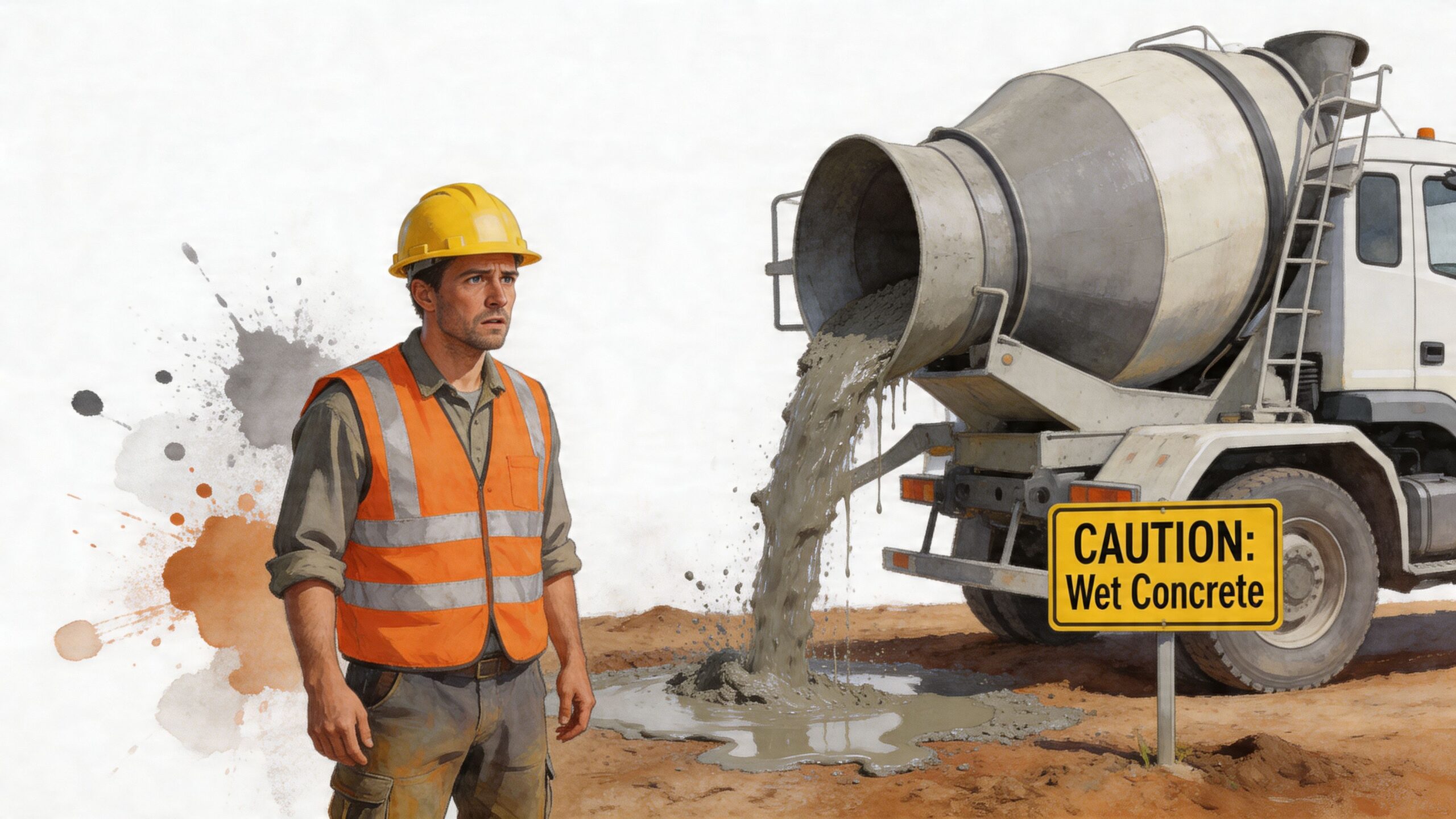
What changed over the years is that washout containment stopped being just a housekeeping issue. It became a standard part of compliant site operations. The market reflects that shift. The global concrete washout bags market was valued at approximately USD 0.5 billion in 2024 and is projected to reach USD 1.0 to 1.2 billion by 2034, with a projected CAGR of 7.2% to 8.5%, driven by construction activity and tighter environmental rules, according to Reports and Data’s concrete washout bags market analysis.
Why crews rely on them
A washout bag solves three immediate problems:
- Containment: It keeps alkaline slurry in one controlled spot.
- Mobility: You can place it where trucks, pumps, and crews can use it.
- Documentation: It gives the superintendent or SWPPP lead a defined control point to inspect.
Practical rule: If a washout area isn’t obvious, accessible, and ready before the first truck arrives, crews will make their own version of one.
What they replace
Older sites often used a scraped-out dirt pit or a plastic-lined hole. That can work in a very narrow sense, but it’s harder to control, harder to relocate, and easier to get wrong. Bags became common because they fit the pace of modern work. You drop them where the operation needs them and remove them when the work is done.
That’s why they matter. They aren’t just “bags for messy stuff.” They’re a field-ready control for a waste stream that can create environmental exposure fast.
Washout Bags vs Pans A Head-to-Head Comparison
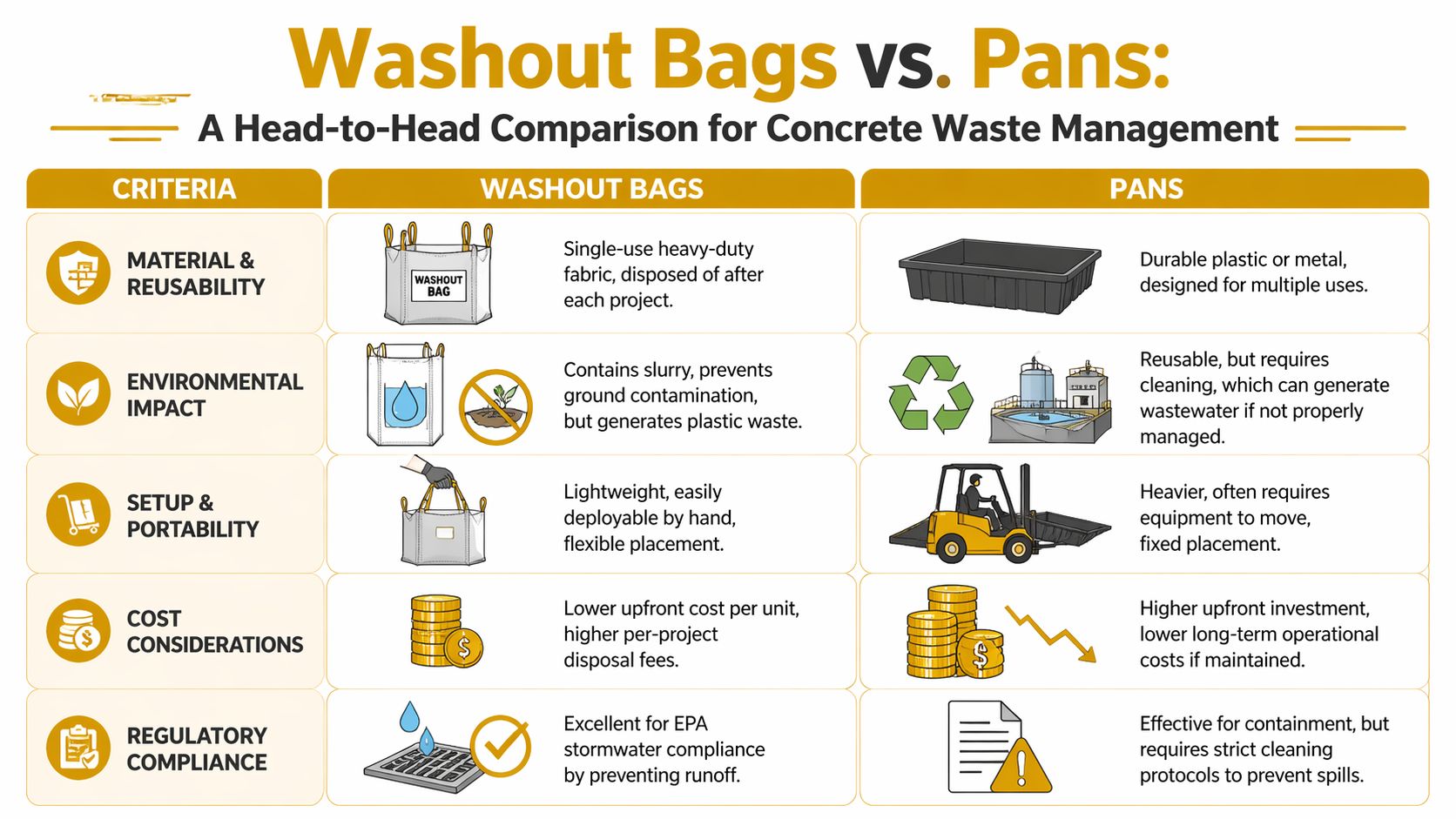
Crews often ask which is better: a washout bag or a washout pan. The honest answer is that each has a place. The wrong answer is treating them as interchangeable on every job.
Bags are useful because they’re light, simple, and easy to stage. Pans win when the job has repeated washouts, larger volumes, tighter inspection pressure, or a disposal plan that needs more control. A small one-day pour has different needs than a multi-day slab, podium, roadway, or pump-intensive operation.
Where bags work best
A bag is often the practical choice when you need quick deployment and flexible placement. If the site is tight, access changes daily, or the washout point needs to move with the work, bags are convenient.
They also make sense when the crew only expects limited washout volume. One bag near a curb crew or a small renovation pour can be easier than staging heavier equipment.
Where pans usually pull ahead
Pans are stronger operationally when washout is continuous. They’re more predictable on repetitive concrete work because they don’t rely on a disposable fabric body and liner for the whole containment strategy.
They also reduce one common blind spot with single-use options: what happens at the end. A full bag still has to be lifted, handled, and disposed of. A pan shifts more of that burden into a service model instead of making the contractor own every step.
A bag contains waste. A pan can contain the whole process better, especially when the job doesn’t stop after one truck rinse.
Concrete Washout Bags vs. Reusable Rental Pans
| Factor | Concrete Washout Bags | Reusable Rental Pans (e.g., Reborn Rentals) |
|---|---|---|
| Material | Fabric bag with liner, intended for single-job or limited-use containment | Durable rigid container built for repeated use |
| Setup | Fast by hand, easy to stage close to active work | Usually requires planned placement and sometimes equipment |
| Mobility during project | Flexible to reposition before use | Better for fixed washout zones |
| Best fit | Small pours, short-duration work, changing layouts | Larger pours, repeat washouts, production-heavy sites |
| End-of-life burden | Contractor must manage filled bag handling and disposal | Rental model can simplify removal and downstream handling |
| Spill risk at overfill | Higher if crews treat it casually or exceed limits | Lower when sized correctly and managed as a dedicated station |
| Waste profile | Generates single-use waste after project | Reusable containment with service-based turnover |
| Labor after filling | More field labor often required | Less on-site improvisation once service is scheduled |
The trade-off most buyers miss
A lot of teams compare only the visible purchase cost. That’s too narrow. The smarter comparison is labor, lift planning, cleanup exposure, and disposal headaches.
For example, a bag may look cheaper at delivery. But if your crew spends extra time managing fill level, stabilizing the bag, waiting on it to cure, arranging removal, and sorting out whether the contents need extra treatment before disposal, your “simple solution” starts stacking hidden costs.
Use bags when the job is small enough and controlled enough to justify them. For recurring or high-volume concrete work, durable rental containment is usually the cleaner operational decision.
Choosing the Right Bag Sizing and Capacity
Most washout bag problems come from one bad assumption: “It’ll probably hold it.” That’s not sizing. That’s gambling with slurry.
The better way is to estimate usage based on the work happening. Think about how many trucks will rinse out, whether pump washout is going into the same container, whether tools are being cleaned there too, and whether the bag may get hit by rain before pickup. A bag should have room to operate safely, not just barely contain the expected volume.
Read the specs like a field person
The important numbers aren’t marketing fluff. They tell you how close you are to failure.
Standard concrete washout bags are engineered with polypropylene and LLDPE liners to achieve weight capacities up to 3,300 pounds. Since concrete slurry weighs 140 to 150 lbs per cubic foot, a 130-gallon bag can contain 2,520 to 2,700 pounds, so keeping fills below 80% capacity is critical to prevent seam failure, according to DuraSack’s concrete washout bag specifications.
That 80% guideline matters because slurry doesn’t behave like dry debris. It shifts weight, pushes into corners, and stresses seams. A bag can look fine right up to the point where it doesn’t.
A simple way to choose
Use this field checklist before ordering:
- Count the waste sources: Don’t size for truck chute rinse alone if pump washout, tools, or saw slurry may end up in the same container.
- Leave headroom: Bags need unused capacity for safety, slosh, and handling.
- Check the liner: A woven shell without a dependable inner liner is asking for seepage trouble.
- Think about pickup: If the filled bag can’t be moved safely from where you place it, the sizing decision was incomplete.
If you need every inch of a bag’s stated capacity to make your plan work, you’ve chosen too small a bag.
What goes wrong with undersized bags
Undersized containment creates a chain reaction. Crews overfill. The top gets crusted over while liquid remains below. Someone tries to move it. The liner shifts, a corner tears, or the bag leans and spills.
That’s why experienced supers don’t pick capacity by guesswork. They size for the actual washout load and for the least careful moment on site, because every site has one.
Site Setup and Best Practices for Using Washout Bags
A good bag in the wrong location is still a bad setup. Most failures happen before the first washout goes in. The bag gets dropped on uneven ground, too close to traffic, too far from the pour, or where crews can’t line up the chute cleanly.
Modern concrete washout bags, often with a 25 cubic feet capacity and a 5:1 safety factor, replace outdated earthen pits, reducing cleanup time by up to 70%, according to Palmetto Industries’ concrete washout bag product information. That benefit only shows up when the station is placed and used correctly.

Placement rules that save headaches
Start with location. You want a spot that’s level, visible, and easy for crews to reach without improvising.
A reliable setup usually follows these basics:
- Use stable ground. Soft ruts and uneven subgrade let bags lean, settle, or tip.
- Keep access practical. If truck drivers or pump crews have to make awkward moves to use the bag, they’ll miss it or splash around it.
- Stay clear of drains and flow paths. Even a contained station shouldn’t sit where a spill would run straight to stormwater infrastructure.
- Protect the perimeter. Active haul routes, backing equipment, and material drops can damage a bag fast.
What crews should do before first use
Open the bag fully. Confirm the liner is seated properly. Make sure the sides are standing as intended and not folded inward where slurry can trap air or hang up.
Then brief the crew in plain terms. Tell them what goes in the bag, what doesn’t, and who is responsible for checking fill level. That short conversation prevents a lot of “I thought someone else was watching it.”
Don’t set a washout bag and assume the system is now working. A bag is only as good as the crew behavior around it.
Common field mistakes
These are the repeat offenders:
- Partial opening: The bag never reaches its intended shape, so capacity and stability suffer.
- Mixed waste: Trash, rebar offcuts, or sharp debris puncture liners and complicate disposal.
- Late setup: The first truck arrives before the station is ready, and crews create an unofficial washout spot.
- No fill monitoring: Slurry rises gradually until one last rinse puts it over the line.
The best setups are boring. Everyone knows where washout goes, the bag stays upright, and nothing ends up on the ground that wasn’t supposed to.
Navigating Compliance SWPPP and Environmental Rules
If you manage sites long enough, you learn that concrete washout isn’t a paperwork issue pretending to be a field issue. It’s a field issue that shows up in paperwork after the fact.
Concrete slurry is hard on the environment because it’s both highly alkaline and loaded with solids. That combination is exactly why inspectors pay attention to washout areas. Once slurry escapes containment, the site isn’t dealing with a cosmetic mess anymore.
What the rules are trying to prevent
Under active stormwater controls, the concern is simple: stop polluted water and sediment from reaching soil, groundwater, storm drains, and nearby waterways.
Under SWPPP regulations, concrete washout bags are a critical control, as slurry can contain up to 2.0 pounds of sediment per gallon and has a toxic pH of 12 to 13. The bag's sealed liner is designed to prevent this from percolating into groundwater, a key requirement for NPDES permit holders, according to this washout bag specification and compliance note.
What inspectors usually look for
An inspector doesn’t need a dramatic spill to write up a site. Smaller failures count too.
Typical trouble points include:
- Improper placement: The station is too close to a drain, gutter line, or runoff path.
- Visible seepage: The liner leaks, or residue is spreading around the base.
- Overflow or splash-out: The containment exists, but crews are using it badly.
- Poor documentation: The site can’t show that washout was planned, maintained, and disposed of properly.
SWPPP reality on the ground
A SWPPP only helps if the field setup matches the plan. If the plan says there’s a designated washout area and the actual crew is rinsing onto bare soil behind the trailer, the paper won’t save you.
That’s why washout containment has to be treated like erosion control or inlet protection. It needs location, maintenance, and accountability. Someone on site should own it.
Compliance is rarely lost in the office. It’s lost when the designated washout area is full, inaccessible, or ignored by the crew.
The practical takeaway is straightforward. Don’t treat concrete washout bags as a box-checking accessory. Treat them as a regulated control that has to perform every day the concrete operation is active.
The Overlooked Final Step Safe Disposal and Transport
A lot of crews think the job ends when the bag is full and tied off. It doesn’t. That’s only the midpoint.
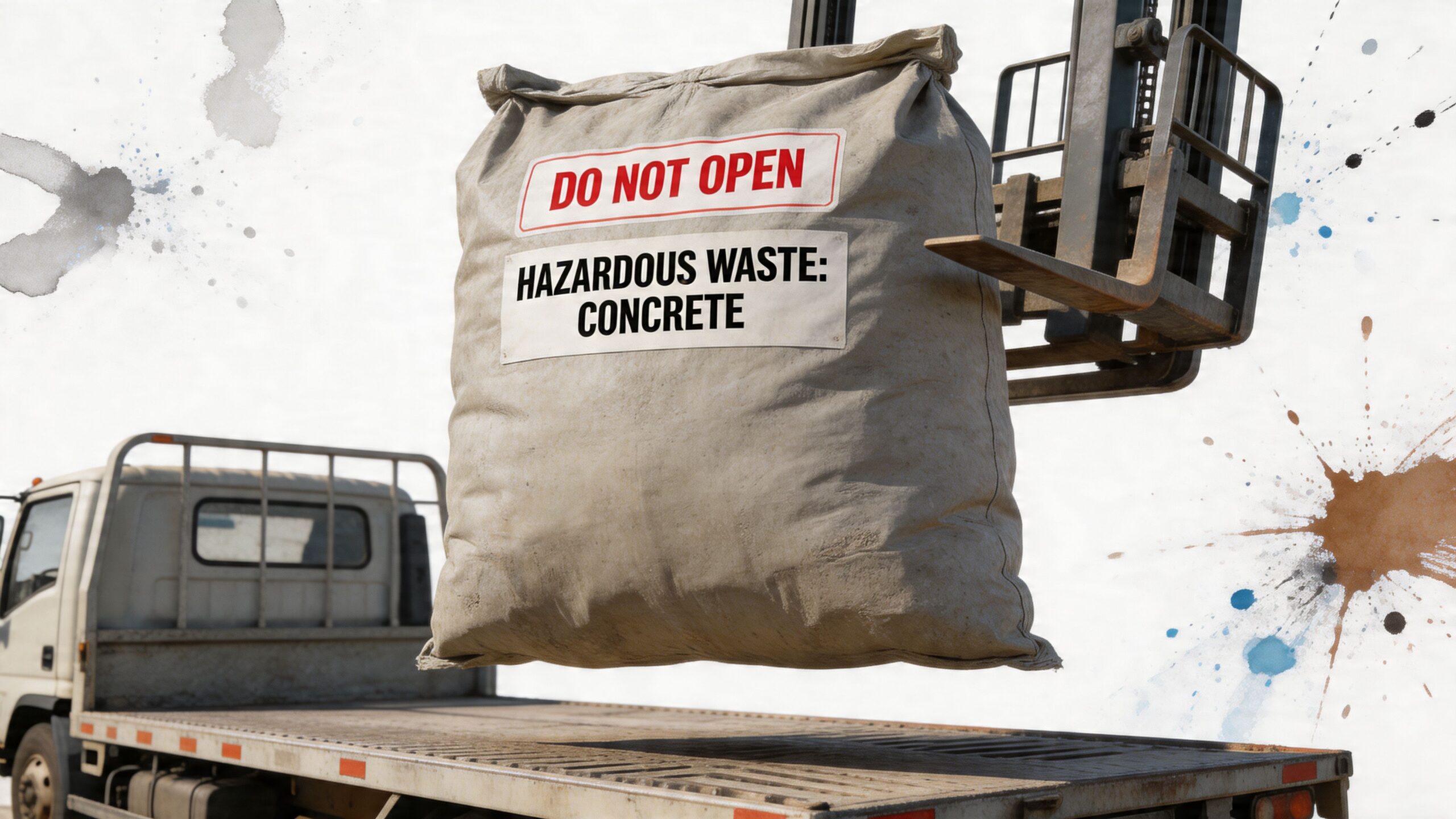
The hard part starts after use. Now you’re dealing with a heavy, alkaline waste package that may contain liquid, semi-set solids, and a liner that has to survive handling. In this scenario, single-use containment often reveals its real cost.
What happens after the pour matters
The material inside the bag is still caustic. It still has to be managed in a way that fits disposal requirements. And it still presents handling risk if the bag was overfilled, punctured, or left exposed too long.
One overlooked issue is pH. A key gap in guidance is the disposal protocol for filled bags. The caustic slurry at pH 12+ often requires neutralization before landfilling to comply with EPA regulations, as roughly 70% of untreated construction wastewater exceeds pH limits, according to Diamond Tool Store’s discussion of concrete washout bag disposal concerns.
That’s the step many buyers never factor in. Containment is only half the job. Disposal is where liability keeps going.
The field problems nobody advertises
Once a bag is filled, the contractor has to deal with practical questions:
- Can it sit safely until solids cure enough for removal?
- Is there free liquid that still needs testing or treatment?
- Does the bag remain stable enough to lift without stressing seams?
- Who is taking it, and what documentation is required at disposal?
Those are not small details. They affect labor, equipment scheduling, and who carries risk if the material is rejected or spills during transport.
Why this changes the cost equation
In this context, durable rental containment often makes more sense than a disposable bag, especially on jobs with repeated concrete activity. The visible upfront price of a bag rarely reflects the downstream work: monitoring, curing time, lift planning, hauling coordination, and pH-related disposal concerns.
The cheapest containment option on delivery day can become the most expensive option on removal day.
If you use bags, build the end-of-life plan before the first rinse goes in. Know who’s handling transport, what the disposal site requires, and whether the contents need neutralization or additional treatment. Otherwise, the washout station becomes a parked problem that nobody wants to claim.
Frequently Asked Questions About Concrete Washout Bags
Can one bag handle multiple washouts
Sometimes, yes. But that depends on the volume, the mix of waste going in, and whether crews are watching fill level carefully. A bag isn’t a bottomless bin. Once slurry and rinse water start stacking up, the safe capacity disappears faster than people expect.
The better rule is operational, not theoretical. If the bag is becoming the default dump point for trucks, pumps, tools, and rainwater, stop assuming it has room left and inspect it.
Are concrete washout bags only for concrete
No. On many sites, similar containment gets used for materials like paint, stucco, and other slurry-producing work. The key is matching the bag and liner to the waste stream and making sure disposal requirements are still being followed. Don’t assume one approved use automatically covers every liquid or semi-liquid trade waste on site.
What about rain
Rain is a common reason a bag gets overloaded. A bag placed in the open can collect water, increase total weight, and reduce freeboard. If wet weather is expected, crews should check bags more often and protect the area as needed so the washout station doesn’t turn into a water catch basin.
What about freezing weather
Cold weather changes how material sets and how long liquid can remain inside. It can also make handling less predictable if crews assume the contents are fully solid when they aren’t. In winter, leave more time for inspection and removal planning.
Can crews move a partially filled bag to a better location
That’s a bad habit. If there’s liquid in the bag, moving it creates unnecessary stress on the seams and shifts the load in ways the crew can’t control well. Place it correctly from the start. If you think you may need to move the station later, that’s usually a sign that a rigid containment option would fit the job better.
What’s the biggest mistake crews make
They treat washout as a cleanup task instead of a managed waste stream. That mindset causes late setup, mixed debris, overfilling, and poor disposal planning. The best crews decide the washout process before the pour starts and stick to it.
If your job calls for a cleaner, lower-hassle approach than single-use concrete washout bags, Reborn Rentals is worth a look. Their durable washout pans and containers are built for crews that want dependable containment, straightforward scheduling, and less end-of-job disposal risk sitting on their own plate.