
Concrete Washout System: A Contractor’s Complete Guide
The pour is done. The trucks are backing out. The pump crew is packing up. Then someone asks the question that decides whether the site stays clean or turns into a compliance problem by lunch.
“Where are they washing out?”
If the answer is “over there by the curb” or “we’ll just use that dirt corner,” you’re already behind. Concrete wash water doesn’t behave like harmless rinse water. It stains pavement, hardens where you don’t want it, and starts moving toward low spots and drains fast. If an inspector walks in while gray slurry is creeping across the site, nobody cares that the pour itself went smoothly.
A proper concrete washout system fixes that before it starts. For short-term jobs especially, it’s one of the simplest ways to keep a site compliant, keep cleanup controlled, and avoid turning a routine pour into a call with the owner, the superintendent, and the SWPPP consultant.
The Hidden Costs of a Messy Concrete Pour
A messy washout rarely starts as a major incident. It usually starts with a shortcut.
A finisher rinses tools near the staging area. A driver washes a chute where access is easy instead of where containment is set. Slurry runs farther than expected because the pad has more slope than it looked like during the morning walkthrough. Then rain hits, or an inspector shows up, or a neighboring tenant sees white-gray runoff near a storm inlet and starts asking questions.
That’s when the job cost changes shape. What looked like a cleanup issue becomes a documentation issue, a schedule issue, and sometimes a client confidence issue. Crews stop working while someone throws down absorbents, moves equipment, or scrambles to build makeshift containment that should have been in place before the first truck arrived.
Practical rule: Treat washout planning the same way you treat access planning for the pump. If you wait until the pour ends, you’ve waited too long.
The full cost isn’t only disposal. It’s lost time, rework, site friction, and the kind of preventable mistake that makes inspectors look harder at everything else on the project. A good washout setup is job-site insurance. It keeps the rinse water where it belongs, gives drivers a clear target, and gives the site team one less thing to argue about during the busiest part of the day.
For short-duration work, that matters even more. You may only need containment for a brief window, but that’s also when teams are most likely to improvise. Renting a ready-to-deploy concrete washout system usually beats improvisation every time because it removes the temptation to “just do something for today.”
Understanding the Modern Concrete Washout System
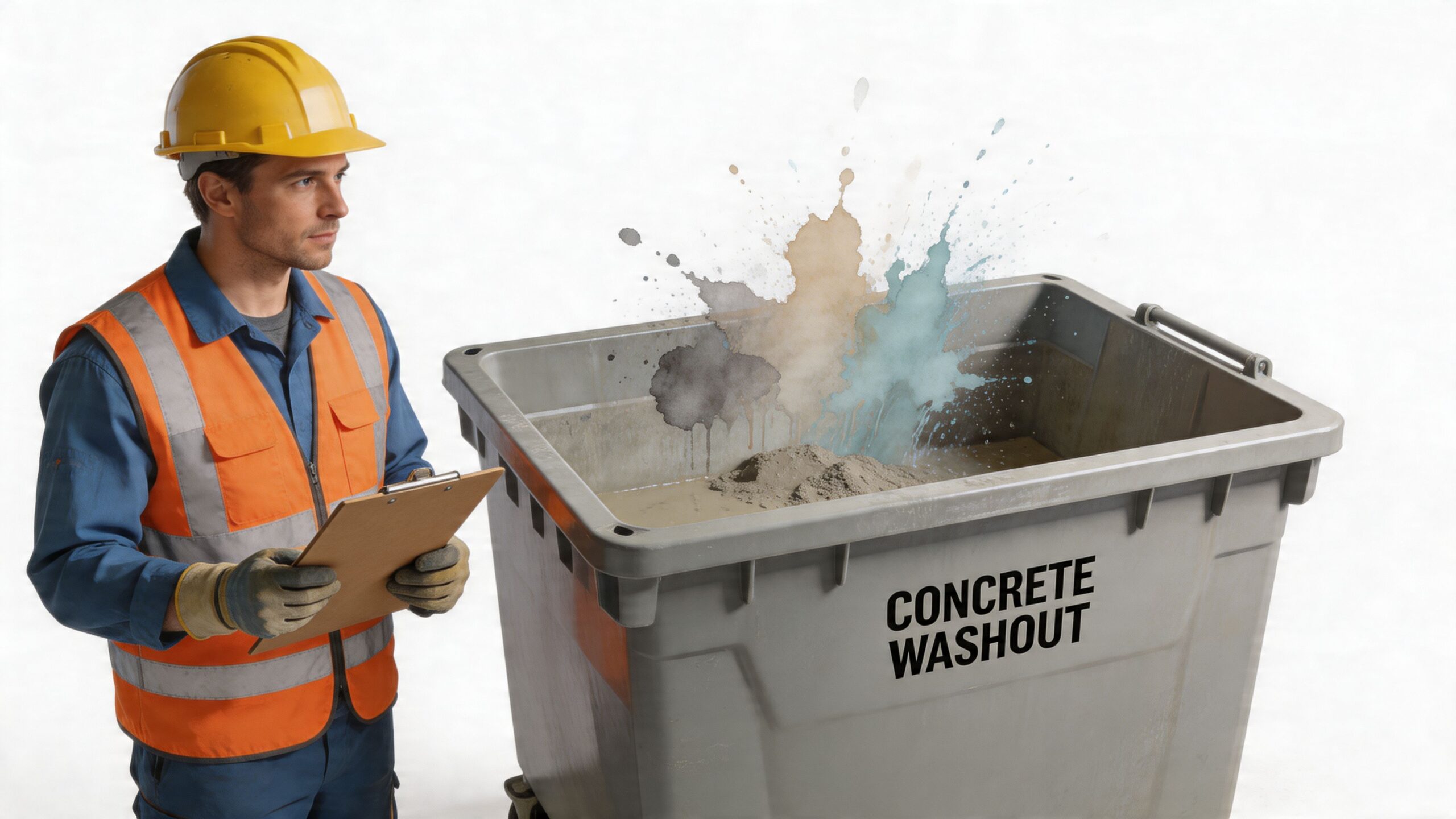
A modern concrete washout system is a piece of site equipment with a clear job. It gives every driver and finisher one approved place to rinse out chutes, hoses, pumps, buckets, and tools, while keeping slurry and solids contained for pickup or treatment later.
On a short-term project, that matters even more. If the system is rented, delivered, set in place, used for a few pours, and hauled off without site-built cleanup, the crew saves time and the estimator avoids carrying ownership costs for equipment that may sit idle between jobs.
It works like any other controlled waste stream on a site. The container handles the mess. The liner or interior surface keeps cleanup manageable. The placement and access plan make sure crews use it. Miss one of those pieces and the washout area turns into a labor problem.
What makes it a system
Start with the container. On most jobs, that means a watertight pan, bin, or purpose-built unit sized to hold rinse water, slurry, and hardened residuals without leaking or collapsing under normal job-site abuse. Good units get dragged by forklifts, clipped by tires, filled in bad weather, and used by crews who are in a hurry. They have to hold up.
Next is the liner or interior surface. This gets overlooked until haul-off day. If concrete bonds hard to the inside, removal takes longer, disposal costs rise, and the next pour starts with a half-usable container. A system that empties cleanly is cheaper to run, especially on rentals where overage charges can show up if the box comes back overloaded or packed with hardened buildup.
Then there is site control. Drivers need a straight shot to the unit. Pump crews need room to wash tools without blocking traffic. The area needs to be marked well enough that nobody starts a second unofficial washout point behind the trailer or near the curb.
That is the difference between a container and a working washout system.
What advanced systems do better
Basic units collect waste. More advanced systems also reduce what has to be hauled off.
Some setups use staged separation or recirculation so coarse material, sand, and fines are handled more efficiently, and reusable water stays in the loop instead of being treated as one mixed waste stream. That approach can make sense on larger pours or repeat placements where disposal volume starts driving real cost.
Cold weather changes the math too. Equipment with fewer moving parts and less dependence on water-heavy pumping tends to be easier to keep operating when temperatures drop. According to an industry demonstration of advanced systems, some designs can reduce slurry volume by 15-20% and cut virgin water use by 80% through reuse loops.
For a one-day sidewalk job, that level of equipment may be more than the site needs. For a multi-week commercial project with repeated truck washout, pump cleanup, and tight disposal pricing, it can pencil out fast.
A plastic-lined pit scraped together on pour morning usually costs less only on paper.
What tends to fail on real jobs
Makeshift washout areas fail in the same ways over and over. The liner tears. The pit slumps. Rain eats up freeboard. A driver cannot tell where to back in, so he rinses where he stops. Then somebody has to assign a laborer and a skid steer to clean up a problem that was avoidable.
Improvised containment also creates rental and scheduling headaches later. If the crew hardens a mess in the wrong spot, removal takes longer, access gets blocked, and the site may need extra disposal or emergency service that was never in the bid.
A proper washout system includes the box, the surface, the access, the service plan, and the exit plan. On short-term work, renting that package is often the practical move because it gives the project a compliant setup for the exact duration needed, without tying up cash in equipment ownership, storage, or maintenance.
Why Washout Compliance is Non-Negotiable
The pour is scheduled for 7:00 a.m. The trucks are stacked at the gate. Then an inspector sees gray water tracking toward an inlet because the crew rinsed out beside the pump instead of using the washout. That is how a routine pour turns into a stop-work conversation, extra cleanup, and a call to the owner before lunch.
Concrete washout compliance is a field control issue tied directly to stormwater compliance, production, and cost. Wash water from concrete operations is highly alkaline. If it leaves containment, it can damage soil, kill vegetation, and reach drains or nearby water. On paper, that looks like an environmental violation. On a job site, it looks like lost time and unplanned expense.
Why inspectors pay attention
Inspectors do not need to catch a dramatic discharge. They look for simple signs that the site is not controlling concrete waste the way the SWPPP requires. A washout box set too close to drainage, slurry dried up outside the container, overflow after rain, or no clear access for drivers all point to the same problem. The system was not planned well enough to hold up under actual site conditions.
That can trigger:
- Notices of violation when wash water or slurry can reach inlets, ditches, or surface water
- Work interruptions while the site fixes containment, cleans affected areas, or updates controls
- Owner and inspector scrutiny for the rest of the project
- Higher closeout costs if hardened material has to be chipped out, hauled off, or remediated from the wrong area
The fine is only part of it. The hit often comes from labor, equipment time, disposal, and schedule disruption.
Why crews still get this wrong
Wash water looks harmless if you are moving fast. It is not. The risk usually comes from ordinary shortcuts, not big mistakes.
A driver rinses before the designated area is ready. The pump crew dumps washout in a low corner because the box is blocked by material. Rain fills the container overnight and nobody checks it before the morning pour. Those are common job-site misses. They are also the exact chain of events that puts slurry where it does not belong.
If the washout location is hard to reach, crews will make their own location.
That point matters even more on short-term work. A two-day sidewalk replacement or a one-week flatwork package rarely justifies buying equipment, but it still has to meet the same field requirements. Renting a compliant washout system for the exact duration of the work usually costs less than scrambling after a failed setup. It also gives the superintendent a clear service plan, pickup timing, and disposal path instead of hoping a temporary pit holds up.
Compliance protects production, not just paperwork
A good washout setup keeps the pour moving. Drivers know where to back in. Laborers are not babysitting a muddy corner with shovels. The superintendent is not burning half the afternoon finding a vacuum truck because the improvised containment overflowed.
There is also a practical cost angle. Short-term projects are where contractors get in trouble by trying to save a few hundred dollars with a makeshift solution, then spending far more on cleanup, haul-off, and crew downtime. Renting a purpose-built system shifts that risk. You get a container sized for the work, a defined pickup window, and a compliant setup without owning, storing, or maintaining equipment between jobs.
Compliance is required. More to the point, it is cheaper than a preventable washout problem.
Sizing and Selecting Your Washout Solution
A washout container that is too small fills faster than the superintendent expects. A container that is too large can create its own problem if it eats up access, blocks staging, or forces drivers into bad turns. On short-term work, that sizing mistake shows up fast because there is no time to adjust after the first pour starts.
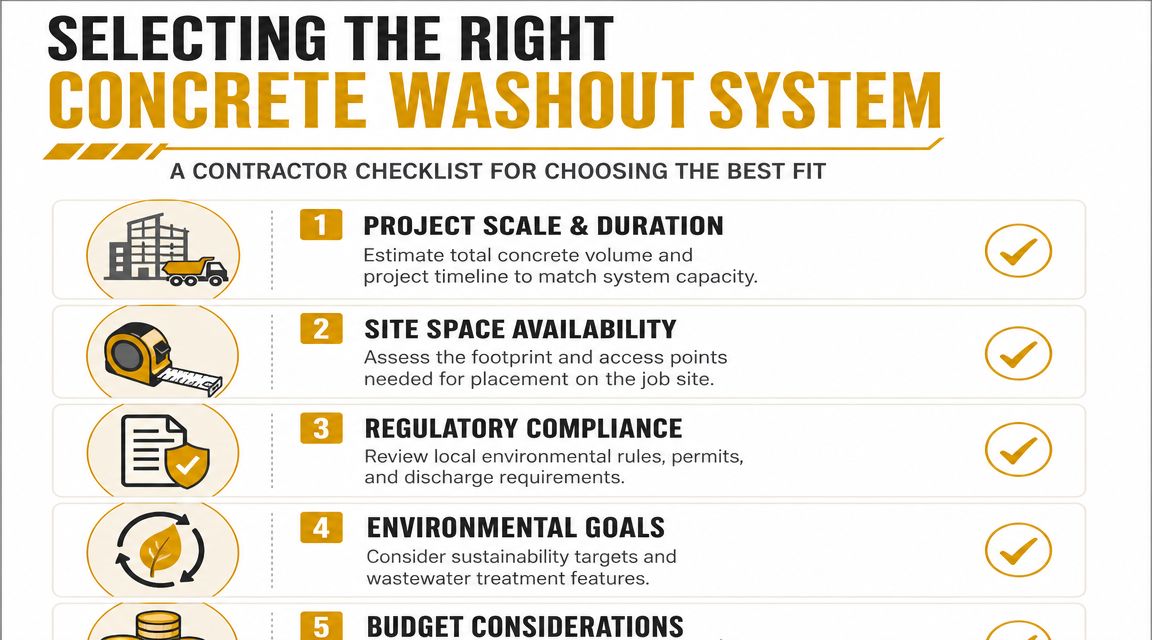
The right choice depends on how the job will run for a few days or a few weeks. Start with four field questions. How much concrete is being placed, how many trucks or pump cleanouts will hit the unit, how tight the site is, and whether the rental company can deliver and remove the container on your schedule.
Start with the job conditions
Capacity matters, but placement usually decides the job first. Temporary washout facilities need to stay at least 50 feet from storm drains and waterbodies, and larger ramped containers such as 26 ft x 8 ft units are commonly used on pours of 350 cubic yards or more, according to this washout container specification sheet.
That changes the selection process. The first question is whether the unit fits the legal and physical limits of the site. The second is whether crews will use it without workarounds.
Check these points before you reserve anything:
- Legal placement area. Confirm setbacks before you pick a container footprint.
- Truck approach and exit. A unit is useless if drivers need to back through active work or tight pedestrian paths.
- Pump cleanup needs. Pump washout can add volume and a different traffic pattern than truck washout alone.
- Rental access. Make sure the delivery truck can set the unit where you planned it, and make sure pickup can happen without tearing apart the site.
Short-term projects need this level of planning more than long jobs do. If the rental unit arrives and cannot be placed where the SWPPP requires, the clock is already running on equipment charges, labor standby, and possible pour delays.
Match the system to the pour
Use the job type as a first screen, then confirm the final size with the rental supplier and whoever is managing the SWPPP in the field.
| Project Type | Daily Concrete Volume | Recommended System Type | Selection Notes |
|---|---|---|---|
| Small renovation or patch work | Low volume | Compact portable washout or small bin | Good fit for one truck at a time and short rental duration |
| Commercial slab or multi-trade site | Moderate volume | Standard watertight washout bin or pan | Works well if truck access is clear and pickup can be scheduled before it crowds the site |
| Large pour with pump operations | High volume | Ramped commercial container | Better choice where multiple trucks and pump equipment need repeat use |
| Tight urban site or constrained access project | Low to moderate volume | Small-footprint washout unit | Chosen mainly by access limits and setback restrictions, not by price alone |
A practical rule on rental work is to size for the busiest day, not the average day. If Friday has three trucks and a pump cleanup, size for Friday. Renting one class up for two days is often cheaper than ordering emergency service, hauling spilled material, or stopping a crew while someone figures out where the next washout goes.
Features that matter in the field
Some features are worth paying for. Some are not.
For short-term projects, the features that usually earn their keep are watertight construction, safe truck access, liners or interiors that clean out without a fight, and a footprint that fits the site without stealing too much staging area. Ramped access can also save labor and reduce side dumping because drivers tend to use what is easy to reach and easy to understand.
More advanced filtration or recirculation options make sense on jobs with repeated pours, long durations, or strict disposal controls. They are often hard to justify on a quick flatwork package where the main goal is compliant containment, predictable service, and clean pickup at the end of the rental.
Pick the smallest compliant system crews can reach and use correctly.
Common selection mistakes
The same errors show up across sites:
- Sizing only by concrete volume. Washout frequency, pump cleanup, rainfall, and crew behavior matter too.
- Ignoring rental logistics. Delivery timing, swap-out availability, and pickup access affect cost as much as the container rate.
- Paying for capacity you cannot use. A bigger box does not help if trucks cannot reach it safely.
- Choosing the cheapest option on paper. Low rental cost can turn into higher labor, cleanup, and disposal cost.
- Letting the site plan change after the washout is placed. Fencing, dumpsters, and laydown often crowd out the original access route.
The best approach is simple and field-tested. Walk the route a mixer truck will take. Mark the legal placement area. Confirm who will wash out there, including the pump crew. Then reserve the unit that fits the actual operation and the actual rental window, not the version of the job shown on the bid set.
Proper Setup and Maintenance on Your Job Site
A good concrete washout system can still fail if the setup is sloppy. Most field problems come from placement, poor crew communication, or lack of daily checks.
The fix is discipline. Set it correctly. Mark it clearly. Inspect it like any other active environmental control.
Set it up right the first time
Before the first truck arrives, confirm the basics:
- Use stable ground. Soft or uneven placement leads to shifting, pooling, and bad access.
- Keep it reachable. If drivers need a spotter, a tight turn, and luck to get there, they’ll look for easier options.
- Protect the area from traffic. Forklifts, lifts, and delivery trucks shouldn’t clip the washout during the day.
- Mark the location clearly. Signs and direct crew instruction prevent “temporary” side washouts.
The site team also needs a final disposal plan before the container starts filling. Waiting until it’s near full is how overflows happen.
Maintain freeboard and monitor conditions
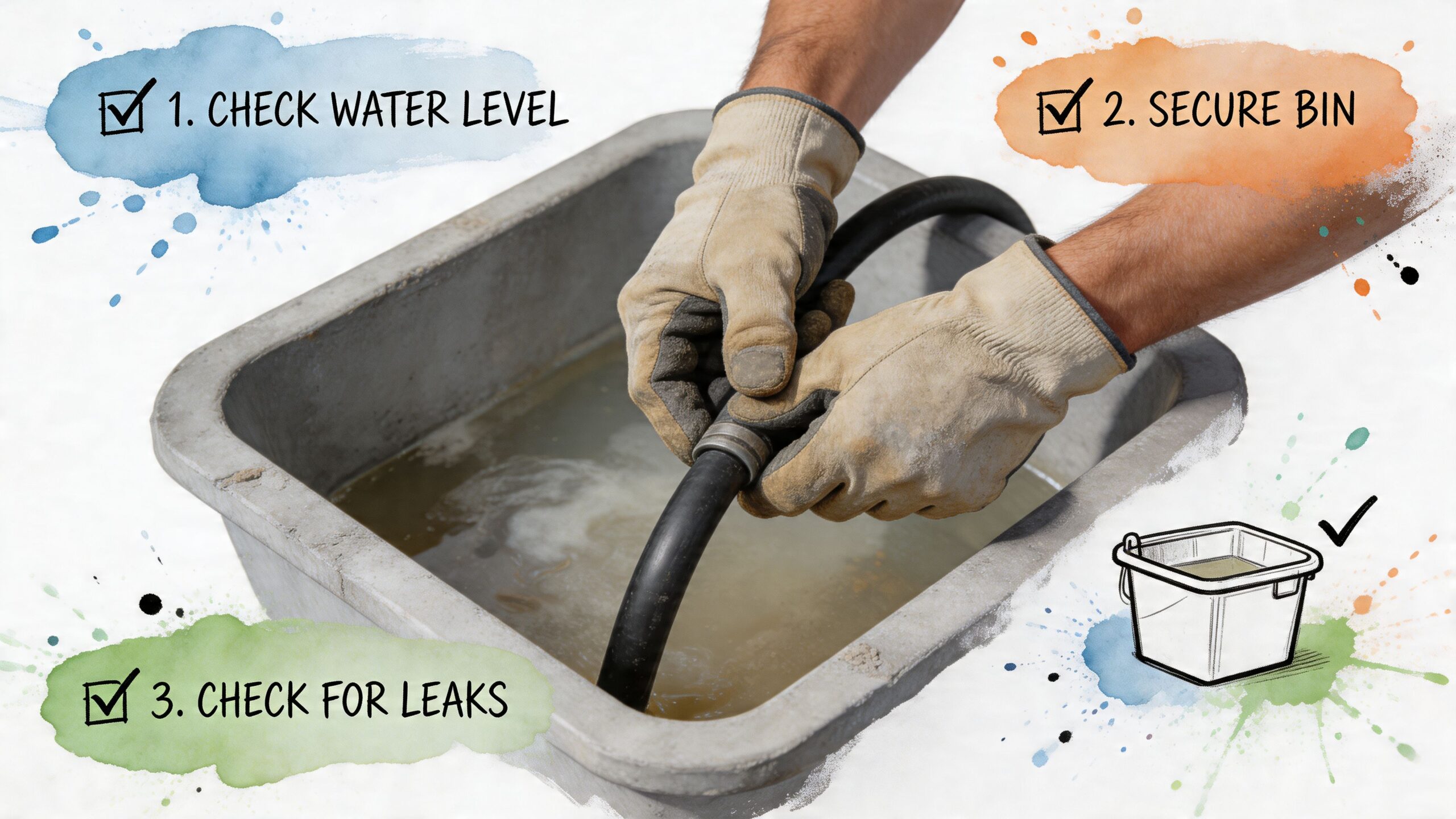
Freeboard gets ignored until rain exposes the mistake. Best practice is to maintain at least 4 inches of freeboard, as reflected in the washout best-practice guidance cited in the project background. That buffer matters because washout volume changes quickly once multiple trucks, pump equipment, and weather are involved.
Do this, not that:
Do check fill level during and after pours.
Don’t assume the container still has room because it did that morning.Do inspect liners and seams.
Don’t wait for visible leakage to confirm damage.Do cover or protect the unit when rain is expected if your setup allows it.
Don’t let stormwater turn a manageable volume into an emergency pickup.Do train every crew using it.
Don’t assume drivers, pump operators, and laborers all got the same message.
On a well-run site, nobody asks where to wash out after the pour starts. They already know.
How filtration systems improve maintenance
Where advanced systems are in use, filtration changes both disposal and water handling. Professional washout systems can use a three-stage filtration process that separates coarse aggregate, sand, and fine cement particles, allowing 60-70% of the washwater to be recirculated while saving on disposal fees of up to $400 per truckload and reducing freshwater demand, according to the EPA washout document.
That architecture usually works in stages:
- Coarse material drops out first.
- Sand and finer grit are captured in the next chamber.
- Remaining fines are treated further before water is reused or managed.
For the crew, the field benefit is straightforward. Less loose solids in the final water stream means cleaner handling, less wasted water, and easier end-of-job cleanup.
What supervisors should check daily
A short daily check prevents most washout failures:
| Daily check | What you’re looking for |
|---|---|
| Location | Still clear of traffic and still functioning as planned |
| Containment | No tears, punctures, leaks, or shifted placement |
| Capacity | Adequate freeboard and no risk of overtopping |
| Housekeeping | No side dumping, no hardened spill buildup outside the unit |
| Access | Trucks and pump crews can reach it without conflict |
That checklist takes minutes. The cleanup from skipping it can take much longer.
Navigating Washout System Rentals and Costs
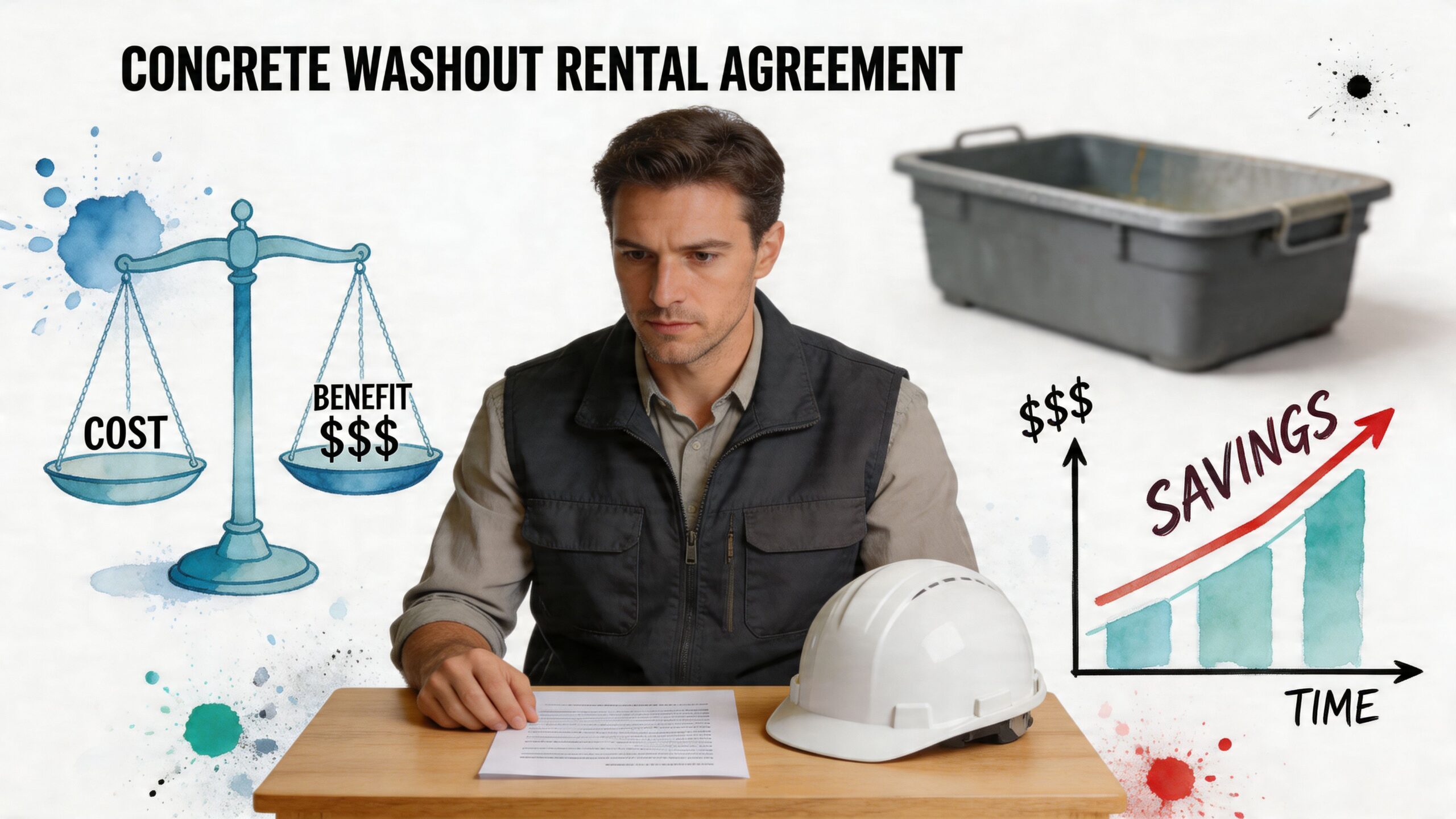
For short-term work, renting is often the practical move. Most contractors don’t need to own washout equipment for every project, and ownership brings its own baggage. Storage, transport, maintenance, cleaning, and scheduling all stay on your side of the ledger once you buy.
Rental shifts the question from “How do I own this asset?” to “How do I get compliant containment on site exactly when I need it?”
Why rental works well on short-duration projects
Rental makes the most sense when the project needs are temporary, the site is constrained, or the concrete scope is intermittent. That covers a lot of real work: tenant improvements, facility upgrades, patch-and-repair programs, civil punch lists, and phased commercial jobs.
The main advantages are operational:
- No capital purchase: You don’t tie up money in equipment that may sit unused.
- No storage burden: You’re not finding yard space between jobs.
- No hauling headaches: Delivery and pickup can be coordinated around the pour schedule.
- Cleaner estimating: Daily pricing is easier to carry in a job budget than hidden ownership costs.
The pricing side matters too. Rental options with clear daily rates help teams budget transparently. For example, the publisher’s background notes that high-capacity rental units can start at $25/day, with additional charges depending on delivery conditions and timing. That kind of transparency matters because hidden logistics costs can erase the savings of a “cheap” option fast.
Where the return shows up
The return on a washout system isn’t only about avoiding a citation. It also shows up in labor, schedule, and truck utilization.
High-speed washout systems can reduce cleaning time from 20 minutes to 5 minutes per truck. For a plant with 20 trucks washing out twice daily, that saves 10 hours of labor and truck time per day and can translate into over $800,000 in additional yearly revenue from freed-up delivery capacity, according to this washout system ROI analysis.
That example is from plant operations, but the lesson carries over to field rentals. When washout is organized, crews move faster. Drivers aren’t waiting on improvised cleanup. Pump operators aren’t searching for a legal rinse location. Laborers aren’t losing time scraping hardened messes off the wrong surface.
Rental is often cheaper than the chaos it prevents, even before you talk about enforcement risk.
What to ask before you book
A good rental conversation should answer the practical questions, not just quote a rate.
Ask these before committing:
- What unit size is available for my pour volume and site access?
- What are the delivery and pickup windows?
- Are there extra charges for rough terrain, tight access, or rush scheduling?
- What condition does the unit need to be in at pickup?
- Who handles disposal or final servicing?
Those details are where a smooth rental either stays smooth or turns into finger-pointing. The best vendors spell out surcharges, site requirements, and scheduling expectations up front.
Rent versus buy in plain terms
Here’s the field version of the decision:
| If your situation looks like this | Rental usually makes more sense | Buying may make more sense |
|---|---|---|
| Short-term or phased project | Yes | Maybe not |
| Infrequent concrete work | Yes | No |
| Limited storage yard capacity | Yes | No |
| Repeated internal use across many jobs | Maybe | Yes |
| Need for fast deployment with minimal admin | Yes | Maybe |
For most general contractors and subs managing temporary pours, rental keeps the operation lean. You get the compliance tool when you need it, then it leaves with the project phase instead of becoming one more asset to babysit.
Frequently Asked Questions and Contractor Checklist
Common questions from the field
What do I do with the hardened concrete after the job?
Don’t treat it like ordinary site trash without confirming your disposal path. Hardened residue should be managed through the container service or disposal process tied to your washout provider and local requirements. The right answer depends on how the waste was collected, whether liners are used, and what your local disposal rules allow.
Can one washout handle both concrete and other liquid waste?
That’s a bad habit. Keep concrete washout separate from paint, coatings, solvents, or unrelated slurry. Mixing waste streams complicates disposal and can create a bigger compliance issue than the original concrete work.
Is a lined dirt pit good enough?
Sometimes a temporary lined setup is allowed, but field-built pits are where crews make the most mistakes. They’re easier to damage, easier to place poorly, and harder to maintain consistently. For short-term jobs, a purpose-built rental unit is usually the cleaner and more dependable choice.
Who should own washout oversight on site?
One person. Usually that’s the superintendent, site manager, or whoever is managing SWPPP controls day to day. If everybody owns it, nobody owns it.
Give washout responsibility to one name, not a group chat.
Pre-pour compliance checklist
Use this before the first truck is dispatched:
- Placement confirmed: The washout location is set, accessible, and separated from storm drains and waterbodies according to project requirements.
- Capacity matched to the job: The unit fits the expected truck traffic, pump activity, and weather exposure.
- Crew instructions issued: Drivers, pump operators, finishers, and laborers know the designated washout point.
- Containment inspected: Container, liner, and surrounding area are intact and ready.
- Access protected: No stored material, fencing, or equipment blocks use of the washout area.
- Monitoring assigned: One person is responsible for checking fill level and condition during the pour.
- Pickup or disposal plan ready: You know what happens when the unit is full or when the pour is complete.
- Rain plan in place: The site team knows how to protect capacity and prevent overflow if weather changes.
A concrete washout system does its job when nobody has to think about it mid-pour. It’s there, it’s obvious, it’s sized right, and everyone uses it.
If you need a short-term washout rental that’s built for real job-site use, Reborn Rentals offers concrete washout containment with clear daily pricing, delivery coordination, and straightforward booking. It’s a practical option for contractors who need compliant equipment on site without taking on the cost and logistics of ownership.