
Concrete Equipment Rental: The Contractor’s Practical Guide
You're already in the part of the job where the pour looks simple on paper and starts getting complicated on site. The trucks are coming, the finish crew is lined up, and somebody still has to make sure the washout setup, delivery path, and inspection paperwork don't turn into the real problem of the day. That's where concrete equipment rental either keeps the job moving or adds friction you didn't budget for.
A rented pan or container is only useful if it shows up on time, fits the site, stays clear of drains and traffic, and holds up long enough to get through the pour without a scramble. The projects that run cleanest usually aren't the ones with the fanciest gear, they're the ones where the superintendent has already thought through the boring details that inspectors and drivers notice first.
Why Equipment Logistics Make or Break Your Pour Day
The pour usually goes sideways in the middle, not at the start. A finisher breaks down, the washout drum is too close to a drain, and the driver starts asking where he can dump while the inspector looks at the site layout and sees three separate problems at once. None of that is about concrete quality, but it can stop the pour just the same.

The bottleneck is usually where people stop paying attention
On a good site, the equipment plan is boring in the best way. The washout unit is already placed, the truck route is clear, and the crew knows who calls for pickup if the container starts filling faster than expected. On a bad site, everybody assumes someone else handled it, and the day turns into a series of small delays that stack up fast.
Practical rule: treat washout and delivery logistics like production equipment, not afterthoughts. If a rented item affects traffic, drainage, or inspection access, it belongs in the plan before the first truck arrives.
That's also why rental works so well on concrete jobs. The construction-equipment rental market is large and established, with one estimate placing global revenue at about USD 213.7 billion in 2025 and projecting growth to USD 339.0 billion by 2033, while Asia-Pacific held 50.5% of global revenue in 2025 and North America stayed strong because of residential, commercial, infrastructure, and project-specific demand Grand View Research. The point isn't the macro trend, it's the operating reality: crews need temporary capacity for a defined pour, then they need the site cleared.
Rental only helps when the logistics fit the job
A washout pan that arrives late, sits in the wrong spot, or can't be pumped before overflow risk develops doesn't save anyone time. The same is true for any concrete support equipment, whether it's a trowel, buggy, screed, or containment unit, if the handoff between delivery, use, and pickup is sloppy. In the field, the cleanest jobs are the ones where rental reduces handling, not adds another layer of coordination.
Selecting the Right Equipment for Your Specific Pour
The wrong pan size is as much a scheduling mistake as an equipment mistake. If the container is too small, the crew starts improvising. If it's oversized for the site, it can block traffic, complicate placement, and create a false sense that overflow is impossible.
Match capacity to the biggest realistic day, not the average day
Concrete washout needs to be sized against the largest expected pour and the waste that comes with it. EPA guidance says concrete washwater is caustic and corrosive, with pH near 12, and it needs to be collected in leak-proof containers so it doesn't reach soil or surface water EPA concrete washout guidance. That means the sizing question starts with containment, not convenience.
A practical selection process is simple:
- Estimate the maximum liquid and solids expected during the pour.
- Choose a leak-proof container with enough volume and reserve capacity.
- Make sure the site can accept the footprint without blocking access.
- Plan pickup or pumping before the unit reaches the 75% fill threshold.
- Verify the unit can be inspected, serviced, and protected from traffic.
A container can look spacious on paper and still be wrong in the field if freeboard, splash, rain, and settled solids aren't accounted for. Local construction BMPs often require facilities to contain all liquid and concrete waste, with freeboard and inspection expectations layered on top of that. For that reason, the advertised volume is only the starting point, never the usable figure.
Use a selection matrix the crew can actually follow
| Project Type | Recommended Pan Size | Estimated Capacity | Key Considerations |
|---|---|---|---|
| Small residential retrofit | Smaller above-grade unit | Enough for limited washwater and cleanup slurry | Tight access, short-duration use, easy removal |
| Mid-size commercial pour | Medium unit with reserve capacity | Sized for multiple trucks and longer cleanup windows | Traffic separation, daily inspection, rain exposure |
| Infrastructure or civil work | Larger unit, often with more service planning | Capacity for heavier waste generation and longer runtimes | Placement control, delivery access, pickup coordination |
Field test: if the unit forces trucks to reverse into a tight zone or puts the crew near live traffic, the size is wrong even if the capacity is right.
Some projects also need enough vertical and horizontal room for the liner and surrounding work area. Caltrans guidance recommends a minimum 10-mil polyethylene liner for above-grade facilities and enough capacity for anticipated liquid and concrete waste Caltrans guidance. That's why the best rental choice is the one that fits the pour, the access route, and the inspection plan at the same time.
Understanding True Rental Costs and Hidden Fees
The daily rate gets attention because it's easy to quote. The true cost shows up later, after delivery, site constraints, and service calls start changing the bill.
The quoted price is only one line item
A lot of contractors compare rentals the way they compare material bids, by looking for the lowest number first. That works badly with concrete support gear, because the cheapest rate can come with the most friction. Delivery timing, rough-terrain access, cleanup expectations, and late pickup terms all change the final cost.
Reborn Rentals publishes upfront daily pricing starting at $25/day, with additional notes for delivery, rough terrain, and express orders in its published fee structure. That matters because transparent add-ons are easier to budget around than hidden surprises at the end of the job. The same logic applies whether you rent a containment pan or another support item, if the provider is vague about access fees and service windows, the estimate is probably incomplete.
Budget for service, not just possession
A rental should be priced against how much handling it saves. If the provider can deliver, place, replace, or haul waste without forcing your crew to babysit the unit, the higher sticker price can still be cheaper than a bargain rental that burns labor hours. That trade-off is especially important on pours that stretch through weather changes or span multiple truck loads.
Use these cost checks before you commit:
- Delivery access: confirm whether soft ground, tight alleys, or uneven approaches trigger extra charges.
- Service response: ask how pickup, replacement, or pumping is scheduled if the unit fills early.
- Cleanup responsibility: make sure you know who handles the container after use.
- Timing windows: late pickup can turn into idle time, and idle time is where labor costs start to leak.
A rental is cheap only when it fits the site, arrives on time, and leaves on schedule.
I've seen more budget damage from poor coordination than from the rental rate itself. When a unit sits in the wrong place or the crew waits on pickup, the cost isn't hidden anymore, it's sitting on the time sheet.
Comparing Major Rental Providers and Service Models
The provider you choose matters because concrete work punishes slow communication. A good rental partner confirms availability, explains the setup, and handles logistics without forcing the superintendent to chase three different people for one answer.
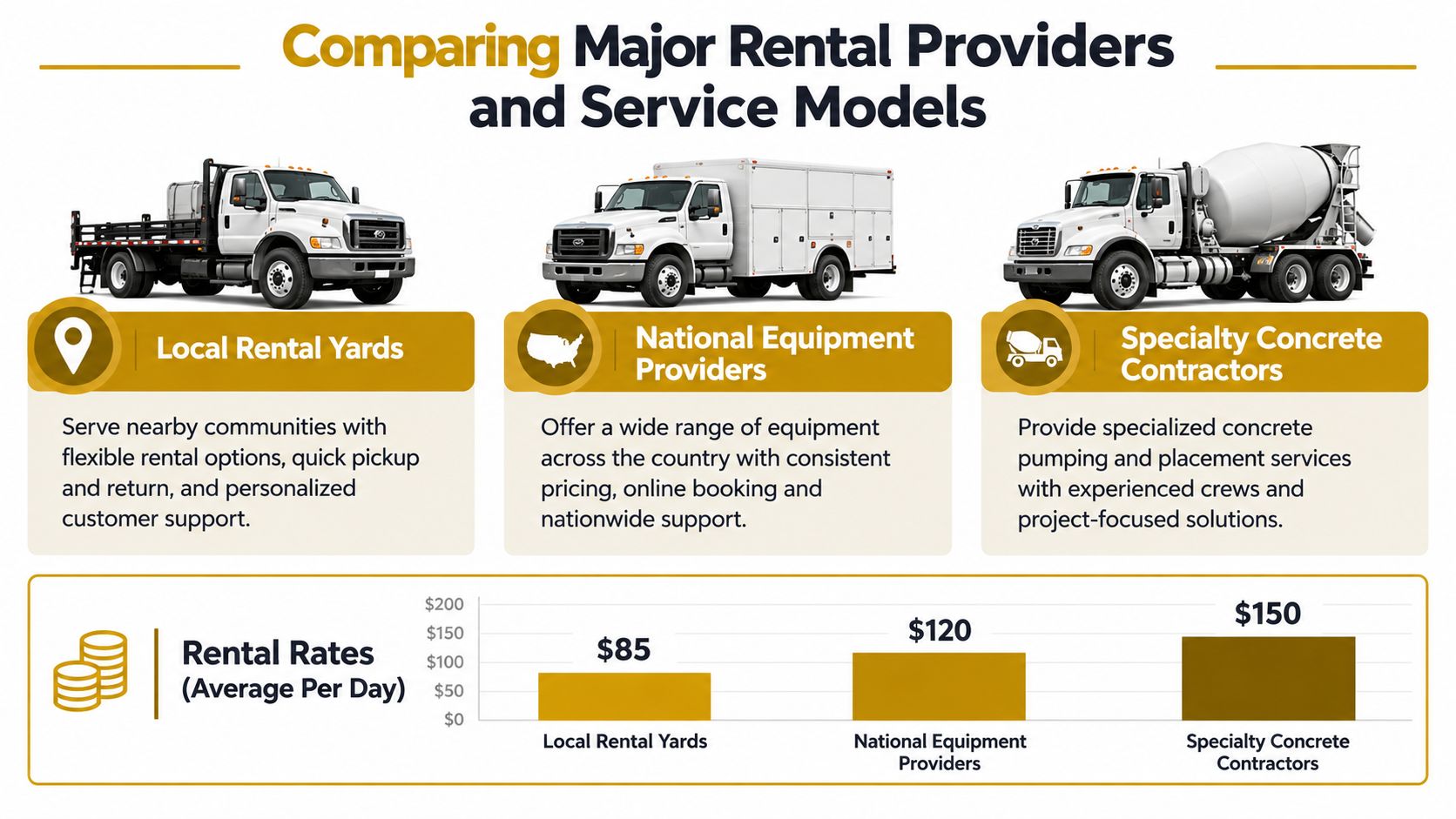
Different providers solve different problems
Local yards can be useful when you need quick access and already know their dispatch habits. National providers often bring broader inventory and standardized processes, which helps on predictable projects with familiar specs. Specialty concrete contractors usually bring the most relevant guidance for washout, containment, and cleanup, because that's the world they live in.
The right choice depends on what you're optimizing for:
- Local rental yards: good when proximity matters more than specialization.
- National equipment providers: useful when your team wants a familiar booking flow and broad coverage.
- Specialty concrete contractors: better when compliance, containment, and service detail matter most.
Support channels tell you a lot about service quality
Modern crews don't want to wait for a single callback window. They want confirmation through the channel they're already using, whether that's Messenger, WhatsApp, email, QR-based contact sharing, or a scheduled callback. A provider that supports fast confirmation usually handles the rest of the job with more discipline too.
That's where Reborn Rentals fits naturally as one option for containment-focused work. It offers a straightforward checkout flow, concrete washout pans and containers, delivery coordination, and multiple contact channels for confirming specs and timing. The practical value isn't the marketing, it's the fact that the whole process is built around a short-duration concrete job instead of a generic rental shelf.
Site Compliance Checklist Before Your Concrete Pour
A washout container alone doesn't make the site compliant. The site has to be set up so the container stays effective while the pour is underway and after the first rain hits.
Placement decides whether the setup works
EPA guidance says washout should be placed at least 50 ft (15 m) from storm-drain inlets, open drainage, and watercourses unless the engineer documents that distance as infeasible EPA concrete washout guidance. It should also stay away from construction traffic, because vehicle damage to liners or sidewalls turns a compliant setup into a spill risk.
The most common mistakes are predictable. Crews place the pan next to a drain, guess at slurry volume, let trucks roll too close, and then postpone inspection until after the storm has already hit. That's exactly how a defensible setup becomes a discharge problem.
Use the inspection rhythm inspectors expect
EPA guidance calls for daily inspections and checks after heavy rain, with attention to leaks, damaged liners or sidewalls, and excessive fill EPA concrete washout guidance. Caltrans guidance also points to enough capacity for expected waste and a 10-mil polyethylene liner for above-grade facilities Caltrans guidance.
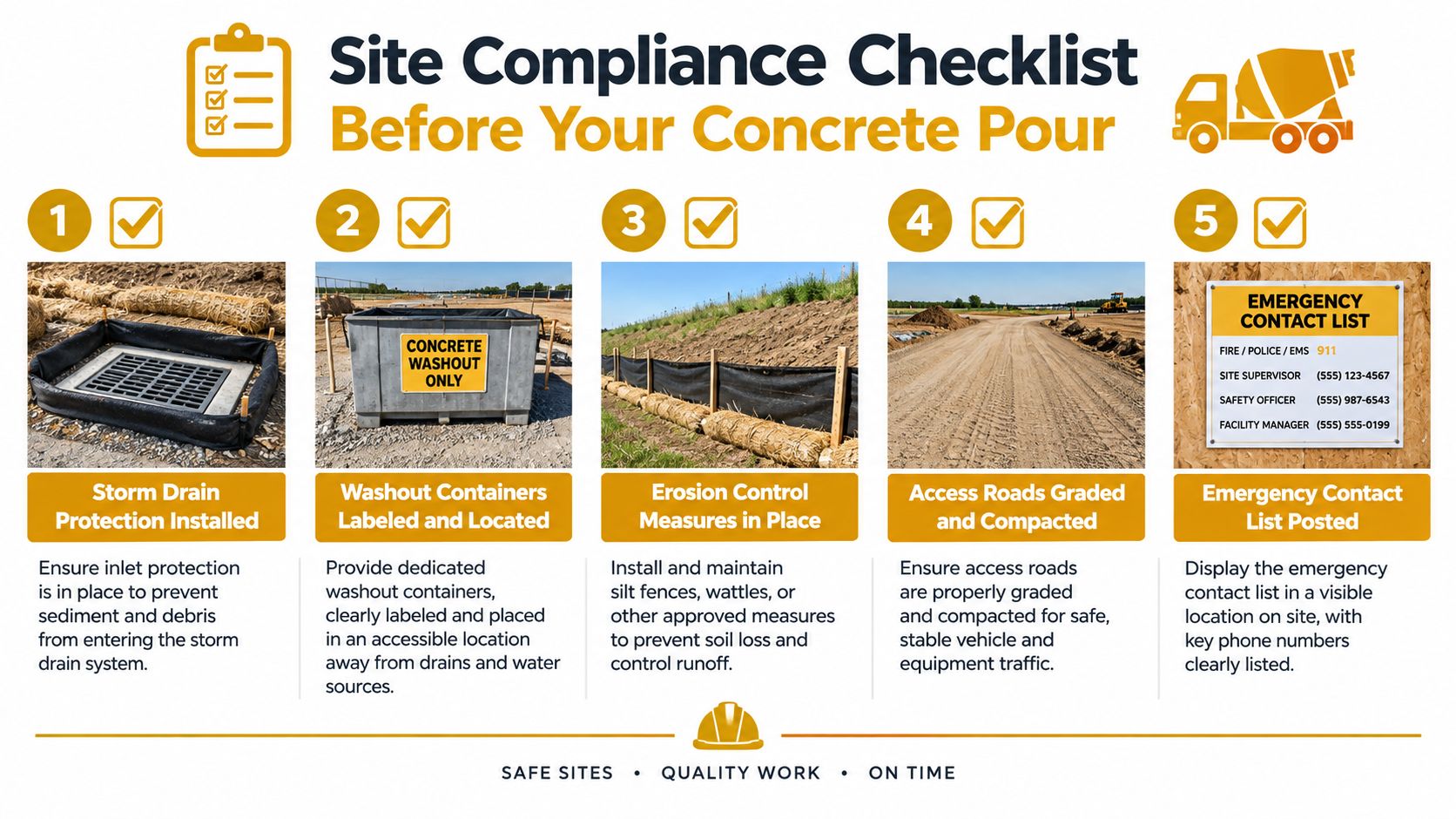
A site-ready checklist looks like this:
- Storm drain protection installed: keep washout and runoff away from inlets and drainage paths.
- Washout containers labeled and located: make the placement obvious to operators and inspectors.
- Erosion control measures in place: don't leave the area exposed to rain and runoff.
- Access roads graded and compacted: keep delivery trucks from rutting the route or damaging the setup.
- Emergency contact list posted: make sure the superintendent, rental provider, and subcontractor contacts are visible.
If you can't explain the washout setup to an inspector in one minute, the site probably isn't ready.
The bigger issue under EPA's construction stormwater framework is that a container is only one piece of compliance. Sites disturbing at least one acre, or smaller sites that are part of a larger common plan, typically need permit coverage, and local MS4 programs can add their own inspection and BMP requirements EPA construction stormwater framework. That's why the setup has to be defensible, not just present.
Streamlining Your Pre-Pour Workflow and Logistics
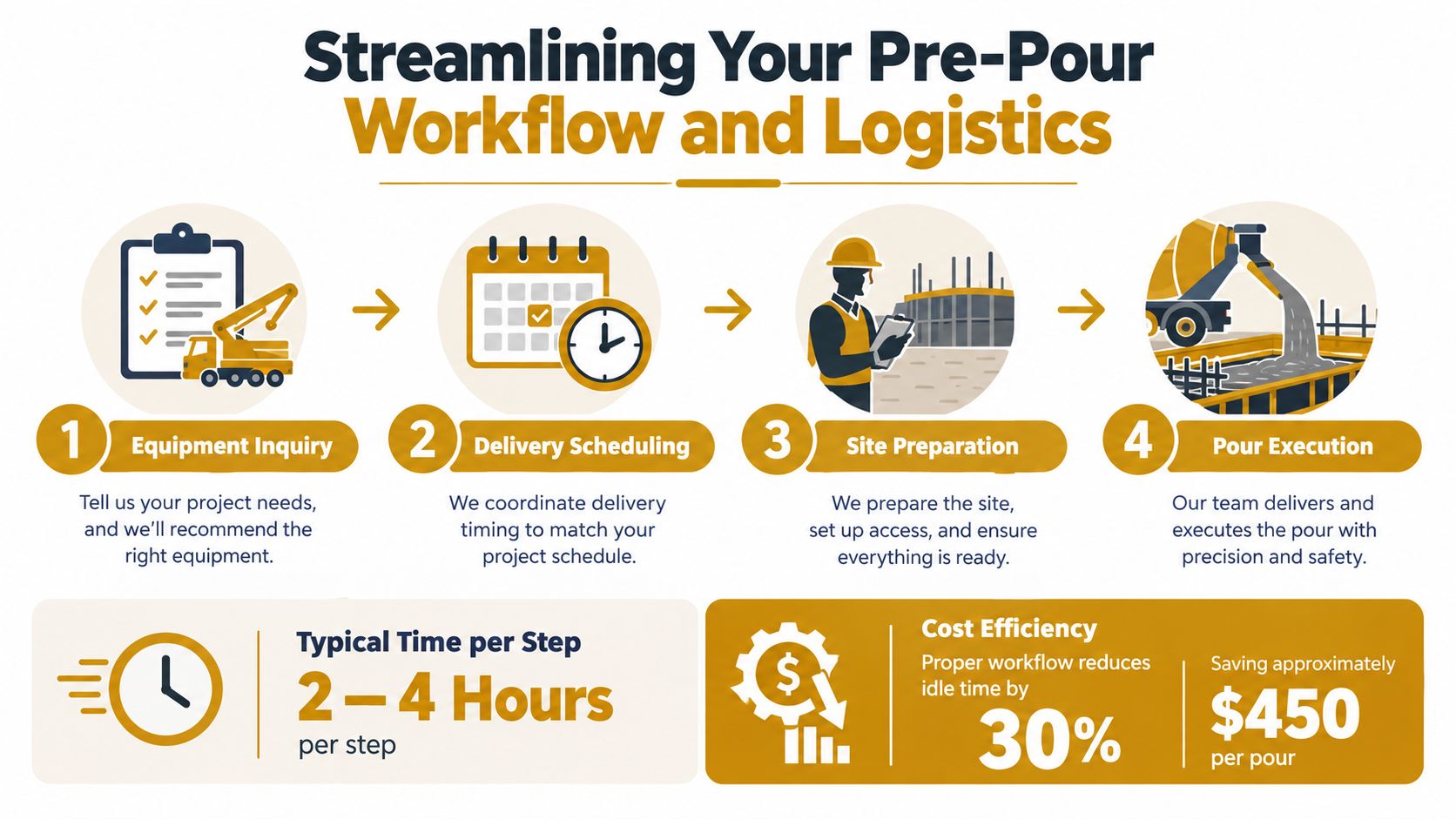
The jobs that stay calm usually follow the same sequence. The superintendent confirms the rental, the delivery window matches the truck plan, the site is prepared before the first load arrives, and the pickup or service call is already scheduled before the container gets close to full.
Build the workflow backward from pour time
Start with the pour window, then work backward from there. If the delivery truck can't place the unit before setup begins, the crew loses time before the first batch even hits the site. If pickup is not scheduled, the container lingers after the crew is gone, which creates a second cleanup problem no one wants.
A practical flow is:
- Confirm the equipment spec and availability.
- Lock in delivery timing and site access.
- Prep the location, including drainage protection and traffic separation.
- Run the pour with the service trigger already defined.
Communication is part of the rental, not separate from it
The best rental providers make it easy to confirm details fast, because concrete work changes fast. When a provider offers multiple ways to reach them, the crew can solve the small problems before they become field delays. That matters on both large pours and small renovations, because the same failure points show up in both jobs, just at different scales.
Reborn Rentals is built around that kind of workflow, with a cart-to-checkout process, concrete washout containment options, and contact channels that help crews confirm availability and logistics without a long back-and-forth. It's a straightforward fit for contractors who need containment gear delivered, placed, and cleared without creating another moving part on pour day.
Keep the handoff clear
A site runs smoother when every party knows who owns what. The general contractor controls access and schedule, the concrete subcontractor controls washout use, and the rental provider handles delivery and service timing. Once that handoff is clear, the pour stops being a coordination problem and starts being what it should have been all along, a workday with fewer surprises.
If your next pour needs washout containment that shows up on time and stays inspection-ready, take a hard look at your logistics before you book the gear. Reborn Rentals offers concrete washout containment rentals, delivery coordination, and support channels that fit real jobsite schedules, so you can keep the site organized and the pour moving.

