
Paint Washout Station Guide for Contractors
A paint washout station is a leakproof, designated containment area for coating and construction washwater, and EPA guidance identifies concrete washwater as slurry near pH 12, above the freshwater aquatic-life range of pH 6.5–9. NPDES construction requirements generally apply to projects disturbing 1 acre or more, so uncontrolled washout can become a permit problem, not just a messy cleanup.
The familiar scene is a busy pour or coating shift, trucks waiting, hoses coming off pumps, and a crew member looking for somewhere to rinse a chute, roller, brush, or line. The nearest curb seems convenient until gray water heads toward an inlet, a pan overflows after rain, or a solvent-contaminated rag gets tossed into a container meant for cement slurry. A station that works in the field is more than a large tub. It's a compliance and logistics system with a defined material range, a controlled location, an inspection routine, and a disposal path.
Why One Washout Spot Can Save a Project
The shortcut usually starts innocently. A finisher rinses a tool beside the pour, a pump operator cleans a line near the truck, and someone scrapes residue onto bare ground because the designated area is too far away. By the time the superintendent notices, the gray trail has reached a curb or storm drain. The crew now has to stop production, block the flow, recover contaminated material, and explain why the posted washout area wasn't used.
A visible, accessible station prevents that chain reaction. Trucks and pumps can reach it without crossing active work zones, while painters and finishers have one known location for rinsing tools. The station also gives the superintendent something concrete to inspect, photograph, and record instead of relying on verbal instructions.
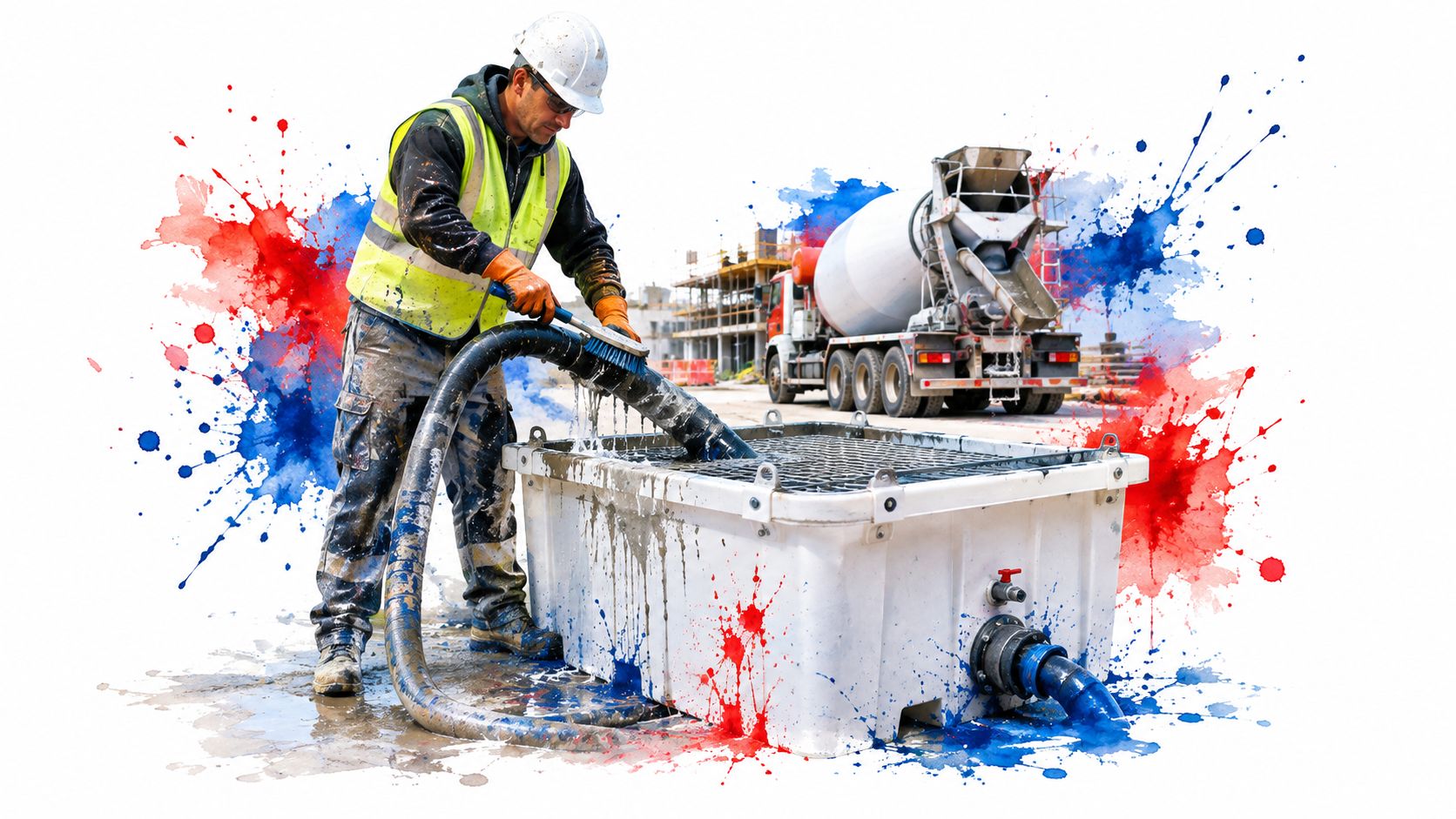
The cost of an improvised area
An uncontained washout creates several problems at once:
- Environmental exposure: Cement slurry can enter storm drains, surface waters, or soil, where it can alter soil chemistry and inhibit plant growth. The EPA concrete washout guidance identifies suspended solids, toxic metals, and high alkalinity as central concerns.
- Crew exposure: Wet slurry makes walking surfaces slick, while hurried cleanup puts workers close to moving trucks, pumps, and contaminated residue.
- Traffic disruption: A station placed in a truck's path forces repeated repositioning, creates congestion, and encourages workers to wash out wherever they happen to be standing.
- Inspection risk: A designated area that is empty, overflowing, leaking, or inaccessible gives an inspector a clear indication that the written plan and field practice don't match.
Practical rule: If the crew has to ask where washout goes, the station isn't serving the job.
The best location is close enough to use during production, but outside stormwater flow paths and away from drains, ditches, and receiving waters. Post the material limits beside it. A concrete-only pan shouldn't become the disposal point for solvent rinse water by default, and a paint treatment system shouldn't receive cementitious waste unless its design and disposal instructions allow it.
What a Paint Washout Station Actually Does
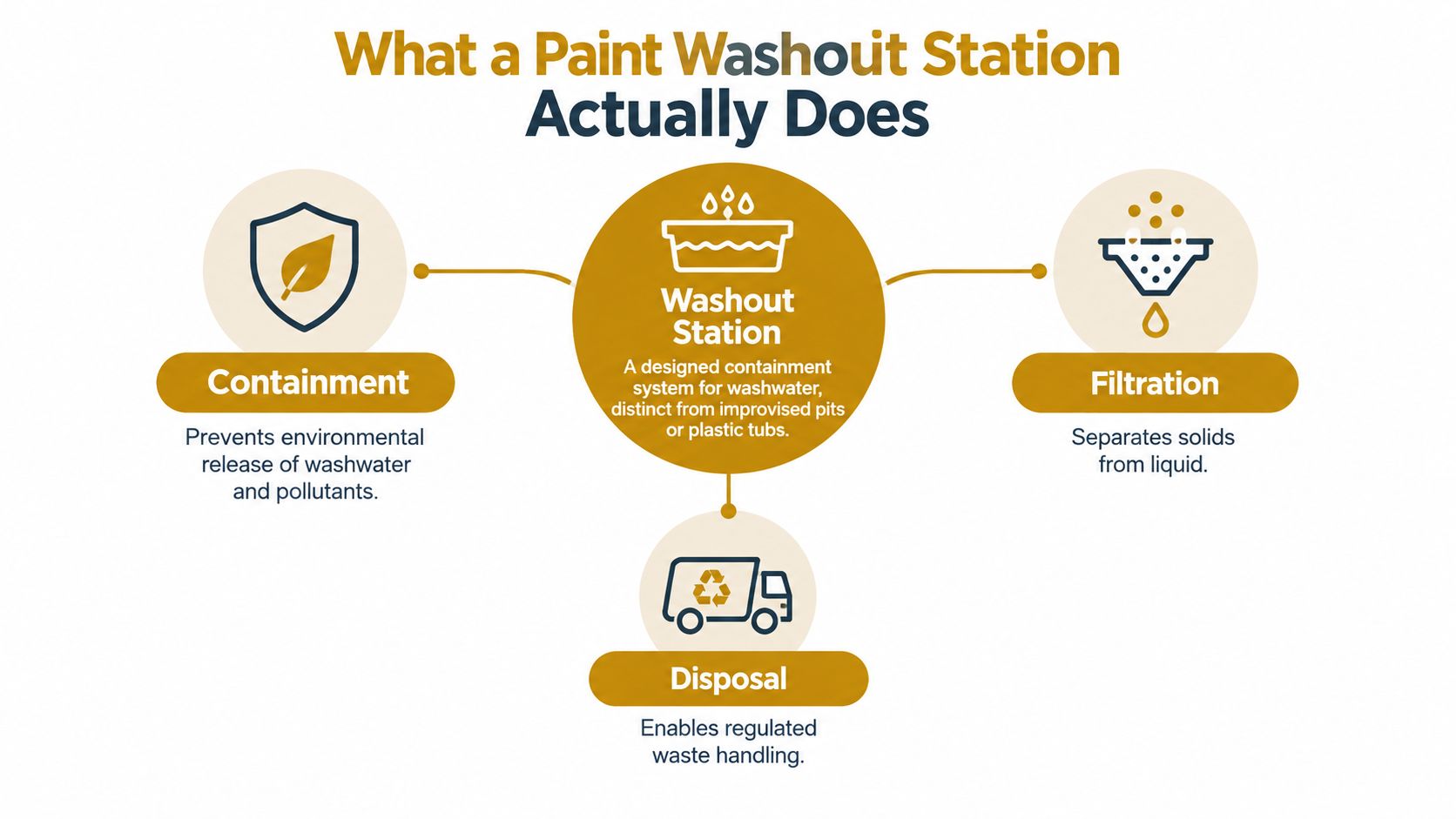
A paint washout station collects washwater and residue before those materials reach soil or stormwater. Depending on the work, it may handle concrete, mortar, stucco, cementitious coatings, water-based paint, or other construction residues. It may also include a treatment or separation process, but containment remains the first duty.
The simplest useful analogy is a settlement system for the job site. Solids stay in the container, liquid remains controlled, and the crew manages the residue through an approved reuse, recycling, treatment, or disposal route. A shallow pit in the ground doesn't provide that control because seepage, overflow, and stormwater contact remain possible.
Containment comes first
EPA guidance recommends collecting and retaining all washout water and solids in leak-proof containers, with the objective of recycling 100% of collected material where practicable, as described in the EPA stormwater construction requirements. The container must resist leakage, remain stable under load, and provide enough freeboard for rainfall and splash.
That requirement changes how crews evaluate a station. Capacity alone isn't enough. A large container with a damaged liner, poor access, or an open edge near a drain is still a weak control.
Filtration is material-dependent
Concrete and cementitious slurry settle differently from paint rinse water. Some paint washout systems use treatment products to separate solids and produce a liquid fraction that may have a defined handling route. That process isn't a universal permission to pour liquid into a drain.
Keep incompatible materials separate. Water-based paint rinse water, concrete slurry, solvent-contaminated waste, curing compounds, and oily residues may require different treatment or disposal decisions. The product Safety Data Sheet and local wastewater requirements determine what happens next.
Disposal closes the loop
A station only works when someone manages the collected waste. Crews need a clear answer to three questions before the first washout:
- What materials may enter this container?
- Who checks the capacity and condition?
- Where will the liquid and solids go?
If those answers aren't documented, the container is just postponing the problem.
Regulatory and Environmental Reasons It Exists
Concrete washout became a formal stormwater-compliance issue in the United States through the Clean Water Act and the National Pollutant Discharge Elimination System, or NPDES. EPA identifies construction-site washout as a pollutant source because cement slurry can move into storm drains and surface waters, percolate through soil, change soil chemistry, inhibit plant growth, and contaminate groundwater. The agency's foundational control is straightforward, collect and retain the material in leakproof containers.
Projects disturbing 1 acre or more generally fall within NPDES construction requirements, making washout containment a common component of a Stormwater Pollution Prevention Plan, or SWPPP. The area should be clearly designated, managed, and kept capable of containing residue during normal operations and weather.
Why the volume changes the planning
The industry challenge is much larger than a few brushes after a small repair. An environmental-management analysis estimates approximately 34 million concrete-truck loads annually, assuming 10 cubic yards per truck. It estimates about 2.16 million cubic yards of residue left on truck chutes, equivalent to approximately 4.32 million tons, along with roughly 308 million gallons of washwater from truck and pump washout. The figures come from the Diligent Concrete Washout report.
That scale explains why regulators expect planned infrastructure. A station needs a location, service access, inspection ownership, and capacity plan. It can't be an afterthought placed wherever the last truck finishes.
Field controls that hold up
Set the station near the pour or coating work, but technical guidance recommends at least 50 feet from storm drains, open ditches, and water bodies. Use stable gravel or rock beneath the area, post clear signage, and keep the route open for trucks, pumps, and servicing equipment.
Inspect the station daily and after rain. Look for displaced liners, wet ground, cracks, bulging sides, clogged access points, and slurry tracking away from the container. When the container reaches approximately 75% capacity, remove the liquid fraction where the approved process allows it, or retain the slurry until it evaporates and can be handled properly.
Station Types, Components, and Sizing Basics
The right station depends on the material, access conditions, service frequency, and weather exposure. A portable containment pan works well when the crew needs quick deployment and relocation. A lined pit may suit a longer project with stable site controls, but it demands careful excavation, liner protection, signage, and overflow planning. Modular systems add treatment or separation components, which can help when paint rinse water needs processing rather than simple settling.
| Station Type | Best For | Key Compliance Consideration |
|---|---|---|
| Portable containment pan | Short pours, mobile crews, changing work areas | Check seams, liner condition, stability, and overflow clearance |
| Lined washout pit | Longer projects with a fixed work zone | Prevent ground contact, protect the liner, and plan for rain |
| Modular treatment system | High-volume or material-specific paint washout | Confirm chemical compatibility and the approved liquid and solid disposal route |
Components that matter in practice
A functional station typically includes:
- Leakproof containment: The base and sides must retain liquid and solids without relying on soil to provide the seal.
- Freeboard: Leave space for splash and rainfall. A full container is a spill waiting for the next storm.
- Stable underlayment: Gravel or rock helps keep the station level, reduces tracking, and protects the base from sharp ground conditions.
- Signage: State what belongs in the station and identify prohibited materials.
- Service access: A vacuum truck, forklift, pump, or waste vehicle needs a safe approach without crossing the active pour.
- Inspection record: Log condition, capacity, weather-related checks, and corrective work.
Sizing should combine expected washwater, residual solids, rain exposure, and service timing. Don't select a container by nominal liquid capacity alone. A station that looks adequate on a dry morning may overflow after a storm or become unusable when settled solids consume its working volume.
A simple selection rule
Rent when the site, duration, or demand changes frequently. Buy when washout is a recurring bottleneck and the company already has disciplined storage, inspection, and cleaning procedures. Whichever route you choose, the container must fit the work rather than force the crew to improvise around it.
Rental versus Purchase for Job-Site Needs
Rental is usually the cleaner choice for intermittent demand. A general contractor managing one commercial pour may need a large pan for a defined window, then have no use for it once the concrete work ends. Renting avoids long-term storage, reduces the chance of equipment sitting damaged between jobs, and lets the team match the station to site access and weather conditions.
Purchase becomes more attractive for a concrete finisher, pump operator, or specialty contractor moving between recurring projects. Ownership can reduce repeated delivery coordination and gives the crew a known system, but only if someone maintains it. A neglected owned pan is worse than a well-serviced rental because the company may assume it's ready when the liner, corners, or fittings are already compromised.
Compare the full operating burden
Ask these questions before committing:
- Project pattern: Is demand occasional, seasonal, or constant across multiple crews?
- Storage: Do you have a protected place to keep the station clean and intact?
- Maintenance: Who checks seams, liners, fittings, and capacity between deployments?
- Delivery: Can the supplier place the unit where trucks can use it without creating a traffic conflict?
- Replacement risk: What happens if the station is damaged, lost, or unavailable when a pour changes dates?
- Servicing: Does your team have a defined waste-removal and disposal process?
A transparent rental quote should identify delivery conditions, rough terrain charges, express service, and pickup expectations. A purchase decision should include the same practical costs, including storage, cleaning, inspection time, and replacement parts.
The cheapest container is the one the crew can reach, use correctly, and service before it overflows.
Before the station arrives, assign one person to accept it, verify its condition, place the signage, and brief the crew. That small handoff prevents the common failure where equipment is delivered but nobody owns the operating routine.
Setup and Maintenance Best Practices
A large pan isn't automatically suitable for every coating. Material compatibility and disposal route determine compliance, not dimensions alone. A station may contain a spill successfully while still creating a waste problem if the crew mixes solvent, thinner, paint residue, and cement slurry in one container.
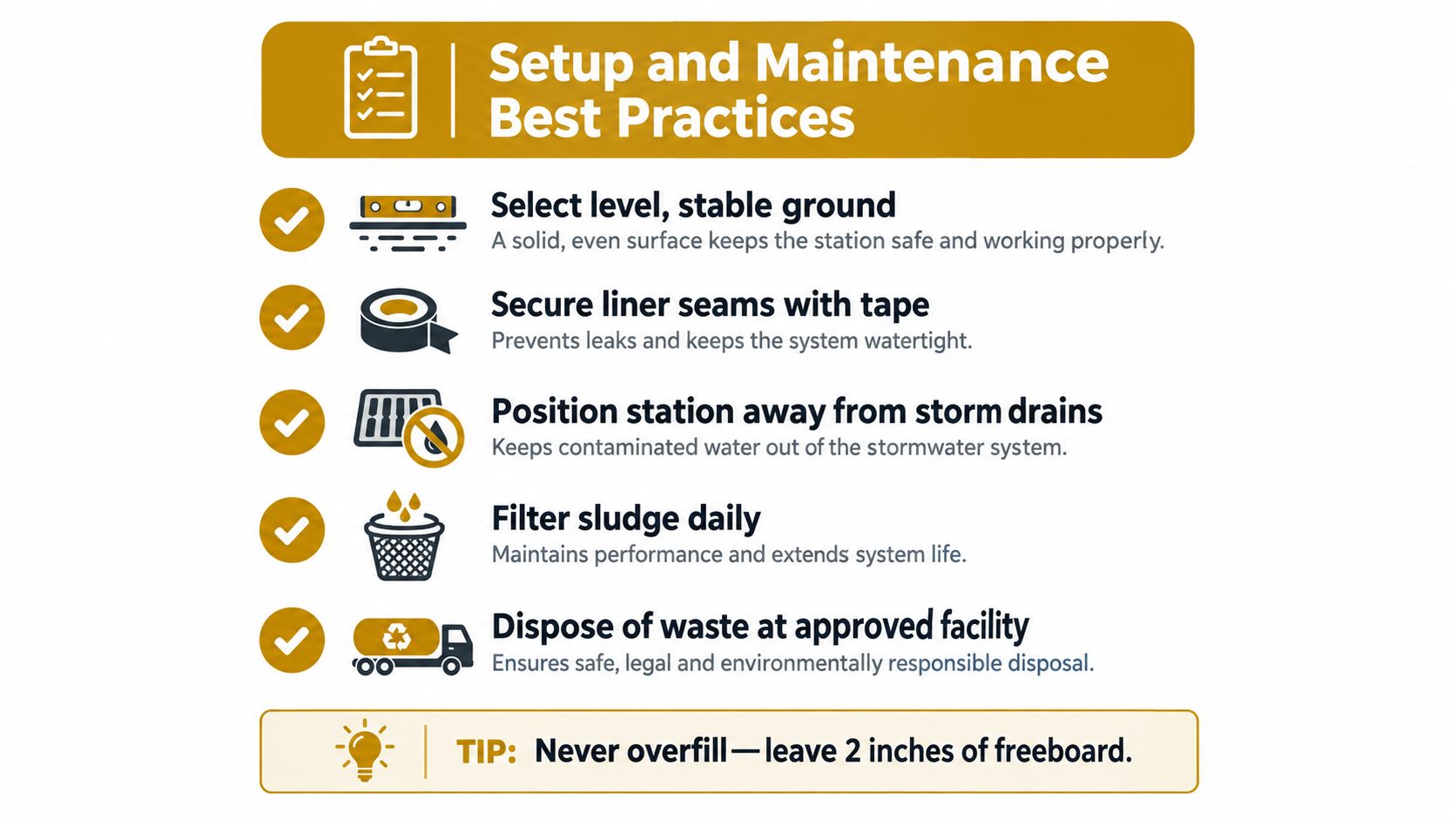
Set it up before production starts
Prepare level, stable ground and keep the container outside normal stormwater flow. Secure the liner and seams, protect the base from punctures, and position the station where workers can wash tools without reaching across traffic. Place signs where a new subcontractor sees them before opening a valve or rinsing a brush.
The crew briefing should identify approved materials and prohibited discharges. A painter may understand where the station is but still assume every rinse water is interchangeable. That assumption causes trouble when the station is designed for cementitious slurry and the work involves solvent-based coatings.
Inspect the points that fail first
Check seams, liners, corners, drains, lids, access points, and the ground immediately around the station. Inspect before each pour or washout event, daily during active use, and after rain. A small breach can turn a contained system into a direct soil or stormwater pathway.
Use a short record that answers:
- Condition: Is the container stable and leak-free?
- Capacity: Is there enough working volume and rain freeboard?
- Location: Are drains, ditches, and flow paths still separated?
- Housekeeping: Has residue tracked outside the area?
- Action: Who corrected the issue and when?
Manage capacity before the station is nearly full. Remove liquid through the approved process, retain slurry for handling, and never assume evaporation makes a contaminated residue harmless. Clean surrounding splashes and replace damaged components before the next shift.
A station passes an inspection because the crew manages it every day, not because it looked compliant when it arrived.
Choosing the Right Station for Your Coatings and Disposal Path
Start with the Safety Data Sheet for every coating, cleaner, curing compound, solvent, and thinner. Separate water-based paint rinse water from solvent-contaminated waste unless the system specifically permits combined handling. Sanitary-sewer disposal isn't automatically allowed, so consult the local wastewater authority before sending collected cleaning water anywhere beyond the containment system.
Use this decision path:
- Identify the material. Concrete, stucco, mortar, water-based paint, solvent, and oil residues don't share the same assumptions.
- Confirm compatibility. Check the container, liner, treatment product, and manufacturer instructions against the SDS.
- Plan capacity. Include washwater, solids, splash, rainfall, and the timing of service.
- Choose the location. Keep access practical while separating the station from drains, ditches, and surface-water routes.
- Assign disposal. Identify the approved destination for both liquid and solid residue before work begins.
- Document inspections. Record condition, capacity, weather checks, and corrective actions for the SWPPP file.
A bigger container can reduce overflow risk, but it can't make incompatible chemicals safe to mix or create an approved disposal route.
Reborn Rentals provides ready-to-deploy washout pans and containment equipment for concrete and renovation crews that need a practical station without slowing the job. Review the available options and arrange delivery through Reborn Rentals, then confirm the footprint, access requirements, and service timing before the first washout.