
Your Guide to a Concrete Washout Station
Picture this: you wouldn't wash a paint roller in the middle of a freshly sodded lawn. So why would you let a concrete truck wash out its chute onto bare ground? A concrete washout station is just common sense—it’s the designated, contained “sink” for your job site, built to catch all the messy, hazardous slurry from your trucks and tools. It's a simple idea, but it's one of the most important Best Management Practices (BMPs) you can have for a clean, compliant, and responsible project.
Why a Concrete Washout Station Is Non-Negotiable
A washout station isn't just a nice-to-have; it's a critical piece of equipment that directly protects your crew, the environment, and your company's bank account. Without one, you’re leaving your site wide open to contamination, hefty regulatory fines, and frustrating project delays.
Think of that gray, watery concrete slurry as a liquid chemical hazard. It has a pH level that can reach 12 or 13—making it just as corrosive as the drain cleaner under your kitchen sink. When that stuff gets loose on a job site, the fallout is serious.
- Environmental Damage: This caustic slurry can torch vegetation and spike the pH of nearby water sources, creating a toxic mess that's deadly for fish and other aquatic life.
- Safety Hazards: If that slurry gets on a worker's skin or in their eyes, you're looking at severe chemical burns.
- Regulatory Fines: Letting concrete washout run free is a clear violation of environmental laws like the Clean Water Act. The fines for non-compliance can be staggering.
The Cornerstone of Your SWPPP
For any construction project, your Stormwater Pollution Prevention Plan (SWPPP) is your game plan for managing pollutants. A concrete washout station isn't just a part of that plan—it's a cornerstone. It’s a clear, physical demonstration that you’re serious about preventing pollution from day one.
Before we dive deeper, here’s a quick overview of what a washout station brings to your project.
Concrete Washout Station at a Glance
| Aspect | Description |
|---|---|
| Core Purpose | To safely contain all concrete washout water and solids, preventing soil and water contamination. |
| Key Components | A watertight, portable container (like one of our pans), a ramp for truck access, and a liner (optional but recommended). |
| Primary Benefits | Ensures EPA and SWPPP compliance, protects the environment, and prevents costly fines and project shutdowns. |
Having this in place shows inspectors you're proactive, not reactive.
A dedicated washout isn't just a container; it's your first line of defense against costly fines and irreversible environmental damage. It proves you are actively managing your site's risk profile.
This isn’t just a local issue; it’s a global shift. The entire concrete washout system market was valued at $245.03 million back in 2024 and is on track to hit $336.57 million by 2032. Why the growth? Because regulations are getting tighter everywhere, demanding full containment of this caustic slurry. You can read more about this trend from industry researchers who are tracking the market's expansion.
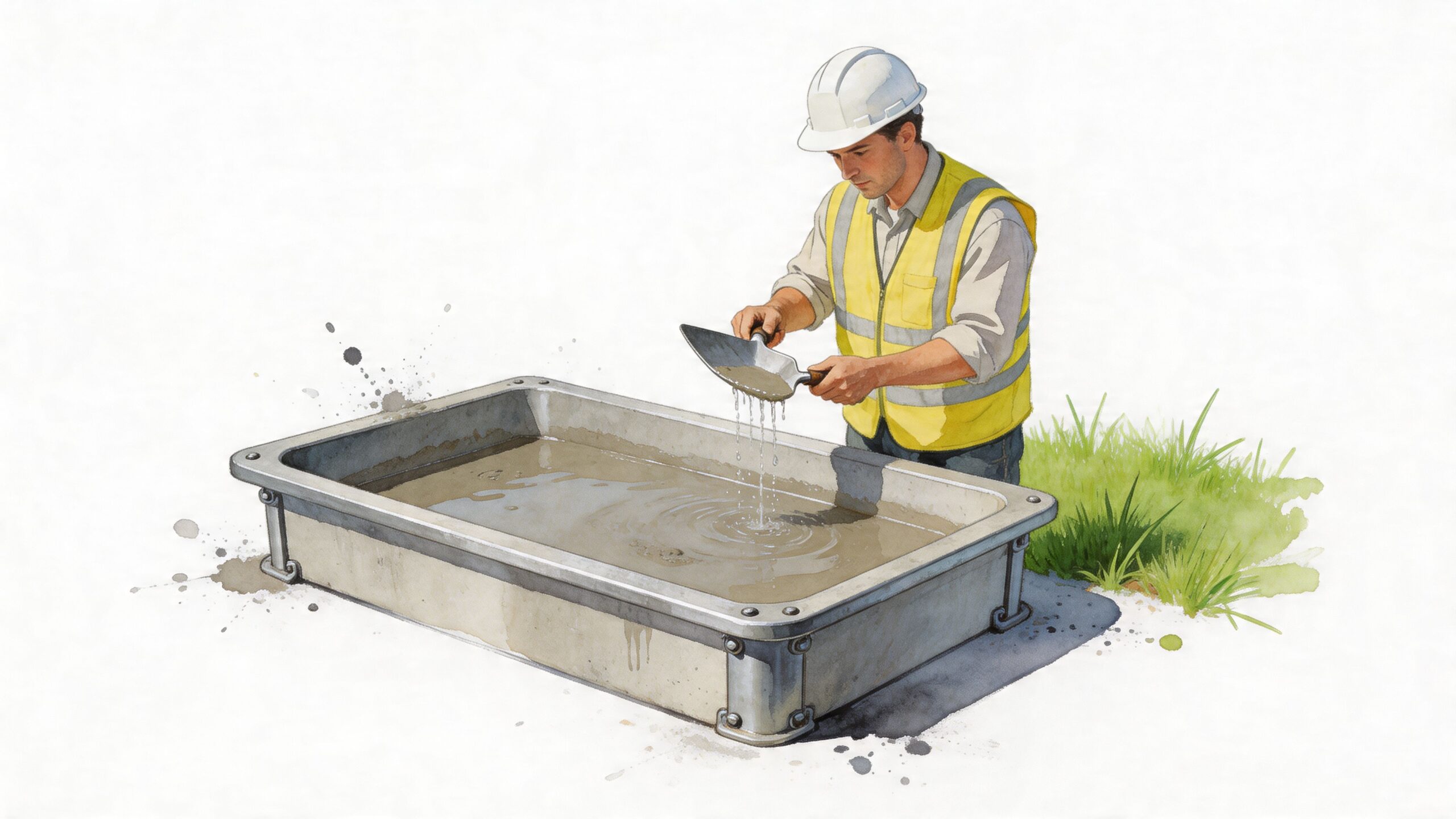
At the end of the day, using a proper washout solution isn’t about choosing between being efficient and being compliant. The two go hand in hand. When you contain your concrete waste, you’re protecting your team, the local environment, and the success of your entire project. It's just smart business.
Navigating EPA Regulations and SWPPP Compliance
Let's be blunt: using a concrete washout station isn't just about keeping the job site tidy. It’s a legal must-have, and the regulators have some serious teeth. Governments at every level—federal, state, and local—have strict rules for construction site runoff, and that gray, watery concrete slurry is public enemy number one.
Getting this wrong can lead to crippling fines and even a complete project shutdown.
The big players here are the U.S. Environmental Protection Agency (EPA) and its powerful Clean Water Act (CWA). The CWA makes it flat-out illegal to let any pollutant, including concrete washout, get into our waterways without a permit. On a construction site, this is all managed through a system that sets the ground rules for handling stormwater.
This is where your Stormwater Pollution Prevention Plan, or SWPPP, becomes the most important document in your truck.
Decoding Your Stormwater Pollution Prevention Plan
A SWPPP isn't just more paperwork to file away. Think of it as the playbook for your entire site, showing exactly how you’ll stop pollution in its tracks. It's a living document that has to identify every potential source of contamination and spell out the exact Best Management Practices (BMPs) you’ll use to control them.
If you’re pouring concrete, your SWPPP absolutely must detail your washout procedures. When an inspector shows up, they’re going to be looking for a few specific things:
- Designated Washout Areas: Is there a clearly marked, dedicated spot for washing out?
- Proper Containment: Is your washout station leak-proof? Is it big enough for the job?
- Location: Is it placed at least 50 feet away from storm drains, ditches, or any body of water?
- Maintenance Records: Can you prove you’re inspecting the station and disposing of the waste correctly?
A SWPPP that’s vague about concrete washout is a red flag for any inspector. It’s one of the very first things they’ll check.
Here’s a simple way to think about it: your SWPPP is your promise to the regulators. Your physical concrete washout station is you keeping that promise.
The Science Behind the Rules
Why are the rules so strict? Because the science is crystal clear: concrete slurry is dangerously caustic. Fresh washout can have a pH of up to 12.5, which is as corrosive as the chemical drain cleaner under your sink.
If that alkaline water seeps into the ground, it can poison the groundwater. If it reaches a stream, it can raise the water’s pH so high that it kills fish and destroys the entire aquatic ecosystem.
That’s why regulations are all about total containment. EPA guidance pushes for 100% solids and water retention in a completely leak-proof container. The goal is to prevent that toxic, high-pH liquid from ever touching the ground. This isn’t just a US thing, either—rules across the globe, from state-level mandates to EU water directives, all demand this same level of protection. You can read more about the global standards for washout containment and see how universal these risks are.
The High Cost of Non-Compliance
Ignoring these rules is a gamble you simply can’t afford. Violating the Clean Water Act can lead to fines that hit tens of thousands of dollars per day, for each individual violation.
Think about it. An inspector sees a concrete truck driver wash a chute out on the ground near a storm drain. That one mistake could trigger multiple violations and a fine that makes the cost of a washout pan look like pocket change.
Even worse, authorities can slap you with a stop-work order, bringing your entire project to a grinding halt. The delays and contractual penalties that follow can be far more damaging than the fine itself. Your reputation takes a hit, and future jobs become harder to win. A proper concrete washout station is your insurance policy against that kind of disaster.
How to Size and Place Your Washout Station
Picking the right size and spot for your concrete washout station is just as critical as having one in the first place. Think of it like a workbench in a woodshop—if it’s too small for the job or stuck in a far-off corner, nobody's going to use it right. Nailing these details from the get-go is the key to keeping your site compliant, safe, and running without a hitch.
Sizing isn't a one-size-fits-all deal. The capacity you need boils down to the scale of your concrete work. A simple patio pour might just need a single, smaller washout pan. But for a massive commercial foundation getting dozens of truck deliveries? You're going to need way more capacity, maybe even several large containers placed strategically across the jobsite.
Calculating Your Washout Capacity
To get a handle on what you need, start with your daily pour schedule. The goal is to get ahead of the total volume of washout slurry and leftover concrete you’ll generate. A solid rule of thumb is to plan for roughly 6-10 gallons of washout slurry for every concrete truck that comes on site.
When you're running the numbers, think about these key factors:
- How many concrete trucks are scheduled? More trucks mean more chutes to wash down. It's simple math.
- Will you be using a concrete pump? This is a big one. Cleaning out pumping equipment uses a lot more water than a standard mixer chute. Don't underestimate it.
- What's the pour volume and frequency? A single massive pour is different from several smaller ones spread throughout the day. Continuous work needs a washout station that can keep up without getting overwhelmed.
For instance, a site expecting 10 truck deliveries and also using a pump truck can easily create over 100 gallons of washout in just one day. Your container has to handle that volume with plenty of room to spare to prevent a nasty spill.
This process is guided by some serious compliance requirements, which the infographic below breaks down perfectly. It’s all about making sure your plan ticks every regulatory box.
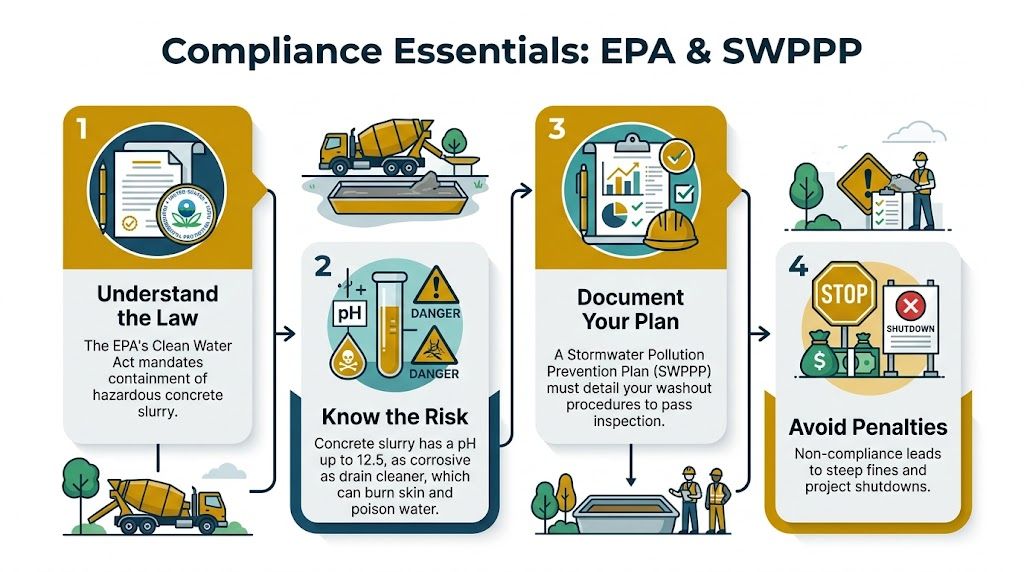
As you can see, understanding the rules, knowing the risks, and documenting your strategy are all connected. A solid washout plan is a complete compliance plan.
Finding the Right Location
Once you’ve figured out the size, placing it correctly is the next big step. You’re aiming for the sweet spot: easy for drivers to get to, but safely away from anything environmentally sensitive. A poorly placed washout can get you in just as much trouble as not having one at all.
Your washout station's location should be a balance of accessibility and protection. Make it easy for trucks to use but impossible for runoff to escape.
When you're scouting for the perfect spot, run through this mental checklist:
- Keep a Safe Distance: Your station absolutely must be at least 50 feet away from storm drains, ditches, streams, or any other body of water. In most places, this isn't a suggestion—it's the law.
- Make Access Easy: Put the washout where mixer trucks and pumpers can get to it without causing a traffic jam. It should be close to the pour but not in the way of everyone else.
- Find Solid Ground: The ground under your washout pan needs to be level and firm. Stay away from steep grades or soft dirt where the container could tip over or sink.
- Make It Obvious: Clearly mark the washout area with signs. This seems simple, but it ensures every single driver knows exactly where they're supposed to clean out, preventing accidental messes elsewhere on site.
By putting some real thought into both size and placement, you turn a simple washout container into a core part of your site's safety and environmental program. It becomes a tool that actively stops pollution and keeps your project moving forward smoothly.
Setup and Maintenance Best Practices
Getting your concrete washout setup right isn't just about ticking a box for the inspector. It’s the difference between a smooth-running site and one that’s constantly dealing with messy problems and regulatory headaches.
The good news is that it’s not a complicated chore. With a modern steel rental pan, the whole process is straightforward and saves you a ton of labor compared to digging an old-school pit.
Think of it like prepping your workspace before you start a big project. A few minutes of prep saves you hours of cleanup later. Before your washout pan even shows up, scout the perfect spot. You need level, stable ground to prevent the pan from tipping once it gets heavy with slurry.
Make sure there’s a clear and safe path for concrete trucks and pumpers to get in and out. A washout station that drivers can’t easily reach is completely useless. Once the pan is delivered, get your signs up immediately to direct everyone to the washout area. This simple visual cue is a non-negotiable part of your Stormwater Pollution Prevention Plan (SWPPP).
Establishing a Routine Maintenance Schedule
Once you’re up and running, a little proactive maintenance goes a long way. Spending a few minutes on daily and weekly checks will save you from the overflows and leaks that trigger expensive cleanup bills or stop-work orders. This isn't just another task on your to-do list; it’s smart risk management.
A simple maintenance routine is all you need.
Daily Tasks:
- Leak Check: Do a quick walk-around. Look for any signs of leaks or spills on the ground around the container.
- Fill Level Monitoring: Eyeball the slurry level. The golden rule is to never let it get more than 75% full. That buffer zone is your best defense against overflowing during a big washout or a sudden downpour.
- Access Check: Make sure the path to the station is still clear. Don’t let it get blocked by materials, equipment, or other job site clutter.
Weekly Tasks:
- Structural Inspection: Give the pan a closer look. Check for any serious dents, warping, or damage that could affect its integrity.
- Slurry Management: See how the slurry is hardening up. As the water evaporates, the solids will build. Schedule a service call for removal before it becomes a solid, unmanageable block.
- Signage Integrity: Check that your washout signs are still standing, visible, and pointing the right way.
The Value of Modern Containment Solutions
Switching from hand-dug, plastic-lined pits to modern steel washout pans is a game-changer for site efficiency. It’s part of a larger trend in the ready-mixed concrete world, where new tech is all about saving time and labor. In fact, some high-speed reclamation systems can now cut washout times down to just a few minutes, getting trucks back on the road faster. These systems also get rid of the need for messy pit excavation and disposal. You can discover more about how fast washout systems boost profits and see the numbers for yourself.
A rental pan is a simpler solution, but the principle is the same: efficiency. A pre-fabricated steel pan from Reborn Rentals means your crew isn't wasting hours digging a hole, lining it, and building a berm.
Proactive maintenance is your best insurance against environmental fines. A five-minute daily check on your concrete washout station can save you from a five-figure penalty.
This hands-on approach to managing your washout station is about more than just following the rules. It’s about running a tighter, more professional operation. A clean, organized washout area shows clients, inspectors, and your own team that you care about quality and safety. It minimizes waste, protects the local environment, and keeps your project on track without costly interruptions.
Alright, the job's done, the concrete is poured, and your concrete washout station has been sitting there, faithfully collecting all that messy slurry. So, what's next? Getting rid of it.
This last step is more than just getting an eyesore off your site. It’s about properly handling the waste and, believe it or not, turning that hardened muck into a recyclable asset.
The first part of the process requires a little patience. Just let mother nature do her thing. On dry days, a lot of the water in the slurry will simply evaporate, which makes the pan lighter and easier to handle. This is exactly why leaving that 25% buffer of free space is so important—it prevents a sudden downpour from turning your washout pan into an overflowing mess.
As the water evaporates, the cement and aggregates left behind will harden into a solid block. Just like that, you've turned a potentially hazardous liquid into a safe, inert solid.
Preparing the Container for Pickup
Once the concrete is rock solid, it's time to get the pan ready for its final ride. Your main job here is to make sure our truck can actually get to it. Clear any equipment, materials, or vehicles that might be blocking the path. A clear path means a quick and safe removal.
If you're one of our rental customers, we've made this part as simple as possible. Reborn Rentals handles all the heavy lifting and disposal.
Before you call us, just run through this quick checklist:
- Confirm Accessibility: Give the area one last look. Is there a clear, safe route for our truck to get in and out?
- Remove Debris: Make sure no one has used the pan as a trash can. We can only haul away hardened concrete, not wood, plastic, or other job site garbage.
- Schedule Pickup: When you're done with it, give us a call to schedule the final removal.
From Waste to Resource
Here’s the cool part. Proper disposal isn't just about avoiding fines; it’s about being smart with our resources. That solid block of concrete we haul away from your site isn't going to a landfill. It's headed for a second life.
The hardened material gets crushed and processed into aggregate. This recycled aggregate is then used in new projects, like road base or even as a component in fresh concrete. It’s a perfect example of a circular economy in action, reducing the need for new materials and saving a ton of energy.
The final disposal of washout isn't an end point—it's the beginning of a new lifecycle. By recycling hardened concrete, we transform a potential pollutant into a sustainable building block for future projects.
The environmental impact is huge. For example, one major recycling operation in Florida repurposed 63,823 tons of concrete slurry over four years. This single initiative cut CO2 equivalent emissions by 5,649 metric tons and saved enough energy to power thousands of homes for a year. You can read the full report on concrete washout recycling achievements to see the impressive data for yourself.
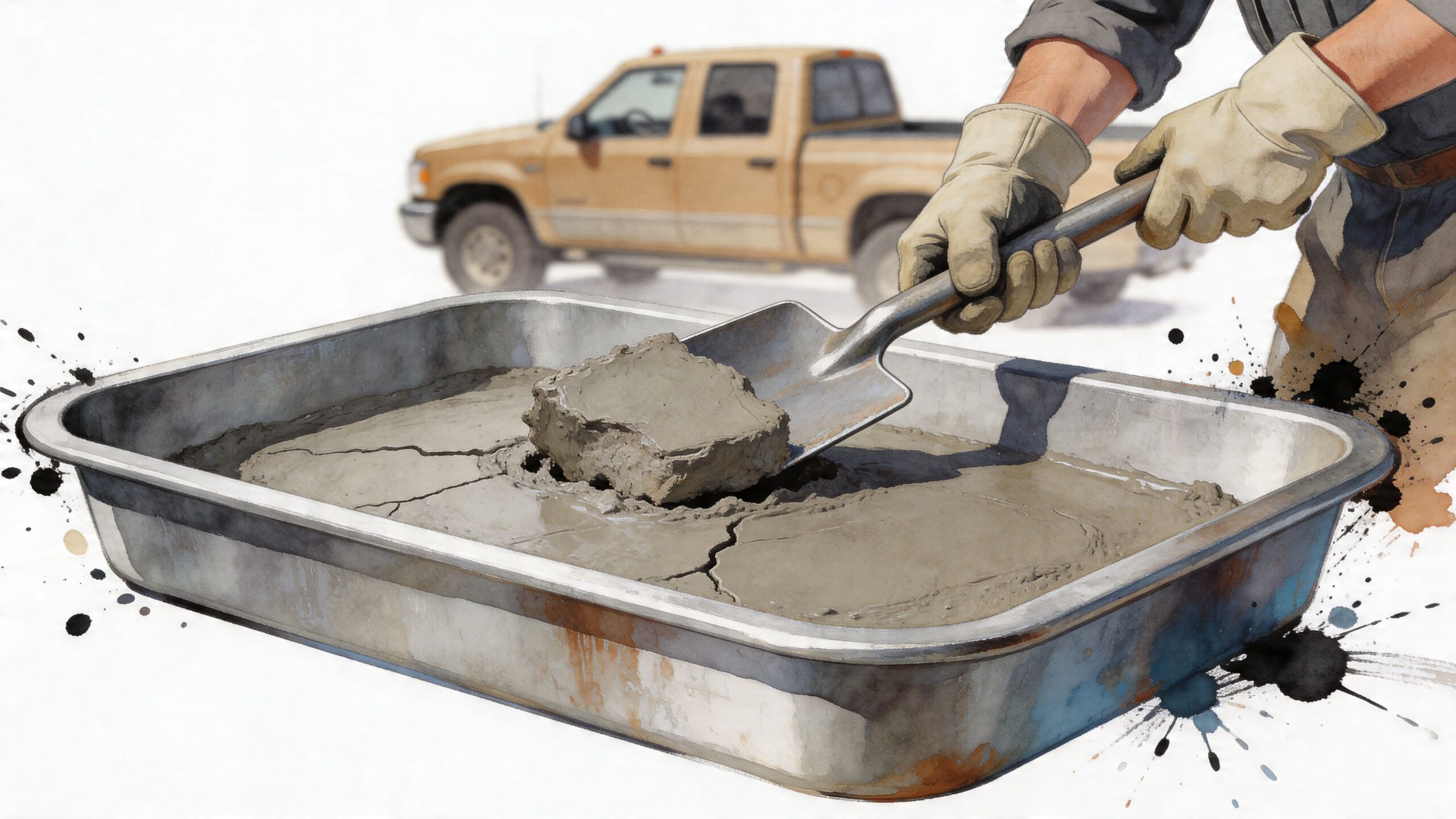
Ultimately, when you manage disposal the right way, you’re closing the loop. You’ve kept your site compliant, protected the environment, and contributed to a more sustainable construction industry. Partnering with a pro like Reborn Rentals just ensures that this final step is handled safely and responsibly, every time.
Your Concrete Washout Station Rental Checklist
Renting a concrete washout station is the easiest way to stay compliant without the headache of building your own. When you partner with a service like Reborn Rentals, you're not just getting a pan—you're getting peace of mind. But a little prep work on your end makes the whole process, from delivery to pickup, run like a well-oiled machine.
Think of this as your pre-pour checklist. It’ll help you get your rental dialed in so you can keep the project on track.
First, Figure Out What Your Job Actually Needs
Before you even think about picking up the phone, get a clear picture of your concrete work. Don't just wing it. A few minutes of planning now saves you from ordering a pan that’s too small (and risking a messy overflow) or paying for capacity you’ll never use.
Ask yourself a few basic questions:
- What’s the total yardage of concrete we’re pouring?
- How many trucks are showing up each day?
- Are we using a concrete pump? (Remember, pump washouts create way more slurry.)
A small residential patio might only need a single, standard pan. But if you’re pouring a big commercial foundation with 20 trucks a day and a pump, you’re going to need a much larger unit—or maybe even a few of them—to handle the volume safely.
Nail Down the Sizing and Site Logistics
Once you have a rough idea of your washout volume, you can pick the right gear. Our 72" x 72" x 24" washout pans, for example, hold about 441 gallons. That’s plenty for most jobs, but it always pays to double-check your math.
When you call your rental provider, have those numbers ready. It helps them recommend the right concrete washout station and makes sure the delivery and placement go off without a hitch.
A good rental company doesn't just drop off a box and leave. They provide a full logistical solution. Getting on the same page about your site's needs from the start is what makes it all work.
Use what you learned from your site walk to guide the conversation. Let them know about any curveballs—tight access points, rough ground, or if you need the pan placed on an upper floor. This is where a pro service really earns its keep, helping you solve problems before they start.
Lock in Your Schedule and Support
With the right pan selected, it's time to lock in the final details. This is more than just picking a delivery date. You need to coordinate the drop-off, any service calls for long-term jobs, and the final pickup.
Here’s what to confirm:
- Delivery Date and Time: Line this up with your project start date. The washout station needs to be on-site before that first concrete truck pulls up.
- Pickup Date: Give an estimated end date, but make sure you can adjust it if the project timeline changes. Construction schedules are rarely set in stone.
- Pricing and Fees: A solid rental company is transparent. At Reborn Rentals, our daily rates are straightforward, but we also outline any potential delivery or handling fees so there are no surprises on the invoice.
- Contact Info: Know who to call. Whether it’s an email, a phone number, or a direct message, having a reliable contact gives you one less thing to worry about.
Following this checklist turns renting a washout pan from just another task into a smart part of your site management plan. It's a simple, cost-effective move that cuts your risk and lets you get back to the real work.
Common Questions About Washout Station Rentals
Even guys who've been pouring concrete for decades have questions about washout rentals. It's just part of the job. Getting the right answers fast keeps your site clean, your schedule on track, and the inspectors happy.
We hear the same questions from crews all the time, so let's get them answered.
How Do I Know What Size Washout Pan to Rent?
This is the big one. Get the sizing wrong, and you're either staring at a costly overflow or paying for a pan you didn't need.
It all comes down to how much concrete you're working with. A good rule of thumb is to plan for 6-10 gallons of washout slurry for every single concrete truck chute you clean. But the real game-changer is the pump truck. If you have a pump on-site, that’s where the volume adds up fast.
Our standard 441-gallon pans handle most jobs without breaking a sweat. But if you’re running a big pour with a pump, you’ll likely need more than one.
Think of it like this: The cost of a second pan is pocket change compared to the fines and cleanup bill from a single overflow. Always err on the side of caution.
How Soon Do I Need to Schedule My Rental?
Short answer: as soon as you can. Your washout station absolutely has to be on-site and ready before that first truck shows up. We tell everyone to book their delivery at least 48 hours before the pour.
If you have a complex site—think rough terrain, a tight spot, or a multi-story build—give us a week's notice. It lets us get all our ducks in a row and ensure a perfect delivery. We can sometimes handle last-minute calls, but they might come with an express fee.
What Happens to the Washout Material After Pickup?
This is the part we're proud of. Once your pan is full and the concrete has hardened, we don't just dump it in a landfill. That hardened material is 100% recyclable.
We haul it to a processing facility where it's crushed down and repurposed into recycled aggregate. That material gets a second life as road base, construction fill, or even as part of a new concrete mix. It's how we turn a waste product into a resource and keep thousands of tons of material out of our local landfills.
What if My Project Runs Longer Than Expected?
Schedules slip. We've been in this business long enough to know that. If your project gets delayed or extended, just give us a call as soon as you know.
Our rental agreements are built to be flexible. We can easily push out your rental period so you're covered for the entire job. Good communication means you never have a gap in your SWPPP compliance, and you always have the equipment you need right where you need it.
Can the Washout Pan Be Moved During the Project?
Yes, but with a huge asterisk: only when it is completely empty. Never, ever try to move a pan that has any slurry or hardened concrete in it. They become dangerously heavy, and you risk equipment failure or serious injury.
If you need to move your washout station, call us. We’ll schedule a service to swap out the used pan and place a fresh, empty one in the new location. It's the only safe way to do it.
Managing your site’s concrete waste is simple with the right partner. Reborn Rentals provides reliable, compliant washout solutions to keep your project clean and on schedule. Get your rental booked today!