
Environmental Rental Equipment Guide for Contractors
A concrete pour can go sideways long before the concrete itself becomes a problem. The superintendent sees chute drippings pooling beside a curb inlet, the finishing crew needs to rinse tools before the next truck arrives, and an inspector pulls up while the pump truck is still blocking the street. Without a prepared containment system, a routine cleanup becomes a stormwater, scheduling, and documentation problem at the same time.
That's where environmental rental equipment earns its place. Contractors don't need to own every containment, dewatering, spill-response, or dust-control asset between projects. They need the right equipment delivered, placed, monitored, and removed in line with the site's environmental obligations.
The Pour-Day Problem Every Contractor Recognizes
The first truck arrives on time. The second truck is already reversing toward the pump. Then the washout pan that was supposed to be on site turns out to be sitting behind stored materials, undersized for the pour, or missing the cover the site plan called for.
A laborer starts rinsing a chute near the curb because the designated area isn't ready. Water runs toward the inlet. Someone throws down absorbent, another person calls the project manager, and the superintendent has to decide whether to stop the pour or risk letting the cleanup continue. Neither option is attractive when crews, trucks, and finishing equipment are working to a tight sequence.
The problem isn't just untidy work. Fresh concrete wash water is strongly alkaline, typically around pH 12, and may contain hazardous metals such as chromium. If the water escapes a leak-proof containment system, it can reach soil, groundwater, or surface water and damage aquatic life, as explained in the EPA concrete washout guidance.
Practical rule: If the first person cleaning a chute has to ask where the washout goes, the site isn't ready for the pour.
Concrete washout is the clearest example, but the same operational gap appears across construction. A civil crew may need a dewatering bag for sediment-laden water. A utility contractor may need secondary containment for a temporary fuel tank. A renovation team may need spill kits and drip pans without keeping a full environmental response inventory in its warehouse.
Rental suppliers fill that gap with equipment that can arrive for a defined work window and leave when the risk has passed. The contractor avoids storing specialized gear between jobs, while the superintendent gets a physical control that can be shown to a crew, an inspector, and a subcontractor. The rental only works, however, when procurement starts with the site constraint rather than the product name.
What Environmental Rental Equipment Actually Covers
Environmental rental equipment is best understood as compliance infrastructure, not as a miscellaneous product category. Each item should control a defined pathway by which sediment, slurry, contaminated water, dust, or spilled material could leave the work area.
Concrete washout containment is the central example. Washout pans and roll-off bins collect liquid and hardened solids, while lids or covers help keep rain from consuming the available capacity. EPA guidance calls for washout water and solids to be collected in leak-proof containers and for the collected material to be recycled, making containment and removal central parts of the operating plan rather than optional cleanup accessories.
From there, the equipment list expands according to the project's risks:
- Sediment socks and dewatering bags help retain sediment when crews pump accumulated water from excavations or low areas.
- Drip pans and secondary containment berms control leaks beneath pumps, generators, tanks, and temporary process equipment.
- Spill kits give crews absorbents, disposal bags, and response materials at the point where a release could occur.
- Vacuum trucks support removal of hydrostatic test water or other liquid waste when pumping and off-site handling are more practical than on-site treatment.
- Dust suppression tanks support water application where exposed soil, demolition, or material handling creates airborne dust concerns.
The selection process should follow three questions:
- What material must be contained? Liquid washout, sediment, fuel, test water, or dust-control water each creates a different handling requirement.
- Where could it travel? Drains, ditches, unprotected soil, roads, and waterways determine placement and secondary controls.
- Who removes it, and what record proves removal? A container without a defined haul-off process merely postpones the compliance risk.
The wider rental market shows why this category has moved beyond a niche service. The European rental market was valued at €28 billion annually in 2020, and the European Rental Association noted €5 billion in annual new-fleet spending; the same source cites research indicating that efficient machine use can cut carbon emissions by more than 50%. Building and construction account for 39% of global carbon emissions, including 11% from upfront carbon tied to materials and construction processes, according to the environmental equipment rental market overview.
Renting Versus Owning Environmental Equipment
Owning a washout pan looks inexpensive when viewed only as a purchase. A full comparison includes storage, cleaning, inspections, transport, repairs, and the staff time required to keep the asset ready for the next deployment.
Rental usually wins when a project has uncertain timing, changing site conditions, or a short concrete phase. It also reduces the risk of selecting the wrong configuration for a jurisdiction or pour sequence. If a project moves from a small retrofit to a larger structural pour, the contractor can change the equipment plan instead of trying to make an unsuitable owned unit work.
Ownership can make sense for a contractor with repeated pours, predictable volumes, secure storage, and an in-house crew that manages cleaning and inspection. Even then, ownership doesn't eliminate the need for hauling contracts, disposal records, or a replacement plan when the unit reaches capacity. The pan is only one part of the control system.
| Factor | Renting | Owning |
|---|---|---|
| Capital commitment | Converts the equipment cost into a project expense | Requires purchase funding before the project generates revenue |
| Storage footprint | Supplier stores the unit between jobs | Contractor must store, protect, and organize the asset |
| Maintenance | Usually handled through the rental relationship, subject to agreement | Contractor manages cleaning, repairs, and condition checks |
| Project variability | Easier to change size, configuration, or service window | Existing inventory may not fit the next site |
| Inspection records | Must be requested and attached to project records | Contractor creates and maintains the records |
| Haul-off | Can be included in a swap or pickup arrangement | Still requires a separate disposal and transport workflow |
| Utilization | Useful only for the rented period | May sit idle between pours while still occupying space |
A poly pan sitting in a yard between projects isn't providing compliance coverage. It may also collect rainwater, become damaged by handling, or return to service with hardened residue that reduces usable capacity. Ownership pays when utilization and internal control are reliable, not just because the asset is reusable.
A hybrid approach often fits mid-sized contractors. They keep basic spill-response and small containment items in their own inventory, then rent washout containers, dewatering systems, vacuum equipment, or specialized covers when the project scope requires them. That arrangement preserves response speed without forcing the company to own every environmental asset it might need.
Sizing a Washout Container to Your Pour
A washout container that fits the yard may still fail on pour day. Size it against the concrete placed during the work window, then add capacity for chute residue, pump cleanup, crew rinsing, rejected material, and rain entering an uncovered unit. The usable capacity, not the catalog dimensions, determines whether the container stays compliant until pickup.
Build the estimate from the actual waste sources:
- Chute washout: Count the trucks using the location and confirm whether every driver will rinse on site. Capacity should reflect the number of truck cleanouts, not only the planned pour volume.
- Pump cleanup: Pump operations can produce one concentrated cleanup event after placement. The container must still have room when the final truck leaves.
- Crew rinsing: Wheelbarrows, buckets, hand tools, and finishing equipment add volume throughout the shift.
- Weather exposure: Rain consumes freeboard. Use a cover when practical, especially if the container will remain in place between work periods.
- Pickup timing: A container can hold the material on paper and still be the wrong choice if it reaches the project's operating limit before the hauler arrives.
For a small, isolated pour, a compact washout pan may work. Several trucks, a concrete pump, or multiple subcontractor crews usually justify a larger pan or roll-off bin. Over-sizing reduces overflow pressure, but it also demands more placement space and can increase delivery and handling costs. Under-sizing creates predictable trouble: crews improvise a second washout point, the first unit fills before pickup, and the SWPPP record no longer matches field conditions.
Iowa DOT guidance says concrete washwater containment should be emptied at 75% of total capacity and placed at least 50 feet from storm sewer intakes, open ditches, or waterbodies. Those requirements appear in the Iowa and state concrete washout guidance. The project permit or local authority may set different limits, so confirm the controlling requirement before ordering.
| Pour Volume (cu yd) | Recommended Container | Freeboard Threshold | Typical Haul-Off Trigger |
|---|---|---|---|
| Small, isolated pour | Compact washout pan | Maintain the project-required freeboard | Schedule pickup before the unit nears its permitted operating limit |
| Moderate daily placement | Larger washout pan with cover | Keep visible reserve for rain and truck cleanup | Set removal timing around crew use and supplier lead time |
| Repeated pours or shared site | High-capacity pan or roll-off bin | Check capacity at each shift change | Arrange a swap or haul-off before the jurisdictional limit |
| Large or extended concrete phase | Multiple units or scheduled swap service | Keep each active unit below its marked safe level | Tie pickup dates to the pour schedule, not an emergency call |
Capacity on paper is only the starting point. Assign a person to check the level, record the inspection and haul-off details, and confirm an appointment that leaves room for final cleanup.
Understanding Rental Pricing and Fee Structures
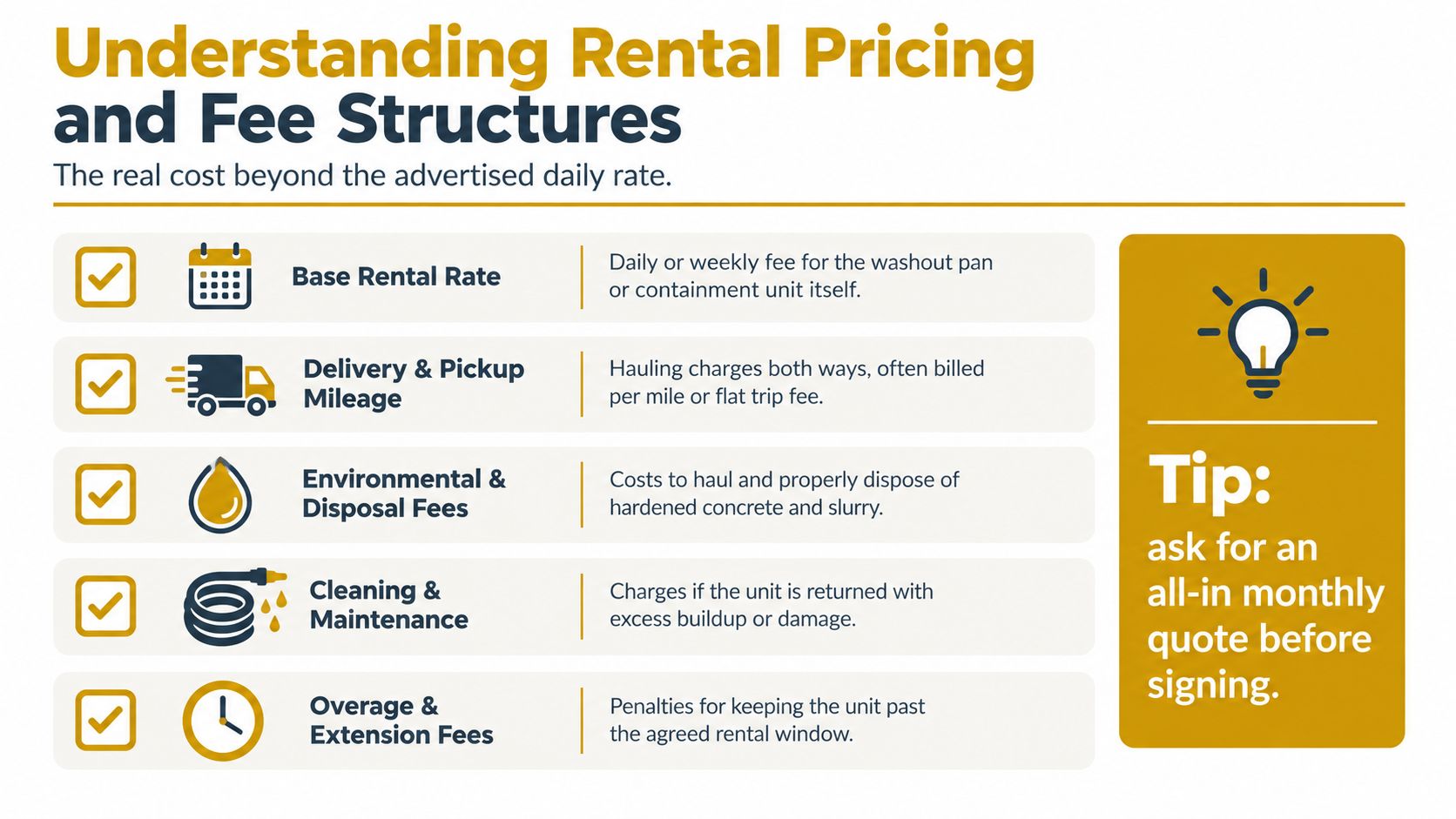
The advertised daily rate is only one line in the cost of environmental rental equipment. A contractor who compares suppliers using that figure alone can underbid delivery, disposal, or site-access complications before the pan reaches the job.
Ask the supplier to separate the following charges:
- Base rental: The fee for the pan, bin, lid, berm, or other equipment during the agreed rental window.
- Delivery and pickup: Transport charges may vary with distance, access conditions, and whether the supplier needs special handling equipment.
- Environmental and disposal fees: Slurry, hardened concrete, and contaminated absorbents may require different processing or disposal arrangements.
- Cleaning and maintenance: Excess buildup, damage, or unsuitable returns can create charges that aren't visible in the initial quote.
- Terrain and access surcharges: Soft ground, restricted routes, steep approaches, or difficult placement can require additional labor or equipment.
- Express, weekend, or after-hours service: Short-notice delivery and nonstandard pickup windows should be priced before the pour.
- Extension and overage fees: A delayed project can turn a short rental into a longer one, especially when the unit remains full and inaccessible.
The largest budgeting mistake is treating disposal as an incidental service. The container may be inexpensive to place, but the material inside still has to be removed, transported, and handled in a way that supports the project record. A second common mistake is failing to price the replacement unit when the first pan is full. A swap arrangement can protect the schedule, but it needs to appear in the quote.
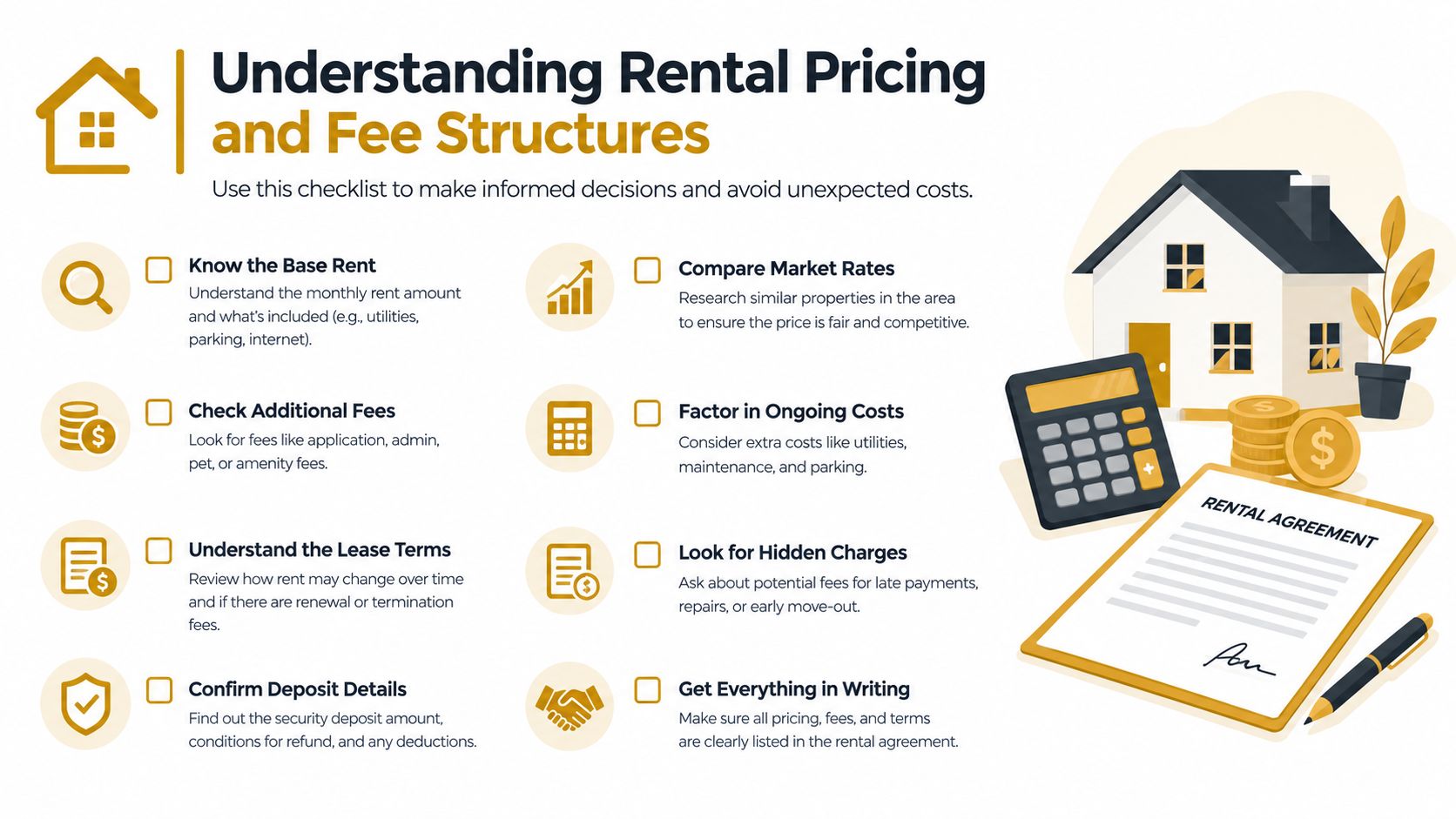
Before signing, confirm the all-in project cost in writing:
- Delivery address, placement point, and pickup route
- Rental start and end conditions
- Included cleaning, cover, and maintenance
- Disposal responsibility and any processing fees
- Weight, volume, or contamination overages
- Charges for rough terrain or express scheduling
- Replacement timing if the unit fills
- Documentation supplied after haul-off
A clear quote protects both sides. It also lets the estimator put a defensible environmental line item into the bid instead of hiding the risk inside general conditions.
Placement, SWPPP Documentation, and Inspection Readiness
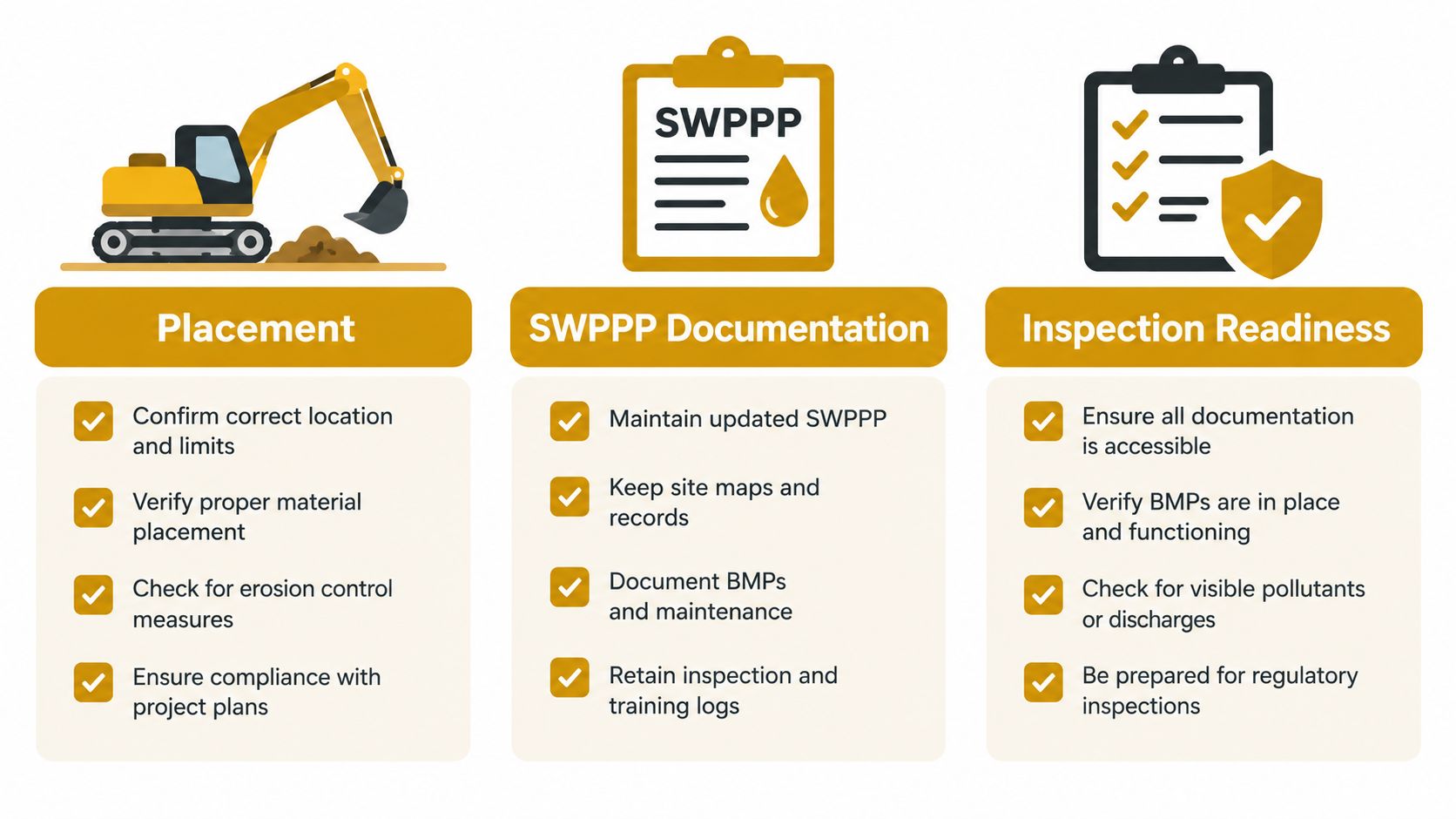
A washout unit can be on site and still fail the project's environmental controls. A poor placement choice gives leaks, overflow, or rainwater a direct route to a storm drain, ditch, or waterbody.
Set the unit on a stable, non-erodible surface that prevents liquid from reaching the ground. Keep it clear of storm sewer inlets, open ditches, and waterways. Confirm the setback in the project documents and with the local authority. The cited Iowa guidance specifies a 50-foot separation from those drainage features, although other jurisdictions may set different distances or conditions.
Freeboard needs to be visible, checked, and preserved throughout the pour. Guidance cited in the state concrete washout handbook identifies at least 4 inches of freeboard for above-grade washouts and 12 inches for below-grade washouts. Rainfall and final truck cleanup can use that reserve quickly, so schedule inspection before the container reaches its apparent limit.
Put the control into the project records
The SWPPP should name the washout location, containment method, inspection owner, maintenance steps, and disposal route. Make the site map agree with the physical placement. Update it if excavation, access changes, or shifting drainage requires the unit to move.
Post a sign at the washout. It should identify the unit's purpose, prohibit discharge to storm drains, name the responsible contractor or foreman, and list an emergency contact. Crews should know immediately that the pan is for concrete washout, not fuel or general waste.
Record what happened after the pour
Use a short inspection log covering the inspection date, visible capacity, liner or pan condition, freeboard, cover, corrective action, and pickup status. File the delivery ticket, swap record, haul-off receipt, and disposal documentation with the SWPPP materials.
The container must keep liquid and solid washout waste from contacting the ground. The Minnesota concrete and other washout guidance also addresses location, capacity, maintenance, disposal records, and inspection after significant rain. Hardened concrete waste requires removal and handling as construction waste.
Delivery Logistics and On-Site Coordination
A washout pan can arrive at the gate and still be useless if the truck can't reach the intended placement area. Confirm the delivery route before the pour, including gate access, overhead obstructions, turning space, pavement condition, and the ability of the delivery vehicle to support its load without damaging the site.
Walk the route with the supplier when the project is congested. Identify where the truck will stop, how the operator will set the unit down, and whether stored rebar, formwork, spoil piles, or temporary fencing will block pickup later. If the ground is soft, prepare a stable pad with suitable site materials such as plywood, timbers, pallets, or other approved support. The goal is to prevent rutting and keep the container level, not to create a temporary platform that can shift under load.
Sequence the drop with the pour
The best delivery window is early enough to inspect and sign off the placement, but not so early that other trades bury it. Coordinate the drop with rebar completion, pump arrival, truck staging, and the finishing crew's access path.
Use a short coordination call or site briefing to confirm:
- Discharge point: The pump operator and truck drivers know exactly where chutes and hoses should empty.
- Crew responsibility: One foreman checks capacity, cover, and housekeeping during the pour.
- Access lane: Finishers can reach the work without stepping around the pan or crossing the truck route.
- Drainage condition: No one has moved the unit into a low point or beside a newly exposed inlet.
- Pickup plan: The supplier can reach the unit without relocating materials or waiting for another trade to clear the route.
Communication matters most when the original plan changes. If excavation shifts the drainage pattern or the crane occupies the agreed route, call the supplier before moving the pan. A quick placement decision made without checking the SWPPP can turn a logistics adjustment into a compliance issue.
Pickup requires the same attention as delivery. Keep the unit accessible, remove loose materials around it, and confirm whether it must be covered or stabilized before the truck arrives. If the pan is full, don't ask a laborer to drag it across the site. Schedule a swap or arrange equipment capable of removing it safely.
A Quick Decision Framework for Your Next Project
Treat the rental decision as a short procurement review, not a last-minute call from the field. The project documents, pour schedule, site geometry, and haul-off plan should all point to the same equipment choice.
Start with the controlling documents
Read the SWPPP and the project's NOI before requesting a quote. Confirm whether the site requires a lined and covered washout, identifies an approved location, or allows an off-site washout arrangement. EPA construction stormwater requirements prohibit discharge of washout wastewater to storm drains and require an appropriate control, as set out in the EPA construction stormwater requirements.
Convert the pour into a rental specification
Use the yards placed per work period, the number of trucks, pump or chute operations, crew rinsing, weather exposure, and planned pickup interval to estimate the waste stream. Select a container with enough usable capacity to remain within the project's freeboard and operating limits, then establish the point at which the supplier must haul or swap it.
Confirm the physical deployment
Before scheduling delivery, verify the route, ground condition, placement surface, drainage setbacks, signage, and access for pickup. Put the location on the site plan and identify the person who will inspect it during the pour and after significant rain.
Price the complete workflow
The bid line item should include the equipment, delivery, pickup, covers, access or terrain charges, disposal, cleaning, extensions, and any planned replacement. Ask who owns the haul-off documentation and when it will be delivered to the project team.
Decide whether the asset belongs in your fleet
Rent when the project is short, variable, remote, or governed by unfamiliar local conditions. Own when the company has recurring demand, reliable storage, trained staff, and a disposal workflow that remains active across projects. For many contractors, a hybrid plan provides the practical balance: retain basic response supplies, then rent specialized containment and service capacity when the pour schedule demands it.
The decision is sound when the equipment can be placed before the first cleanup, monitored without guesswork, removed before it becomes a site hazard, and documented after disposal. That's the difference between renting a container and renting a working environmental control.
Reborn Rentals provides concrete washout containment for construction and renovation work, with washout pans, lids, scheduled pickup, replacement, and slurry disposal options that can be coordinated around the pour schedule. Review the available configurations and arrange delivery through Reborn Rentals before your next project mobilizes.