
10 Best SWPPP Plan Templates for 2026 Compared
What if the SWPPP plan template you downloaded is legally sound, but for the wrong regulator? That's the trap most template lists ignore. A plan only works if it matches your permit, whether that's the federal Construction General Permit, a state construction permit, or a transportation agency's documentation standard.
Picking wrong wastes days stripping out inapplicable sections, and it can fail review because the terminology, forms, and inspection language don't line up. The EPA guidance on NPDES construction coverage sets the core trigger at 1 or more acre of disturbance, including smaller sites that are part of a larger common plan ultimately disturbing at least 1 acre. That threshold drives what a credible template must contain, from site maps and receiving waters to sequencing and inspection procedures.
Below are ten options matched to the project type each one fits. I flag the practical traps, including Access files, locked PDFs, and agency specific binders, and I pay particular attention to how each format handles concrete washout, because that's where a neat document often stops matching pour day reality.
1. U.S. EPA Construction SWPPP Template
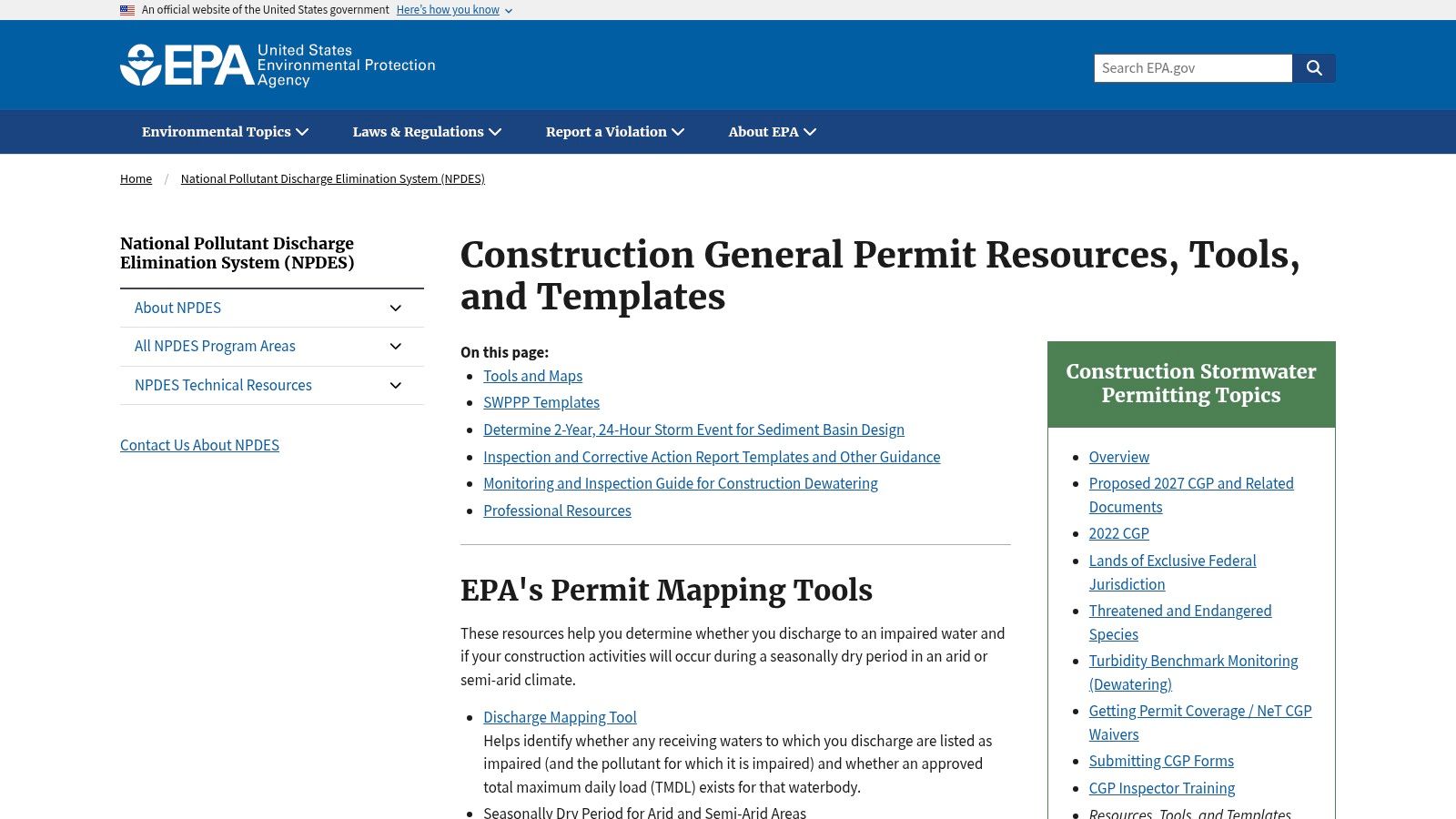
Start here only if you're under the federal permit. The U.S. EPA Construction SWPPP Template is a free, editable Word document built around the 2022 Construction General Permit, and the EPA page on developing a SWPPP confirms that its current template is intended to address the minimum requirements of the 2022 CGP. That's a recognizable baseline, not a universal permit.
What you actually get
You get guided plan sections plus companion forms for inspections, dewatering inspections, and corrective actions. Those forms matter more than the narrative shell, because inspectors ask for records, not intentions. A separate template covers small residential lots, which is covered next.
Pros: It's free from the federal permitting agency, the companion forms help organize ongoing records, and reviewers recognize the structure on federal CGP projects.
Cons: State authorized programs can impose different or additional requirements, so you'll still need site specific maps, controls, and review. It's also just a document. There's no filing portal, revision tracking, or plan management system behind it, so version control is entirely on you.
2. U.S. EPA Small Residential Lot SWPPP Template
Homebuilders don't need a 60 page plan for a single lot, and EPA knows it. The U.S. EPA Small Residential Lot SWPPP Template is a free, editable document meant to cut paperwork for eligible small residential projects under the federal CGP, with an accompanying educational brochure.
Eligibility is the whole decision. The EPA streamlined small residential SWPPP template document is designed for projects disturbing less than one acre, outside sensitive areas, at least 50 feet from waters of the United States, without chemical stormwater treatment, and without steep slope disturbance. Outside those parameters, you're back to a customized plan.
Practical rule: If you can't check every eligibility box in writing, don't force a streamlined template to fit. Use the full format and tailor it down.
Pros: It's free, focused, and published by the federal permit authority, which helps small builders avoid overbuilding the document.
Cons: The scope is narrow, state and local requirements may differ, and you still need site specific information and real controls in the field.
3. Texas Commission on Environmental Quality SWP3 Template
Texas calls it a SWP3, and using federal terminology in Texas paperwork is an early sign you grabbed the wrong file. The Texas Commission on Environmental Quality SWP3 Template is a free Word template for operators under the Texas Pollutant Discharge Elimination System construction general permit.
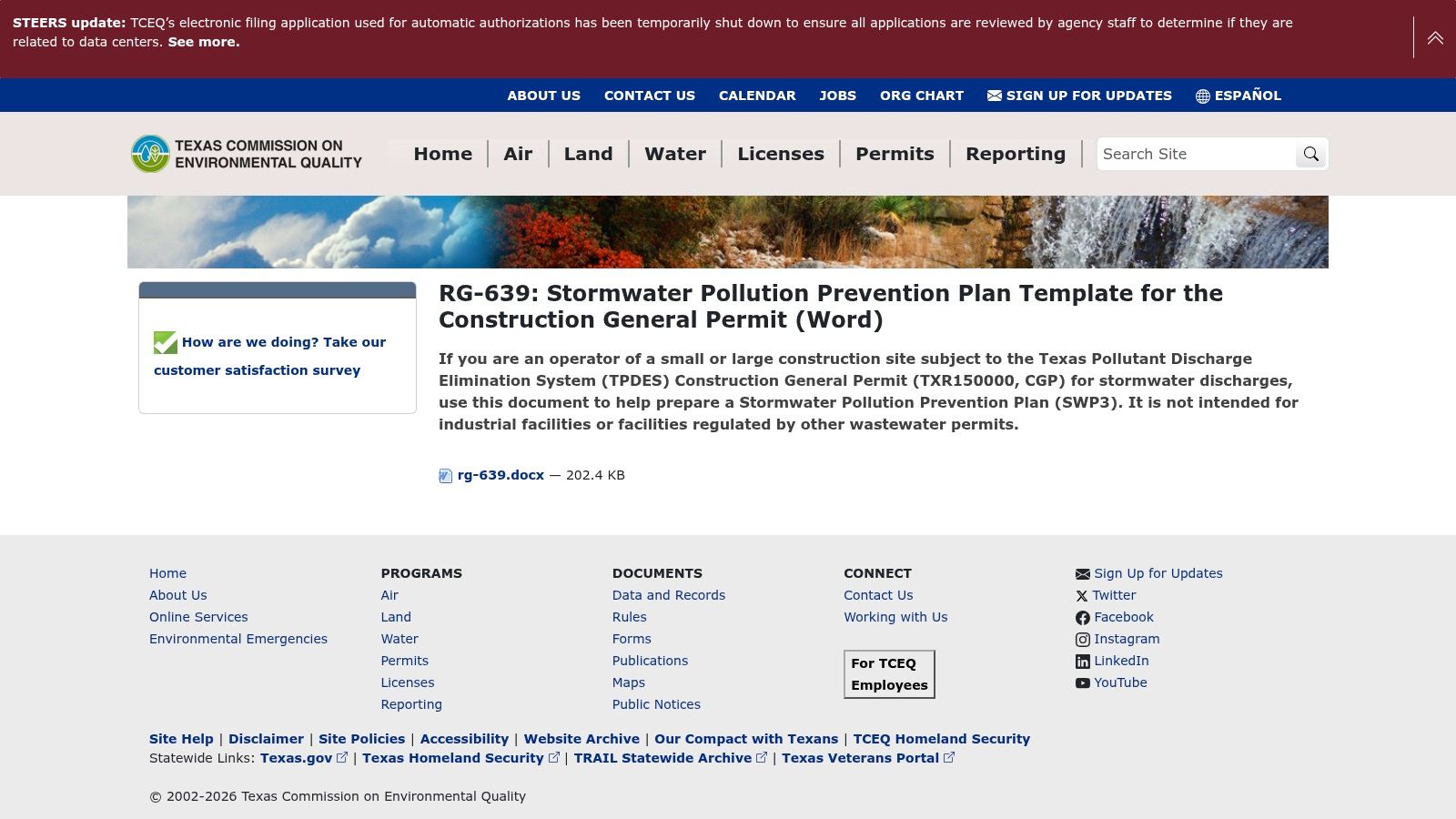
What sets this one apart is the support material around the headings. You're not just filling blanks.
- Worksheets built in: Prompts help you organize required information instead of guessing what belongs under each heading.
- Technical guidance included: The package explains intent, which reduces copy and paste errors from other states.
- Construction only scope: It's designed for small and large covered construction sites, not industrial stormwater or unrelated wastewater permits.
Pros: Texas operators get permit terminology that matches their reviewers, plus worksheets that make a first draft faster.
Cons: Don't export it. It's unsuitable as a general template elsewhere, and you must check it against the applicable permit and your project circumstances. A completed SWP3 still requires implemented, site specific controls.
4. Texas Department of Transportation SWP3 Binder Template and Guidance
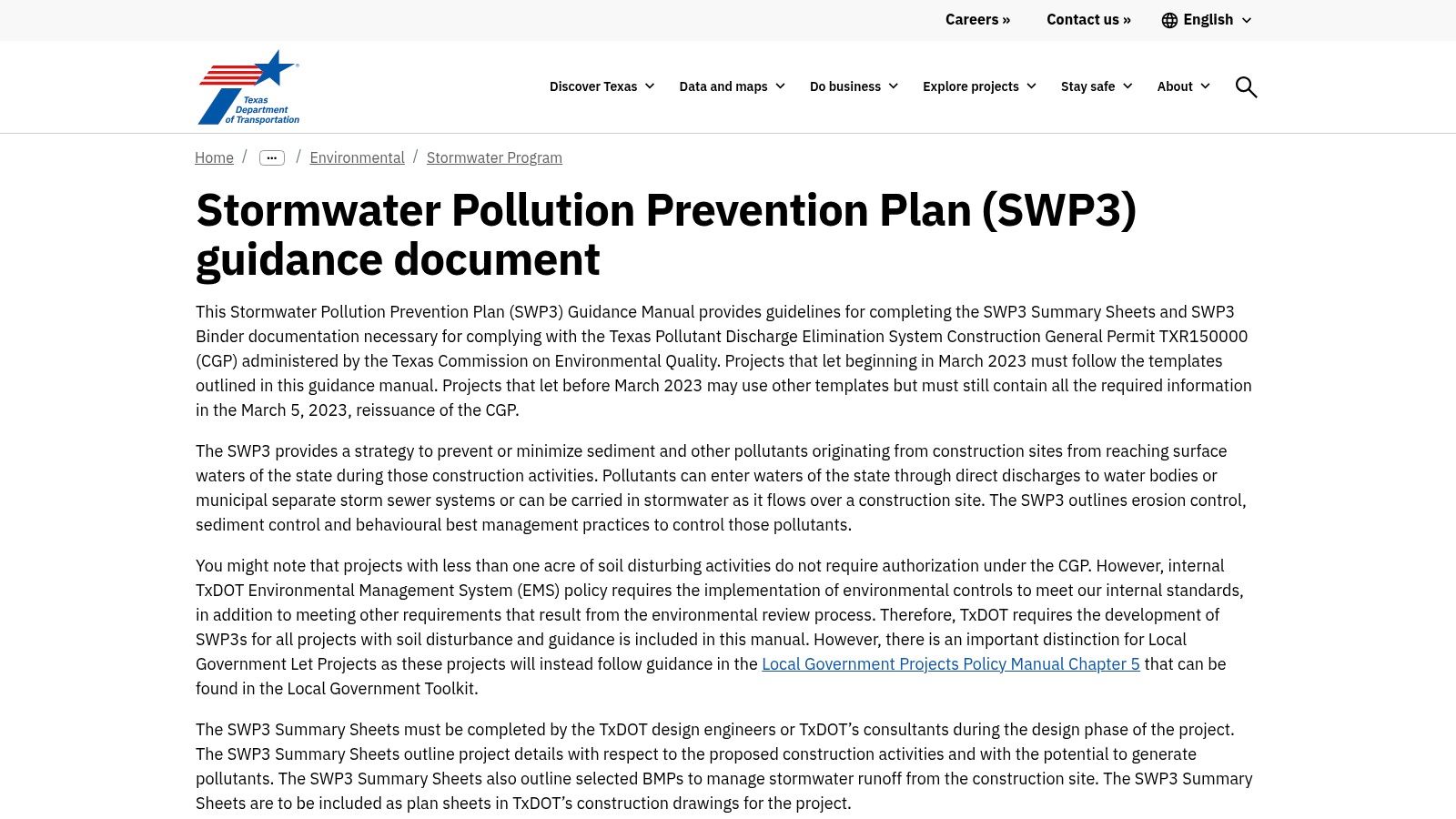
Working on a Texas highway job? The general TCEQ document won't be enough on its own. The Texas Department of Transportation SWP3 Binder Template and Guidance covers SWP3 summary sheets and binder documentation for transportation projects, and TxDOT says projects let beginning in March 2023 must follow the templates in its guidance manual.
Why the binder matters
TxDOT work adds agency documentation and field record expectations on top of the state permit. The guidance is designed around the Texas construction general permit and includes material for projects disturbing one acre or more, but the value is organizational. It shows your crew how records should be filed so an inspector can find them fast.
Pros: It combines instructions with documentation formats and fits TxDOT contractor workflows better than any generic SWPPP plan template.
Cons: Private commercial work doesn't need this structure, and it can add bulk without benefit. You also need to verify current TxDOT requirements, because agency manuals get revised between lettings.
5. Caltrans Statewide SWPPP Template and Preparation Manual
This is the most technically awkward file on the list, and that's worth knowing before you commit. Caltrans Statewide SWPPP Template and Preparation Manual resources support Caltrans projects under the 2022 CGP, with a separate template for the Lake Tahoe Hydrologic Unit.
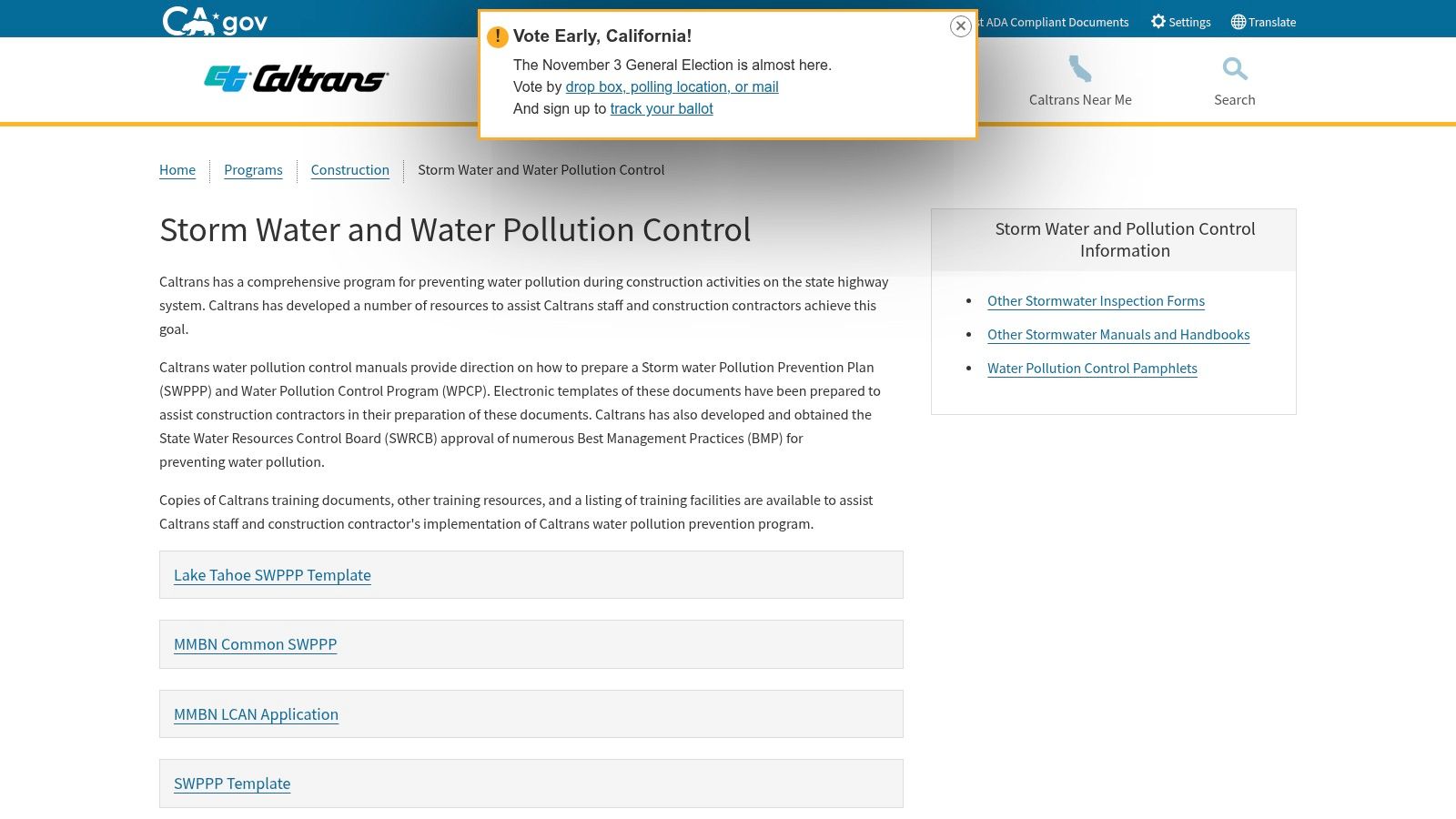
The template is a Microsoft Access database requiring Access 2007 or later. If your field laptops don't run Access, your elegant plan becomes a file nobody can open at the trailer. Budget time for IT, not just writing.
The preparation manual partly redeems that friction. It includes instructions, examples, procedures, and BMP guidance, plus related construction water pollution control documents. For contractors working to Caltrans specifications, that depth helps.
Pros: Extensive agency guidance and worked support beyond a blank plan.
Cons: California does not provide one general SWPPP template for all dischargers, and this one is built for Caltrans work. Private California sites shouldn't assume it fits, and project specific permit requirements still need checking.
6. Arizona Department of Transportation Construction SWPPP Template
ADOT solves a problem the other DOT entries don't, dual permit coverage in one package. The Arizona Department of Transportation Construction SWPPP Template is a free Word based template that, according to the agency, offers options addressing both the federal 2022 NPDES CGP and Arizona's 2025 AZPDES CGP.
That flexibility is useful only if someone deliberately selects the applicable provisions. Leave both frameworks in an unedited draft and you've created contradictions an inspector will find.
Field documentation is the strength
- Rain event and inspection forms: Ready formats for the records crews generate during construction.
- Amendment and spill forms: Built in ways to document changes instead of scribbling margins.
- Contractor forms: Helpful where multiple operators share responsibility on one corridor.
- Monitoring and Sampling Analysis Plan template: Included for projects that need sampling, rather than forcing you to build one separately.
Pros: It's a free, complete package that explicitly addresses federal and Arizona frameworks.
Cons: The main template is intended for ADOT projects. You must tailor or remove inapplicable material, and Arizona rules don't travel to other states.
7. Washington State Department of Ecology Construction SWPPP Template
Washington's offering is refreshingly plain. The Washington State Department of Ecology Construction SWPPP Template is a free, downloadable Word document providing a recommended structure and content guide for plans under Washington's Construction Stormwater General Permit.
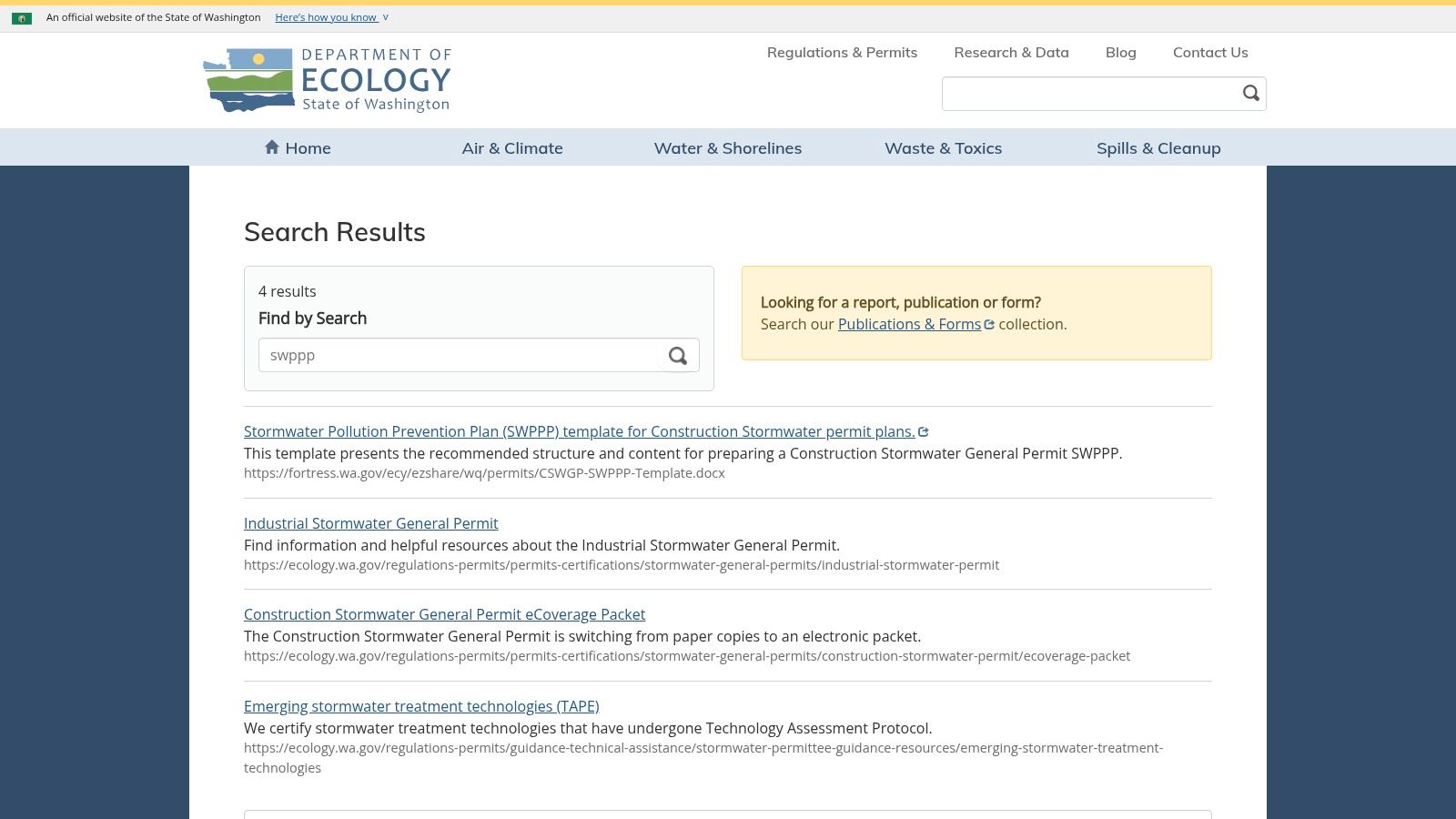
I recommend treating the word recommended seriously here. This is a state specific starting point that shows expected structure and content, not a guarantee that filling every heading satisfies your permit. You still confirm applicability yourself, because the template doesn't establish whether permit coverage is required for your site.
A clean Word file you can actually revise in the field beats a polished PDF nobody updates after grading changes.
Pros: It's more relevant to Washington projects than a generic federal SWPPP plan template, it's free from the state permitting authority, and Word format adapts easily to project information.
Cons: It's Washington specific, revisions happen, and using an outdated download is a common, avoidable error. Check the current template revision before every new project, and keep it separate from Washington's industrial stormwater templates.
8. Florida Department of Environmental Protection Construction SWPPP Template
Florida gives you a framework and a warning in the same package. The Florida Department of Environmental Protection Construction SWPPP Template is a free PDF intended as a general guide for construction SWPPPs, and the department cautions that it may not include every applicable requirement. It directs users to the Florida construction stormwater permit itself.
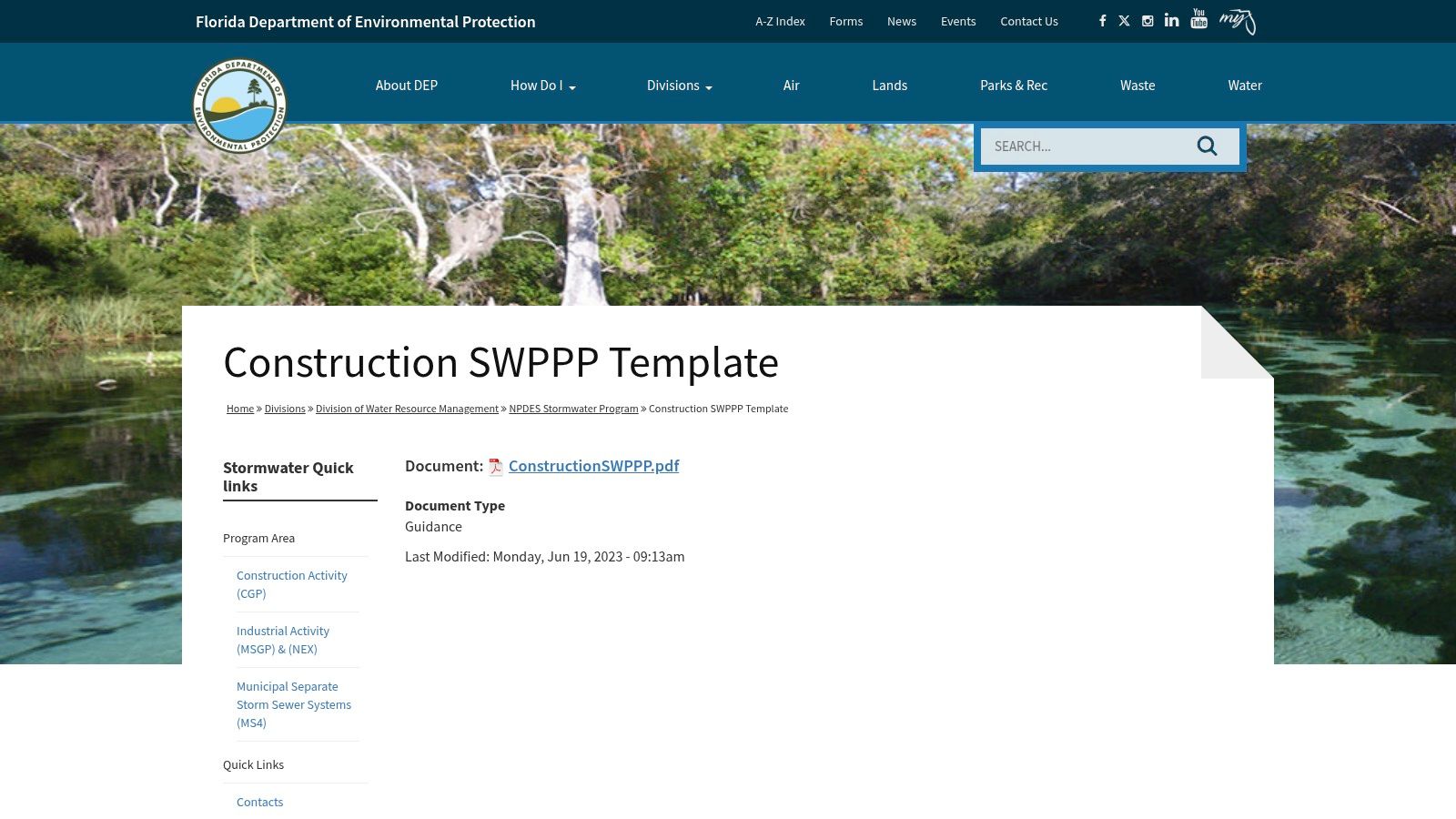
The PDF problem
PDF is fine for reading and poor for living documents. You'll likely rebuild the content in Word so you can amend controls, maps, and responsible parties as conditions change. Plan that conversion time into your schedule instead of discovering it the night before the NOI.
To its credit, the template includes guidance on completing and updating the plan, and it highlights amending the plan when conditions or controls change. That emphasis is exactly right for Florida's fast changing site drainage.
Pros: Free, state specific, and clear about updates.
Cons: Editing friction, an explicit completeness warning, and older template material mean you must check the current permit carefully.
9. South Carolina Department of Environmental Services Construction SWPPP Template
Most templates produce one document that serves nobody well. South Carolina splits the job. The South Carolina Department of Environmental Services Construction SWPPP Template helps you prepare both a detailed SWPPP and an on site version for construction use.
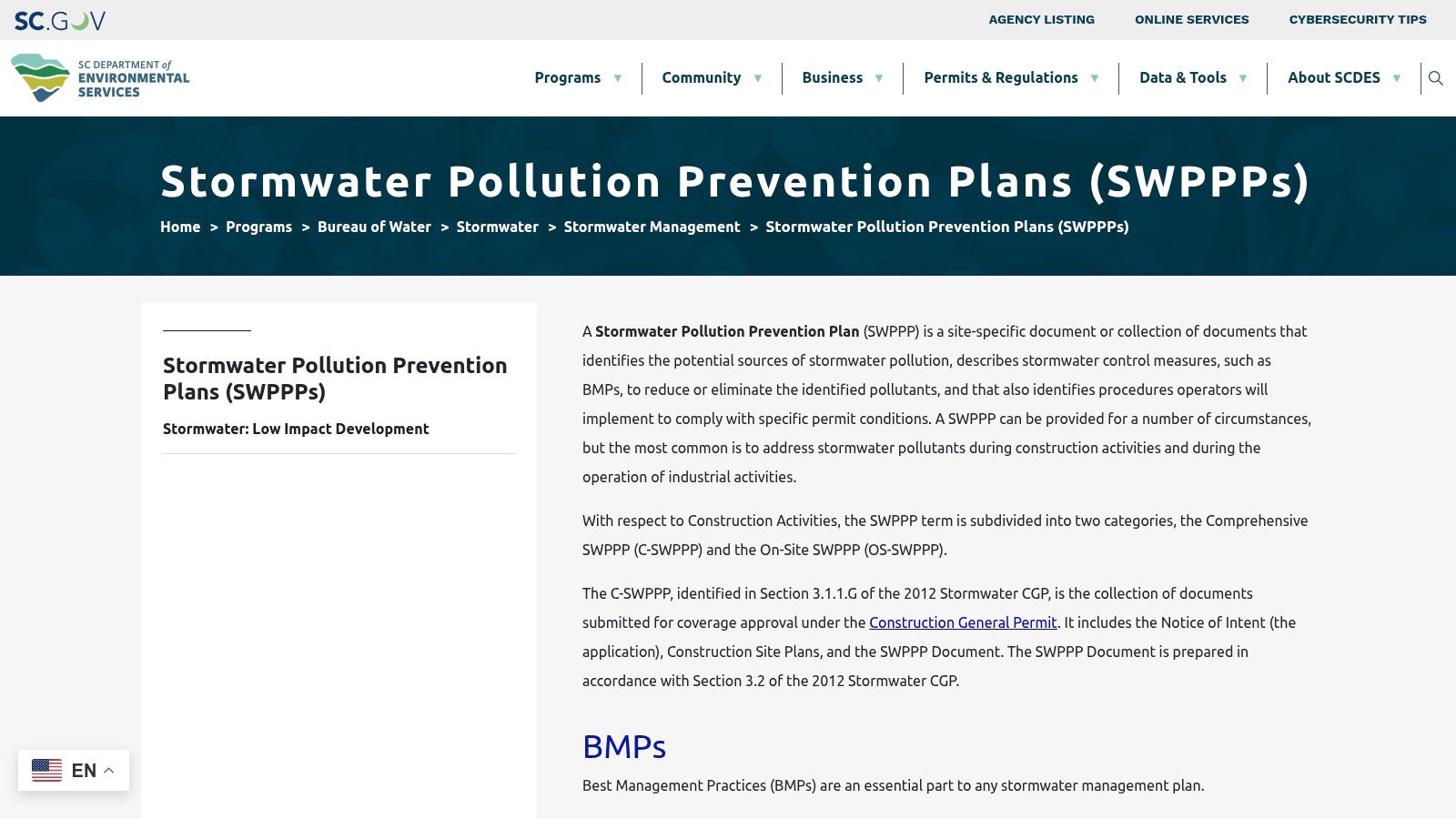
That distinction is practical. The full plan carries the full narrative and supporting documents, while the on site plan guidance covers logs and construction records that superintendents touch. SCDES also recommends using it alongside the applicable construction permit, the plan review checklist, and the BMP handbook, so you're drafting against the same materials reviewers use.
Pros: It addresses planning and field use together, it's free, and the supporting review and BMP materials reduce guesswork about expectations.
Cons: It's South Carolina specific, you should verify the current permit and template version, and it still requires project specific content. Two versions also mean two documents to keep in sync after every amendment.
10. Storm Guided SWPPP Authoring Software
Everything above is a document you manage yourself. Storm Guided SWPPP Authoring Software is different. It's a paid, guided authoring and export tool built on the Connections Course template, designed for people who produce plans repeatedly rather than once.
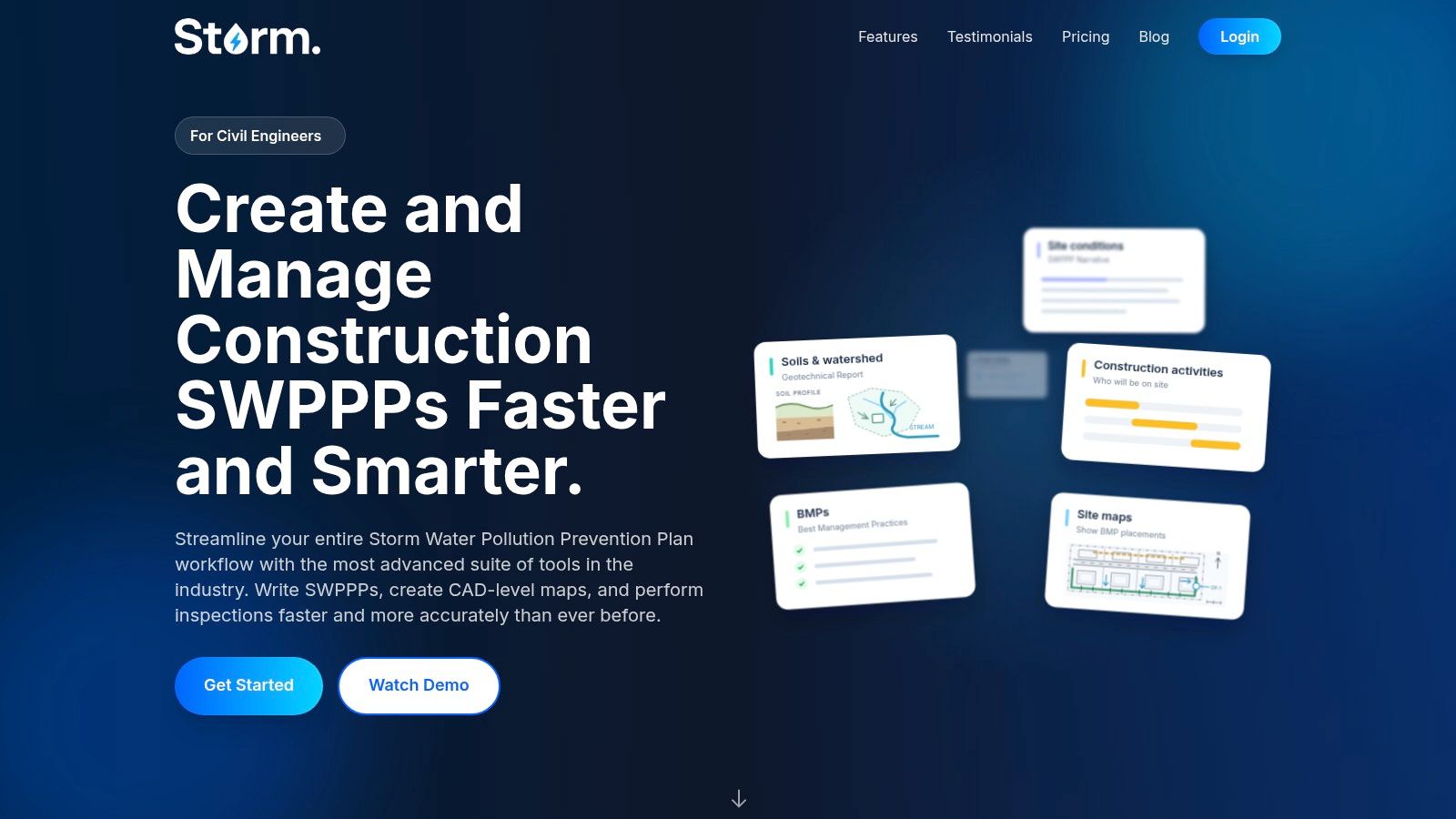
Coverage is the constraint. Storm supports California Construction General Permit projects, including traditional and LUP projects, with other permits and states planned. If your work is outside California, the workflow doesn't help you today, no matter how clean it looks.
- Guided authoring and export: Prompts replace blank page drafting for repeat producers.
- Team and revision terms: Listed plans include unlimited team members, revisions, and exports.
- Project limits by tier: Express allows one project, Pro allows ten, and Business allows unlimited projects.
Pros: Pricing is posted instead of entirely quote based, and collaboration suits consultants.
Cons: A subscription isn't worthwhile for occasional preparation, California only coverage is limiting, and software doesn't remove the need for qualified review and accurate site information.
SWPPP Template Comparison
| Template | Source Type | Format | Best For | Cost |
|---|---|---|---|---|
| U.S. EPA, Construction SWPPP Template | Federal agency | Editable Word template with companion forms | Federal CGP construction projects | Free |
| U.S. EPA, Small Residential Lot SWPPP Template | Federal agency | Editable document | Eligible small residential projects under the federal CGP | Free |
| Texas Commission on Environmental Quality (TCEQ), SWP3 Template | State agency | Word template with worksheets and guidance | Construction projects covered by Texas permits | Free |
| Texas Department of Transportation (TxDOT), SWP3 Binder Template and Guidance | State transportation agency | Guidance manual and documentation templates | Texas transportation and TxDOT projects | Free |
| Caltrans, Statewide SWPPP Template and Preparation Manual | State transportation agency | Access database and preparation manual | Caltrans construction projects | Free |
| Arizona Department of Transportation (ADOT), Construction SWPPP Template | State transportation agency | Word template and field forms | ADOT projects under federal or Arizona permit frameworks | Free |
| Washington State Department of Ecology, Construction SWPPP Template | State agency | Word document | Construction projects under Washington's stormwater permit | Free |
| Florida Department of Environmental Protection, Construction SWPPP Template | State agency | PDF template and guidance | Construction projects in Florida | Free |
| South Carolina Department of Environmental Services (SCDES), Construction SWPPP Template | State agency | Construction plan and on-site plan materials | South Carolina construction projects needing plans and field records | Free |
| Storm, Guided SWPPP Authoring Software | Commercial software | Guided online authoring and export | Repeat California CGP plan preparation and collaboration | Paid subscription; pricing posted |
From Template to Compliant Site Making the Washout Section Real
Choosing the right SWPPP plan template is the easy half. Your plan holds up only if the site implements what the document promises, and concrete washout is where that promise usually breaks first. Crews wash out where the truck stops, not where the map says they should, unless the designated area is obvious, accessible, and has capacity left.
The stakes aren't clerical. The EPA construction stormwater guidance identifies wastewater from concrete washout as a prohibited discharge unless it's managed through appropriate controls, and it requires regular inspections at least every 7 days, or every 14 days plus within 24 hours after a qualifying 0.5 inch rain event. Your template should therefore do more than name washout as a BMP checkbox.
What a defensible washout section contains
- Mapped location and access: Show every washout point on the site map, with truck access that doesn't cross stabilized areas or drainage paths.
- Capacity calculation: Match containment volume to estimated concrete volume per pour, including pump washout, so overflow isn't predictable.
- Inspection evidence: Tie each washout to your inspection checklist with fields for fill level, liner or containment condition, overflow, and photo documentation.
- Removal and disposal procedure: State who calls for service, at what fill level, and where slurry goes, then keep the closeout record with your inspection log.
- Revision trigger: Update the section when grading, drainage, pour sequencing, or BMP performance changes, because a stale map is a finding waiting to happen.
Build a simple pour day appendix if your template lacks one. Add the washout location map, weather trigger, estimated volume, inspection fields, overflow response, and sign off after each pour. That single page connects pumpers and finishers, who often aren't the permit operator, to auditable records the operator can defend.
Remember the full lifecycle, too. The EPA Region 9 NPDES permit guidance notes that after the project is finished and the site is fully stabilized, the operator generally must submit a Notice of Termination within 30 days. A template that supports preconstruction planning, active inspections, revisions, final stabilization, and termination keeps you from rebuilding records at closeout.
On equipment, we can help you match the plan to the field. Reborn Rentals is SWPPP compliant, and our washout pans are NPDES, OSHA, EPA, and BMP compliant and load tested to 36,000 lbs. Our turnkey pan swap service delivers a new empty pan first, then hauls the full pan and disposes of concrete slurry at a recycling facility, so your documented disposal procedure describes what happens. Before your next pour, confirm the pan location on your map matches where the pan sits, and that capacity matches the pour schedule in your appendix.
Pair your finished plan with containment that matches the washout location, capacity, and disposal procedure you've documented, with upfront daily pricing starting at $25/day and a turnkey swap service that replaces full pans and hauls slurry to a recycling facility. Visit Reborn Rentals to reserve a compliant washout pan for your next pour and keep your site records consistent with what's in the field.