
Managing High-Volume Washout on Multi-Mile Infrastructure Pours
Key Takeaways:
- Your concrete discharge method dictates container selection: the 441-gallon Large pan handles high-volume mixer trucks on bridge decks and mainline paving, while the 310-gallon Small pan accommodates low-clearance rear-hopper pump setups.
- A 441-gallon pan safely collects wash water and aggregate slurry from 35 to 45 ready-mix truck chute washouts before requiring a scheduled swap.
- Service within the Denver C-470 loop runs at a flat $300 swap rate per pan; corridor routes beyond C-470 are billed at $8.99 per mile per swap, with custom long-haul quotes over 200 miles.
- Staging washout units linearly at bridge abutments, median access crossovers, and batch-plant staging pads keeps civil projects compliant with Colorado Department of Public Health and Environment (CDPHE) stormwater permits.
Table of Contents
- Discharge Method Determines Pan Sizing
- Pan Capacity Specifications: 310-Gallon vs. 441-Gallon
- Corridor Staging and Linear Logistics on Multi-Mile Jobs
- Calculating Chute Volume for Continuous Pours
- Corridor Mileage and Dispatch Pricing Outside C-470
- Environmental Compliance and Stormwater Controls Along Public Rights-of-Way
- Selecting the Right Pan for Heavy Civil Projects
- Frequently Asked Questions
- Get Started with Front Range Corridor Service
Discharge Method Determines Pan Sizing
On infrastructure and civil projects across Colorado, choosing concrete containment starts with how your equipment discharges wash water. When you plan a multi-mile corridor project—such as a continuous slipform highway run, bridge deck replacement, or structural culvert pour—the washout setup must match the physical clearance of your haul trucks and pump rigs without slowing cycle times.
Ready-mix trucks discharging chute rinse after delivering standard structural concrete or High-Performance Concrete (HPC) require adequate container height to control backsplash while retaining capacity. A low-profile container allows chutes to swing directly over the rim without auxiliary ramps or dug pits. Conversely, if your operation uses a trailer-mounted line pump or a high-capacity boom pump, the cleanout procedure involves backflushing the delivery manifold, purging the hopper, and collecting aggregate wash. Pumping operations with rear hoppers require low rim heights so the operator can drop the cleanout sponge and flush water directly into the bin.
Matching the container height to the specific discharge point avoids field-rigged chutes, reduces aggregate splash onto highway subgrades, and prevents cross-contamination of adjacent base course aggregate.
Pan Capacity Specifications: 310-Gallon vs. 441-Gallon
Reborn Rental provides two standardized steel containment units built for direct jobsite washdown along Colorado’s Front Range. Selecting between these units depends entirely on the volume of concrete placed, the available placement footprint, and the frequency of swap cycles required by your schedule.
- 310-Gallon Small Washout Pan: Measures 72 inches by 72 inches by 14 inches high (6 feet by 6 feet by 14 inches). With an overall liquid capacity of 310 gallons, this unit is engineered for tight right-of-way configurations, median work, and low rear-hopper access on pump equipment. Its 14-inch side walls allow mixer chutes and pump hoppers to discharge straight in with zero ramp construction or earthwork. The rental rate is $26 per day, $140 per week, or $532 per 4-week billing period.
- 441-Gallon Large Washout Pan: Measures 72 inches by 72 inches by 24 inches high (6 feet by 6 feet by 24 inches). Offering 441 gallons of capacity within the same compact 6-by-6-foot footprint, this unit provides 42% more containment volume by utilizing 24-inch side walls. It is built specifically for heavy highway, structural bridge, and high-volume placement where dozens of mixer trucks cycle through the discharge point every shift. The rental rate is $29 per day, $175 per week, or $588 per 4-week billing period.
Both models feature heavy-gauge watertight steel construction designed to handle corrosive high-pH slurry without leaking. For high-production corridor work, civil superintendents standardly deploy the 441-gallon Large washout pan at primary truck cleanout points and reserve the 310-gallon Small washout pan for dedicated boom pump cleanup stations where clearance is restricted.
Corridor Staging and Linear Logistics on Multi-Mile Jobs
Highway jobs create unique logistical challenges because the point of placement moves continuously. A continuous pour on an interstate widening project or bridge deck placement cannot stop because a washout container reached its freeboard limit. Project engineers and estimators must design a rolling staging plan before the first ready-mix truck arrives on site.
When executing long corridor work, you need to designate dedicated wash stations at controlled intervals. The optimal locations are access aprons, haul-road intersections, bridge abutment approaches, or temporary batch-plant turnarounds. Positioning washout containers adjacent to stable ingress points ensures that our delivery and swap flatbeds can access the units safely without disturbing subgrade compaction, rutting prepared base courses, or violating corridor traffic control plans.
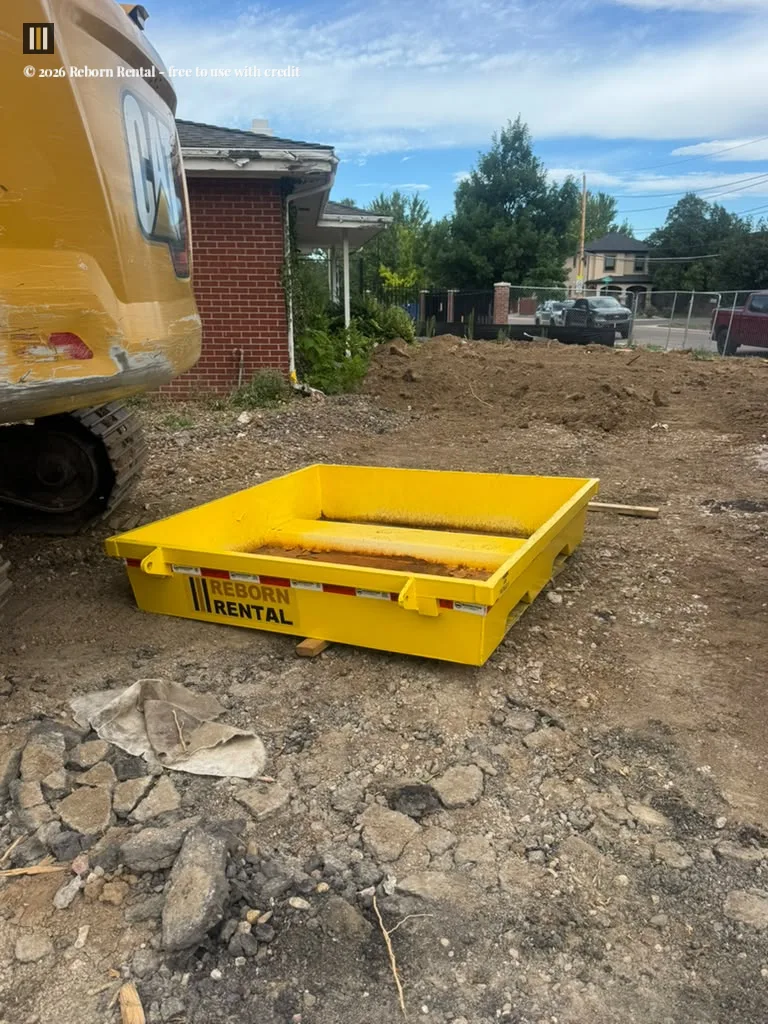
On jobs spanning several miles along routes such as I-25, US 36, or I-70, positioning containers at 1- to 2-mile increments prevents ready-mix drivers from driving miles down live traffic lanes with unwashed chutes. It also prevents erratic water use on the grade. Each wash station should include a dedicated hardstand pad, clear directional signage, and adequate turnaround radius for tandem mixer trucks.
Calculating Chute Volume for Continuous Pours
Estimating your daily washout volume requires evaluating the mix design, placement speed, and driver cleanout protocol. A standard ready-mix truck uses between 7 and 10 gallons of water to wash down its collection hopper, flip chutes, and extension chutes after discharge. When wash water mixes with leftover residual paste and aggregate residue, total waste volume averages roughly 10 gallons per truck.
To prevent sloshing during lift-and-haul operations, containers should be serviced before liquid levels reach within 4 to 6 inches of the rim. This maintains safe operational freeboard. For a 441-gallon container with a 24-inch depth, safe operating capacity is approximately 350 to 380 gallons. Consequently, a single 441-gallon pan accommodates 35 to 45 truck chute cleanouts before requiring a swap.
Corridor Calculation Example: A continuous bridge deck pour requiring 400 cubic yards of concrete placed at 50 yards per hour will cycle approximately 45 ready-mix trucks over an 8- to 9-hour shift. A single 441-gallon pan will reach maximum working capacity near the end of that shift. On large civil placements exceeding 500 cubic yards per day, scheduling a dual-pan station or coordinating a mid-pour swap ensures uninterrupted placement.
Pump trucks add significantly more waste volume. Priming slurry, line flushes, and hopper washouts can generate 40 to 60 gallons per cleanout event. When your pour includes both line placement and direct chute placement, dedicate one 310-gallon pan exclusively to the pump truck cleanout zone while running your ready-mix trucks through the 441-gallon pan.
Corridor Mileage and Dispatch Pricing Outside C-470
Infrastructure bids require clear hauling costs. Reborn Rental operates transparent pricing for civil and highway contractors across the entire Colorado Front Range. There are no long-term contracts; equipment is billed on simple daily, weekly, or 4-week rental terms.
Logistical swap pricing is calculated based on project location relative to the Denver metropolitan loop:
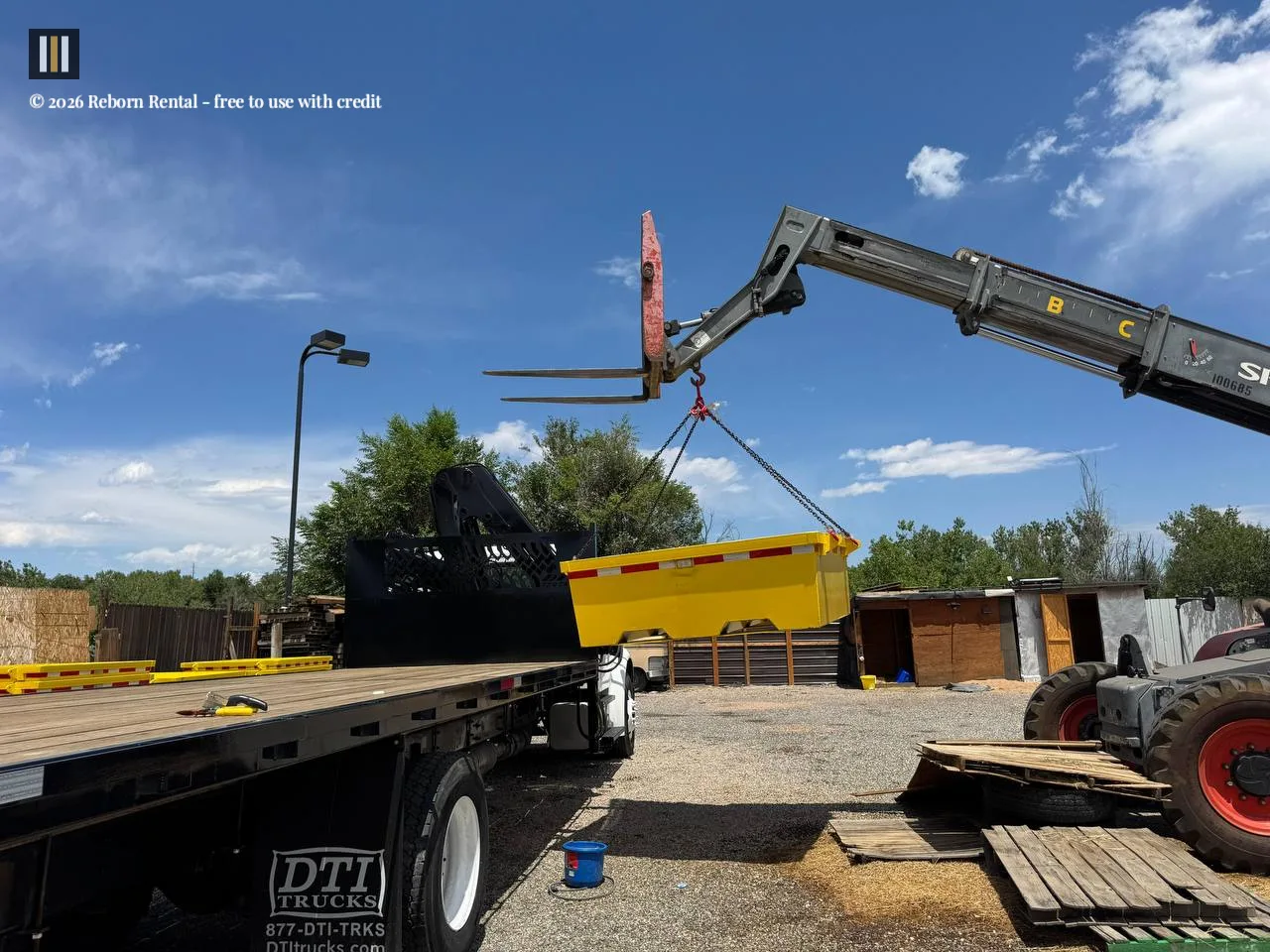
- Inside the C-470 Loop: Our standard swap-and-haul service is a flat $300 per pan. This includes dispatching our truck to your site, winching the loaded container, dropping an empty replacement pan, and hauling the slurry off-site to a compliant facility. You can review full details on our concrete washout swap and disposal service.
- Beyond the C-470 Loop: Infrastructure pours extending north toward Loveland, Fort Collins, and Greeley, or south toward Colorado Springs and Pueblo, are billed at the flat swap rate plus $8.99 per mile per swap measured beyond the C-470 perimeter. For additional details regarding distance schedules, review our fees and surcharges.
- Long-Haul Civil Projects (Over 200 Miles): Projects exceeding 200 miles from Denver receive dedicated long-haul quotes structured around your project’s pour schedule and corridor phase timelines. Contact our dispatch desk by phone or email for customized corridor rates.
Standard delivery and dispatch operations run Monday through Friday from 9:00 AM to 6:00 PM Mountain time. For early-morning highway closures, night deck pours, or weekend lane shifts, after-hours self pickup or drop-off is available at our yard with advance notice for a $35 fee. Payment is processed via major credit cards, Apple Pay, Google Pay, Klarna, or ACH transfer; cash is not accepted on site.
Environmental Compliance and Stormwater Controls Along Public Rights-of-Way
Civil projects operating on public rights-of-way fall under strict scrutiny from local inspectors, the Colorado Department of Transportation (CDOT), and the CDPHE Water Quality Control Division. Concrete wash water is chemically corrosive, commonly registering a pH of 12 or higher—comparable to household ammonia or lye. Allowing wash water to hit bare subgrade can contaminate groundwater and violate your site’s Stormwater Pollution Prevention Plan (SWPPP).
Under Colorado regulations, any untreated discharge from concrete washing into a municipal storm sewer or roadside ditch constitutes an illicit discharge. Unlike temporary pits lined with plastic sheeting—which frequently tear under the weight of aggregate, puncture during backfill, or leak into permeable soils—watertight steel pans provide documented, measurable BMP (Best Management Practice) compliance.
Where soil exhibits high hydraulic conductivity, such as sandy river terraces or coarse base aggregate, unlined or damaged containment allows rapid infiltration of caustic water. Utilizing rigid, sealed pans eliminates subsurface migration risks, protects roadside stormwater inlets, and satisfies municipal inspectors during routine environmental audits.
Selecting the Right Pan for Heavy Civil Projects
Optimizing equipment costs on civil projects requires assigning the correct pan size to each stage of construction:
- Select the 441-Gallon Large Pan ($29/day) if: You are placing continuous highway pavement, large bridge decks, retaining walls, or large box culverts where ready-mix trucks arrive on tight turnaround cycles. Its 24-inch depth provides the capacity needed to absorb 35 to 45 washes per shift while preventing roadside slurry overflow.
- Select the 310-Gallon Small Pan ($26/day) if: You are running tight median repairs, multi-lane urban widenings with restricted shoulder space, or pours utilizing boom pumps where rear-hopper height prohibits tall bins. Its 14-inch walls provide unobstructed chute and hopper access without site grading.
To eliminate administrative overhead across multi-month civil phases with multiple subcontractors, estimators and project managers can set up an MSA or dedicated account to streamline ordering and job-coded billing across your entire corridor project.
Frequently Asked Questions
How do civil contractors coordinate washout swaps along highway corridors?
Contractors establish designated wash stations at accessible points such as bridge aprons, median crossovers, or staging yards. Swap requests are scheduled with our dispatch team based on your pour volume. Our driver arrives during standard working hours, unloads a clean, watertight replacement unit, winches the loaded container onto the flatbed, and hauls it away, keeping your pour compliant without production delays.
What is the cost per mile for delivery outside the Denver C-470 boundary?
Deliveries and swaps outside the C-470 loop carry our flat $300 swap rate plus $8.99 per mile per swap. For extended projects over 200 miles from Denver, contact our office for a dedicated long-haul quote tailored to your project schedule.
How many chute washouts can a 441-gallon pan handle during a continuous bridge pour?
Allowing for recommended operational freeboard to avoid spilling during transit, a 441-gallon pan safely handles between 35 and 45 truck chute cleanouts (averaging 8 to 10 gallons of slurry per wash) before requiring a swap.
What is your cancellation policy?
Cancellations are free up to 5 business days before your scheduled delivery. After that cutoff, the fee is 50% of the reservation amount (excluding delivery fees).
Can I self-pick-up or self-drop-off on a weekend or outside working hours?
Yes. Self pickup and drop-off outside standard hours can be arranged in advance for a $35 after-hours fee.
What are your standard working hours?
Our standard operational and dispatch hours are Monday through Friday, 9:00 AM to 6:00 PM Mountain time. Our telephone quote line at (720) 734-9337 is answered 24/7 for immediate pricing and project coordination.
What payment methods do you accept?
We accept all major credit cards, Apple Pay, Google Pay, Klarna, and ACH transfers. We do not accept cash.
Get Started with Front Range Corridor Service
Not sure which pan fits your setup? Call us at (720) 734-9337—we’ll talk through your placement volume, corridor access, and discharge equipment, and quote you on the spot.