
Environmental Stewardship for Construction: Best Practices
At the end of a concrete pour, the same scene plays out on a lot of jobs. The truck chute is coated, the tools are heavy with slurry, the finisher wants to clean up fast, and somebody starts looking for the nearest patch of dirt. If the washout plan wasn't set before the first yard arrived, the crew will make a plan on the fly. That's when bad habits show up.
A lot of environmental problems on construction sites don't start with malice. They start with convenience. A hose gets dragged to the wrong spot. A washout area ends up too far from the pump. A temporary dirt berm seems “good enough” until runoff moves where nobody wanted it to go.
That's why environmental stewardship matters on a job site. Not as a slogan. As a daily operating standard that keeps a project clean, compliant, and under control.
Beyond the Mess a Practical Introduction
If you manage concrete work, you already know washout isn't a side issue. It's part of the pour. The moment the truck arrives, washout is on the schedule whether anyone wrote it there or not. Ignore it, and the site pays for it later through cleanup, arguments with inspectors, and crews wasting time fixing a preventable mess.
Construction has a blind spot here. USDA-identified stewardship gaps in industrial and urban settings show that practices like concrete washout containment are often treated like a checkbox instead of a core stewardship principle, as noted in this discussion of stewardship gaps in construction. That matches what many site managers see in the field. Teams will spend serious effort planning access, sequencing, and safety, then leave slurry management to improvisation.
What the end of a pour really looks like
One truck is waiting. Another is backing in. The pump operator needs room. Laborers are carrying tools back. The superintendent is already thinking about tomorrow's inspection. In that moment, nobody wants a long lecture about environmental policy. They want a simple answer to one question.
Where does the washout go?
If the answer is clear, the crew moves efficiently. If it isn't, somebody picks the easiest location, not the right one. That's how washout ends up near traffic paths, low spots, drainage routes, or unfinished grading where rain can carry it farther than expected.
Field reality: Crews follow the path of least resistance. Good stewardship means making the right action the easiest action.
Stewardship on a real job site
On a construction site, environmental stewardship means you control the mess before it controls the project. It means the washout area is planned, marked, accessible, and managed like any other critical operation. You don't wait for an inspector to point out a problem. You build the routine so the problem doesn't happen.
That mindset is practical, not philosophical. It protects the site, keeps the crew moving, and shows clients and consultants that your team runs disciplined work. When slurry containment is handled well, people notice. More important, they stop noticing because it stops becoming a recurring issue.
Defining Environmental Stewardship in Construction
The formal definition matters because it gives job site practice a clear standard. The U.S. Environmental Protection Agency defines environmental stewardship as “the responsibility for environmental quality shared by all those whose actions affect the environment”, with a baseline of compliance and a focus on continuous improvement, as summarized by James Madison University's stewardship overview referencing the EPA definition.
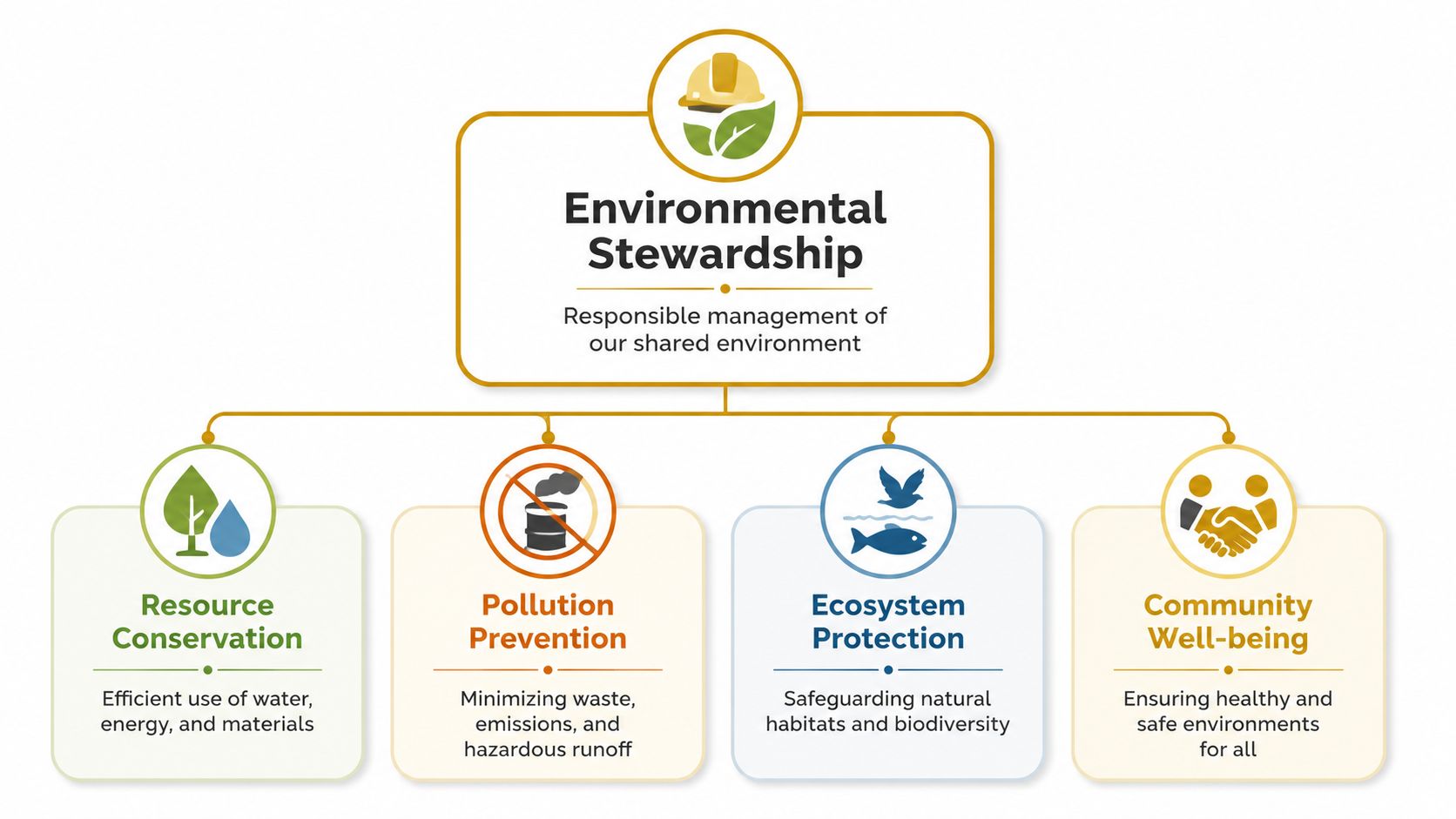
That sounds broad until you put boots on the ground. On a project, shared responsibility means the superintendent, project manager, foreman, pump crew, finishers, and drivers all affect outcomes. Stewardship isn't owned by one compliance person with a clipboard. It's built into how the site operates.
The three job site pillars
I break it into three practical pillars.
Compliance first
Start with the core requirements. Your site has requirements. Stormwater controls, designated waste handling, protected drainage paths, and washout procedures all need to work in the field, not just on paper. A SWPPP is only useful if the crew can follow it under production pressure.
Compliance is the floor. It isn't the ceiling.
Resource discipline
Construction burns through materials, water, labor time, and haul capacity fast. Stewardship means you don't waste any of them. If workers spend extra time scraping hardened slurry from the wrong place or cleaning contaminated access routes, that's a resource problem as much as an environmental one.
A clean washout process helps crews use less effort on rework and more on production.
Pollution prevention before cleanup
The cheapest spill to fix is the one that never leaves the containment area. The easiest runoff event to manage is the one you prevented by choosing the right location and container before the pour started. Good site managers think upstream. They don't rely on after-the-fact cleanup as a strategy.
Stewardship on a construction site starts with one question. Did we plan for the waste stream before we created it?
What stewardship looks like in daily operations
On a concrete job, the practical signs are easy to spot:
- A designated washout location: Close enough for crews to use without debate, far enough from drains and sensitive areas to reduce risk.
- Clear crew direction: Everyone knows where chute washout, pump cleanup, and tool cleaning happen.
- Routine inspection: Someone checks fill level, condition, and surrounding ground before the problem grows.
- Orderly closeout: Hardened material gets handled deliberately instead of abandoned until turnover.
Environmental stewardship is no longer abstract. It becomes visible in layout, housekeeping, sequencing, and supervision.
The Hidden Costs of Improper Concrete Washout
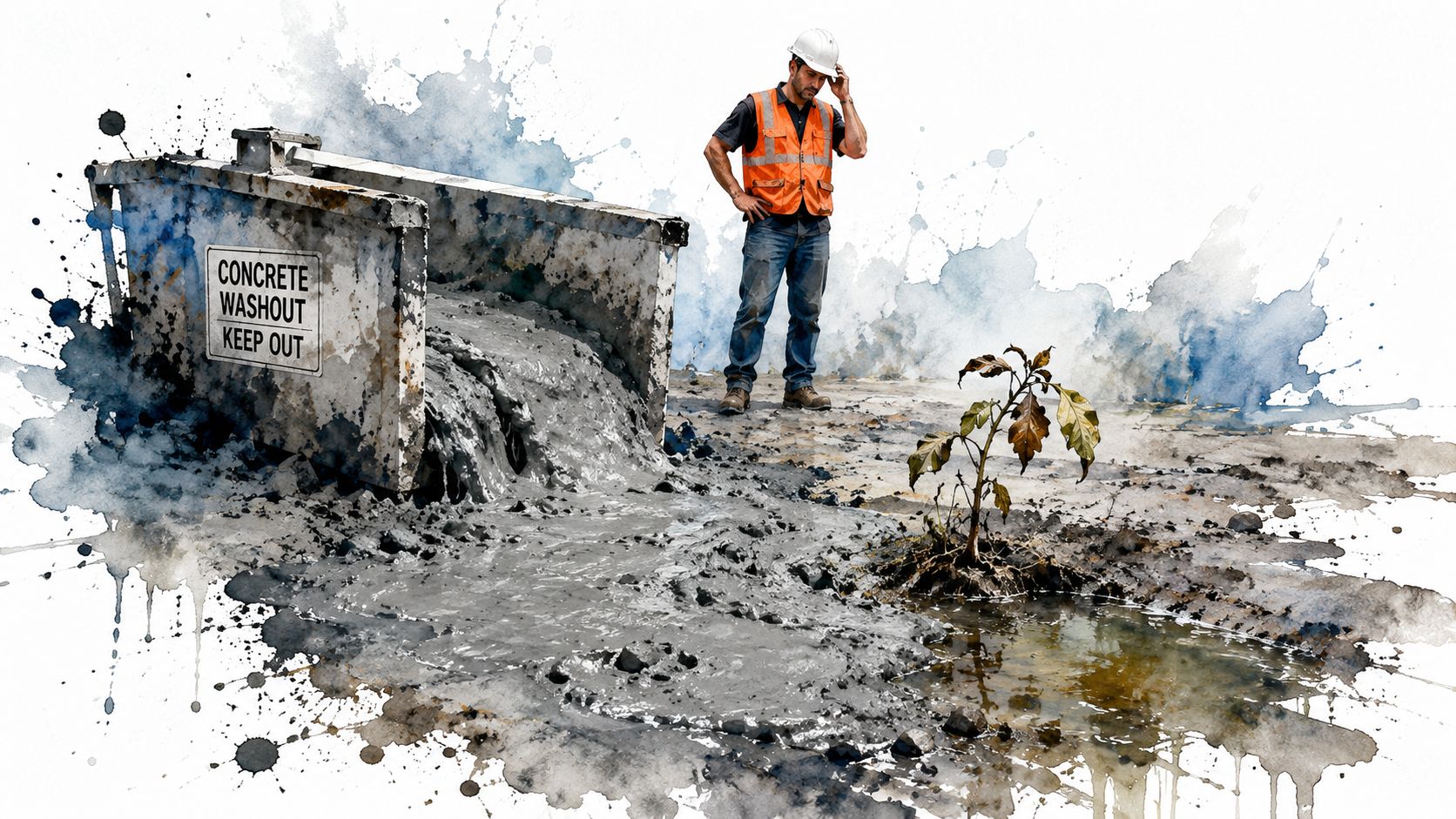
Improper washout rarely looks dramatic at first. It looks like a small gray puddle, a wet patch near a dirt stockpile, or a shortcut taken at the end of a long day. But slurry doesn't stay in the moment that created it. It spreads through traffic, rain, grading, and drainage.
What goes wrong in the field
Concrete washout leaves behind a residue that can foul soil, damage vegetation, and migrate toward drainage infrastructure if nobody contains it. Once that happens, the issue is no longer isolated to one cleanup area. It becomes a site control failure.
The direct costs show up fast:
- Crew time lost: Laborers clean unintended washout spots instead of productive work areas.
- Equipment interference: Slurry in access paths creates housekeeping problems and can complicate movement around the pour zone.
- Inspection risk: A bad washout setup gives inspectors an easy, visible deficiency to document.
- Reputation damage: Owners, consultants, and neighboring trades read sloppy environmental control as sloppy management.
That last point matters more than some teams admit. A project manager can explain one mistake. Repeated disorder tells a different story.
Why regulators take site runoff seriously
Regulators focus on industrial runoff because unmanaged site activity can create outsized downstream harm. The wider pattern is easy to understand when you look at other resource failures. Transporting goods by a rigid road truck is over 70 times more carbon intensive than bulk shipping, and groundwater over-abstraction has caused Mexico City to sink 9 meters in the last 100 years, according to Circular Ecology's environmental sustainability facts. Different sectors, same lesson. Small operational decisions scale into major environmental consequences when nobody manages them properly.
Construction crews don't control global shipping or regional aquifers. They do control where slurry goes at the end of a pour. That's the point. Stewardship starts with the impacts you can prevent directly.
Practical rule: If washout water can leave the area by gravity, traffic, or rain, the setup isn't finished.
What doesn't work
Some site habits keep causing the same failures:
- Using an informal dirt depression: It looks quick, but it isn't containment.
- Setting washout too far from the pour: Convenience beats policy every time.
- Waiting until the truck arrives to decide: Late decisions create poor placement.
- Ignoring fill level: Even a good container becomes a bad control when it's overloaded.
A messy washout area is usually a management problem before it becomes an environmental one.
Best Practices for Concrete Washout Management
The strongest washout plans are boring. Everyone knows the location. The container is already in place. The route is clear. The crew uses it without being reminded every ten minutes. That's what good control looks like.

Start with placement
Pick the washout area before concrete shows up. The best location balances access and protection. It has to be convenient enough that the driver, pump crew, and laborers will use it under time pressure. It also has to sit away from drainage paths, storm inlets, and areas where rainwater can carry material offsite.
A bad location forces the crew to choose between productivity and compliance. They'll choose productivity.
Set up for actual crew behavior
Think about how the pour will move, not how the site looks on a plan sheet. Ask practical questions.
- Truck access: Can the driver reach the washout without tight backing or conflict with active operations?
- Pump cleanup: Will hose and equipment cleaning happen in the same zone, or somewhere else by habit?
- Tool return path: Are finishers carrying wet tools across finished surfaces or pedestrian routes?
- End-of-day visibility: Can the foreman confirm the area is secure before leaving?
Good controls work with the rhythm of the pour.
Use a repeatable operating sequence
A simple workflow prevents most washout failures.
- Confirm the location before the pour starts. Don't assume the crew remembers yesterday's setup.
- Walk the area. Check for stability, access, nearby drains, and enough room for safe use.
- Direct all washout to the designated container. That includes chute rinse, pump components, buckets, and hand tools.
- Watch fill levels during active concrete work. Overflow turns a contained operation into a cleanup event.
- Secure the area after use. Keep surrounding ground clean and free of stray material.
- Handle hardened residue deliberately. Don't let it accumulate into a secondary housekeeping problem.
What crews should hear from supervision
The best field instruction is short and specific.
Wash out there. Not near the curb. Not behind the trailer. Not “just this once.”
That kind of direction works because nobody has to interpret it.
Common mistakes to stop immediately
A few habits deserve a hard stop:
- “We'll clean it later.” Later usually means after it spread.
- “It's only a little rinse water.” Small amounts become recurring contamination when repeated.
- “That spot worked on the last job.” Every site has different drainage, access, and exposure.
- “The container is full but we can squeeze one more wash.” That's how containment fails at the worst possible time.
Closeout matters too
Washout management doesn't end when the pour ends. The area still needs follow-through. Water has to be managed, hardened concrete has to be removed or processed appropriately, and the container has to be ready for pickup or continued use.
A lot of teams handle the active pour well and then get lazy on closeout. Inspectors see the closeout condition, not your good intentions from yesterday afternoon.
Choosing and Implementing Your Washout Solution
Not every project needs the same washout setup. A small retrofit, an interior slab patch, and a major placement with multiple trucks create different volumes, different crew movement, and different cleanup demands. Choosing the right solution is less about brand preference and more about fit, access, and discipline.
Match the container to the work
If you undersize the washout, you create pressure on the crew from the first truck. If you oversize it without considering placement, you may put a large container in a location that complicates traffic or staging. The decision should come from the expected pace of concrete operations and the type of cleaning that will happen there.
Some rental options in the market are listed at 72' x 72' x 24' with approximately 18.25 tons and about 441 gallons, while another common option is 72' x 72' x 14' with about 310 gallons, based on the product information described by the publisher. Those details matter because size affects how often the crew can use the unit before service, how much room it takes on site, and how carefully you need to think about placement.
Use capacity as an operational planning tool, not just a catalog detail.
Questions that separate a workable setup from a bad one
Before ordering, run through these decision points:
- How many washout users will hit the container? One truck and hand tools are different from repeated truck rinses plus pump cleanup.
- How long will concrete work continue? A one-day event and a multi-day sequence need different service planning.
- What's the access condition? Rough terrain, limited turning radius, or tight urban work zones affect where a container can sit.
- Who is responsible daily? A named foreman or superintendent should own inspection and communication.
Rent or buy
For most short-term work, renting makes more sense because the container shows up when needed and leaves when the operation is done. You avoid storing a dirty asset, transporting it between jobs, and maintaining it after hard use. Renting also lets you choose a setup that fits this project instead of forcing every project to fit the equipment you already own.
Buying can make sense for contractors with constant repetitive concrete activity, stable yard logistics, and an internal process for cleaning, hauling, and redeploying units. But a lot of firms underestimate the time required to manage those details well.
Implementation checklist
A washout plan gets stronger when it's treated like a real field procedure. Use a basic checklist so nothing depends on memory.
| Phase | Task | Status |
|---|---|---|
| Pre-pour | Confirm expected concrete activity and likely washout demand | Pending / Complete |
| Pre-pour | Select designated washout location away from drains and traffic conflicts | Pending / Complete |
| Pre-pour | Verify delivery access, terrain, and placement area | Pending / Complete |
| Pre-pour | Assign one supervisor responsible for washout oversight | Pending / Complete |
| Day of pour | Brief truck drivers, pump crew, and laborers on exact washout location | Pending / Complete |
| Day of pour | Inspect container condition and available capacity before first load | Pending / Complete |
| Active work | Monitor use and surrounding housekeeping during pour | Pending / Complete |
| Active work | Stop unauthorized washout in alternate locations immediately | Pending / Complete |
| Closeout | Check area for splatter, overflow, and tracking | Pending / Complete |
| Closeout | Arrange pickup, replacement, or continued service as needed | Pending / Complete |
The best washout solution is the one the crew will actually use correctly under pressure.
Don't separate equipment from process
A container by itself won't fix poor supervision. If nobody assigns the location, marks the route, briefs the crew, and checks the condition, even the right piece of equipment can fail in practice. The tool supports the process. It doesn't replace it.
Measuring and Documenting Your Stewardship Efforts
Most contractors know how to prove compliance when an inspector asks for paperwork. Fewer know how to show that their team consistently manages environmental risk well. That's the gap. The industry still struggles to show stewardship in operational terms, and without practical benchmarks like slurry contained or visible reduction in contamination pathways, teams have trouble articulating their value, as reflected in this search-based industry question about measuring stewardship impact in construction.
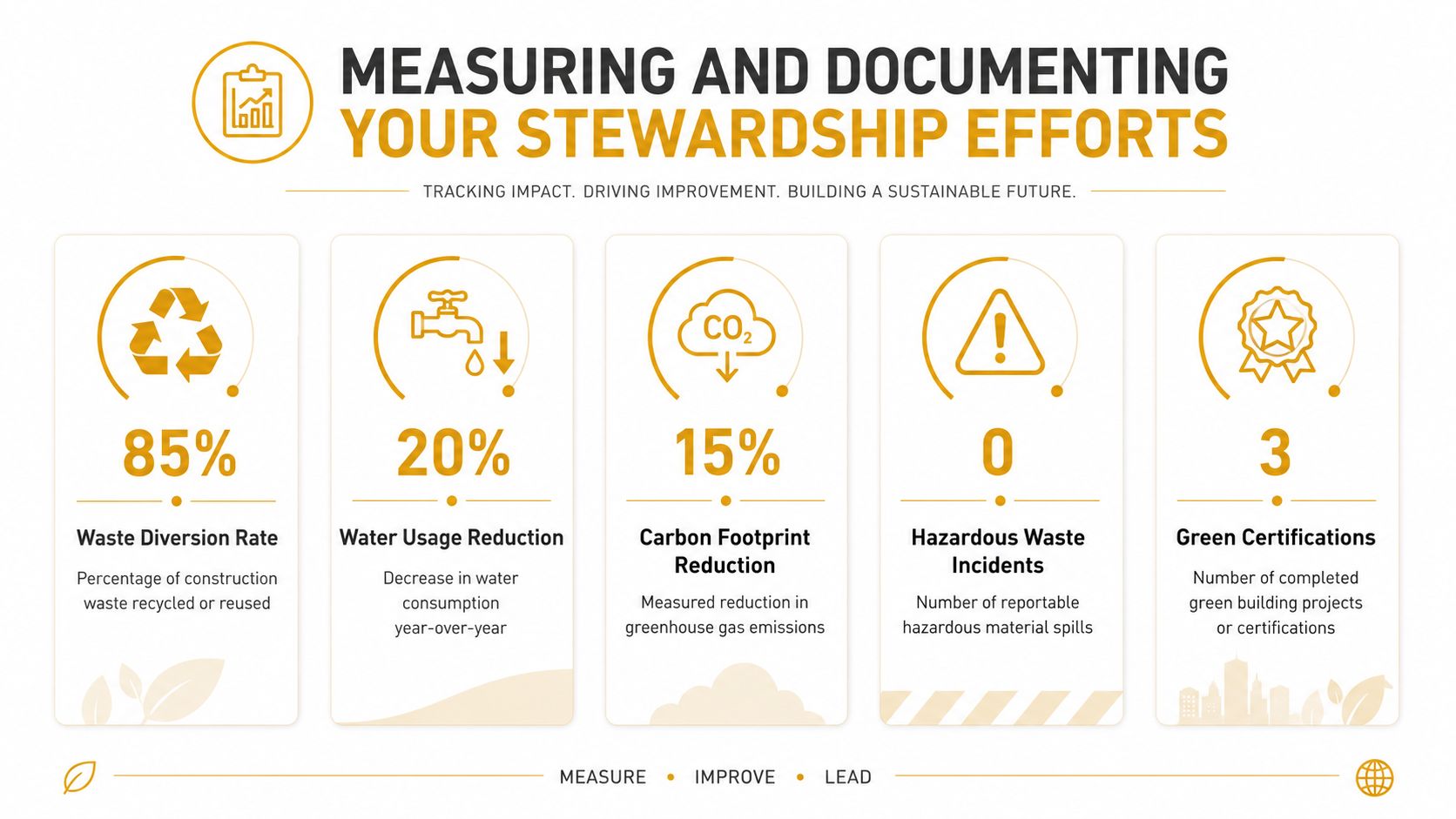
That matters for more than inspections. Owners, EPCM teams, SWPPP consultants, and internal leadership all want evidence that the site is under control. A clean setup helps. Documented performance helps more.
What to track on a live project
You don't need a complicated software stack to document environmental stewardship around concrete washout. Start with field records that are easy to maintain and easy to review later.
- Washout activity log: Note when the container was placed, inspected, heavily used, and serviced.
- Photo record: Take clear date-stamped photos of the area before use, during active work, and after cleanup.
- Condition notes: Record overflow risk, nearby housekeeping issues, or corrective actions taken.
- Crew communication: Keep a short note on who was briefed and when.
- Material handling follow-through: Document what happened to hardened residue and whether the area was restored cleanly.
These records do two jobs at once. They support compliance, and they create a management history you can use to improve the next job.
What good documentation proves
Well-kept records show that stewardship wasn't accidental. They show the team planned the control, used it, checked it, and corrected issues when needed. That's stronger than saying, “We usually do it right.”
Here's what owners and consultants often read from solid documentation:
| Record type | What it demonstrates |
|---|---|
| Photos | Visible housekeeping and containment discipline |
| Daily notes | Active supervision rather than passive hope |
| Corrective action entries | Problems were identified and addressed promptly |
| Consistent logs | Washout control was part of routine operations |
| Closeout record | The site was left in a controlled condition |
Good documentation turns stewardship from a claim into evidence.
Why this pays off
The return isn't limited to avoiding trouble. Strong documentation improves training, because new foremen can see what acceptable control looks like. It improves consistency, because crews stop reinventing the same process on every project. It also strengthens business development, especially when clients want contractors who can manage site impacts without constant oversight.
A lot of firms talk about quality and professionalism. Very few document washout management well enough to prove it. That creates an opening for the teams that do.
Stewardship Is Smart Business
A clean washout operation tells you a lot about a project. It tells you the crew received direction, the foreman paid attention, and the site management team understands that production and control have to work together. That's what environmental stewardship looks like in construction. Not theory. Execution.
The biggest mistake is treating washout like an afterthought. The better approach is to treat it like formwork, access, or traffic control. Plan it early, put the right equipment in place, assign responsibility, and verify the condition every day concrete work is active.
That discipline protects more than the environment. It protects schedule, labor efficiency, site appearance, inspection readiness, and client confidence. A contractor who manages waste streams well usually manages the rest of the project well too.
If you're responsible for concrete operations, review your current washout procedure before the next pour. Check the location, the equipment, the crew briefing, the inspection routine, and the closeout process. Tighten the weak points now, while they're still easy to fix.
If your team needs a straightforward way to contain concrete slurry and keep the site organized, Reborn Rentals offers specialized washout containment rentals with clear equipment options, upfront pricing details, and delivery coordination that fits active construction work. It's a practical place to start when you want washout control to be part of the plan instead of a scramble at the end of the pour.

