
Skid O Can Concrete Washout Guide for Contractors
A concrete pour is already a moving operation. Trucks arrive in sequence, the pump crew watches the line, finishers work against the clock, and the foreman keeps traffic, access, and weather in view. Then someone asks where the chute rinse water is going.
If the answer is “we're finding a pan,” the project is already behind. The right washout container isn't a back-office purchase. It controls where liquid and concrete residue go, how quickly drivers clear the pour area, and whether the crew can show an inspector a contained, serviceable setup.
Skid-O-Kan has operated in South Texas for more than 50 years, serving special events, construction sites, and parties, while independent business records describe a much older operating history and local service continuity. Its name is also used in construction conversations for skid-mounted washout containers, so the practical question is less about the label and more about matching the container to truck flow, site access, weather exposure, and disposal logistics.
Why Skid O Cans Matter on a Pour Day
At 7 a.m., the first concrete truck arrives, but the chute rinse point is still undecided. A small pan near the curb fills before the next driver finishes washing down. Water moves toward an inlet, a laborer drags plywood across soft ground, and the pump operator waits with the boom locked in place. The pour loses its rhythm before the foreman establishes workable containment.
That failure usually starts with a poor match between the container and the jobsite. A unit that is too small, badly placed, or difficult to service turns every truck into a coordination problem. Drivers need a clear approach, finishers need a defined rinse point, and the superintendent needs confidence that slurry will stay inside the designated area.
Concrete washout water warrants that control because it is highly caustic, commonly near pH 12, and can contain toxic metals, according to EPA concrete washout guidance. The guidance calls for leak-proof containment and establishes the objective of collecting and retaining 100% of washwater and solids for recycling or proper handling. The container therefore supports the site's environmental controls, rather than serving as a temporary place to rinse a chute.
The schedule and compliance are connected
The washout location must fit the project's SWPPP and local inspection expectations. Field guidance commonly places washout facilities at least 50 feet from storm drains, open ditches, and water bodies, with containment and cover to limit rainfall-driven overflow, as described in construction stormwater washout guidance from the Minnesota Pollution Control Agency.
Project size and truck frequency should drive the selection. A short pour with occasional deliveries may work with a smaller container if access, capacity, and servicing are clear. Continuous truck arrivals need more working capacity and a location that drivers can reach without crossing the active work zone. Rain exposure also changes the calculation because precipitation consumes available volume before the next rinse.
A poorly sized unit creates operational and compliance exposure at the same time. If rain fills it, solids build up, or a truck rinses outside the lined area, the crew may stop work, clean affected ground, document the response, and explain the condition during an inspection. Savings from the smallest rental can disappear through delayed trucks, emergency servicing, cleanup, or a remediation dispute.
A skid-mounted container addresses these jobsite demands through contained capacity, forklift mobility, and a defined pickup pathway. Stage it before the pour, move it as access changes, and schedule removal based on solids and liquid capacity. The right format keeps truck flow moving while supporting the SWPPP and making disposal costs easier to control.
What a Skid O Can Actually Is
A Skid O Can is a steel, skid-mounted concrete washout container designed to collect chute rinse water, mixer wash water, pump residue, and tool slurry. The exact dimensions and capacity depend on the manufacturer and rental market, so the foreman should confirm the rated liquid volume, access requirements, lid or cover arrangement, and hauling method before delivery.
The physical design explains its job. A typical unit uses a reinforced steel body mounted on skids, with fork pockets or another lifting arrangement that lets a forklift place it on prepared ground. Heavy-gauge walls resist the abuse that comes with active construction sites. Some units include an internal slope, baffle, grate, or ramp to help crews direct concrete residue into the vessel while keeping truck access practical.
Think of it as a small roll-off concept adapted for liquid containment. A roll-off dumpster gives a project a defined place for debris. A skid-mounted washout container gives the concrete crew a defined place for alkaline water and solids, with the vessel designed to stay watertight while it's in service.
What belongs inside the container
The container should receive material that would otherwise run onto soil, pavement, or a stormwater path:
- Chute rinse water: Collect the water used to clean the truck chute after discharge.
- Pump and tool residue: Direct slurry from pumps, buckets, and finishing tools into the contained area.
- Settled solids: Keep hardened or settling concrete in the unit until the vendor or approved handler removes it.
- Rainwater: Monitor rainfall because it consumes available freeboard and can change the pickup schedule.
The rental arrangement usually determines whether the vendor pumps liquid, removes solids, swaps the unit, or sends material for recycling or another approved disposal route. Those details should appear in the service agreement rather than being left to verbal assumptions.
What it isn't
A Skid O Can isn't a mixing tub, and it isn't a general-purpose debris box. It also isn't the same thing as a thin plastic washout pan or an earthen pit lined for temporary use. Those formats may be suitable in certain conditions, but they differ in rigidity, mobility, inspection visibility, and how easily a hauler can service them.
The name can refer to a particular rental product or a broader container style depending on the market. Treat the label as a starting point. The useful procurement questions are whether the unit is leak-resistant, how it will be loaded and unloaded, where it can be placed, how much concrete traffic it can handle, and who removes the material afterward.
Skid O Cans Compared to Other Washout Solutions
The right comparison isn't “steel versus plastic.” It's capacity, mobility, reuse, and inspection risk under the actual site plan. A small renovation, a remote utility excavation, and a multi-day structural pour don't create the same washout problem.
The table below uses qualitative capacity descriptions because manufacturers size pans, pits, bags, and skid units differently. Confirm the actual rated capacity and service terms with the rental provider.
Washout Format Comparison
| Format | Typical Capacity | Mobility/Reuse | Inspection Risk | Best Fit |
|---|---|---|---|---|
| Skid-mounted container | Higher-volume containment for repeated truck rinses, subject to the specified unit rating | Forklift or lifting equipment can reposition it, and the container can remain in service across multiple pours | Lower when correctly placed, covered, signed, inspected, and serviced | Multi-day structural pours, steady truck flow, constrained or regulated sites |
| Reusable plastic pan | Small to moderate containment, depending on pan dimensions and freeboard | Light enough to move manually or with simple handling, reusable when cleaned and intact | Overflow, puncture, wind movement, and poor access can increase exposure | Small finish pours, repair work, short-duration concrete placement |
| Lined pit or bermed excavation | Site-built capacity can be substantial, but depends on excavation, liner, berm, and rainfall control | Difficult to relocate and usually tied to one work area | Liner damage, seepage, uncovered exposure, and weak signage can create inspection problems | Remote or short-duration utility work with suitable ground and room |
| Disposable bag or tub | Limited by the bag or tub size and its structural support | Easy to deploy, but not designed for repeated heavy service | Tears, shifting, rain accumulation, and unclear disposal responsibility require close monitoring | Small, low-volume tasks where the vendor provides a clear removal plan |
A pan wins when the pour is short and the crew can watch it continuously. It's inexpensive in labor terms only if someone monitors it and replaces it before the washout reaches the edge. A pan placed beside a storm drain because it's convenient is a poor choice regardless of its purchase or rental price.
A lined pit can work on a remote pad where excavation is already planned and the site has enough space for a stable, covered containment area. It loses its advantage when the project moves, the ground becomes saturated, or the inspector needs to see a clean, clearly defined facility in a tight urban work zone. Boise's concrete washout guidance identifies tubs, lined boxes, and lined pits as possible containment formats, reinforcing that the decision is operational rather than tied to one product.
Field rule: Choose the format that your crew can keep contained during the busiest truck movement, not the format that looks adequate on an empty site.
Skid-mounted units generally earn their place when the project has repeated pours, limited room for improvisation, or a clear need to move the facility as work progresses. They don't remove the need for inspection. They make the inspection and service routine easier to control when the unit is selected and staged correctly.
Setting Up and Using a Skid O Can on Site
Set the container before the first truck arrives. Waiting until the pump is primed forces the concrete crew to solve a site-layout problem while the pour is already underway.
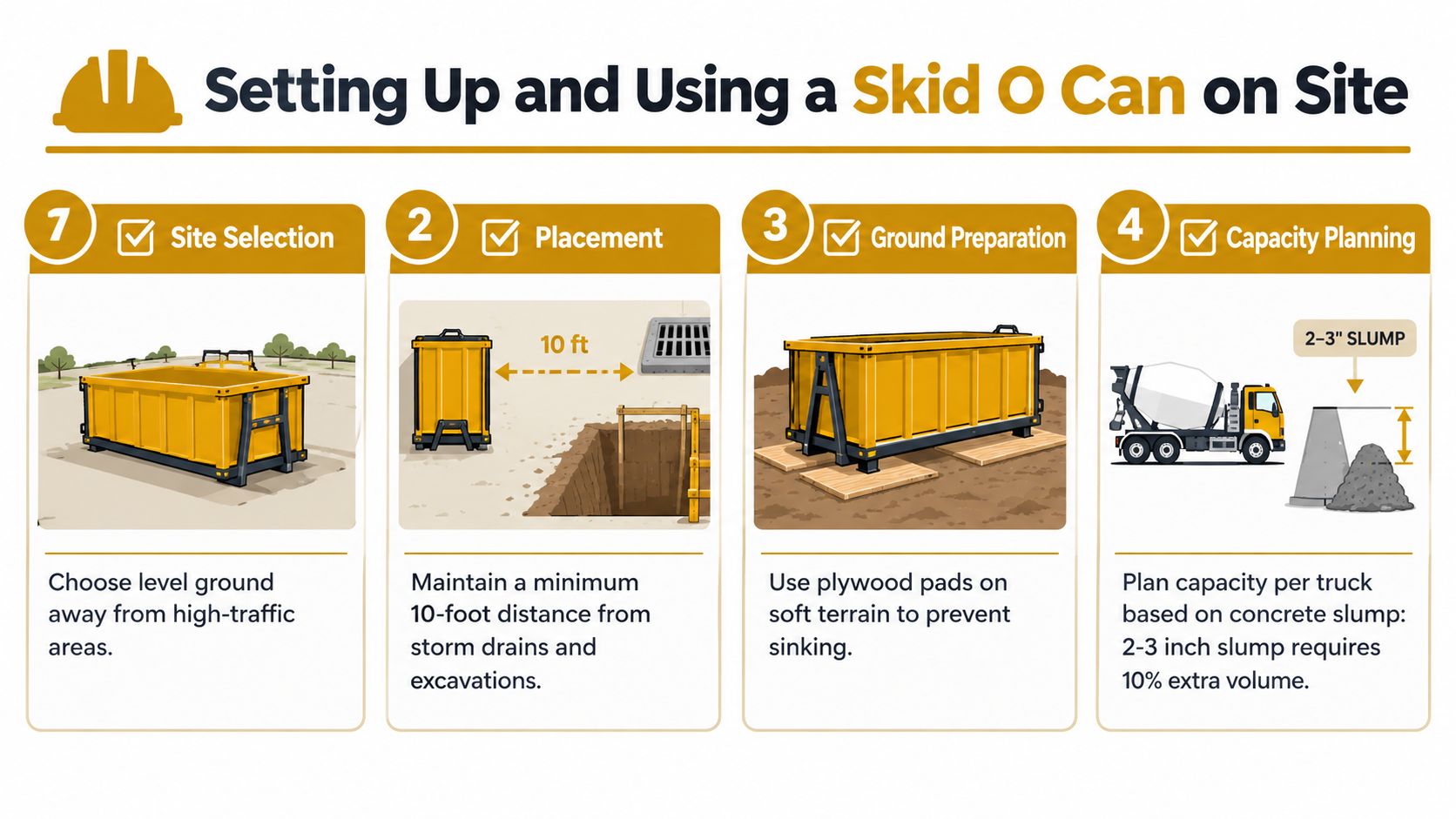
Choose the location first
Use the approved SWPPP layout to identify nearby storm drains, open ditches, excavations, and water bodies. Common field guidance places washout facilities at least 50 feet from those drainage features, as noted in agency construction stormwater guidance. Permit conditions, municipal rules, and the site plan control if they set a different requirement.
Choose level ground outside the truck's turning path. Leave room for a truck to approach, a laborer to direct the chute safely, and a forklift or service vehicle to reach the container. Keep the unit away from excavation work, trench edges, vehicle impact zones, and areas where changing grades or saturated soil could undermine it.
The right location also depends on the pour schedule. A container that works for occasional truck rinsing may become a traffic problem during a steady placement. Check truck frequency, expected chute cleaning, access for service, and the likely disposal route before committing to the pad.
Prepare the ground
Inspect the surface before setting the container. On soft or wet terrain, use a stable pad, such as properly supported plywood where the site plan permits, to distribute the load and limit sinking. A tilted container reduces usable freeboard, complicates chute positioning, and can put pressure on the surrounding ground.
Check the lid, grate, ramp, and fork pockets for damage. Face the ramp or access side toward the truck approach, then confirm that the forklift can retrieve the unit without crossing an unsafe travel route. Keep the service path open for a planned swap or pump-out.
Run the container as a staged work area
Post clear washout signage and brief every driver and finisher on the designated location. Before the pour, check for leaks, damage, accumulated solids, and enough freeboard for the planned truck sequence. Assign one person to watch the area instead of relying on each driver to manage it consistently.
Capacity planning should reflect the concrete mix, chute-cleaning practice, truck sequence, weather, and vendor service interval. One container may handle a smaller placement yet fill too quickly during a larger pour. Schedule a swap or pump-out before the crew must improvise, and confirm that the planned service timing fits the project's disposal requirements.
Use this routine during the pour:
- Direct every rinse to the same contained point. Keep hoses, chutes, and tools from discharging beside the unit.
- Watch the freeboard. Rainwater and washwater both reduce available capacity.
- Check the perimeter. Look for seepage, splashing, tracked slurry, or a displaced cover.
- Record service needs. Note conditions in the daily environmental log and contact the vendor before the next scheduled pour if capacity is tightening.
A skid-mounted container performs well when placement, access, signage, and monitoring are assigned before work starts. Treat those tasks as part of the equipment setup, not as cleanup after the pour.
Rental Costs, Delivery, and Scheduling Considerations
On a small retrofit, a basic pan may be enough. On a truck-heavy placement, the same choice can create a mid-pour service call, waiting trucks, and a disposal problem. Price the washout setup against the project's pour size, truck frequency, access, SWPPP requirements, and removal plan, not against the rental rate alone.
Separate equipment time from handling and waste services in the bid. Confirm whether delivery, pickup, pumping, solids removal, recycling, disposal records, and routine swaps are included. Ask what creates an extra charge, such as an urgent changeout, difficult access, or service outside the agreed window. Put separate charges into the estimate rather than hiding them in a general contingency.
Skid O Can Rental Cost Factors
| Cost Factor | Typical Range | What Drives It |
|---|---|---|
| Base rental | Varies by vendor and contract term | Unit size, rental duration, project location, and whether pricing is daily or weekly |
| Delivery and pickup | Varies by route and service plan | Distance, scheduling window, number of units, and whether the pickup is planned or urgent |
| Disposal or environmental service | Varies by material and agreement | Liquid volume, settled solids, recycling or disposal route, and documentation requirements |
| Terrain or access charge | Varies by site conditions | Soft ground, restricted entry, steep grades, limited turning space, or need for additional handling equipment |
| Changeout or emergency service | Varies by response and timing | Pour frequency, fill rate, weekends, holidays, weather delays, and short-notice requests |
A longer rental can lower equipment cost per pour when the container stays useful and service intervals match the schedule. Keeping it through a long gap between placements may add idle rental days. Returning it too soon can force a rush delivery before the next pour, with added transport cost and possible truck delays.
Truck frequency should drive the format decision. Several consecutive pours may justify a larger container, a planned swap, or a second location staged near the work. A smaller repair project may need only a pan that the crew can monitor and remove promptly. SWPPP expectations still apply, but disposal economics change with the volume of washwater and solids. Labor, access, cleanup, and waiting time can outweigh a lower daily rate.
Procurement check: Ask for the complete cost of one planned pour, including delivery, pickup, service, disposal, and any access condition that the driver will encounter.
Schedule the container like any other piece of pour-day equipment. Confirm the delivery window, site contact, gate requirements, truck dimensions, forklift availability, weekend coverage, and weather-delay policy. Verify that the unit will arrive before the first discharge and remain available through the final scheduled washout. Keep the service route open so a swap or pump-out does not interfere with active work.
For a direct rental workflow, Reborn Rentals lists concrete washout pans and containers with upfront daily pricing, along with possible delivery, rough-terrain, and express-order charges. Use those published terms as a starting point, then confirm the equipment, dates, location, access conditions, and service scope before ordering.
Maintenance, Solids Handling, and Disposal
The washout container has a lifecycle after the last truck leaves. Water remains alkaline, solids settle, and rain can consume the freeboard while the crew is focused on the next phase of work. Leaving the unit untouched until it becomes a hardened block makes pickup harder and can create a gap in the environmental record.
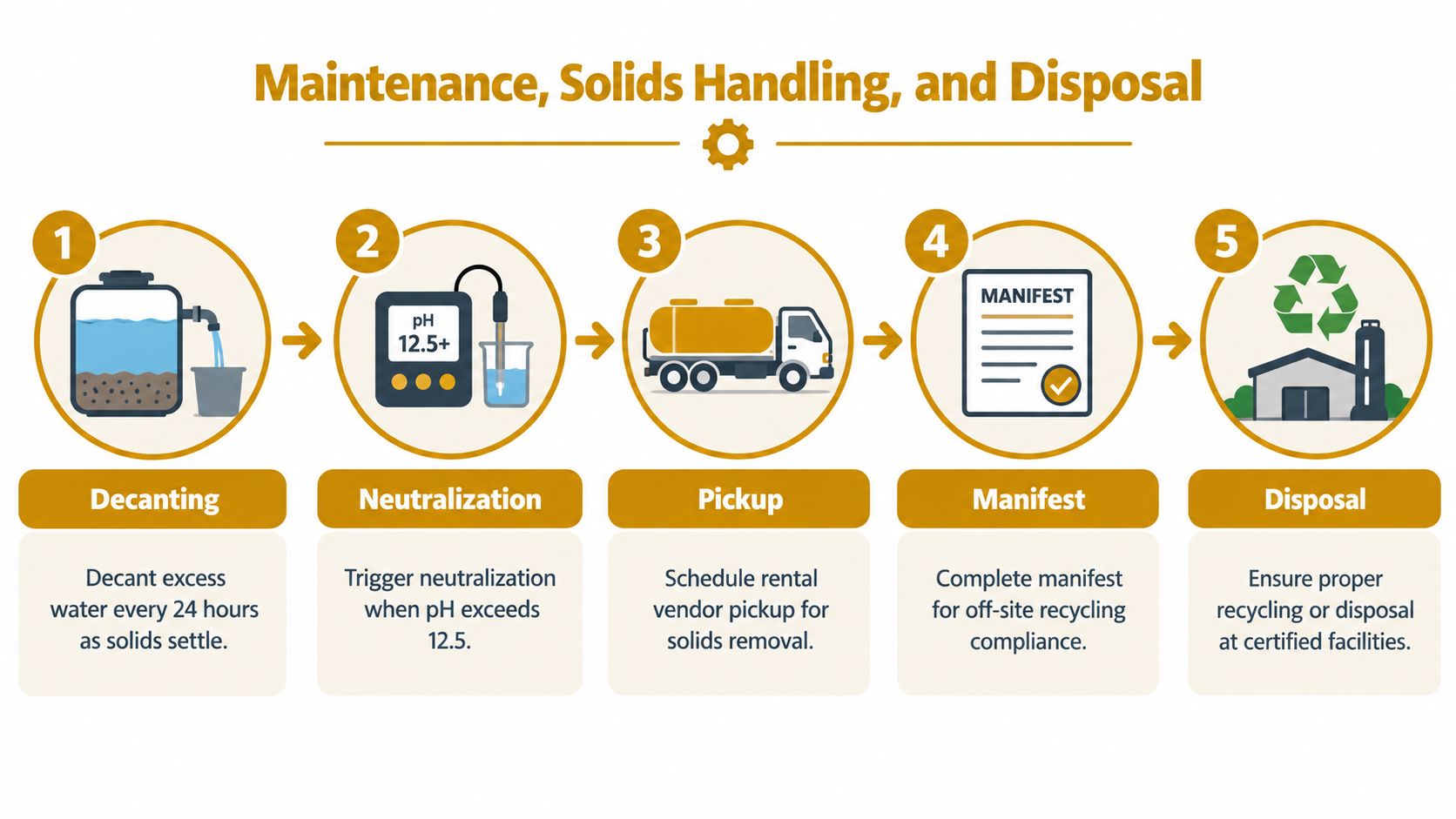
Concrete solids should remain contained while they settle. The crew shouldn't discharge liquid to soil, a drain, or a nearby ditch because the water looks clear. EPA guidance identifies concrete washwater as caustic and potentially contaminated with toxic metals, and calls for collection and retention of washwater and solids for recycling or proper handling. Use the project's approved procedure and the vendor's instructions for pumping, decanting, solidification, or removal.
Monitor condition, not just fill level
A container can need service before it looks full. Settled concrete reduces effective volume, hardened material can interfere with pumping, and a damaged liner or seam changes the containment risk. Inspect the walls, base, access points, cover, and surrounding ground as part of the site's routine environmental checks.
Call the rental vendor early when:
- Solids reduce working capacity: The crew can't direct the chute safely without splashing or approaching the edge.
- Rain changes the plan: Stormwater fills the unit or the cover no longer protects the contents.
- The unit shows damage: A leak, bent access point, shifted base, or compromised seal needs attention before the next rinse.
- The pour schedule moves: A weather delay or added placement changes the expected service date.
Don't add neutralizing chemicals or alter the waste stream without an approved procedure. The correct pH response depends on the project plan, the material, and the handler's requirements. The crew should document observations and follow the responsible environmental professional's direction rather than making an improvised treatment decision.
Keep the paperwork with the SWPPP records
Ask the vendor what documentation comes with pickup or disposal. Keep delivery and pickup records, inspection notes, service tickets, photographs where required, and the waste manifest or disposal certificate supplied for the material. The record should identify what was removed, when it was removed, who handled it, and the recycling or disposal destination when that information is part of the service.
The paperwork matters because containment is only one part of compliance. During an audit or inspection, the project team may need to show that the washout was maintained and that the collected material went through an approved handling route. A clean container with no service record leaves an avoidable question.
Common Contractor Questions and Final Takeaways
Can a Skid O Can handle pump trucks and boom pours? It can, provided the unit is rated for the expected material, positioned within safe reach of the pump or truck, and monitored during placement. A boom pour may produce a different washout pattern than a standard chute rinse. Confirm access, capacity, and the expected service load with the vendor before delivery.
How many trucks can one container handle? No universal truck count applies. Slump, chute-cleaning habits, pump residue, tool washing, rainfall, available freeboard, and settled solids all affect capacity. Base the plan on the actual pour sequence, then arrange service before the container becomes marginal. Waiting for overflow creates a scheduling and compliance problem.
Does it automatically satisfy EPA or state requirements? No. The site still needs suitable placement, leak prevention, cover or overflow controls, signage, inspection, maintenance, and approved disposal. EPA guidance calls for containment and proper management of concrete washwater and solids. Local permits and SWPPP provisions may add conditions for drainage protection, inspection, or documentation.
What happens if rain fills it early? Keep the washout covered where the plan and equipment allow, inspect it after significant weather, and contact the vendor before the next concrete operation if freeboard has dropped. Do not pump rainwater onto the ground or into a stormwater system without an approved, documented method.
The format decision rests on three jobsite realities. Compliance exposure concerns whether the crew can keep washwater and solids away from soil and drainage paths. Disposal economics depends on the material generated and how often the vendor must pump, exchange the unit, or remove solids. Crew workflow determines whether drivers can reach the container without waiting, reversing through active work, or rinsing somewhere else.
Project size and truck frequency should drive the choice. A skid-mounted container fits pour-heavy, multi-day work when truck flow, site movement, and scheduled servicing support the handling method. A rigid pan may suit a small finish pour. A lined pit can work for short-duration utility work when the ground conditions, permit, and inspection plan support it.
Before the next bid, record the pour sequence, truck access, drainage features, expected weather exposure, service interval, and disposal responsibility. If the proposed format cannot answer those questions clearly, the washout plan is not ready for the site.
For a practical containment option, Reborn Rentals offers concrete washout pans and containers for construction and renovation work, with delivery and disposal logistics that can be confirmed around the project schedule. Check equipment availability, dates, location requirements, and service details before the next pour.