
Steel Mortar Pan: The Essential Job Site Guide for 2026
You're usually looking for a steel mortar pan when the job is small enough that a mixer feels like overkill, but big enough that a bucket turns the work into a mess. A mason needs mud close by. A finisher needs a controlled patch mix. A remodel crew needs something that holds material without sloshing it across the floor.
That's where crews either work clean or waste time.
A wheelbarrow is fine until you're trying to keep a tight work area. A plastic tote works until the side flexes, the bottom wears through, or dried material starts breaking loose into a fresh batch. A Steel Mortar Pan is the simple answer because it does one job well. It holds mortar, grout, or a small concrete batch in a contained, durable tray that takes abuse and keeps the site under control.
An Introduction to the Indispensable Mortar Pan
On a real job site, the little delays are what drag production down. One laborer is hunting for a clean bucket. Another is scraping half-set mortar off a plywood scrap because somebody mixed on the ground. Meanwhile, the mechanic is waiting with a trowel in hand.
A Steel Mortar Pan fixes that by giving the crew a dedicated place to mix and hold material. It's low, open, stable, and easy to work from with a hoe, margin trowel, or shovel. You can set it where the work is happening and stop walking back and forth for every small batch.
That matters most on repair work, veneer, block infill, patching, and punch-list tasks. You don't need a big setup. You need control.
Why crews reach for a pan instead of improvised containers
A mortar pan earns its place because it solves a few job site problems at once:
- Containment: Material stays in one tray instead of spreading across slab, subfloor, or finished surfaces.
- Access: The open top gives you room to chop, fold, and remix without fighting a narrow bucket opening.
- Handling: You can move a manageable batch closer to the wall, scaffold, or repair area.
- Cleanup: A smooth steel interior is easier to scrape clean than rough wood or damaged plastic.
Practical rule: If the batch is too small for powered equipment but too messy for a bucket, use a mortar pan.
It also signals a disciplined crew. Clean staging, controlled mixing, and less waste usually go together. When the pan is in the right spot and the material is mixed right, the rest of the work moves better.
What Is a Steel Mortar Pan
A Steel Mortar Pan is a shallow, heavy-duty steel tray built to mix, hold, and move masonry and cement-based materials. It's not fancy equipment. That's the point. It survives abuse, takes abrasive material, and keeps its shape under load.
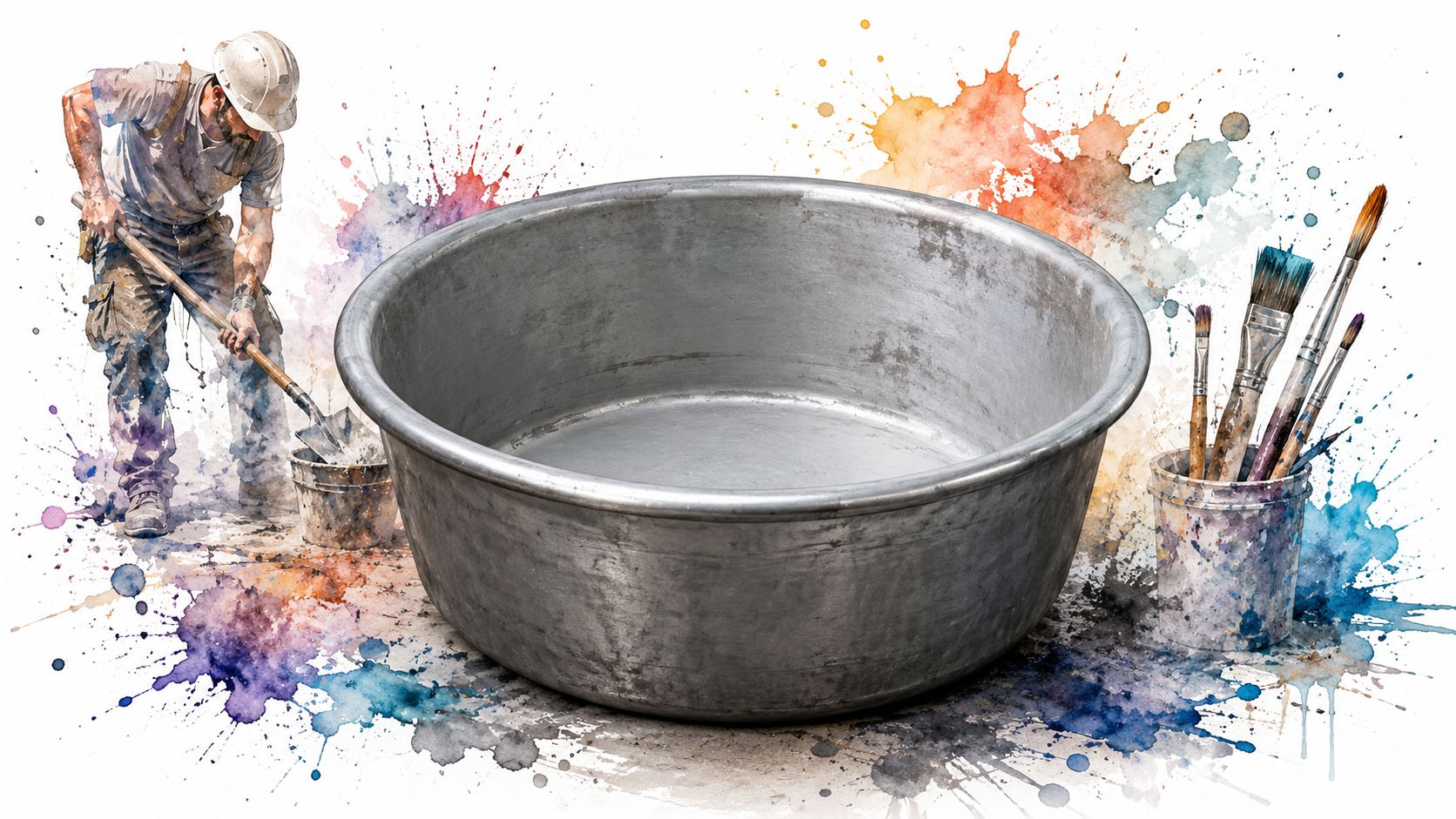
One standard example is a 30"x30"x7" steel mortar pan made from 22-gauge power-coated steel with a leak-proof design and a load capacity of 3 cubic feet (0.08 cubic meters), built so masons can mix, hold, and transport mortar while reducing spillage and material loss on site, as listed on the Atlas Preservation steel mortar pan product page.
Why the construction details matter
A pan like this works because of a few basic design choices.
First, steel stands up to sand, cement, grout, and repeated scraping. Those materials chew up weak containers fast. Steel takes that wear better than most improvised options.
Second, a single-piece body matters. Seams are failure points. They leak slurry, trap residue, and crack after repeated loading. A single-piece pan keeps wet mix where it belongs.
Third, edge design affects both service life and safety. The 29"x29"x6.5" heavy-gauge steel model from Bon Tool is listed with a 3.2 cubic foot liquid capacity and rolled edges for better durability and user safety, and it's described as suitable for handling high-viscosity materials such as mortar, grout, and concrete on the job, according to the Bon Tool mortar pan listing.
What you should notice before using one
Look at these features before the pan goes into rotation:
| Feature | Why it matters on site |
|---|---|
| Seamless basin | Helps prevent leaks and makes cleanup easier |
| Steel body | Resists abrasion from sand, cement, and scraping tools |
| Rolled or reinforced edges | Reduces sharp-edge risk and helps the pan keep its shape |
| Low, open profile | Makes mixing and scooping faster than working out of a bucket |
A good pan isn't just a tray. It's a work surface for material handling.
Mortar Pan vs Shower Pan A Critical Distinction
A crew member grabs a “mortar pan” for a bath remodel, and the wrong product shows up on site. That mistake burns time fast. In one case, it means a steel tray for mixing mud. In the other, it means a shower base that has to tie into drainage and waterproofing correctly.
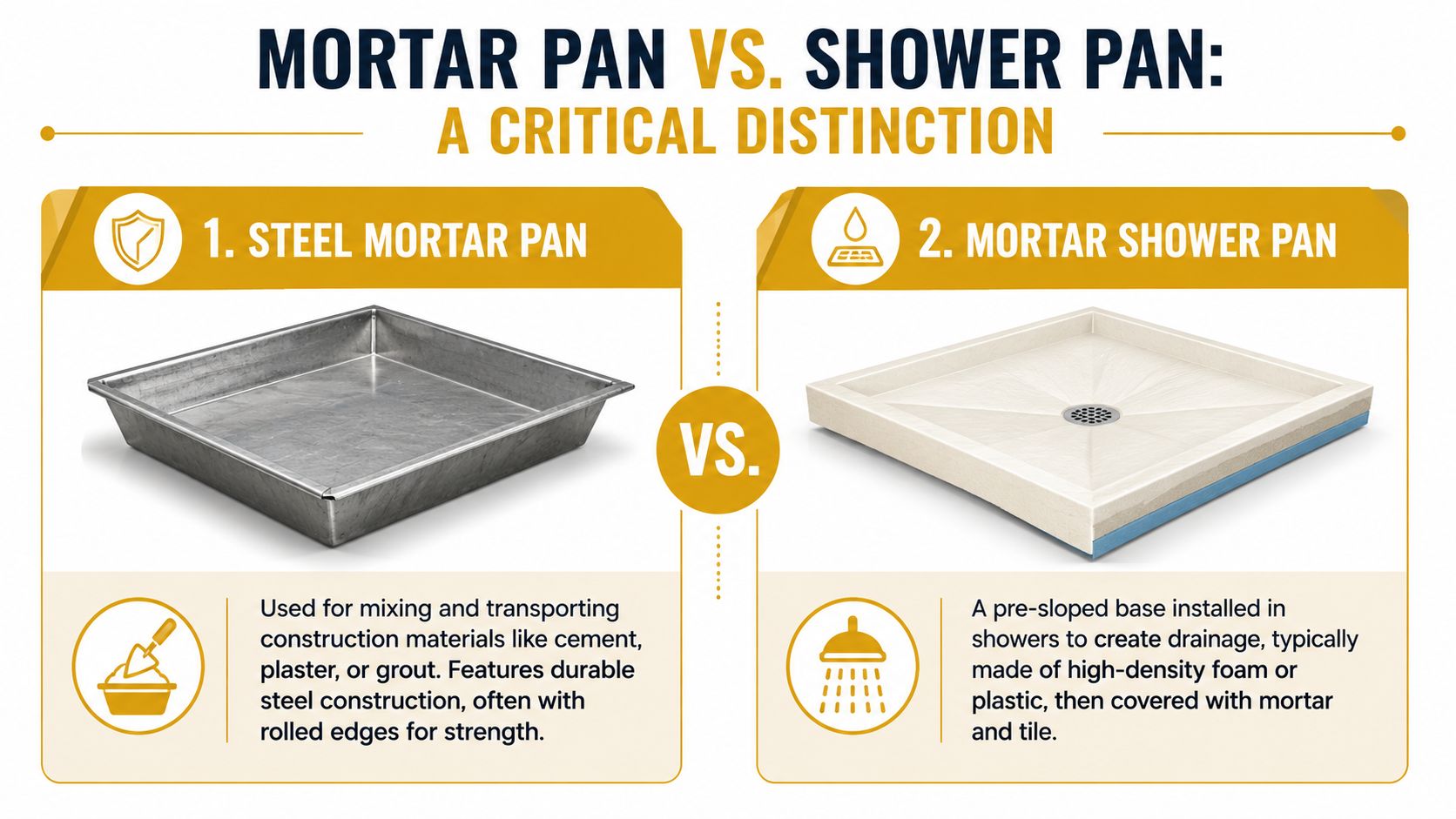
The names are close. The products are not.
A steel mortar pan is a portable mixing vessel for mortar, grout, or small concrete batches. A shower pan is a built-in part of the shower assembly. It handles slope, drainage, and waterproofing. Some showers use a site-built mortar bed. Others use pre-formed bases or foam systems. None of those are interchangeable with a handheld steel mixing pan.
One is a tool, the other is part of the installation
Here's the distinction crews need to keep straight:
- Steel Mortar Pan: Used beside the work area to mix, hold, and carry material.
- Shower pan: Installed in the bathroom as the base layer for a shower floor assembly.
- Pre-formed shower base: A manufactured shower system component used instead of building the base from deck mud on site.
Set a steel mixing pan into a shower opening and the job fails before tile even starts. It has no provision for the drain connection, no approved waterproof tie-in, no proper wall transition, and no rated role in the shower system.
A steel mortar pan stays beside the work. A shower pan gets built into the waterproof assembly.
Why the mix-up keeps happening
I see this confusion with homeowners, new estimators, and remodel clients more than with experienced tile setters or masons. The search terms blur together. Suppliers also use “mortar pan” loosely enough that buyers assume they are looking at the same category of product.
The fix is simple. Ask what the item has to do.
If the job is mixing mortar for block, brick, patching, stucco repair, or grout work, order a steel mortar pan.
If the job is building a shower floor, order a shower pan or shower system that is made for waterproofing and drainage.
Quick field check
| If you need to… | You need… |
|---|---|
| Mix, hold, or carry mortar on site | Steel mortar pan |
| Build a sloped, waterproof shower base | Shower pan or shower system |
That one check prevents a bad purchase, a wasted delivery, and a costly installation error.
Common Job Site Uses and Best Practices
The pan earns its keep when the crew uses it where it fits best. Think of it as a small-batch station, not a substitute for every mixing setup on site.
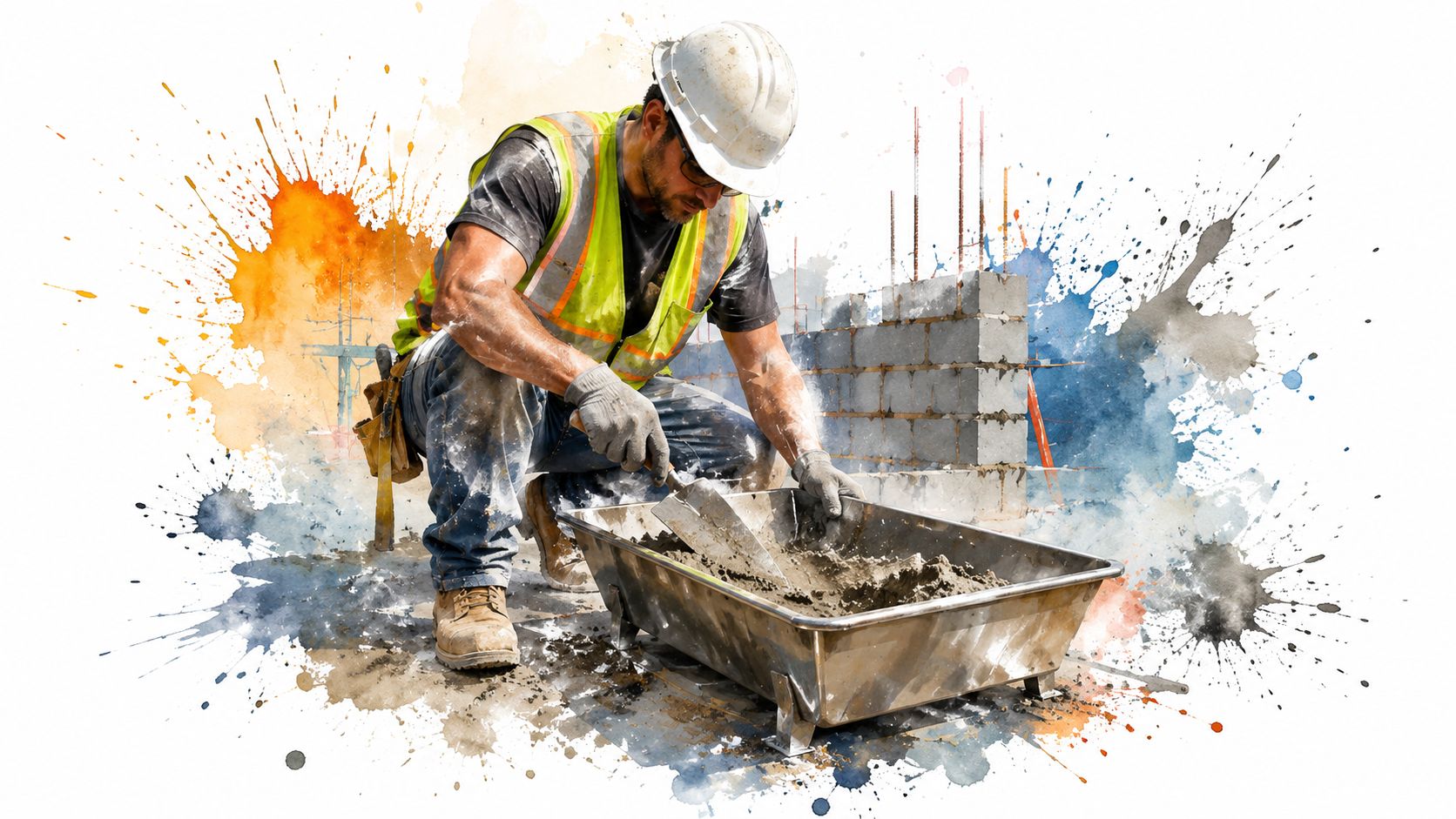
A mason laying a short run of block doesn't want to drag over a full mixer for a minor wall return or repair. He wants mud close to the line, easy to scoop, and contained. The pan sits beside the work area, low enough for quick access and stable enough that a trowel or scoop doesn't tip it around.
A finisher patching a slab works the same way. Small repair material, controlled water, clean edges. The pan lets the crew mix only what they can place before the material starts tightening up.
Where a steel mortar pan works best
Common uses include:
- Mortar staging for masonry work: Keep a working batch near the wall, scaffold, or repair area.
- Small grout or concrete mixes: Good for patches, embeds, and minor infill.
- Stucco or plaster support work: Helpful when you need a manageable amount of material at hand.
- Debris or tear-out containment: Handy for short-term collection of broken material during cleanup.
Best practices that save time
Set the pan on firm, level ground. If the base rocks, the mix shifts and spills. On finished surfaces, protect the area underneath before you set wet material down.
Don't overload it just because there's room. A pan works best when the batch is still easy to chop and fold. If the laborer has to fight the mix, production drops and material ends up outside the tray.
Use the right tool for the batch:
- Hoe for mortar or concrete: Better for folding and chopping aggregate mixes.
- Margin trowel for grout or repair blends: Gives tighter control in smaller quantities.
- Flat shovel for loading and transferring: Works when you need to move mix in and out fast.
Keep the water under control. It's easier to loosen a stiff batch than fix one that's already gone soupy.
Safety habits crews skip too often
A steel pan is simple, but it still deserves respect.
- Watch the edges: Rolled edges are safer, but you still don't grab carelessly.
- Mind lift weight: Wet mortar gets heavy fast. Split the batch before the carry becomes a strain.
- Clean around the pan: Spilled mud beside the tray turns into a slip hazard.
- Don't leave cured buildup inside: Hardened chunks contaminate the next batch and throw off consistency.
Used right, the pan becomes part of the rhythm of the work. Used carelessly, it becomes one more mess to work around.
How to Select and Maintain Your Mortar Pan
Buying the right pan comes down to one question. What kind of work will it see most days? A pan for occasional repair work doesn't need the same toughness as one that gets dragged around masonry sites every week.
What to look for before you buy
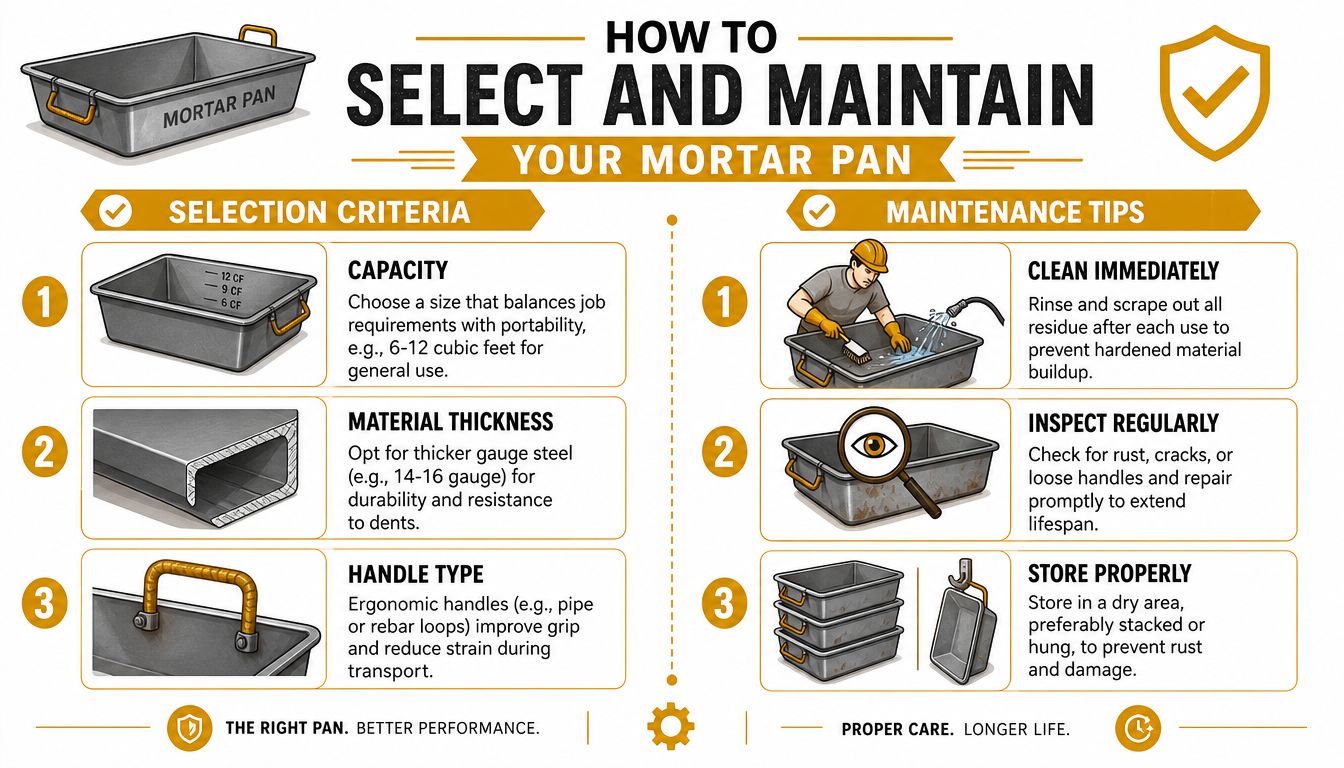
Start with the body itself. A one-piece steel pan is worth more than a cheaper option that leaks or twists after a few loads. After that, look at edge strength, overall depth, and whether the size matches the type of batches your crew mixes.
Here's the trade-off in plain terms:
| Selection factor | Better for | Watch out for |
|---|---|---|
| Larger capacity | Fewer remixes, more material on hand | Harder to move when loaded |
| Smaller footprint | Tight spaces, punch work, remodel tasks | More frequent batching |
| Heavier steel construction | Longer service life, better dent resistance | More weight to handle empty and loaded |
| Rolled edges | Safer handling and edge durability | Still needs routine inspection |
If your work is mostly masonry support, patching, veneer, or short-run material handling, pick a pan the crew can move without wrestling it. The best size on paper isn't always the best size on site.
What fails first on a cheap or abused pan
Most pan problems show up in predictable places:
- Edges deform first: That usually happens when workers pry, drag, or stack carelessly.
- Bottom wear shows up next: Repeated scraping and rough storage take their toll.
- Coatings break down under neglect: Once residue sits too long, cleanup gets rougher and damage comes faster.
Shop rule: Clean the pan before the mix cures, not at the end of the week.
A maintenance routine that extends service life
You don't need a complicated process. You need consistency.
- Clean immediately: Scrape out fresh residue after each use. Dried mortar turns a smooth interior into a rough one.
- Rinse and inspect: Check the inside corners, bottom surface, and edges while the pan is still wet enough to clean easily.
- Store it dry: Don't leave it sitting full of wash water, slurry, or wet debris.
- Stack with care: Don't jam pans together in a way that bends the lip or distorts the basin.
- Pull damaged pans out of service: If a pan has sharp edge damage, deformation, or active leaking, fix it or retire it.
A pan doesn't need to look new. It does need to stay safe, stable, and clean enough that the next batch starts right.
Renting vs Buying A Smart Contractor's Decision
A steel mortar pan isn't expensive compared with powered equipment, but the buy-versus-rent decision still matters when you're managing crews, storage, and project turnover. The smart answer depends on how often the pan works, not whether ownership sounds better.
If your crew uses mortar pans every week, buying usually makes sense. You want them ready, marked, and assigned to the workflow your laborers already know. Daily-use hand tools and support equipment usually pay for themselves in convenience alone.
Renting makes more sense when the need is temporary, the project is unusual, or the crew needs extra capacity for a short window. That happens more than people admit. A contractor takes on a larger masonry repair, a shutdown project, or a multi-crew punch phase and suddenly needs more containment and staging equipment than the shop keeps on hand.
When buying is the better move
Buy if these conditions describe your work:
- Frequent use: The pan is part of normal weekly operations.
- Dedicated crew setup: Your masons or finishers need the same gear available every day.
- You have storage discipline: Equipment gets cleaned, stored, and tracked instead of disappearing into scrap piles.
When renting is the sharper decision
Rent if the job creates a short-term need:
- Project-specific demand: You need additional pans for one contract, not year-round.
- Cash flow matters more than ownership: You'd rather keep money available for labor, material, and production equipment.
- You want less maintenance burden: Temporary gear doesn't sit in the yard collecting damage between jobs.
The mistake is treating every tool like a permanent purchase. Some equipment belongs in the company inventory. Some equipment only needs to exist for the life of the project.
A disciplined contractor separates those two categories. That's how you keep the yard cleaner, the books tighter, and the crew supplied without tying money up in gear that sits idle.
If your project also needs dependable concrete washout containment, Reborn Rentals is worth a look. They focus on practical rental equipment for keeping sites clean, organized, and ready for responsible slurry containment, which helps crews handle the mess around concrete work without slowing the job down.