
7 Swppp Inspection Checklist Tools for 2026
A storm is moving in, concrete work is active, and the inspector arrives while the site is changing by the hour. The team needs to verify that the SWPPP map still matches field conditions, the concrete washout pan is positioned correctly and has room for the day's slurry, tracking controls are working, stockpiles are protected, waste areas are contained, and perimeter BMPs have not been overtopped or displaced. Photos must show what was observed, not just that someone visited.
The best SWPPP inspection checklist captures those observations clearly, gives the superintendent a practical path to correction, and leaves an organized record for the project file. This roundup compares resources by the workflow they support, including preparation, field observations, photos and records, corrective actions, and final reporting. It also separates printable forms from mobile systems, because a digital checklist can strengthen field control, but it can't replace a properly installed washout, inlet protection, stabilized access, or functioning erosion-control measure.
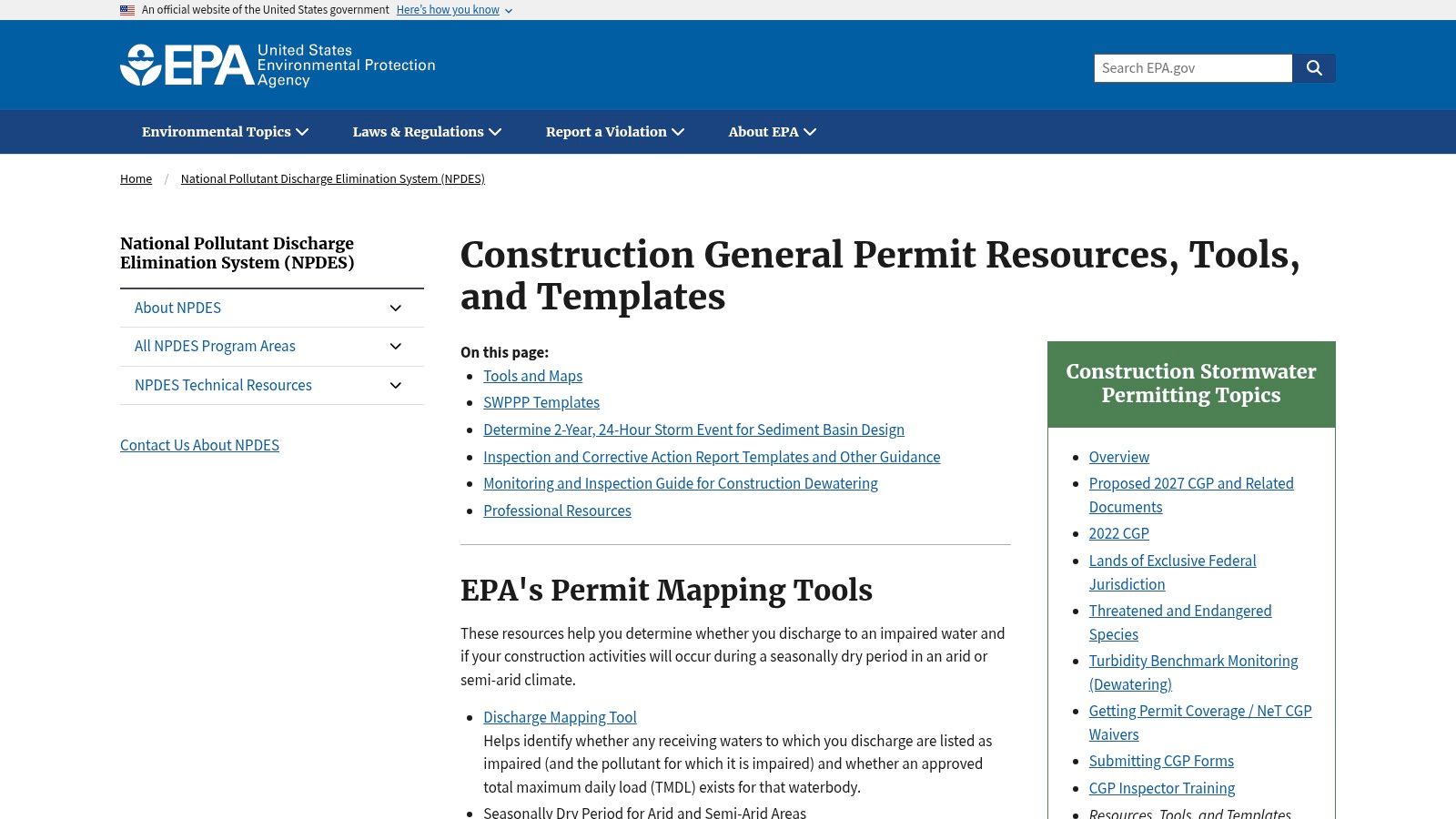
1. EPA Construction General Permit Site Inspection Report Template 2022
The EPA Construction General Permit resources and templates provide the strongest formal starting point for a contractor who needs an inspection record tied to federal permit language. The editable Site Inspection Report Template is aligned with the 2022 Construction General Permit and supports inspection details such as weather, rainfall, discharges, BMP condition, dewatering, corrective actions, and follow-up documentation.
Best for formal preparation and reporting
This template works well before the inspection because it forces the team to think about the permit requirements, site conditions, and inspection schedule instead of treating the visit as a quick walk-through. EPA guidance identifies documentation such as the inspection date, inspector name and title, weather or rain-gauge information when applicable, and corrective actions as part of a formal inspection record. EPA inspection guidance supports that documentation approach.
The template also complements the broader SWPPP record. EPA compliance materials indicate that an inspection should verify whether the SWPPP is on site, the map is legible, pollutant sources are identified, spill-response procedures are available, baseline controls are installed, and routine logs are current. EPA's construction compliance checklist makes that distinction important. The inspector is checking the plan and its implementation, not merely looking for visible mud.
Where it falls short
The Word-based format is static. It won't automatically attach GPS data, organize field photos, notify a responsible foreman, or produce a live corrective-action dashboard. A contractor will likely need to add project-specific lines for washout condition, stockpile protection, vehicle tracking, discharge points, owner requirements, or state permit language.
Use it as the compliance baseline, then adapt it carefully. Don't remove required fields just to make the form shorter.
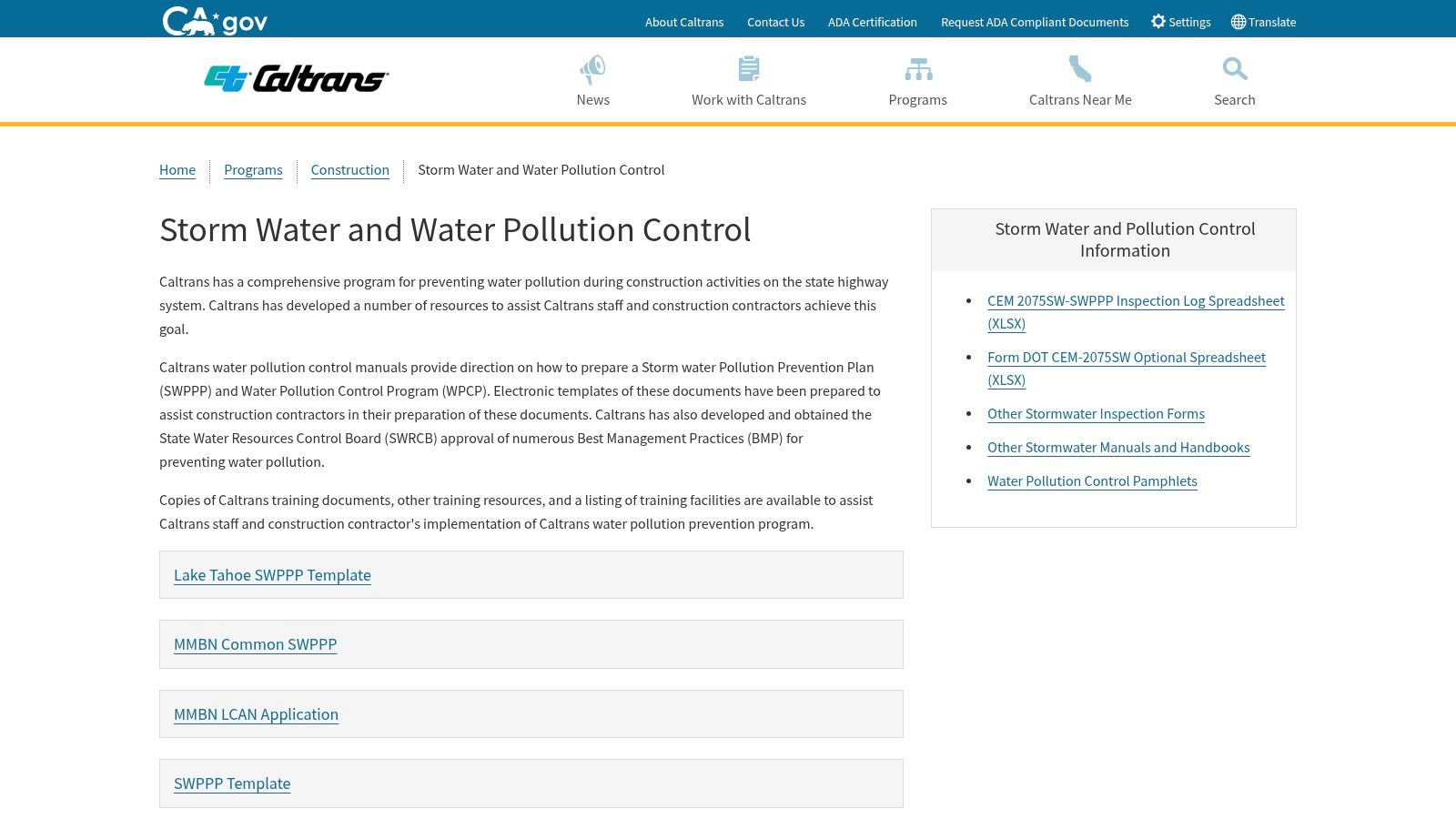
2. Caltrans CEM 2075SW SWPPP Inspection Log Spreadsheet
The Caltrans stormwater and water pollution control resources include the CEM 2075SW inspection log spreadsheet, a practical field model for routine and storm-event inspections. Its spreadsheet structure gives crews a familiar way to record dates, weather, BMP observations, maintenance needs, and follow-up actions without learning a specialized application.
A useful model for field-built forms
The spreadsheet is particularly useful during preparation. A project manager can duplicate the log for each phase, add project-specific BMP categories, and create columns for maintenance responsibility or completion status. That flexibility helps on infrastructure work where the inspection route changes as grading, paving, utilities, and concrete operations move across the site.
The log also fits event-driven work. Stormwater programs commonly combine scheduled inspections with rainfall or runoff triggers. Minnesota, for example, requires inspections once every seven days during active construction and within 24 hours after a rainfall event greater than 0.5 inches in 24 hours, while California guidance calls for inspections before forecast storms, after rain events that create runoff, and at 24-hour intervals during extended rain events. These requirements are summarized in Michigan's stormwater pollution prevention plan checklist.
Practical rule: Build the inspection log around both the calendar and the weather forecast. A form that only reminds crews about routine dates is incomplete.
The trade-off
CEM 2075SW is California-oriented, so terminology and fields may not line up with another state's permit or an owner's reporting system. It also lacks native mobile capture. Photos may sit in a separate folder, and corrective actions can become difficult to track when several people edit different copies.
It's a strong spreadsheet model, but teams should control file naming, version ownership, and approval responsibilities before using it across multiple projects.
3. TxDOT Form 2118 SWPPP Field Inspection and Maintenance Report
The TxDOT stormwater pollution prevention plan resources include Form 2118, a field inspection and maintenance report built around BMP condition and corrective work. The form is a good fit for transportation projects where an inspector needs to record what failed, what maintenance is required, and whether the issue has been addressed.
Strong on maintenance tracking
TxDOT Form 2118 is most useful after the inspector has walked the site and identified physical work. Instead of treating an inspection as a pass-or-fail exercise, the layout supports a maintenance conversation. A damaged silt fence, displaced check dam, clogged inlet protector, exposed stockpile, or overflowing washout can be described alongside the action needed.
That approach matters because physical controls need more than a checkbox. A concrete washout line should prompt the inspector to examine the pan or container's location, condition, access, labeling, and remaining capacity. If a subcontractor is washing out beside the pan, the report should create a clear correction for the superintendent, not just record “washout acceptable.”
The form also works for post-storm review. Inspectors can document sediment accumulation, overtopping, scour, displaced controls, and areas where runoff bypassed the intended BMP. Those observations help the team decide whether to repair, replace, resize, or relocate a control.
Where adaptation is necessary
The form is designed for Texas transportation work, so a private commercial project or another state will need to adjust terminology, inspection triggers, responsible-party fields, and owner-specific reporting requirements. It doesn't provide built-in photo management, mobile signatures, automated weather alerts, or central document storage.
For smaller teams, that simplicity can be an advantage. For a company managing many projects, the form works better as a field reference than as the complete recordkeeping system.
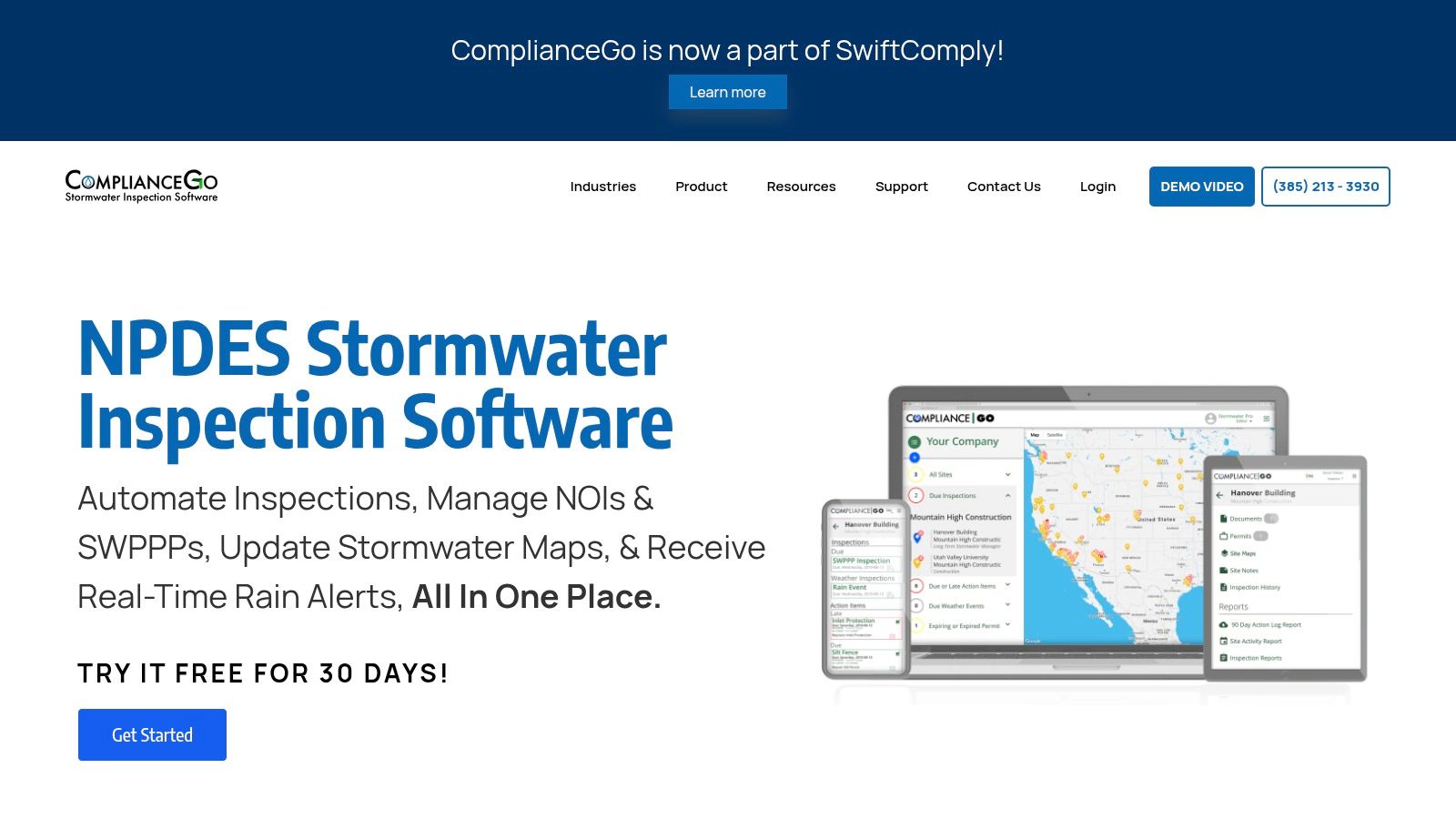
4. ComplianceGO by SwiftComply
ComplianceGO takes the SWPPP inspection checklist out of a static document and places it inside a stormwater compliance workflow. The platform supports mobile inspections, GPS-stamped photos, weather-triggered inspections based on site coordinates, report generation, and centralized storage for SWPPP documents, training records, and lab results.
Best for multi-site coordination
The main advantage is continuity. A regional contractor or consultant can standardize inspection questions across projects while keeping site-specific requirements in each project record. Inspectors can capture photos at the point of observation, which makes it easier to connect a damaged perimeter control or unprotected stockpile to the corrective action that follows.
Weather-triggered workflows also support preparation. A team can respond to a forecast or rainfall event with a defined inspection process instead of relying on a supervisor to remember which sites need attention. That lines up with the broader compliance expectation that checklists support scheduled and rainfall-triggered inspections.
The National Academies' survey of state DOT practices shows why this type of evidence chain matters. Among 42 surveyed state DOTs, 35 agencies, or 83%, reported inspections of control measures, while 33, or 79%, reported regular site investigations. The survey also found that 31 agencies, or 74%, used photographs and videos, as documented in the National Academies construction stormwater survey. Digital records aren't a substitute for good controls, but they make evidence easier to organize.
The cost and onboarding question
ComplianceGO pricing isn't publicly listed, so a buyer needs a vendor quote before comparing total cost. The platform also requires onboarding. Teams must configure inspection questions, user roles, site locations, document libraries, and escalation rules before automation becomes useful.
It's a better fit for organizations with recurring inspection volume than for a single short project that only needs a printable report.
5. SafetyCulture iAuditor
SafetyCulture's SWPPP and BMP inspection resources combine customizable templates with a mobile inspection app. Inspectors can capture photos, work offline, assign corrective actions, generate branded PDF reports, and review inspection information through dashboards.
Fast field capture
SafetyCulture is practical when the crew needs to move from observation to assignment without returning to the office. An inspector can photograph a blocked inlet, mark the finding, assign it to the appropriate person, add a due date, and include the result in the final report. That sequence is more useful than a paper note that says “repair BMP” with no owner or follow-up.
Offline capability is important on active sites where reception is unreliable. The inspector can continue recording observations and synchronize the inspection later. Customization also lets a contractor add questions for concrete washout, haul-road tracking, fuel storage, waste containers, dewatering, slope protection, and discharge points.
A physical control still has to work. If a digital inspection shows that a washout pan is too close to a drain or too small for the work area, the next step is to reposition or replace the containment. The app records the issue. It doesn't contain concrete slurry.
Review templates before deployment
The public template library is a starting point, not proof of permit alignment. SafetyCulture notes that its library includes community-created material, so a qualified project reviewer should compare every template against the governing permit, approved SWPPP, owner requirements, and actual site conditions.
Advanced functionality requires a paid subscription plan. That may be reasonable for a contractor that wants assignment workflows and portfolio reporting, but a small project may need only the form and a controlled PDF process. The platform is strong for usability and action tracking, less strong as a ready-made legal interpretation of every jurisdiction's permit.
6. GoAudits SWPPP Stormwater Inspection Checklist
GoAudits' SWPPP inspection checklist is aimed at teams that want a quick-start mobile workflow. The checklist can be edited around common construction stormwater topics, while the app supports photos, pass, fail, or not-applicable responses, corrective-action tracking, and PDF reporting.
Good for a small inspection team
GoAudits makes sense when a superintendent or environmental coordinator needs to start documenting inspections without building a system from scratch. The pass, fail, and not-applicable structure helps keep a field visit moving, while photo attachments give the report more context than a series of handwritten marks.
The checklist can be adapted to specific inspection routes. For example, a concrete-heavy project might put washout containment, pump discharge, slurry tracking, material storage, and drain protection near the top of the workflow. A grading project might emphasize perimeter controls, slope stabilization, stockpiles, sediment basins, and discharge points.
The one-click report workflow also helps when an owner wants a PDF after each visit. A report should still identify the location, condition, required action, responsible person, and verification status. A polished PDF with vague observations remains a weak record.
Don't confuse a template with approval
The published checklist is template material. It should be reviewed against the project's permit and approved SWPPP before field use, especially where inspection frequency, rainfall triggers, terminology, or owner forms differ.
Full platform access requires a paid subscription. GoAudits is therefore most attractive to smaller teams that value rapid deployment and integrated reporting. It may be less suitable where a contractor already has a corporate inspection platform or needs deep integration with project management, document control, and regulatory systems.
7. RainCheck Free SWPPP Inspection Checklist
RainCheck's SWPPP inspection checklist takes a more inspector-focused approach. The printable PDF is organized by BMP and emphasizes what to look for in common problem areas, including concrete washouts and sediment controls. An optional mobile version adds GPS-stamped photos, weather data capture, and signed PDF reporting.
Practical when paper still works
The PDF is useful for crews that need a straightforward document in a truck, trailer, or field binder. Its BMP-by-BMP format helps an inspector ask a better question than “is the site okay?” The focus becomes specific: Is the washout intact and located away from runoff paths? Is sediment accumulating against the perimeter control? Are stockpiles covered or otherwise protected? Has tracking reached the public road? Does a discharge point show evidence of erosion or sediment release?
That level of prompting helps less experienced inspectors notice conditions that a generic inspection form may miss. It also provides a useful field reference before the team builds a project-specific checklist.
The optional digital workflow adds a stronger evidence chain. GPS-stamped photos and signed reports can connect the inspection to a site and inspector, while weather data supports event-driven documentation.
The limitations
The PDF download is email-gated, and the mobile workflow is vendor-specific. A contractor should check how the digital form fits existing document storage, user permissions, corrective-action processes, and owner reporting requirements.
RainCheck is best treated as a practical inspection framework, not an automatic permit-compliance determination. Customize the questions for the governing permit and the approved SWPPP, then make sure every listed control exists in the field.
SWPPP Inspection Checklist, 7-Tool Comparison
| Item | Implementation complexity | Resource requirements | Expected outcomes | Ideal use cases | Key advantages |
|---|---|---|---|---|---|
| EPA Construction General Permit (CGP) – Site Inspection Report Template (2022) | Low, download and customize | Word processor, administrative time | Permit-aligned baseline inspections and documentation | Contractors/consultants needing CGP compliance | Official EPA template, free, up-to-date with 2022 CGP |
| Caltrans CEM 2075SW, SWPPP Inspection Log Spreadsheet (California) | Low–Medium, spreadsheet setup and edits | Excel skills, project-specific edits | Structured logs suitable for routine and storm inspections | California projects or those adopting Caltrans format | Free public-sector template, easily editable spreadsheet |
| TxDOT Form 2118, SWPPP Field Inspection and Maintenance Report (Texas) | Low, form-based use | Minimal (print/fill or PDF), administrative tracking | Clear BMP condition and maintenance tracking for DOT projects | Texas transportation projects and contractors | Field-tested format, recognized by TxDOT for large jobs |
| ComplianceGO (by SwiftComply), Stormwater Inspection Management Platform | Medium–High, vendor onboarding and configuration | Subscription, training, mobile devices, integration effort | Automated, weather-triggered inspections, centralized SWPPP records | Firms managing many sites or municipal programs | Purpose-built stormwater automation, GPS/photo and weather integration |
| SafetyCulture (iAuditor), SWPPP/BMP Inspection Templates and Mobile App | Low–Medium, template selection and mobile setup | Mobile devices, optional paid plans for advanced features | Mobile/offline inspections, photo evidence, branded reports and analytics | Teams needing quick deployment from single to portfolio scale | Fast to deploy, large template library, corrective-action tracking |
| GoAudits, SWPPP/Stormwater Inspection Checklist (with App) | Low–Medium, sign-up and checklist import | Subscription, mobile devices for onsite use | Ready-to-use mobile inspections, photo capture, PDF reports | Small teams seeking an all-in-one checklist and reporting tool | Quick start workflow, one-click reporting and exports |
| RainCheck, Free SWPPP Inspection Checklist (printable PDF) + optional mobile form | Low (PDF) to Medium (optional app) | Email to access PDF, optional mobile subscription for GPS/weather | Practical BMP-by-BMP guidance; optional GPS/weather-stamped reports | Inspectors wanting practical guidance or lightweight digital tools | Free practical checklist, inspector-focused failure-mode guidance |
Turn the Checklist Into a Reliable Site Routine
The right resource depends on the inspection workflow your project can sustain. Use the EPA template as the formal baseline when you need a document aligned with the 2022 Construction General Permit. Use Caltrans CEM 2075SW or TxDOT Form 2118 as adaptable public-sector field models when a spreadsheet or form fits the crew better than an application. Those resources are especially useful for building project-specific questions around maintenance, weather, BMP condition, and follow-up.
Choose a digital platform when the record needs to travel quickly from the field to the superintendent, project manager, owner, or consultant. ComplianceGO is designed around stormwater workflows and multi-site coordination. SafetyCulture offers broad inspection flexibility and offline capture. GoAudits provides a quick-start checklist and reporting path for smaller teams. RainCheck is a sensible printable option when crews need BMP-by-BMP prompts without committing immediately to a full platform.
Whatever you choose, customize it for the governing permit, approved SWPPP, owner requirements, inspection triggers, and actual site layout. EPA materials emphasize that the SWPPP should be site-specific and that inspection procedures and schedules need to be clearly described. A copied template can still fail if it lists controls that aren't installed, omits controls that are present, or doesn't reflect current drainage and construction phases.
The inspection should connect paperwork to physical protection. Confirm that the concrete washout area appears on the SWPPP map, is labeled, remains intact, and has enough containment for the planned work. Check waste areas, vehicle tracking controls, stockpiles, slopes, perimeter BMPs, inlet protection, dewatering points, and discharge locations. Photograph conditions that need correction, assign the work to a responsible person, and verify the repair instead of closing the item based on a promise.
For concrete-heavy work, a dedicated containment rental can help the site maintain a dependable washout setup instead of improvising with inadequate barriers. Reborn Rentals provides concrete washout pans and containers for construction and renovation projects, with current equipment, dates, locations, delivery details, and contact options available through its website.
Use the checklist as the operating record, not as a substitute for site protection. A strong inspection ends with the crew knowing what needs attention, who owns it, and how the project will prove that the correction was completed.
Reborn Rentals offers concrete washout pans and containment equipment for construction, renovation, concrete pumping, and finishing work. Visit Reborn Rentals to check current equipment, dates, locations, delivery details, and rental options for your next SWPPP inspection cycle.