
What Is Concrete Slurry and How to Handle It Safely
The chute has just emptied, the hose is still running, and someone is pointing at the gray water collecting near the truck. On a busy pour day, that moment looks small. It isn't small at all, because the choice about where that wash water goes can turn into a compliance issue, a cleanup bill, and a delay before the next load even lands.
Concrete slurry is one of those jobsite terms that gets used loosely until it causes trouble. Crews hear it from different people, see it in different forms, and sometimes treat every gray liquid the same way. The problem is that some slurry is a designed construction mix, while other slurry is a caustic waste stream that needs containment and disposal, not placement back into the work.
Concrete itself has a long history as a building material, reaching back to at least 6500 BC in the Nabataea regions of today's Syria and Jordan, and modern production became scalable after Portland cement was patented in 1824 Giatec Scientific history of concrete. That history matters on site because today's crews are working with a standardized material that behaves predictably, but the washout byproduct does not. The rest of this article is the answer sheet for the part of the job that tends to get rushed.
A Pour Day Scenario Most Crews Know Too Well
The finish crew has already moved on to the slab edge. One laborer is hosing down the chute, another is rinsing tools, and the foreman is trying to keep trucks moving. The gray water starts spreading toward the low spot, and suddenly everybody wants a fast answer.
That's where confusion usually starts. Someone says, “It's just water and concrete dust,” and someone else says, “Sweep it to the edge.” Both statements miss the part that matters. Once that wash water leaves the controlled area, it stops being a housekeeping issue and becomes a stormwater and disposal problem.
Practical rule: if the wash water can move on its own, it can leave the jobsite on its own.
A good foreman doesn't need a chemistry lecture in that moment. They need to know three things. What the material is, why it can't reach a drain or open soil, and what size of containment will let the crew finish without babysitting the pan every five minutes.
That's why the washout decision has to be made before the first truck backs in, not after the chute is already rinsed. If the site has no planned containment, the crew ends up improvising with buckets, berms, or a patchwork of tarps that were never meant to hold a real pour day. Those improvised fixes often cost more in labor than the rental would have cost in the first place.
The rest of this article follows the same order a site supervisor would use on the ground. It starts with what the material is, then moves to the hazard, the rules, the sizing, and the cost line items crews forget to carry in the estimate.
What Concrete Slurry Is
Concrete slurry is the wet waste left behind after concrete work meets water. It shows up during washout, cutting, coring, grinding, and polishing, and it usually contains fine cementitious particles, water, silica dust, sand fines, and residues from admixtures or curing compounds IACDS slurry management definitions. In plain language, it is the gray liquid that runs off the work, plus the very fine solids suspended in it.
The part crews mix up most
The phrase gets used in two different ways. Cement slurry is a designed construction mix used for grouting, pumping, or stabilization. Concrete slurry, on the other hand, is the waste stream produced when concrete dust and wash water mix during jobsite activities. That difference matters because the handling method depends on whether the material is part of the work or the leftover from it.
A good mental model is this. Fresh slurry can look like a thin milkshake, then leave behind a hardened layer of fines after it settles. Water carries the tiny solids long enough for them to spread, and then gravity takes over. Once the solids settle, they stop acting like liquid cleanup and start acting like a crusted residue.
The chemistry piece is simple enough to translate for a new hire. The material is high-alkaline, which is why it has to be treated as a regulated waste stream rather than ordinary rinse water Science Insights concrete slurry overview. That same source set also points out the confusion many crews run into, because the industry often uses “slurry” for both the engineered mix and the waste form. For a foreman, the safe shortcut is to ask one question, is this material going into the work, or coming off the work.
If it is coming off the work, it needs a containment plan. That plan has to account for both the liquid you can see and the fine solids you cannot, because the visible puddle is not the whole problem.
Why Concrete Slurry Is a Real Hazard
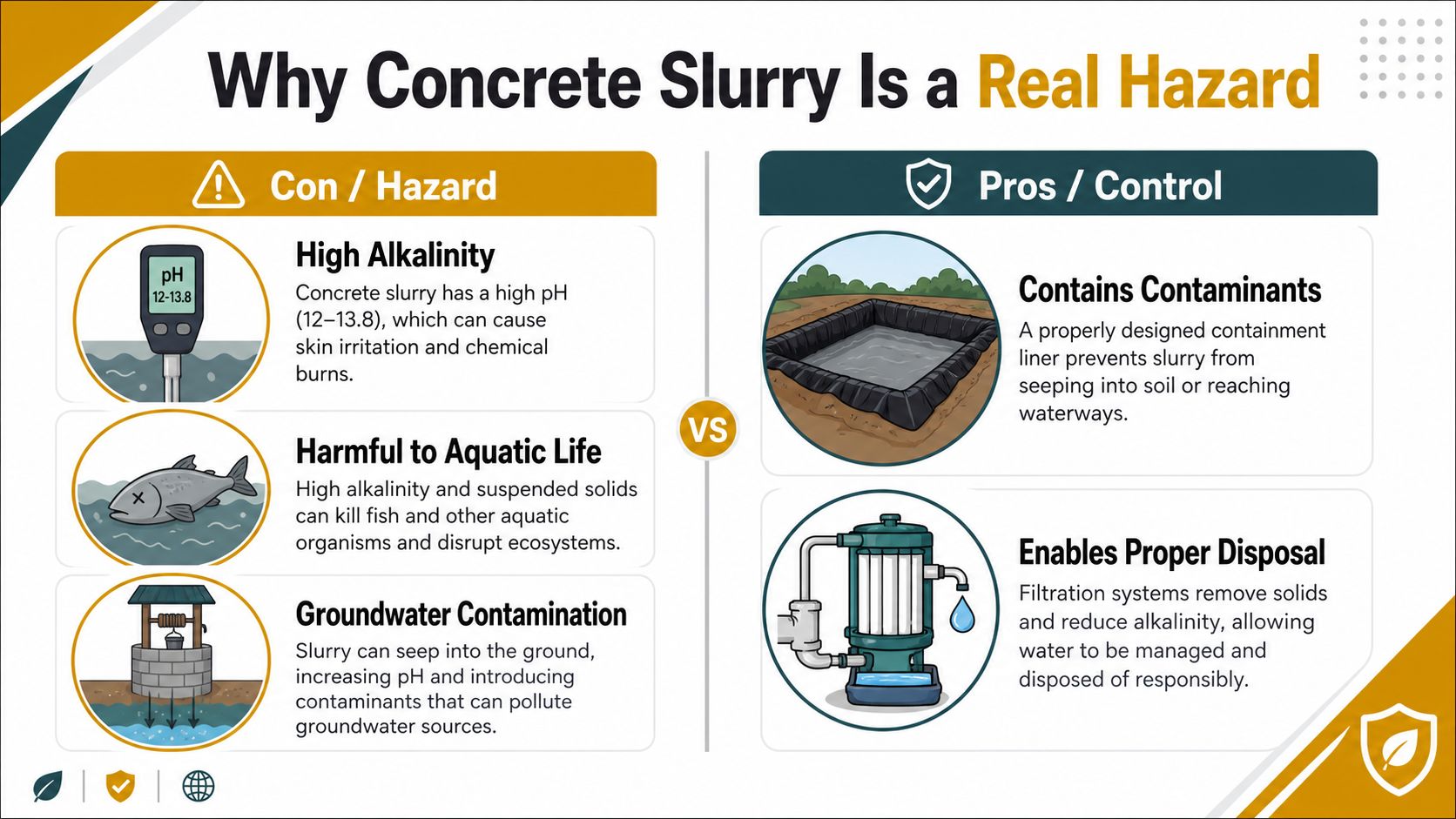
The hazard starts with alkalinity. Concrete slurry can be strongly caustic, which is why a new foreman should never treat it like ordinary rinse water. Once it leaves the controlled work area, it can burn skin, irritate eyes, and create trouble for anything it reaches, including soil, drains, and surface water.
Environmental risk comes from the liquid and the leftovers
The moving water is only part of the problem. The suspended fines ride with it for a while, then settle out and form a hardened layer that is harder to collect than the original wet material. A small spill can look manageable at first, then turn into a disposal headache once the solids set up.
The safety risk shows up fast on site. Slurry can splash during washdown, coat boots and gloves, and leave a slick film on smooth concrete or paved areas. Once the residue dries and gets broken up by foot traffic or cleanup work, crews also have to deal with silica-containing dust from cutting and grinding debris IACDS slurry management definitions.
Never assume a wet cleanup is harmless just because it doesn't look dramatic.
The operational risk is what supervisors feel first. Slurry that works its way into pipes, trenches, or equipment can harden into a crust that takes time and labor to remove. That slows the next phase of work, ties up labor that should be on the pour, and adds cost in places crews often forget to budget for, like extra cleanup time, removal, and disposal.
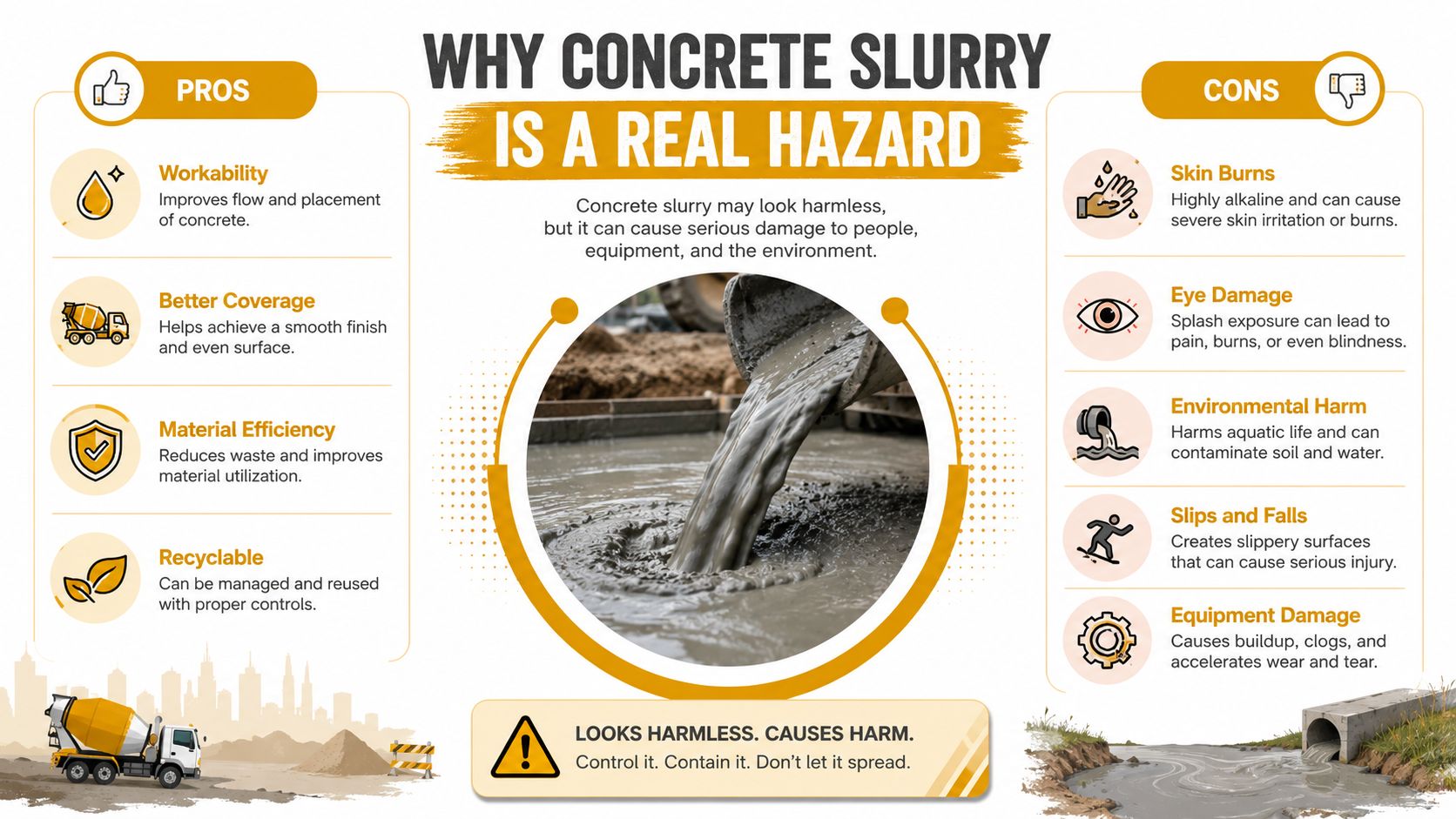
The point is straightforward. Water makes the slurry move, solids make the damage linger. A wet floor is one issue. Settled fines in a drain, a hose, or a work zone are another, and those are usually the ones that cost more to fix.
SWPPP and Regulatory Expectations on a Job Site
A Stormwater Pollution Prevention Plan, or SWPPP, usually asks for one basic thing on concrete work: keep wash water in a designated washout area and keep it out of storm drains and waterways. That language can sound formal on paper, but it comes down to visible jobsite behavior. Inspectors want to see that the crew has a place to put slurry, and that the place works.
What gets checked on the ground
A field inspector usually looks for the basics first. The washout area should be labeled, the liner or container should be intact, and there shouldn't be evidence that slurry has already spilled or overflowed. If the site map doesn't show the washout location, that omission can become a problem long before the pan is full.
Documentation is where a lot of teams get sloppy. Someone sets the pan, the pour happens, and nobody updates the site map or tracks disposal paperwork. That might feel minor in the moment, but it weakens the paper trail if an agency asks how the waste was contained and removed.
Local enforcement can be stricter than the broad federal language, so the safest posture is to treat SWPPP as the floor, not the ceiling. The project manager should be able to answer a few questions before the first truck arrives.
- Where is the washout area shown on the site map?
- Who checks that the liner or container is intact?
- How will overflow be prevented if the pour runs long?
- Where does the slurry go after collection?
- Who keeps the disposal record with the job file?
That list sounds simple because it is simple. The challenge is making sure it happens on a rushed day, not only when somebody is already standing there with a clipboard.
Best Practices for Handling and Containing Slurry
Start with placement. The washout spot needs to be flat, stable, and easy to reach without forcing trucks or pumps into bad turns. It also needs to sit away from drains, traffic paths, and low spots where runoff can travel. If the site forces people to cross the whole job to reach containment, the system is already working against the crew.
The habits that save the most trouble
The best crews treat the pan like a piece of equipment, not a dump bucket. They stop pumping before the rim gets close, they watch rainfall, and they redirect washout before the container starts looking full. If the pan is already near capacity, the next rinse doesn't need creativity, it needs a pickup plan.
Never let wash water reach a storm drain.
That one habit carries the whole compliance story. It protects the environment, keeps the site cleaner, and prevents the kind of spill that turns into a reportable incident.
Containment also needs time. Let the solids settle and cure before disposal so the waste can be handled as a solid rather than a free liquid. Covering the container helps keep rain from diluting overflow and keeps the contents visible to anyone checking the site. Labeling matters for the same reason, because nobody should have to guess what the container is holding.
For some jobs, teams use a rented washout pan or container instead of building a temporary pit. Reborn Rentals offers concrete washout pans for rent with delivery, which fits that use case when a crew needs a ready-to-place containment option on a short schedule. A rented unit doesn't replace a site plan, but it can make the plan easier to execute.
Every one of those habits avoids a specific problem. Good placement reduces traffic conflicts, managed fill levels reduce spills, settling reduces disposal headaches, and a covered, labeled container makes inspections less awkward.
Sizing Washout Pans and Containers by Pour Size
Sizing starts with volume, but it doesn't end there. You have to think about how many trucks are coming, whether the crew is washing chutes or pump lines, and whether cutting or coring water will land in the same containment point. If those activities share one site, the washout system needs enough room for the whole day, not just the first rinse.
A practical way to compare common options
| Pour Profile | Recommended Pan Size | Approx. Liquid Capacity | Best Use Case |
|---|---|---|---|
| Small retrofit or repair pour | 72 in. x 72 in. x 14 in. | About 310 gallons | Short-duration jobs, limited washout, lighter site traffic |
| Mid-size slab or foundation day | 72 in. x 72 in. x 24 in. | About 441 gallons | Longer pours, more chute washout, higher slurry volume |
| Shared concrete cutting and washout site | Taller capacity option with room for settling solids | Use the larger footprint when access allows | Mixed slurry loads where solids build up faster |
The taller pan makes sense on slurry-heavy days because it gives the crew more headroom before overflow. The footprint still matters, though, because trucks and pumps need room to work without crowding the edge. A pan that's technically deep enough can still be a bad fit if nobody can access it safely.
What to tell a foreman before the first truck arrives
Size for at least one full pour plus a safety margin. That rule holds up even when the exact mix or cleanup volume isn't known yet. If the job includes extra washout from tools, pump lines, or coring, step up to the larger option instead of trying to nurse a smaller unit through the day.
A pan that's too small turns a routine rinse into a moving target.
That's the key sizing lesson. Capacity isn't just a number on a spec sheet, it's the difference between a controlled cleanup and a crew that has to stop work and improvise.
Rental Pricing, Delivery, and Surcharges to Plan For

A slurry budget gets easier to explain when the estimate shows the full path from yard to pickup. Reborn Rentals lists $25 per day as the starting daily rate for standard washout pans and containers, which gives a foreman a concrete baseline instead of a guess. The final total still depends on site conditions, access, and how long the unit stays on the job.
The line items that surprise crews first
Delivery and pickup can move the number fast, especially if the site sits far from the yard or the truck has to work through tight access. Rough ground can add handling complexity, and short-notice requests can bring express-order charges. Those costs do not change the headline rate, but they are part of the actual job cost.
Duration is the other budget trap. A pan that stays on site longer than planned can add rental days while the crew waits on finishing, inspection, or weather to clear. If pans get moved between phases, each swap creates another coordination point, and that is where schedules slip and invoices grow.
The cleanest way to keep the budget honest is to list the rental, the delivery, the pickup, and any likely surcharges tied to access or urgency. A washout pan is doing more than holding slurry. It is also keeping concrete capacity available for the pour, so the crew is not forced to choose between cleanup and production. An infographic detailing rental pricing, delivery fees, and common surcharges for equipment rentals with transparent service policies.
That is the point to explain to the foreman. A clear slurry budget keeps the rental, the truck time, and the likely extra fees in one place, so the line item sounds planned instead of improvised.
A Short Action Plan Crews Can Run Tomorrow
The first move is administrative, not physical. Confirm that the washout area is shown on the SWPPP map, and make sure the crew knows where it is before the first truck backs in. Then check the pan or container size against the day's pour, the washout volume, and any extra slurry coming from cutting or coring.
After that, brief the crew on the rules that matter most. Keep the fill level under control, never let wash water move toward a drain, and watch the container during rain or high-volume washout. If the unit is getting close to capacity, schedule pickup or disposal before the problem becomes visible from across the site.
Photos help more than you might think. A quick set of site pictures, including placement, labeling, and condition, gives the project file a simple record if questions come up later. It also forces the team to look at the setup with fresh eyes before the work starts.
Responsible slurry management pays off in ways crews notice right away. The site stays cleaner, inspections go smoother, and surprise costs are easier to avoid because the disposal plan was built into the job instead of improvised at the end. That's the difference between treating washout as a nuisance and treating it like part of production.
If you're planning a pour and need a washout container that's ready to place, Reborn Rentals offers concrete washout pans and containers with clear daily pricing and delivery options. Visit Reborn Rentals to check availability, match the container to your site, and line up the logistics before the first truck arrives.