
What Is Secondary Containment and How It Prevents Spills
Secondary containment is the backup system that catches a release from a primary container before it reaches soil, drains, groundwater, or navigable waters. Under EPA SPCC rules in 40 CFR §112.7(c), facilities subject to the rule must use containment or diversionary structures, and bulk storage installations generally have to hold the full capacity of the largest single container plus freeboard for precipitation.
You're probably dealing with this question because something practical is happening on site right now. A drum is sitting near a drain. A fuel tote is staged in a laydown yard. A concrete crew needs a washout spot before the pump truck rolls in. Or an inspector asked a simple question that turns into a harder one fast: “What's your secondary containment plan?”
That's where people get tripped up. They hear “secondary containment” and picture a berm, a pan, or a spill pallet. Useful tools, yes. But the idea is broader. It's a backup control system. It exists because primary containers fail. Valves drip, hoses split, drums tip, tanks overflow, and rinse water goes where nobody intended.
On a busy jobsite, the difference between a minor cleanup and a reportable mess usually comes down to whether that backup layer was already in place. If the release stays contained, your crew can respond. If it escapes to soil or stormwater, the problem gets bigger, slower, and more expensive to fix.
Contractors, site supers, SWPPP consultants, and facility managers all run into the same confusion points. Does one berm cover everything? How do you size for rain? Does concrete washout count the same as fuel storage? What changes when oil, hazardous waste, and flammables share the same site?
Those are the questions that matter in the field. This guide handles them the same way a good foreman or EHS trainer would. Start with the basic idea. Then sort out how it works, why regulators care, how sizing really happens, and what practical containment options make sense when you need something deployable.
Introduction What Secondary Containment Means on a Real Jobsite
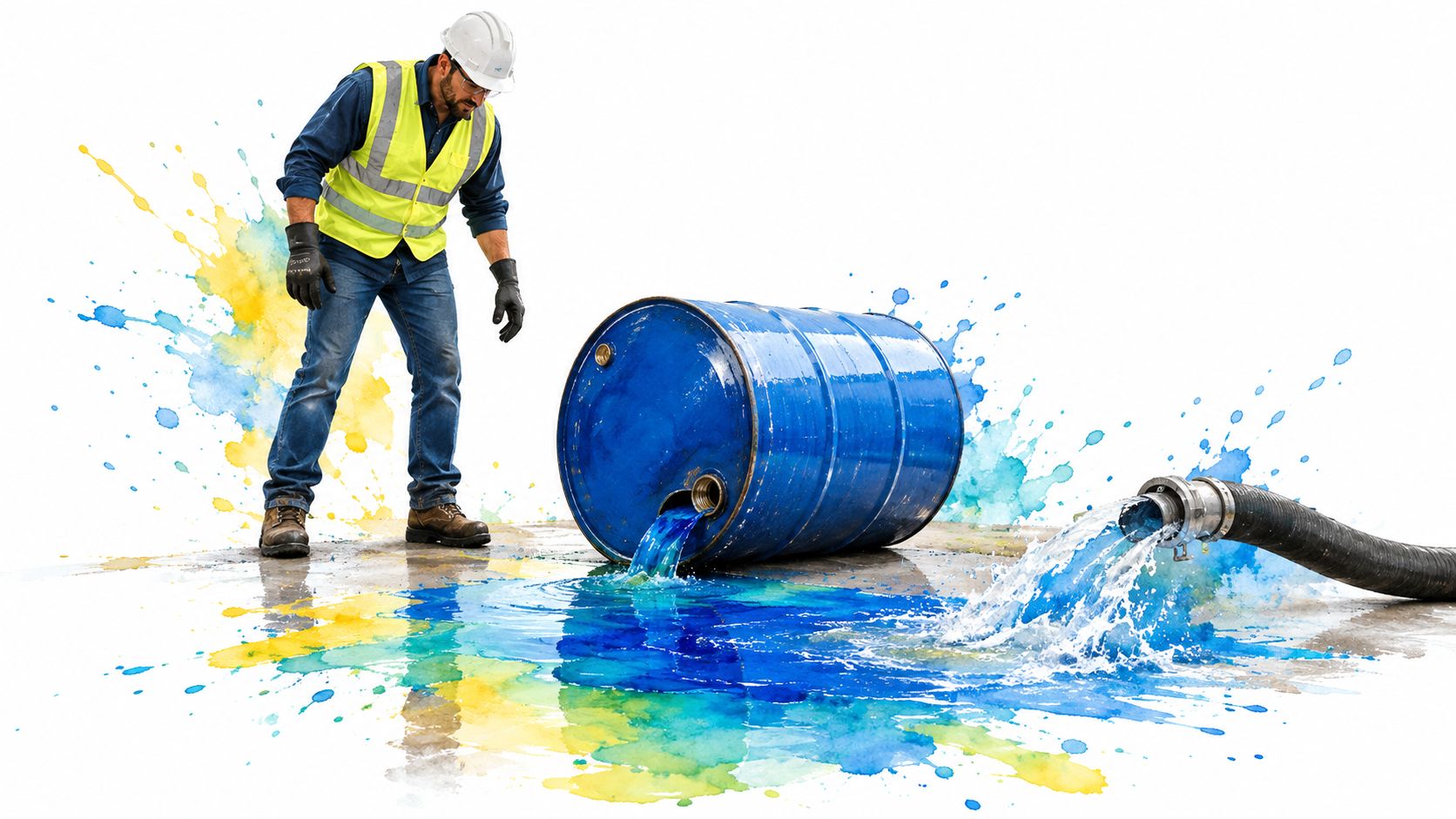
A laborer opens a valve on a washout setup and walks away for a minute. A hose shifts. Slurry starts creeping across the ground. On another part of the site, a diesel drum gets nudged by equipment and starts leaking from the lower seam. Neither event looks dramatic at first. That's why secondary containment matters.
It's the layer that catches the problem before the site wears it.
What crews usually mean when they ask about it
Those asking what is secondary containment aren't looking for a textbook definition. They want to know what they need to set under, around, or beside a container so a spill doesn't turn into contaminated soil, runoff, or a compliance issue.
In plain language, think of it like this:
- Primary containment is the thing meant to hold the liquid. A tank, drum, pipe, tote, or washout vessel.
- Secondary containment is the backup that catches the liquid if that first layer fails.
- The job is to stop movement. Once material reaches dirt, a drain, or water, control gets harder fast.
That's why a pan under a washout station, a berm around a fuel area, or a pallet under drums isn't just “extra.” It's the part of the setup that buys you response time.
Secondary containment only matters when something goes wrong. That's exactly why it has to be in place before work starts.
Why this gets confusing so fast
The term sounds simple, but the field reality isn't. One crew is thinking about concrete slurry. Another is storing oil. A third has waste liquids waiting for pickup. They may all use the phrase “secondary containment,” but the design logic can change with the material, the container, the weather, and the rule set that applies.
A lot of site mistakes start with a half-true assumption. Someone hears “hold the spill” and thinks any berm is fine. In practice, containment is also about where the release can go, how long it must stay put, and whether rain changes the required capacity.
That last point is the one many crews miss. Containment isn't just a box around equipment. It's a capacity problem plus a weather problem.
Understanding Secondary Containment and How It Works
Secondary containment is the backup layer that stands between a small equipment problem and a site-wide cleanup.
A tank, drum, tote, pipe, or washout vessel is the primary container. It holds the material during normal work. Secondary containment sits under it, around it, or outside it so a leak, overfill, cracked seam, or damaged fitting stays in a controlled area instead of spreading across soil, pavement, or storm drains.
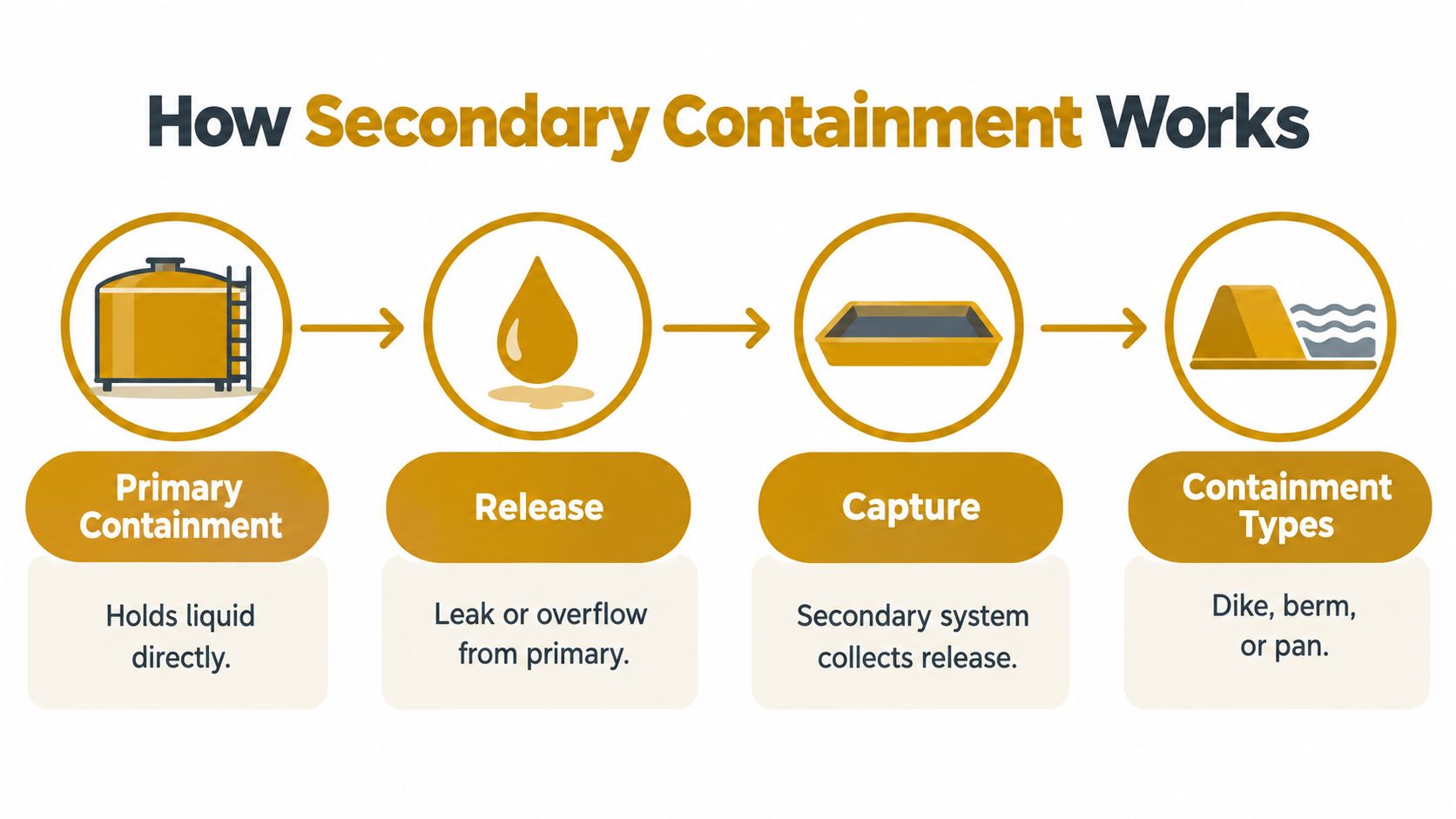
A simple garage example helps. A paint tray under a can catches drips before they hit the floor. On a jobsite, the same idea shows up as a spill pallet under drums, a berm around a fuel tank, or a concrete washout pan under rinseout work.
The function is simple. The design is where crews get tripped up.
Containment has to do more than form a barrier. It has to catch the release, keep it from escaping, and hold it long enough for cleanup. That is why a shallow pan might work for light drips but fail badly for a larger release during rain. The question is not only, “Will it catch liquid?” The question is, “Will it still have enough usable capacity after weather, sludge, and freeboard are factored in?”
That is the part many busy sites miss. Secondary containment is a capacity problem plus a weather problem.
One term, different rule logic
Crews often use the same phrase for very different setups. Oil storage under SPCC has one design logic. Hazardous waste areas under RCRA can add another. State and local rules may add liner, cover, or compatibility requirements on top of that. The hardware may look similar from ten feet away, but sizing and material choices can change fast once you know what is being stored and what rule set applies.
For example, a containment berm for oil may need to account for the largest container and precipitation. A washout pan for concrete slurry has a different challenge. The liquid is highly alkaline, solids build up quickly, and rainwater can eat into working volume. That is why rental-ready concrete washout pans are often chosen for predictable capacity, durable material, and easier pickup when the pan is full.
What the system is doing on the ground
A good secondary containment setup usually handles four jobs at once:
- Intercept the release at the source
- Stop flow to soil, drains, or low areas
- Hold the liquid and any solids until response or removal
- Stay compatible with the material long enough to do all three
That last point matters more than it sounds. Diesel, used oil, acids, solvents, and concrete slurry do not all behave the same way. A containment product that handles one liquid well may soften, corrode, crack, or lose capacity with another.
Passive setups and active measures
On most jobsites, contractors deal first with passive containment. That includes curbs, dikes, spill pallets, berms, lined areas, pans, vaults, and double-wall equipment. These controls are already in place before anything goes wrong.
Some sites also use active measures under certain oil-spill planning approaches, as described in EPA's SPCC guidance on containment options. Even then, the practical standard stays the same. The release has to be controlled before it leaves the area you can manage.
The best way to read secondary containment is as a jobsite control with one purpose: keep a release in a known place long enough for your crew to deal with it. Once you look at it through capacity, weather, and rule overlap, the design choices start to make a lot more sense.
Why Secondary Containment Matters for Compliance and the Environment
A release rarely happens on a clean, dry slab at the perfect time. It happens during fueling, after a tote valve gets clipped, or the morning after rain has already filled the berm halfway. That is why secondary containment is not just a spill accessory. It is a capacity and weather control that has to keep working under the conditions the site sees.
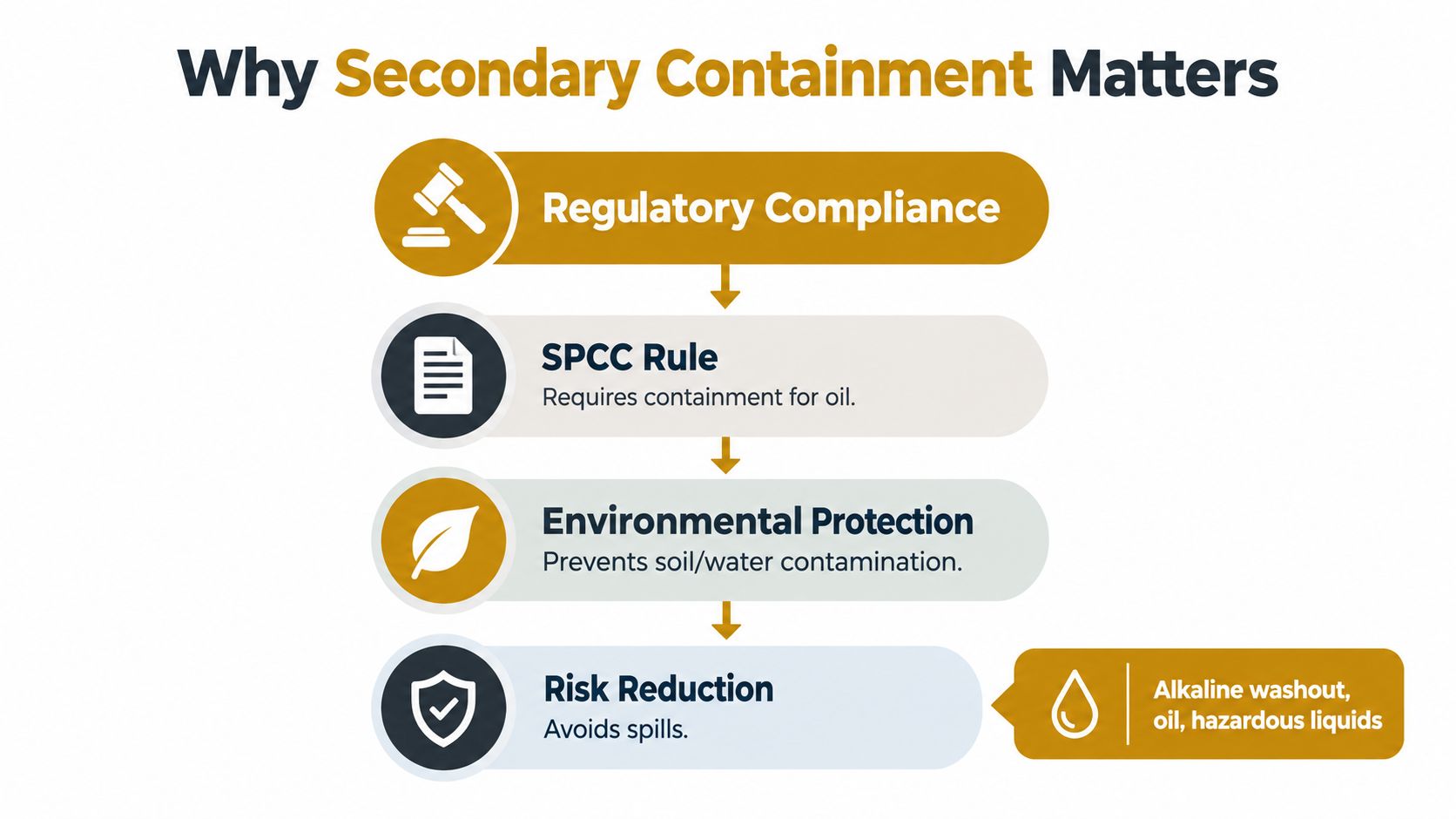
The environmental stakes are simple. Once oil, hazardous liquid, or alkaline washout gets into soil, curb lines, or stormwater paths, cleanup spreads fast. The job gets bigger, disposal gets harder, and the site can end up dealing with reporting and corrective action that could have been avoided.
The compliance side works the same way. Inspectors are not checking whether a crew bought a berm, pan, or pallet. They are checking whether the containment can realistically keep a release in place until it is removed.
SPCC turns containment into a sizing problem
For oil-related facilities in the United States, EPA's SPCC framework requires containment or diversionary structures or equipment under 40 CFR §112.7(c). On a real jobsite, that pushes the conversation past good intentions and into design choices.
The practical question becomes: how much liquid could end up in the containment area, and how much room has to be left for rain? A berm sized only for the tank or tote can come up short outdoors. Water takes up storage volume. If that volume is not planned for, the first heavy storm can turn a compliant-looking setup into one that overflows.
That is one reason containment decisions often change between indoor and outdoor storage, and between dry materials and concrete washout. A washout pan may be temporary, but if it is sitting outside, weather still counts.
One site can fall under overlapping rules
A lot of crews hear "secondary containment" and assume there is one standard answer. There usually is not. The same site can have different containment expectations depending on what is being stored and whether the material is product, waste, or both.
A single location might involve:
- SPCC concerns for oil storage and oil-filled equipment
- RCRA hazardous waste requirements for certain waste tank systems
- OSHA expectations tied to safe handling and housekeeping
- State or local rules that affect materials, drainage, covers, or waste handling
That overlap matters because the rule set can change the design. EPA's SPCC approach may allow one containment area to serve multiple oil containers if it can contain the release as required. Hazardous-waste tank systems can be more prescriptive. Under 40 CFR §267.195, containment must prevent migration to soil, groundwater, or surface water and must detect and collect releases within 24 hours, as shown in the RCRA tank system containment requirements.
One berm is not automatically enough just because it looks big.
Inspectors look at performance, not just volume
Capacity gets most of the attention because it is easy to measure. Performance is what decides whether the system works.
An inspector or plan reviewer is usually looking for practical failure points:
- Is the containment material compatible with the liquid or slurry?
- Will rain reduce available capacity below what the setup needs?
- Do seams, corners, or rough subgrade create leak paths?
- Can contaminated water be removed without sending it offsite?
- Will traffic, hoses, or repeated loading damage the containment before the job is done?
That last point trips up temporary operations. A low-cost liner or undersized pan may hold for a short time in perfect conditions, then fail once equipment traffic, UV exposure, and weather get involved.
Concrete washout shows why this matters in the field
Concrete washout is a good example because it sits right at the intersection of capacity, weather, and rule overlap. The material is temporary, but the environmental risk is real. High-pH slurry and rinse water can move into soil or drainage paths fast if the pan is undersized, cracked, or left uncovered during rain.
That is why rental-ready washout pans make sense on many projects. The crew gets a defined containment volume, predictable material compatibility for concrete waste, and a setup that is easier to place, service, and swap out than improvised containment. On sites where schedules move fast and layouts change weekly, that trade-off can be safer than building a one-off solution in the field.
Secondary containment matters because it keeps a small release from becoming a site problem, a cleanup problem, and a compliance problem all at once. The right setup is the one that still holds after the storm, after a long shift, and under the specific rules that apply to that material.
Types of Secondary Containment and Materials That Hold Up
There's no single containment product that fits every site. The right choice depends on what you're storing, how long it'll be there, what the ground looks like, whether weather is a factor, and how often crews need access.
That's why material choice matters almost as much as capacity.
Common containment types in the field
Some options are built into the site. Others are temporary and movable.
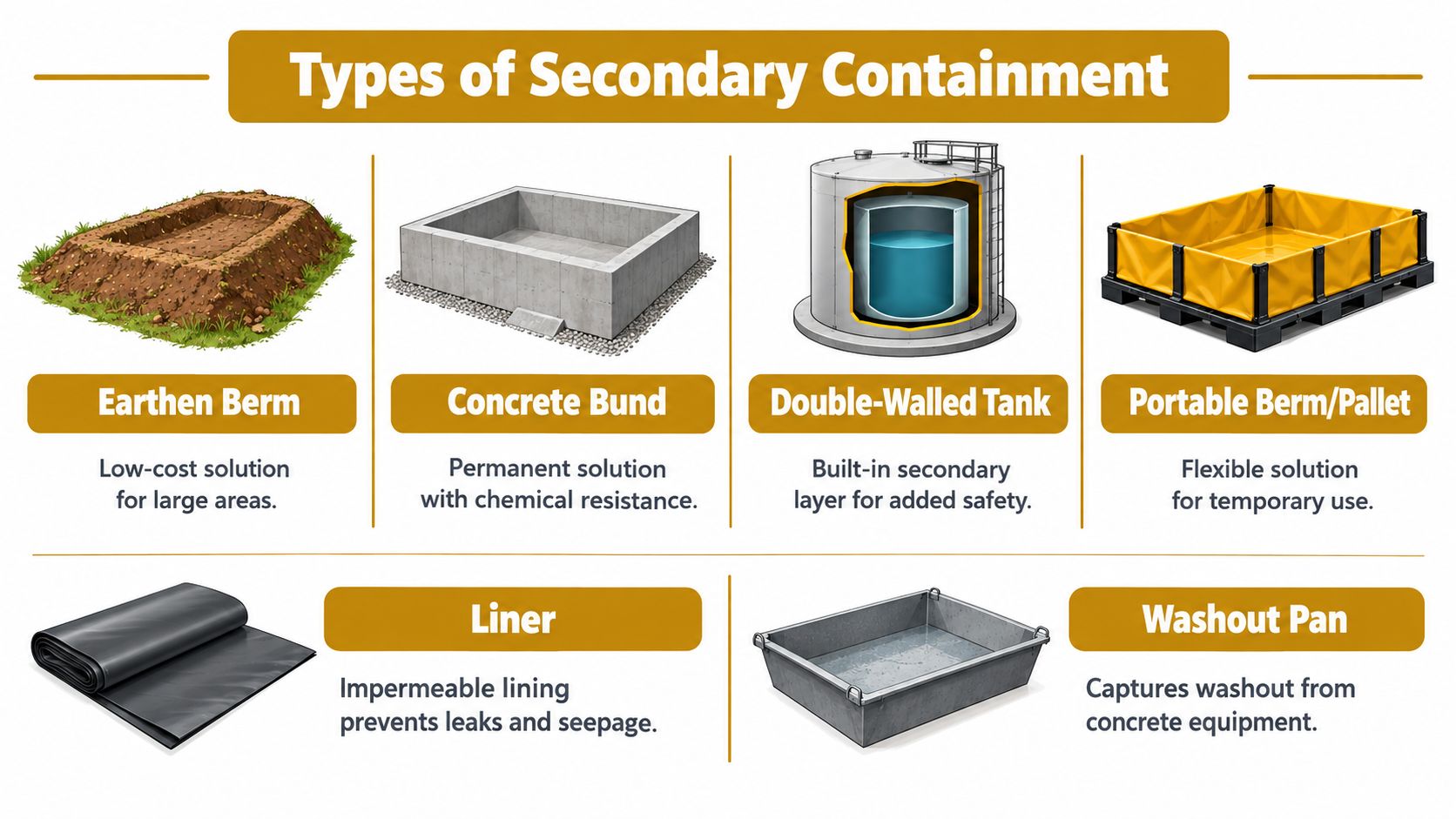
- Earthen berms work for large outdoor areas where a broad perimeter makes sense. They can be practical, but performance depends heavily on lining, upkeep, and site conditions.
- Concrete bunds or curbed pads are common where equipment stays put and repeated use justifies a rigid structure.
- Double-walled tanks build the backup layer into the storage system itself.
- Portable berms and spill pallets fit shorter-duration work, mobile operations, and changing site layouts.
- Liners are often what make a berm or pit function as containment rather than just a low wall.
- Washout pans and containers are purpose-built for temporary concrete slurry and rinse water control.
Material choice changes the answer
A containment system that works for one liquid may be a poor match for another. The stored material, exposure time, and site abuse level all shape the choice.
A few field realities matter:
- Flexible liners are useful where portability matters, but they need decent subgrade and protection from puncture.
- Rigid steel pans handle rougher treatment better on active construction sites, especially where forks, hose drag, and uneven staging areas are normal.
- Concrete structures are durable for permanent installations, but they aren't the quick answer for short-term work.
- Plastic pallets can be fine for certain drum storage uses, though they may not be ideal where heavy traffic or sharp contact is routine.
A containment product can be technically compatible and still be operationally wrong for the site.
Choosing a Secondary Containment Type for Your Site
| Containment Type | Best Use Case | Key Strength | Watch Out For |
|---|---|---|---|
| Earthen Berm | Large outdoor storage area | Covers broad footprint | Often needs a liner and regular upkeep |
| Concrete Bund | Permanent tank or process area | Durable and stable | Less flexible when the site changes |
| Double-Walled Tank | Dedicated liquid storage | Built-in backup layer | Doesn't solve every transfer-area risk |
| Portable Berm | Temporary setup or mobile work | Fast deployment | Vulnerable to setup errors and surface issues |
| Spill Pallet | Drums and small containers | Simple drip and leak capture | Limited fit for larger washout activity |
| Washout Pan | Concrete rinseout and slurry control | Purpose-built for temporary washout | Needs proper placement, cover, and disposal planning |
Where washout pans fit
Temporary concrete work has a different rhythm than a fixed fuel yard. You need something deployable, easy to place, and strong enough for rinseout and slurry collection. That's where rental washout containment makes sense.
For example, Reborn Rentals offers steel washout pans and containers sized for temporary concrete washout activity, including options listed at approximately 310 gallons and approximately 441 gallons based on its published product details. On real jobs, that kind of equipment can be a practical choice when you need a designated containment point without building a permanent bund.
The key is using rental gear for the use case it's meant for. A washout pan is a good answer for temporary concrete operations. It isn't automatically the answer for every regulated liquid storage scenario on site.
How to Size Secondary Containment and Calculate Capacity
A crew sets a washout pan by the pour, sees plenty of wall height, and gets back to work. Then a storm rolls through overnight, the pan takes on rain, hardened residue steals some of the usable space, and the next rinseout puts material over the edge. The mistake started earlier. The pan was judged by appearance instead of actual holding capacity.
That is why sizing secondary containment is a capacity-plus-weather job, not a quick visual check.
For SPCC-covered oil storage, the basic idea is straightforward: size the containment for the full contents of the largest single container in the area, then account for rain if the containment is exposed. Other rule sets can change the details. RCRA units may bring compatibility and design expectations tied to the waste. State and local rules may be stricter about freeboard, stormwater management, or what materials can contact the waste stream. On a real jobsite, those overlapping rules affect both the number you size to and the material you choose.
A simple way to size it in the field
Start with the question that matters most: if one container fails all at once, where does that full volume go?
Then walk through these checks:
- Find the largest single container inside the containment area.
- Use its full capacity, not its usual fill level.
- Add space for rainwater if the system is open to weather.
- Subtract lost volume from slopes, supports, pumps, curbs, debris, or hardened buildup.
- Confirm the liquid would stay inside under real site conditions, including uneven ground and active use.
Shared containment can still work. As noted earlier in the SPCC discussion, you do not always need a separate structure for each container. The shared area still has to be large enough for the worst single-container release, plus weather exposure if rain can enter.
Why weather changes the answer
A containment wall only helps if there is empty space left when the release happens.
That point gets missed with temporary equipment. An open-top berm, washout pan, or portable basin may look oversized on day one and undersized three days later after rain, slurry, and residue build up. A cover or lid can reduce rain entry, but only if crews keep it closed and the cover is still in good shape.
Secondary containment works like a bucket under a leak. If rain is already filling the bucket, you have less room left for the leak.
Worked example with a rental-ready washout pan
Temporary concrete work is a good example because sizing is not only about regulation. It is also about production pace, haul-off timing, and weather exposure.
Say the crew rents a washout container listed at approximately 310 gallons. That number is the starting point, not the answer. If slurry buildup, chunks of hardened concrete, or leftover water are already taking up space, the remaining capacity is lower than the catalog number. If the pan sits uncovered during rain, usable freeboard drops again.
Now add the rule overlap. For concrete washout, you may not be working under the same sizing logic used for SPCC oil storage, but you still need to keep material contained, prevent overflow, and use a pan material that can handle the alkaline washout. That is where capacity and material choice meet. A unit that is big enough on paper but poorly matched to the waste stream or site conditions can still fail in practice.
Larger pans give room, not immunity
A pan listed at approximately 441 gallons gives the crew more operating space, which is helpful on busy placements or when pickup is not immediate. It does not remove the need to calculate usable capacity.
Check the conditions:
- expected rinseout volume during the work window
- rain exposure before service or removal
- residue that reduces interior volume
- ground conditions that can tilt the unit and shift liquid to one side
- whether the pan material is suitable for the liquid and solids being placed into it
That last point matters more than many crews expect. Oil, fuel, solvent waste, and concrete slurry do not all ask the same thing from the containment material. Steel, poly, coated fabric, and lined concrete each have trade-offs in chemical resistance, puncture risk, portability, and cleanup effort.
Hidden volume losses are common
Containment calculations go wrong in small, ordinary ways.
Support blocks, internal braces, hose runs, pumps, residue, and stray materials stored inside the area all eat into hold volume. In portable systems, poor setup can do the same thing. A berm that is racked on uneven ground or a pan that is not sitting level may have less usable depth than it appears to have from one side.
A good field check is simple: look at what is already inside the footprint, then ask how much open volume is left for a sudden release plus weather.
Use engineering judgment when the setup gets complicated
Some jobs need more than a quick field estimate. That includes regulated oil storage, mixed waste streams, unusual layouts, sensitive drainage paths, and sites where state rules add stricter design expectations.
In those cases, use the site plan, the design basis, manufacturer information, and qualified engineering support as needed. For busy contractors, the practical lesson is clear. Size containment for the release, the weather, and the usable volume left on the day something goes wrong.
Inspection Maintenance and Everyday Best Practices
A containment system that was compliant on delivery can fall out of compliance fast if nobody manages it. Most failures in the field aren't dramatic product failures. They're routine neglect.
Placement and setup habits that prevent trouble
Start with the ground. Place portable containment on a flat, stable surface where the unit won't rack, twist, or settle unevenly. If the setup is on rough terrain, crews should expect more wear points and a greater chance of poor drainage or edge stress.
Keep access practical. If a driver, pump operator, or laborer can't use the containment area without stepping over obstacles or stretching hoses too far, somebody will improvise. Improvised washout usually becomes off-target washout.
A few day-one habits pay off:
- Stage it early: Put washout and spill-control equipment in place before trucks, pumps, or fueling activity begin.
- Protect the footprint: Keep scrap, rebar, and sharp debris out from under liners, pans, and portable berms.
- Leave working room: Give crews enough space to approach, rinse out, and exit without clipping walls or edges.
What to inspect during active use
Short checks beat heroic cleanup later. During active work, crews should look for seam damage, bent edges, puncture points, overflow risk, and accumulated residue that's shrinking usable space.
Use a simple rhythm:
- Before use: confirm the container is empty enough, stable, and positioned correctly.
- During use: watch fill level and keep washout inside the designated unit.
- After use: check for cracks, leaks, standing contaminated water where it shouldn't be, and any signs the setup shifted.
If rain is in the forecast, treat open containment as a live issue, not tomorrow's problem.
Rainwater, covering, and disposal discipline
Uncovered containment fills up when nobody's looking. That's one reason covers and watertight lids matter on temporary washout setups. Even so, crews need to close them consistently and check that they're still sealing properly after repeated use.
Collected liquids and hardened concrete residue also need a plan. Don't wait until the container is overloaded and then scramble for disposal. Schedule haul-off or replacement before capacity gets tight, especially during periods of repeated pours.
Documentation helps too. Inspectors often care whether the site can show that someone was watching the system. A short log, delivery record, service note, or internal inspection checklist can make your containment program look managed instead of improvised.
Common Pitfalls and How Rental Washout Containment Solves Them
The most common containment mistakes are surprisingly ordinary.
Some teams undersize for rain. Others assume a berm that works for one liquid automatically covers every regulated material on site. Some place containment on rough, unstable ground and then act surprised when liquid pools where it shouldn't. And plenty of crews leave washout containers uncovered until a storm proves why that was a bad idea.
The fix usually isn't complicated. Match the containment type to the material and duration. Check the largest container or expected washout load. Account for weather. Use compatible materials. Keep the unit serviceable, covered when appropriate, and on a pickup schedule that prevents overfill.
Rental washout containment solves a specific field problem well. It gives contractors a ready-to-deploy place to capture slurry and rinse water without constructing a permanent system for a temporary operation. That's especially useful on active pours, renovation work, civil projects, and short-duration jobs where site conditions change fast.
It also helps with consistency. A designated washout pan or container gives the crew a clear target, which usually beats vague verbal instructions and a hope that everyone remembers where to rinse out. Before choosing one, check the listed capacity, site access, terrain, cover options, and delivery timing. Then compare that against your actual work plan, not the optimistic version of it.
The right next step is simple. Identify your largest containment demand, think through rain exposure, and look at the site layout where the unit will sit. Once those are clear, the right containment choice usually gets a lot easier.
Reborn Rentals provides rental washout pans and containers for concrete work, with published capacities, delivery coordination, and clear daily pricing so crews can set up designated slurry containment without building a permanent system. If you need a practical washout option for an upcoming pour or renovation job, visit Reborn Rentals and check the available container sizes, logistics, and contact options before the crew mobilizes.