
Stormwater BMPs for Concrete Washout: Keeping Colorado Commercial Sites Compliant
Key Takeaways
- Colorado Department of Public Health and Environment (CDPHE) General Permit COR400000 prohibits concrete wastewater discharges into municipal separate storm sewer systems (MS4) or state waters without exception.
- Concrete slurry maintains a pH of 12.0 to 13.0, making an uncontained washout an Illicit Discharge subject to stop-work orders and municipal fines.
- Discharge method determines container selection: low-profile 14-inch pans allow pump truck hoppers to dump directly without ramps, while 24-inch pans provide volume for multi-truck structural slabs.
- Makeshift cardboard and pit-and-poly systems fail under heavy aggregate loading and hydrostatic pressure, creating subsurface Infiltration liabilities.
- Swapping full watertight steel containers establishes an auditable chain of custody that satisfies municipal inspectors and protects project schedules.
Table of Contents
- Executive Summary: Colorado Concrete Washout Compliance
- Regulatory Framework: CDPHE and EPA Mandates Across the Front Range
- The Failure Modes of Makeshift Washout Controls
- Equipment Selection: Matching Containment to Discharge Geometry
- GC Subcontractor Control: Preventing Illicit Discharges
- Turnaround Logistics and Compliance Documentation
- Frequently Asked Questions
- Get Compliant Containment on Site
Executive Summary: Colorado Concrete Washout Compliance
Concrete washout containment on Colorado commercial projects is governed by strict water-quality regulations enforced by both municipal stormwater inspectors and state regulators. When concrete tools, pump hoppers, and ready-mix chutes are washed out, the resulting slurry carries suspended solids, chemical admixtures, and dissolved calcium hydroxide. This mixture typically yields a caustic pH between 12.0 and 13.0—comparable to household ammonia or liquid drain cleaner.
Allowing high-pH water to escape containment breaches federal Clean Water Act provisions and state environmental permits. For a general contractor superintendent managing half a dozen subcontractors across foundation, structural flatwork, and exterior civil packages, washout control is an active operational liability. Compliance requires an engineered, watertight BMP (Best Management Practice) that contains liquids and solids, resists puncture from heavy aggregate, and can be cleanly serviced before capacity limits are exceeded.
Regulatory Framework: CDPHE and EPA Mandates Across the Front Range
In Colorado, stormwater runoff on construction sites disturbing one or more acres is regulated under the CDPHE Colorado Discharge Permit System (CDPS) General Permit for Stormwater Discharges Associated with Construction Activity (Permit No. COR400000). Commercial sites must formulate and maintain an active Stormwater Pollution Prevention Plan (SWPPP). Under this permit, concrete washout wastewater cannot be discharged to the ground, into groundwater through an unlined pit, or into stormwater conveyances.
Federal Environmental Protection Agency (EPA) National Pollutant Discharge Elimination System (NPDES) guidelines mirror these rules. Any discharge of concrete wash water into a curb inlet, roadside ditch, culvert, or storm drain constitutes an Illicit Discharge. Municipal Separate Storm Sewer System (MS4) entities along the Front Range—including Denver, Aurora, Lakewood, Fort Collins, and Colorado Springs—maintain independent enforcement authority. Local municipal inspectors frequently issue immediate stop-work orders, cite general contractors, and levy per-day fines when concrete wastewater touches the subgrade or threatens public drainage networks.
A compliant site must demonstrate complete containment. Poured concrete relies on chemical Hydration to set, leaving residual paste inside mixer drums and pump lines that cannot be permitted to wash across an Impervious Surface or soak into native soils. The mandate requires dedicated, hardened facilities that isolate caustic liquids until they dry or are hauled away for offsite processing.
The Failure Modes of Makeshift Washout Controls
Subcontractors frequently propose makeshift washout pits or temporary assemblies to cut short-term expenses. On an active commercial jobsite, these improvised setups present significant failure risks:
- Earthen Pits Lined with Polyethylene Sheeting: A traditional dug pit lined with 10-mil plastic fails mechanically when concrete pump clean-out balls, vibrator heads, or chute shovels puncture the liner. Liquid concrete effluent rapidly leaches through the tear, resulting in subsurface Infiltration. When groundwater tables are shallow—common along the South Platte River basin—this directly contaminates local aquifers.
- Cardboard and Corrugated Boxes: Pre-formed corrugated cardboard containers with interior plastic bladders are easily compromised. Wet Colorado spring snowstorms or summer cloudbursts saturate the exterior corrugated framing, causing sidewall blowouts under the hydrostatic pressure of wet slurry.
- Hay Bale Corrals: Stacking straw bales on plastic sheeting creates a porous perimeter. Slurry easily breaches seams between adjacent bales, sending high-pH water traveling toward the nearest storm inlet.
- Cleanup Complications: Once a temporary pit or cardboard box collapses, site teams face costly manual remediation. Remediation requires an excavator to scrape out contaminated mud, followed by hazardous disposal testing before site backfilling can proceed.
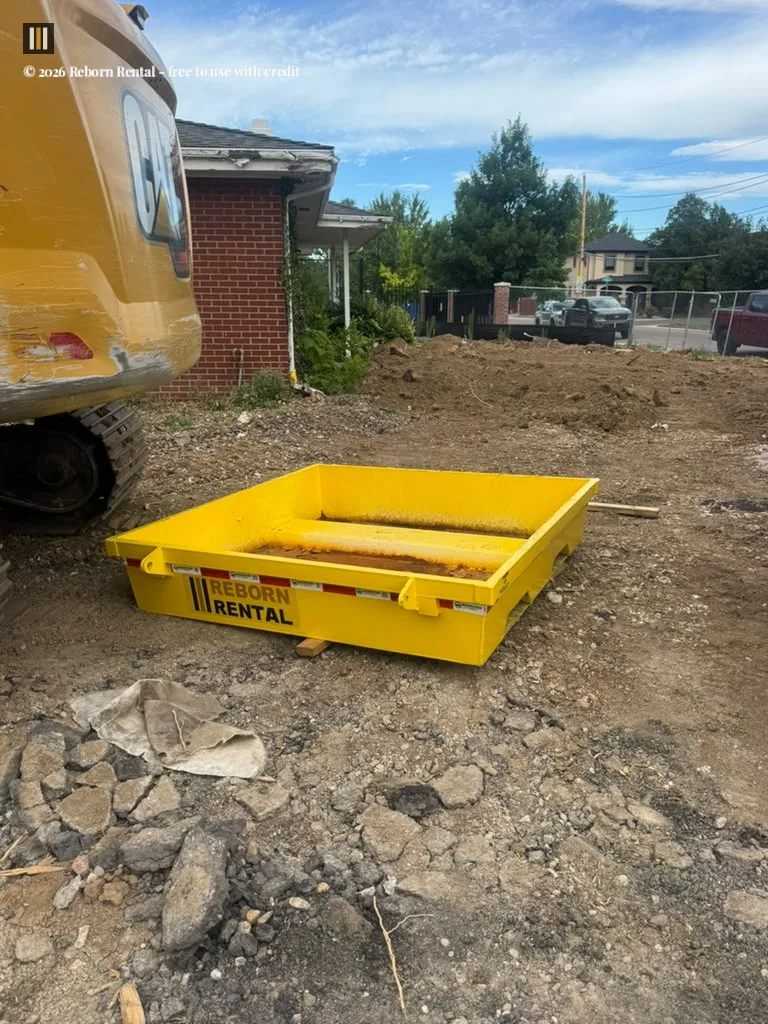
By contrast, heavy 10-gauge watertight steel pans eliminate puncture, tearing, and sidewall collapse. They keep the site compliant, protect local drainage, and pass municipal stormwater inspections.
Equipment Selection: Matching Containment to Discharge Geometry
Selecting washout hardware begins with evaluating the discharge equipment your subcontractors bring to the site. A single pan design does not suit every concrete placement operation. Matching container dimensions and wall heights to concrete pump configurations and ready-mix chutes avoids spills and containment failure.
When planning your site logistics, superintendents should evaluate these two primary containment profiles:
1. The 310-Gallon Low-Profile Pan (Pump Hoppers and Tight Access)
Concrete pump trucks—both line pumps and large boom pumps—feature low rear hoppers designed to receive concrete from ready-mix trucks. Cleaning out a pump hopper requires washing out aggregate and lubricating slurry straight down. Standard high-walled bins sit too tall to clear the rear hopper clean-out gate, forcing pump operators to use unauthorized ground areas or build elevated ramps.
The 310-gallon Small washout pan solves this clearance problem. Measuring 72 inches wide by 72 inches long by 14 inches high, it provides an ultra-low target. A boom pump or line pump can back up and drop its hopper discharge directly into the container without custom earthworks, ramps, or auxiliary chutes. Its footprint also fits confined infill sites in downtown Denver, Golden, or Boulder, where alleyways and tight setbacks rule out larger waste structures.
Rental rates for the 310-gallon pan are structured simply: $26 per day, $140 per week, or $532 per 4-week cycle, providing cost control on projects with long durations and varied pour schedules.
2. The 441-Gallon Standard Pan (High-Volume Ready-Mix Washout)
For structural deck placements, mass foundations, and continuous flatwork pours involving multiple ready-mix trucks, capacity is the primary operational factor. Ready-mix chute washouts produce 5 to 10 gallons of rinse water per truck alongside residual aggregate and paste.
The 441-gallon Large washout pan features a 72-inch by 72-inch footprint with a 24-inch sidewall height. It easily clears ready-mix swing chutes while providing 42 percent more storage capacity than the low-profile unit. This extra capacity allows high-volume projects to wash out multiple pours before triggering an exchange, avoiding jobsite delays from full pans.
The 441-gallon unit rents for $29 per day, $175 per week, or $588 per 4-week billing period. Contractors can rent concrete washout pans on flexible terms with no long-term contract required.
GC Subcontractor Control: Preventing Illicit Discharges
General contractors bear the environmental permit liability on Colorado commercial jobsites. If a concrete pumping subcontractor washes a slick line into an unprotected curb gutter, the municipality issues the violation to the general contractor named on the SWPPP permit. Maintaining strict sub oversight is critical to managing compliance risk.
To keep subs aligned and operations compliant, implement these jobsite procedures:
- Siting and Physical Placement: Position steel washout pans on level grades at least 50 feet away from storm drains, drainage channels, and sensitive environmental zones. Never place washout containers behind material stockpiles or in corners where drivers cannot see or reach them.
- Inlet Protection Integration: Even with steel pans on site, install standard Inlet Protection (curb socks, rock bags, or drop-inlet fabric inserts) on any storm drains downhill from the concrete washing station. This provides a physical safety net if a sub accidentally spills slurry outside the pan perimeter.
- Pre-Pour Coordination Meetings: Include concrete washout protocols in pre-pour subcontractor alignments. Direct ready-mix dispatchers and pump supervisors to the specific pan location before wheels roll onto the site. Ensure operators know that cleaning out on subgrades, aggregate bases, or unapproved spots brings an automatic jobsite backcharge.
- Monitor Freeboard Requirements: Colorado stormwater guidelines require continuous freeboard (minimum 4 inches of clear sidewall) to prevent container overflow during sudden rainfall. Train your field engineers and site superintendents to inspect pan fill lines daily and order swaps well before pans reach capacity.
Turnaround Logistics and Compliance Documentation
Maintaining compliance over multi-month construction schedules requires efficient hauling logistics. A washout pan that sits full for days creates an immediate spill hazard and stops future concrete placements. Establishing a defined swapping protocol keeps work moving and insulates your project from municipal enforcement.
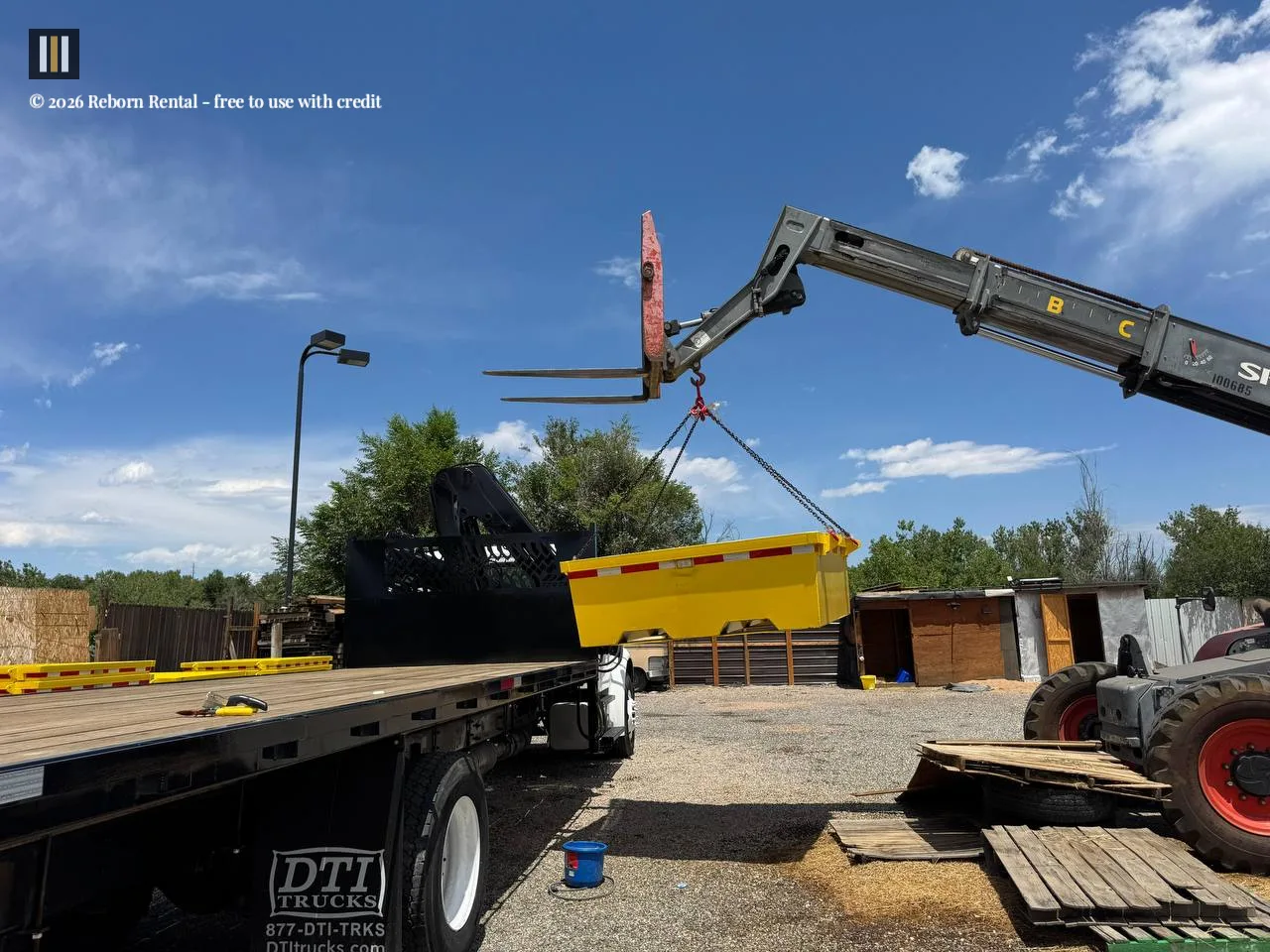
Reborn Rental handles container logistics across the entire Colorado Front Range. When a pan reaches approximately 75 percent capacity, your team schedules a swap. We drop an empty, clean pan and winch the full container onto a specialized flatbed for transport.
Our logistics and delivery rates follow a transparent pricing schedule:
- Inside the C-470 Loop: Pan swap-and-haul service is a flat $300 per pan.
- Outside the C-470 Loop: Service is billed at the flat $300 rate plus $8.99 per mile beyond the loop (covering Longmont, Boulder, Loveland, Greeley, Fort Collins, and Colorado Springs).
- Long-Haul Deliveries: Sites beyond 200 miles receive custom transport quotes via email.
- Transparent Billing: Transparent rates are documented on our published fees and surcharges page, eliminating hidden environmental or disposal line items.
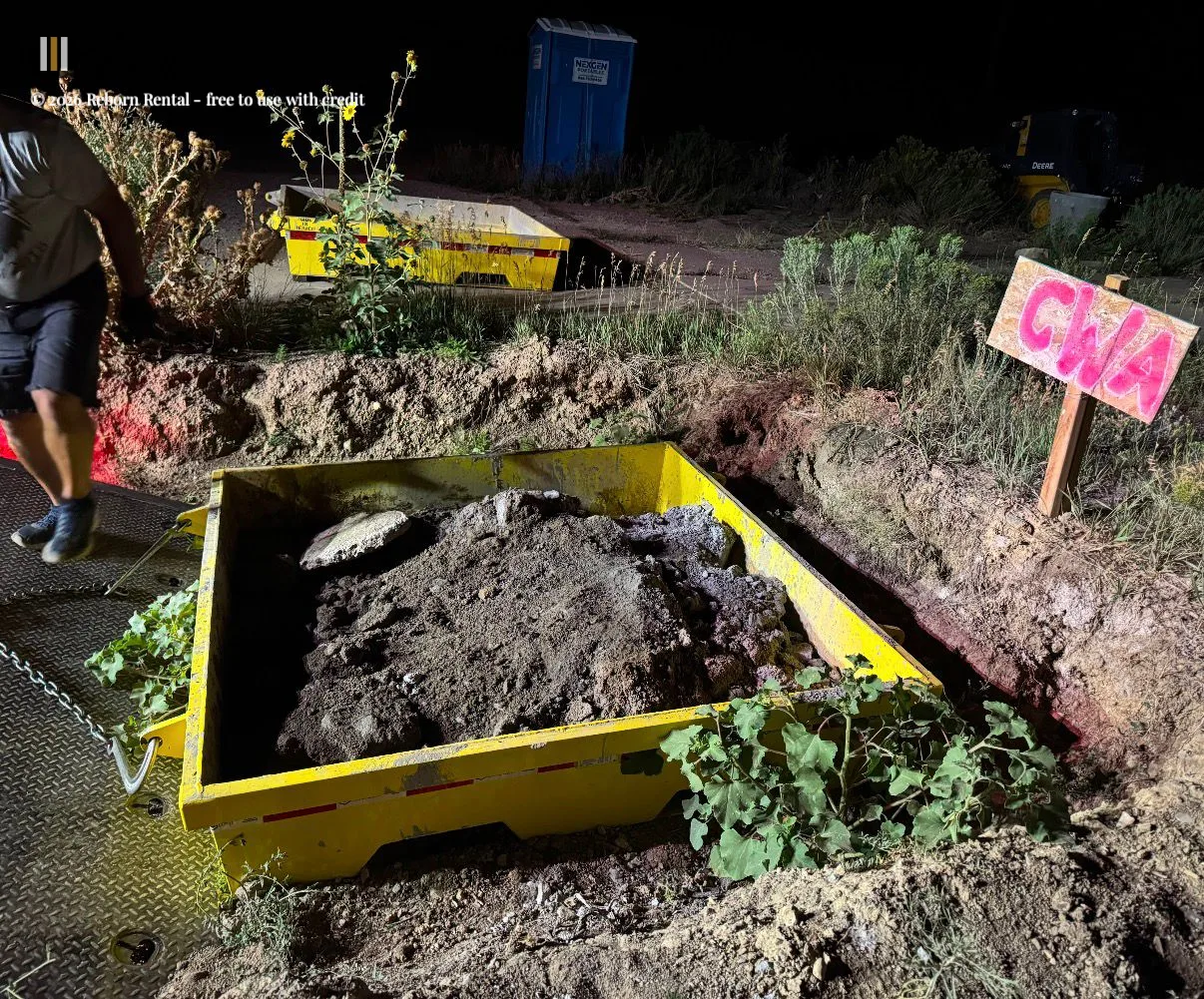
When the hauler winches a full container away, they leave behind an auditable electronic or paper record. Filing these swap records in your onsite stormwater management log provides clear proof of responsible disposal when CDPHE or local municipal inspectors audit your environmental documentation.
Dispatch operates Monday through Friday from 9:00 AM to 6:00 PM Mountain time. For contractors moving equipment during weekend road closures or early night shifts, Reborn Rental offers after-hours self pickup and drop-off access with advance notice for a $35 fee. Payment is processed smoothly through major credit cards, ACH, Apple Pay, Google Pay, or Klarna; cash payments are not accepted.
Frequently Asked Questions
What are the baseline EPA and CDPHE requirements for concrete washout containment on Colorado commercial jobsites?
Both the EPA and CDPHE require complete containment of concrete slurry, mixer wash water, and chemical additive residues under the Clean Water Act and Colorado CDPS General Permit COR400000. Facilities must be 100 percent watertight, structurally sound, and monitored to maintain sufficient freeboard so wash water never leaches into soil or escapes into municipal storm networks.
How can a general contractor prevent concrete subcontractors from creating illicit discharges into storm inlets?
General contractors should mandate the use of dedicated watertight steel washout pans in subcontractor scope agreements, locate pans in easily accessible spots at least 50 feet from water conveyances, install local storm inlet protection, and conduct brief mandatory pre-pour logistics alignments with all concrete pump operators and ready-mix drivers.
How does swapping full washout pans maintain compliance documentation across long project timelines?
Scheduling a professional concrete washout swap and disposal service generates dated transport manifests for every removed container. Superintendents file these receipts directly into the site SWPPP binder, providing water quality inspectors with verification that heavy caustic slurry was hauled offsite cleanly rather than buried or dumped on project grounds.
What is your cancellation policy?
Cancellations are free up to 5 business days before your scheduled drop date; after that window, a fee of 50 percent of the reservation (excluding delivery charges) applies.
How far do you deliver from Denver?
We deliver throughout Colorado. Pricing is a flat $300 inside the C-470 loop, $8.99 per mile beyond C-470, and custom long-haul quotes for sites over 200 miles out.
Can I self-pick-up or self-drop-off on a weekend or outside working hours?
Yes, with advance notice. An after-hours fee of $35 applies for pickups or returns scheduled outside normal business hours.
How can I track my delivery?
Contact our support team with your assigned Order ID, and we will provide the live location of the delivery driver.
What payment methods do you accept?
We accept all major credit cards, ACH transfers, Apple Pay, Google Pay, and Klarna. We do not accept cash payments.
What are your working hours?
Our standard operating hours are Monday through Friday, 9:00 AM to 6:00 PM Mountain time.
Do you offer discounts for bulk orders?
Yes. If your project requires more than 20 units or runs on an ongoing timeline of 6 months or longer, contact our sales department for an enterprise quote.
Get Compliant Containment on Site
Not sure which pan fits your setup? Call us at (720) 734-9337—we will talk it through and quote you on the spot.