
Steel Pans vs. Cardboard Bins: Which Concrete Washout Solution Wins?
Contents
- Key Takeaways
- Choosing Your Setup: Pan Capacity and Discharge Height First
- The Contenders: Heavy-Gauge Steel Pans vs. Corrugated Kits
- Trade-Off Comparison: Steel Washout Pans vs. Cardboard Bins
- Structural Integrity Under Colorado Weather Cycles
- Moving Washout Containment: Wet Slurry Dynamics and Rigging
- Environmental Compliance and Spill Risks on Site
- When Corrugated Washout Bins Make Practical Sense
- The Case for Dedicated Local Steel Pan Service
- Frequently Asked Questions
- Ready to Switch? Get a Live Quote
Key Takeaways
- Corrugated cardboard washout containers rely on thin poly liners; puncture or moisture saturation destroys their structural capacity on active jobsites.
- Welded watertight steel pans handle freeze-thaw cycles, wet slurry weight, and sudden Front Range precipitation without wall blowouts or ground contamination.
- Once filled with wet washout slurry, moving cardboard bins with telehandlers or forklifts frequently results in ripped corners, dropped bottoms, and unplanned cleanup.
- Steel pans offer integrated rigging points and fork pockets engineered for loaded relocation across uneven rough-grade site conditions.
- For projects within the Denver metro and Front Range corridor, on-demand swaps eliminate storage of torn bins, disposal coordination hassles, and compliance inspection failures.
Choosing Your Setup: Pan Capacity and Discharge Height First
Before evaluating materials, look at how your equipment discharges concrete rinse water. A containment system fails immediately if your pump chute or mixer cannot reach it without backing onto unstable ramps or splashing against exterior walls.
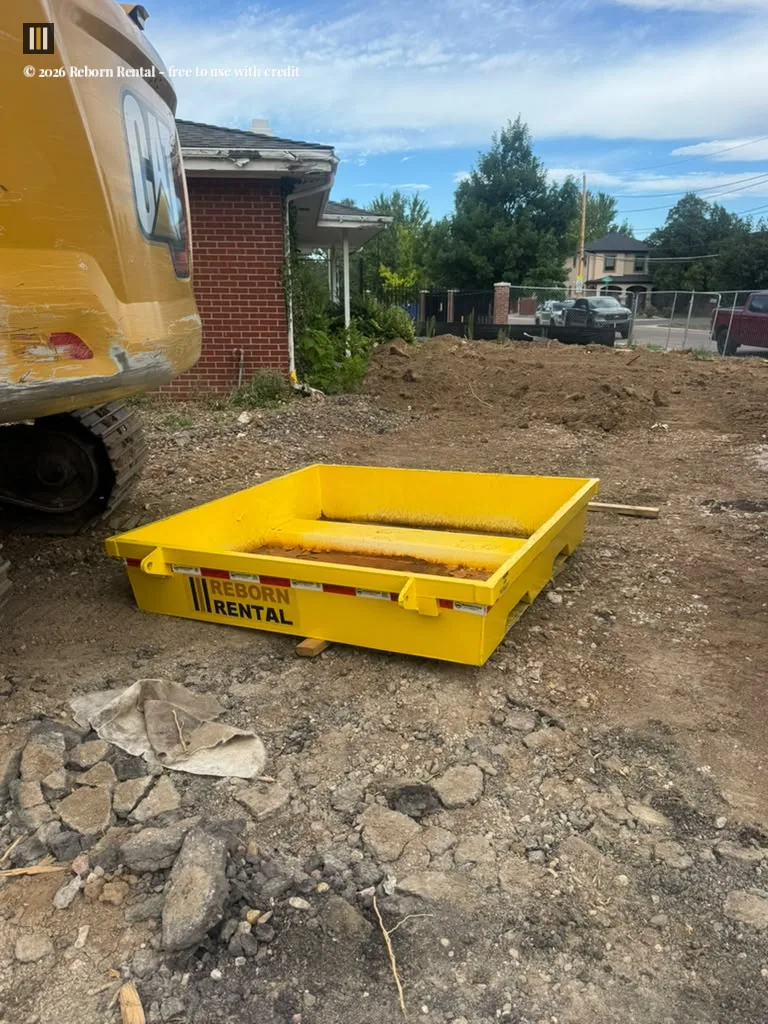
For low-clearance operations, rear-hopper mixer cleanout, and line pumps, pan height determines whether you can wash out directly into the vessel. The 310-gallon Small washout pan measures 72 inches wide by 72 inches long with a 14-inch wall height. At 14 inches, ready-mix chutes and pump truck hoppers discharge straight into the pan without requiring earth ramps, timber cribbing, or pits. When running larger pours with multiple trucks where volume accumulates quickly, the 441-gallon Large washout pan maintains the same 72-by-72-inch footprint but extends to a 24-inch wall height. That added depth provides extra capacity for high-volume slab placements before requiring an exchange.
The Contenders: Heavy-Gauge Steel Pans vs. Corrugated Kits
Contractors operating along the Front Range generally weigh two containment categories to satisfy their SWPPP commitments: portable corrugated cardboard boxes lined with plastic film, or rigid, heavy-gauge steel washout pans.
Cardboard washout systems arrive flat-packed on a pallet. A crew member unfolds the corrugated box, tapes or folds the bottom flaps, and inserts a 6-mil to 10-mil polyethylene liner sleeve over the top edge. The promise is low initial unit cost and lightweight delivery. Once assembled, the box sits directly on your subgrade or compacted base course waiting for truck chute washdowns.
Steel pans arrive pre-assembled and water-tested. Built from heavy-gauge plate steel with continuous exterior welds, these units function as sealed, self-supporting containment structures. They feature reinforced lifting eyes, integrated fork pockets, and smooth internal sidewalls designed to resist both mechanical puncture from chute scrapers and hydraulic pressure from wet concrete slurry.
Trade-Off Comparison: Steel Washout Pans vs. Cardboard Bins
Evaluating jobsite containment requires weighing structural limits against logistical effort. The following matrix outlines how these two systems compare under field conditions.
| Feature / Performance Factor | Heavy-Gauge Steel Washout Pan | Corrugated Poly-Lined Kit |
|---|---|---|
| Watertight Integrity | Fully welded steel seams; 100% leak-tested containment. | Relies entirely on thin plastic liner; vulnerable to tears. |
| Rain and Snow Performance | Unaffected by precipitation or standing surface water. | Corrugated fiber degrades when external walls get soaked. |
| Freeze-Thaw Resistance | Absorbs slurry expansion without sidewall rupture. | Ice expansion easily splits corners and punctures liners. |
| Rigging and Relocation | Built-in fork pockets and crane pick eyes for loaded moves. | Rarely relocatable once loaded; bottom failure risk is high. |
| Chute and Equipment Impact | Withstands scraper contact, chute drops, and shovel strikes. | Shovels, chute edges, and rebar scraps easily tear liner. |
| Site Footprint Options | 72″x72″x14″ (310 gal) or 72″x72″x24″ (441 gal). | Varies; typical sizes range from 36″x36″ to 72″x72″. |
| Disposal Logistics | Full-service scheduled swap; waste hauled offsite cleanly. | Subcontractor must break down, rig, transport, or landfill. |
Structural Integrity Under Colorado Weather Cycles
Colorado jobsites subject temporary structures to extreme weather swings. A morning pour might start under direct sunshine, experience a heavy afternoon downpour, and drop below freezing overnight. Corrugated paper products absorb moisture from both the atmosphere and the surrounding soil. When rain soaks the exterior cardboard shell, the material loses its structural compressive strength rapidly.
Even if the internal poly bag holds liquid initially, external water weakens the box corners. Slurry weight pushes outward against softened fiberboard, leading to bulging walls or outward blowouts. During spring months along the Front Range, melting snow creates standing water around washout areas. If a cardboard container sits in pooling water on an unpaved subgrade, the bottom panel delaminates within hours.
Freeze-thaw cycles compound this vulnerability. Concrete wash contains free water that expands roughly 9% upon freezing. Rigid steel pans are designed to absorb that hydraulic expansion along tapered sidewalls without splitting. In contrast, when liquid within a cardboard box freezes, jagged ice crystals easily pierce thin polyethylene membranes. When temperatures rise the following afternoon and the ice melts, caustic alkaline runoff escapes directly into the soil.
Moving Washout Containment: Wet Slurry Dynamics and Rigging
Can you move cardboard washout containers once they are filled with slurry? In practice, trying to move a full cardboard washout box is among the quickest ways to cause an accidental discharge on a jobsite.
Concrete wash slurry is dense, weighing roughly 130 to 140 pounds per cubic foot. A partially filled box holding even 150 gallons represents nearly a ton of deadweight. Cardboard boxes lack integrated structural pick points. Some manufacturers include nylon sling kits designed to slip underneath the cardboard floor. However, when a telehandler or crane lifts the assembly, the concentrated upward force of the straps pinches the weakened cardboard walls together. The hydraulic head pressure of the wet sludge bursts the wet seams, resulting in a dropped load and widespread contamination across your subgrade.
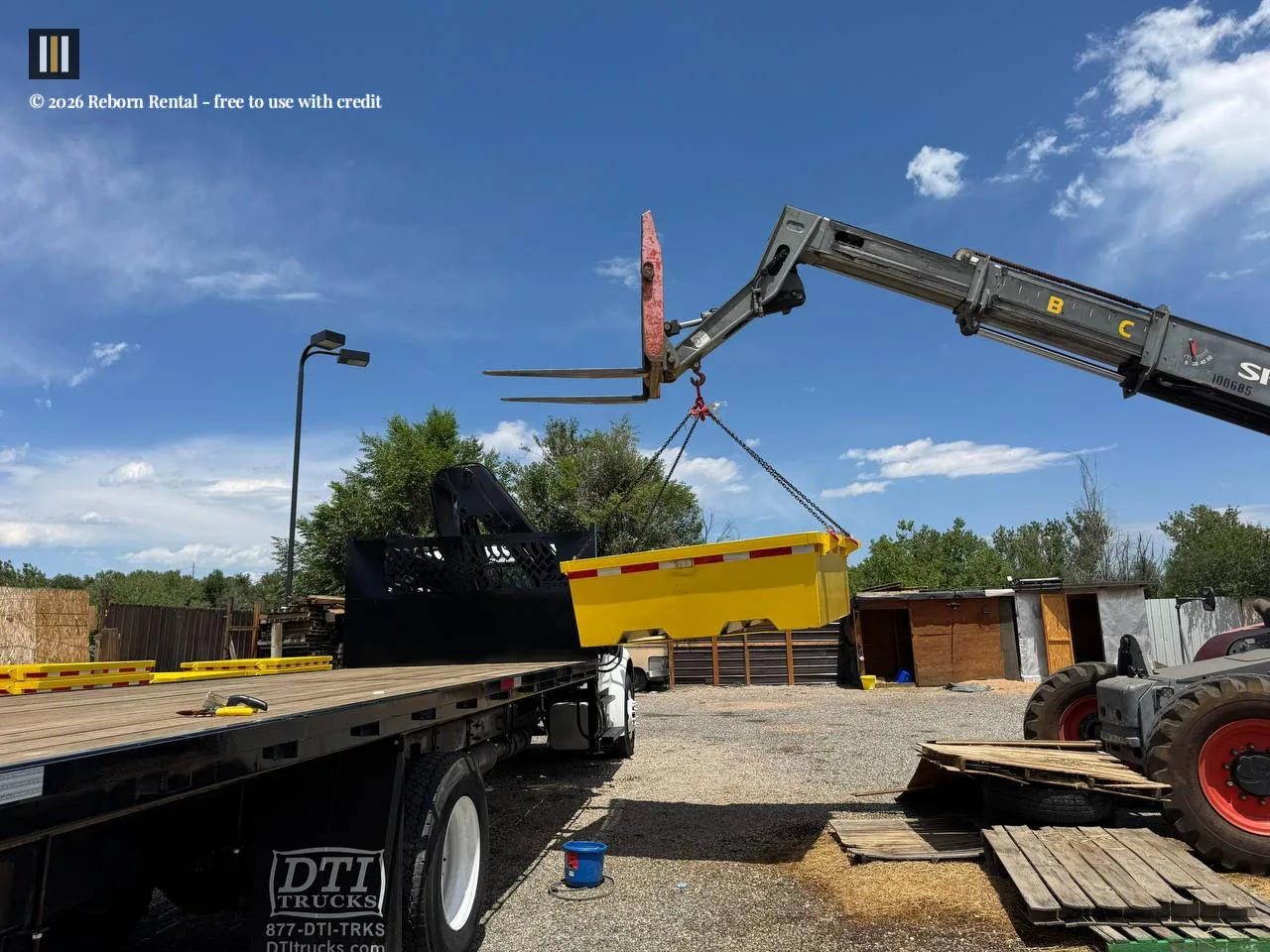
Steel pans eliminate this hazard. Equipped with heavy-wall fork tubes welded directly to the base frame, a telehandler operator can slide forks completely under the pan, lift the load evenly, and transport it across rough access roads without flexing the containment shell. When operating in tight commercial footprints or multi-story structures where a crane hook is required, dedicated corner lifting eyes allow four-way chain rigging. This allows project teams to position containment directly adjacent to a boom pump or upper deck pour and hoist it back to grade safely once the pour concludes.
Environmental Compliance and Spill Risks on Site
Runoff from concrete washout operations carries a pH level between 12 and 13, matching the caustic alkalinity of liquid drain cleaner or bleach. This high pH is driven by the chemical reaction of cement hydration. Under Colorado Department of Public Health and Environment (CDPHE) discharge permits and EPA Construction General Permits, introducing this alkaline wastewater into the storm sewer, roadside ditches, or native soil constitutes an illicit discharge.
Inspectors walking your perimeter check BMP (Best Management Practice) installations for signs of leakage, staining, or structural fatigue. When using cardboard containers, maintaining compliance requires constant visual inspection of the liner. Ready-mix drivers rinsing their chute trays frequently use steel scrapers or trowels to dislodge aggregate and paste. A single slip with a chute hook or scraper tears the polyethylene liner against the rough aggregate inside. Because the tear occurs beneath inches of murky slurry, crews rarely notice the leak until the exterior cardboard wall collapses or discolored water leaches out across the gravel pad.
Steel pans eliminate blind punctures. Heavy plate steel resists sharp metal impacts, chute strikes, and accidental shovel hits during aggregate cleanout. The sealed perimeter protects stormwater inlets, ensuring that high-pH wash water remains isolated from surrounding soil until professional removal occurs.
When Corrugated Washout Bins Make Practical Sense
Cardboard washout kits remain on the market because specific, limited operating conditions tolerate their drawbacks. Being transparent about those conditions helps estimators make practical choices for their balance sheets.
A corrugated kit can be an acceptable option under the following constraints:
- Short-Duration, Dry-Weather Pours: If your project involves a one-day pour in mid-summer with zero chance of rain, on a completely flat, covered concrete slab (such as an interior tenant finish).
- Negligible Volume: When washing out only hand floats, wheelbarrows, and a couple of hand tools where total slurry volume does not exceed 20 to 30 gallons.
- Zero Relocation Needed: When the box will be assembled, filled, dried via evaporation additives, and hauled out directly from its exact initial footprint without ever being lifted while containing wet sludge.
- Remote Sites Beyond Delivery Zones: If work takes place far off the beaten path where flatbed delivery logistics are unavailable, carrying a collapsed cardboard kit in the bed of a pickup truck may be the only workable contingency.
For standard production pours, pump sweeps, foundation placements, and multi-truck pours along the Front Range, relying on cardboard invites unnecessary structural and environmental risk.
The Case for Dedicated Local Steel Pan Service
Handling washout on an active site should not require your superintendents to build cardboard furniture, tape down poly sheets, or worry about whether the bottom will drop out during a crane pick. Working with a dedicated Front Range provider keeps concrete crews focused on pouring and finishing slabs rather than managing waste bins.
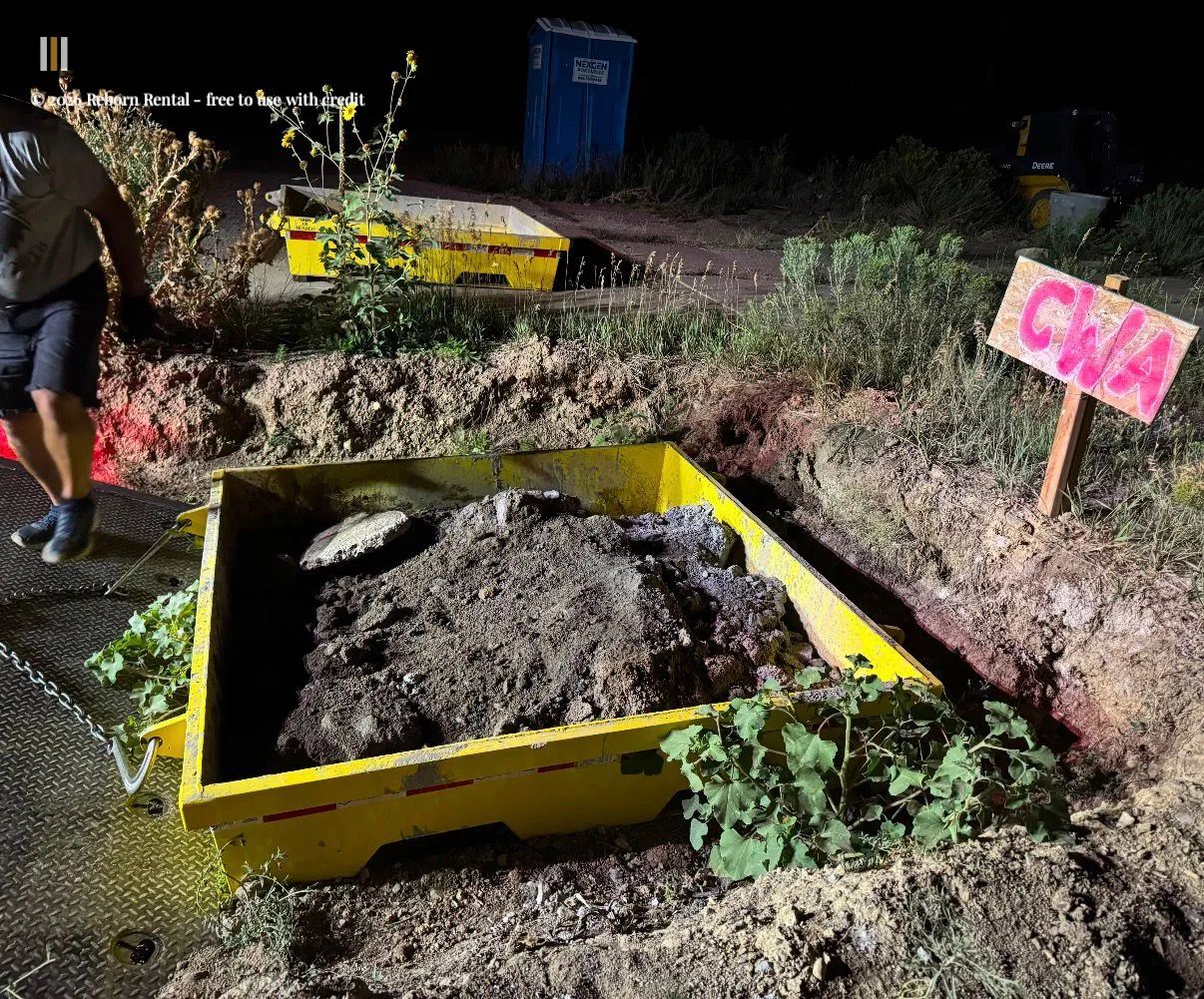
Reborn Rental maintains an inventory of rugged, watertight steel containers engineered specifically for severe jobsite conditions. Through our concrete washout swap and disposal service, we deliver a clean, watertight steel pan directly to your drop point. When the pan reaches capacity, call our team. We arrive with specialized rigging equipment, hoist the loaded container onto our truck, and drop an empty pan in its place to keep your pump trucks and ready-mix deliveries moving.
Our pricing model is simple, transparent, and built without binding long-term contracts. Swap-and-haul service is a flat $300 per pan within the C-470 loop. Beyond C-470, swap transport is priced predictably at $8.99 per mile, with long-haul projects beyond 200 miles quoted directly by email. Daily, weekly, and monthly rates keep equipment costs manageable for any pour schedule:
- 310-Gallon Small Pan: $26 per day | $140 per week | $532 per 4-week cycle.
- 441-Gallon Large Pan: $29 per day | $175 per week | $588 per 4-week cycle.
Whether you need to rent concrete washout pans for a two-day curb placement in Lakewood or coordinate recurring swaps for a commercial project in Denver, equipment is staged locally for rapid dispatch. When your pour finishes, you schedule a pan swap and waste removal, and the containment leaves your site completely.
Frequently Asked Questions
Do cardboard concrete washout boxes hold up in wet weather?
Cardboard washout boxes degrade quickly in wet conditions. Direct rain, melting snow, and contact with saturated soil soften the outer corrugated walls. Once saturated, the cardboard loses the compressive strength required to resist the outward lateral pressure of heavy concrete slurry, frequently leading to seam failure or total wall collapse.
Can you move cardboard washout containers once they are filled with slurry?
Moving a cardboard washout box containing wet slurry is extremely hazardous. Wet washout weighs roughly 130 to 140 pounds per cubic foot. Lifting a loaded box with forklifts or rigging slings concentrates load stresses across soft paper edges, usually tearing the bottom flaps or ripping the poly liner. Steel pans should be used whenever containment must be relocated during a project.
Why do steel pans reduce leak risks compared to poly-lined corrugated kits?
Steel pans feature continuous, heavy-gauge welded seams that provide complete containment without relying on thin plastic membranes. Chute scrapers, shovel blades, and sharp aggregate fragments that puncture 6-mil or 10-mil poly liners cannot breach steel plate, preventing hidden leaks from creating unpermitted discharges into local subgrades or stormwater systems.
How far do you deliver from Denver?
We deliver throughout the Front Range corridor. Swaps and deliveries are billed at a flat $300 inside the C-470 loop. Beyond the C-470 boundary, transport is billed at $8.99 per mile. Projects located beyond 200 miles receive custom long-haul quotes by email.
What is your cancellation policy?
Reservations can be cancelled free of charge up to 5 business days before your scheduled drop date. Cancellations made inside that 5-day window are charged 50% of the reservation amount, excluding delivery fees.
Can I self-pick-up or drop off a washout pan outside working hours?
Yes. While our standard office operating hours are Monday through Friday from 9:00 AM to 6:00 PM Mountain time, after-hours self pickup and drop-off can be arranged with advance notice for a $35 fee.
What payment methods do you accept?
We accept major credit cards, Klarna, Apple Pay, Google Pay, and ACH transfers. We do not accept cash payments.
Ready to Switch? Get a Live Quote
Stop risking site citations and ruined liners on fragile cardboard boxes. Upgrade your jobsite containment with watertight steel washout pans delivered directly to your project location. Call (720) 734-9337 to speak with our team—phone lines are answered 24/7 for live quotes. No contract lock-ins, simple pricing, and swaps on demand across the entire Front Range.