
Concrete Washout Pan Rental in Colorado Front Range
Key Takeaways
- Watertight, heavy-gauge steel washout pans eliminate subgrade slurry leaching, replacing unlined dug pits and fragile plastic bins.
- Two distinct sizes match equipment clearance: the low-profile 310-gallon pan (14-inch walls) for mixer chutes and pump hoppers, and the 441-gallon pan (24-inch walls) for multi-truck structural pours.
- Straightforward pricing: daily, weekly, or 4-week rentals with zero contract commitments.
- Fast swap-and-haul service: flat $300 within the Denver C-470 beltway, and $8.99 per mile beyond.
- After-hours self pickup and drop-off available at the Lakewood yard for a $35 fee.
Colorado Front Range Washout Compliance and Jobsite Logistics
Managing concrete slurry on Colorado Front Range jobsites demands an approach that balances practical crew workflow with strict environmental compliance. When concrete trucks wash down their discharge chutes, or when pump operators flush out hoppers and lines, the resulting runoff carries a high pH level—typically between 12 and 13. Releasing this caustic wash water onto open soil or into storm drains constitutes an Illicit Discharge under municipal separate storm sewer system (MS4) regulations and the Colorado Department of Public Health and Environment (CDPHE) Water Quality Control Division guidelines.
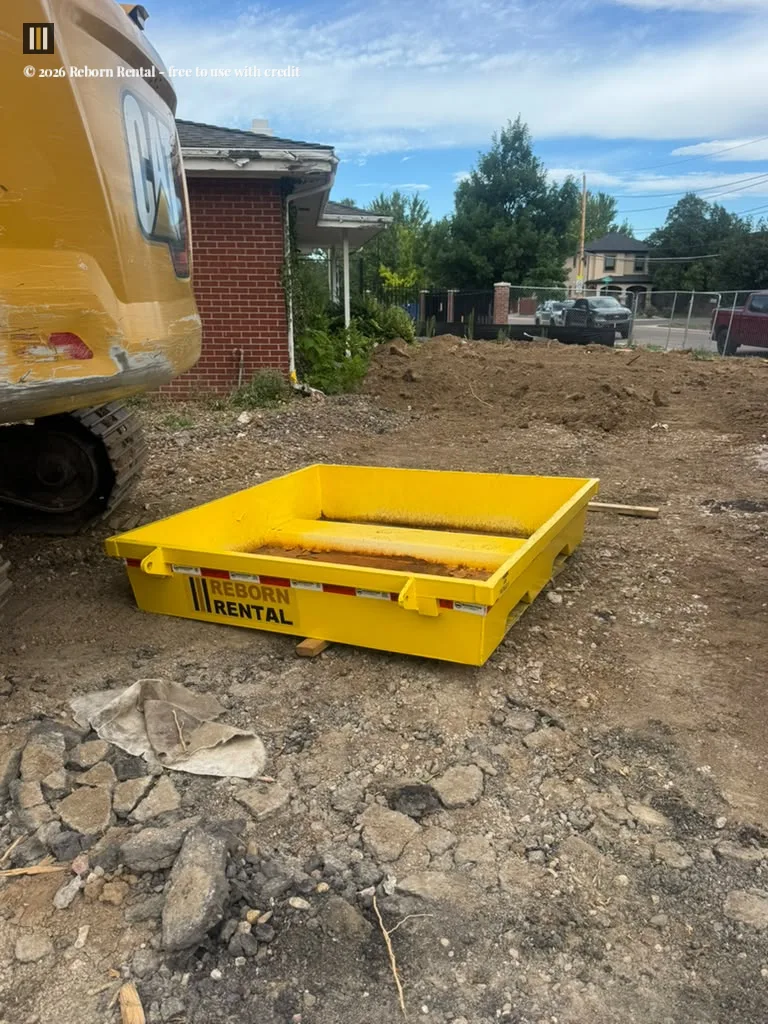
On tight urban projects in Denver, Lakewood, Aurora, or Boulder, carving out space for an unlined earthen pit is rarely an option. Even on expansive commercial pads, dug pits frequently fail inspections. Heavy clays along the Front Range resist liquid absorption, leading to surface overflows during sudden afternoon rainstorms, while sandy subgrades allow rapid Infiltration of caustic water into shallow groundwater tables. A dedicated, watertight steel container functions as a closed-loop BMP (Best Management Practice), containing all slurry, aggregate sediment, and process water in a single, transportable footprint. When you rent concrete washout pans directly from a regional supplier, you eliminate digging costs, liner punctures, and the labor required to break out hardened washout pits at the end of a project.
How the Drop, Use, and Swap Service Operates
Jobsite operations require equipment management that keeps flatwork crews and pour schedules running without delays. We operate on a straightforward three-stage model engineered around pour schedules: Drop, Use, and Swap.
- Drop: We schedule and deliver a clean, watertight steel container directly to your jobsite staging area. Placement is selected so ready-mix trucks can easily back up to the unit without interfering with site traffic or pump setup.
- Use: During the pour, drivers wash down their discharge chutes, the Agitator (Mixer Truck) fins, and transition hoppers directly into the pan. Crews also use the pan to clean hand tools, vibrators, and finishing boards without letting wash water pool on subgrades or formwork.
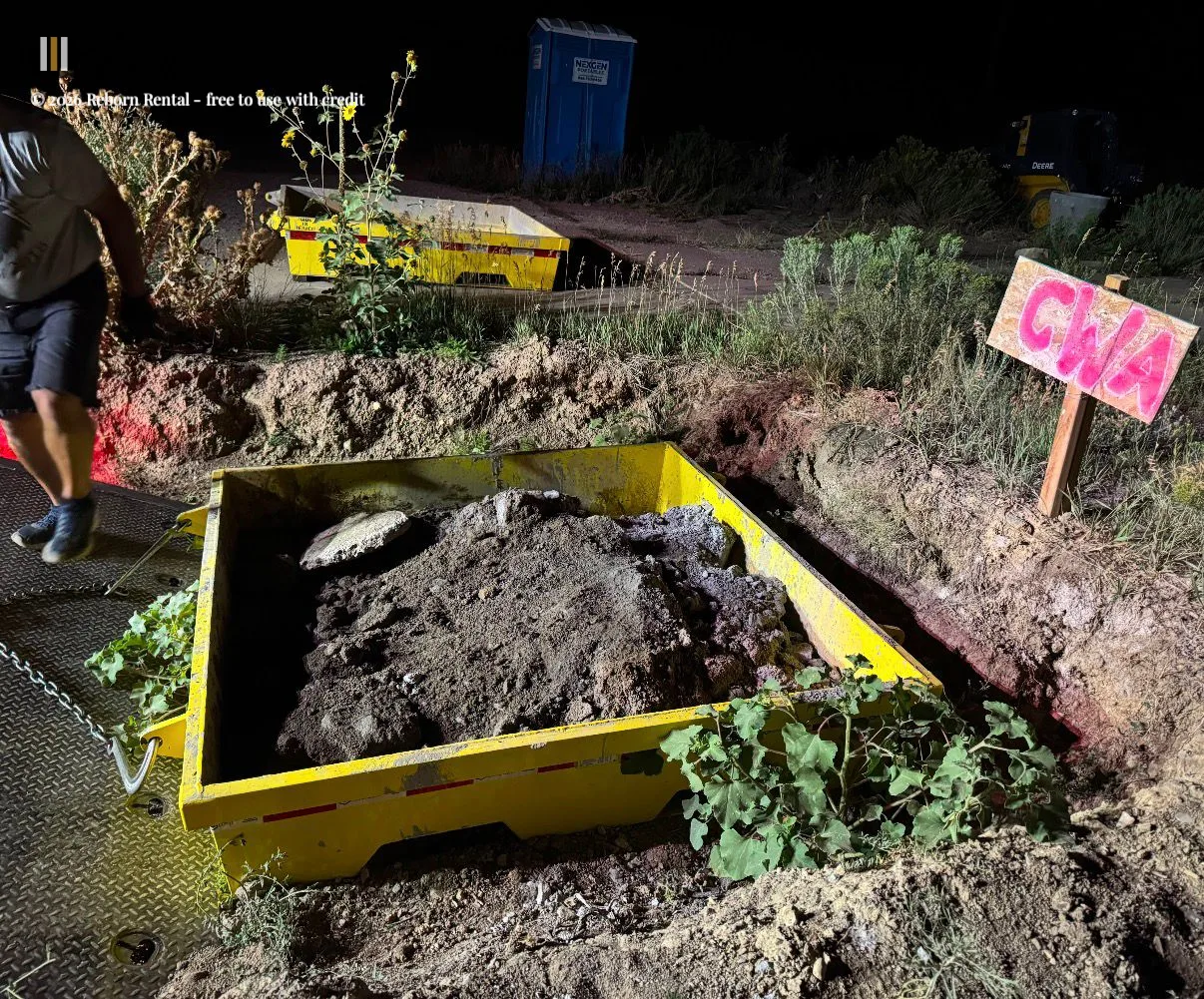
- Swap: When the container nears 75% capacity, call our dispatch line. We bring an empty replacement pan, winch the loaded unit onto our transport deck using rated lifting points, and reset the new pan in the exact same footprint. Your site never sits without active washout containment.
Once removed from your job, our concrete washout swap and disposal service handles the heavy material off-site, letting your site superintendent and project engineers focus on schedule milestones rather than waste remediation.
Choosing Your Container: 310-Gallon vs. 441-Gallon Capacities
Matching the pan profile to your discharge equipment prevents equipment damage, chute clearance issues, and messy site overflows. We provide two configurations engineered specifically for concrete contractors.
The 310-Gallon Low-Profile Washout Pan
The 310-gallon Small washout pan measures 72 inches wide by 72 inches long with a low 14-inch sidewall. This low profile is designed specifically for tight vertical clearances. When a concrete Boom Pump or trailer-mounted Line Pump finishes a pour, the hopper discharge gate sits close to the subgrade. Standard roll-off boxes and tall dumpsters are simply too high for direct hopper dumping without constructing hazardous earthen ramps.
The 310-gallon unit fits directly beneath rear-hopper discharge gates and lower-angled ready-mix chutes. It is the ideal choice for residential infill pours, tight parking garage structures, elevated deck staging, and pump-truck operations where space is at a premium.
The 441-Gallon High-Capacity Washout Pan
The 441-gallon Large washout pan shares the same 72-inch by 72-inch footprint but features 24-inch vertical sidewalls. This design yields significantly greater volume, making it the preferred option for high-yardage commercial foundations, structural mat pours, highway bridge decks, and multi-day flatwork runs.
Because the 24-inch sidewall requires greater chute clearance, it is best served by standard ready-mix delivery trucks backing directly to the pan on open grades. The added depth holds wash water from dozens of truck chutes and consolidation tools before a swap is necessary, cutting the frequency of haul trips on long-duration jobs.
Washout Pan Sizing and Equipment Discharge Matrix
To determine which container best fits your pour schedule, review the specifications below based on equipment dimensions and expected washout volume:
- 310-Gallon Pan: Dimensions: 72" × 72" × 14" | Pan Volume: 1.53 cu yds | Primary Application: Pump truck hoppers, line pumps, tight street closures, low-chute clearances.
- 441-Gallon Pan: Dimensions: 72" × 72" × 24" | Pan Volume: 2.18 cu yds | Primary Application: High-volume ready-mix pours, commercial foundations, multi-truck slab placements.
A standard mixer truck chute washdown uses approximately 15 to 30 gallons of water. Factoring in slurry, leftover aggregate, and rinse water, a 310-gallon pan reliably accommodates roughly 10 to 15 truck washouts, while a 441-gallon pan handles 18 to 25 truck cycles before requiring a swap to maintain adequate freeboard against rainfall events.
Clear Rental Rates and Swap Pricing Structure
Equipment budgets demand predictable numbers without hidden surcharges or multi-month lock-in clauses. We rent on simple, transparent timeframes:
- 310-Gallon Pan: $26 per day | $140 per week | $532 per 4-week cycle.
- 441-Gallon Pan: $29 per day | $175 per week | $588 per 4-week cycle.
There are no long-term contractual commitments. Keep the pan for a three-day curb-and-gutter run, or retain it on site across several months of structural phases.
When the unit reaches capacity, our swap-and-haul fee is a flat $300 per pan anywhere within the Denver C-470 outer loop. If your jobsite lies outside the C-470 boundary—such as up in Longmont, out in Brighton, or down in Castle Rock—transportation is billed at a transparent $8.99 per mile per swap beyond the loop. Projects requiring transport over 200 miles are quoted directly as long-haul delivery via email.
Payment processing is straightforward: we accept all major credit cards, Apple Pay, Google Pay, Klarna, and direct ACH transfers. We do not accept cash transactions.
Front Range Delivery Coverage and Site Placement Details
Based out of Lakewood, our fleet delivers daily throughout the Denver metropolitan region and the broader Front Range corridor. Regular routes service projects in Denver, Lakewood, Aurora, Arvada, Westminster, Thornton, Commerce City, Broomfield, Golden, Wheat Ridge, Englewood, Littleton, Centennial, Highlands Ranch, and Parker.
Our standard dispatch operates Monday through Friday from 9:00 AM to 6:00 PM Mountain Time. However, concrete pours frequently start before dawn or run over schedule into the evening. For contractors who need equipment outside standard yard hours, we offer after-hours self pickup and drop-off at our yard for a $35 fee with advance notice. If your crew needs to grab a pan on Sunday afternoon for an early Monday morning slab pour, we can stage it for you.
For jobsite placement, ensure the designated ground is firm, compacted subgrade or base course that can support delivery trucks. Avoid placing pans directly over newly laid utilities or under low-hanging overhead power lines that restrict crane and winch operations.
Preventing Illicit Discharge and Subgrade Infiltration
Environmental inspections across Adams, Arapahoe, Jefferson, and Douglas counties have become increasingly rigorous. When storm water management inspectors review your site, open pits with torn visqueen plastic liners can result in immediate stop-work orders and steep fines. Wind-blown plastic tears easily against aggregate edges, allowing alkaline wastewater to enter surrounding soils.
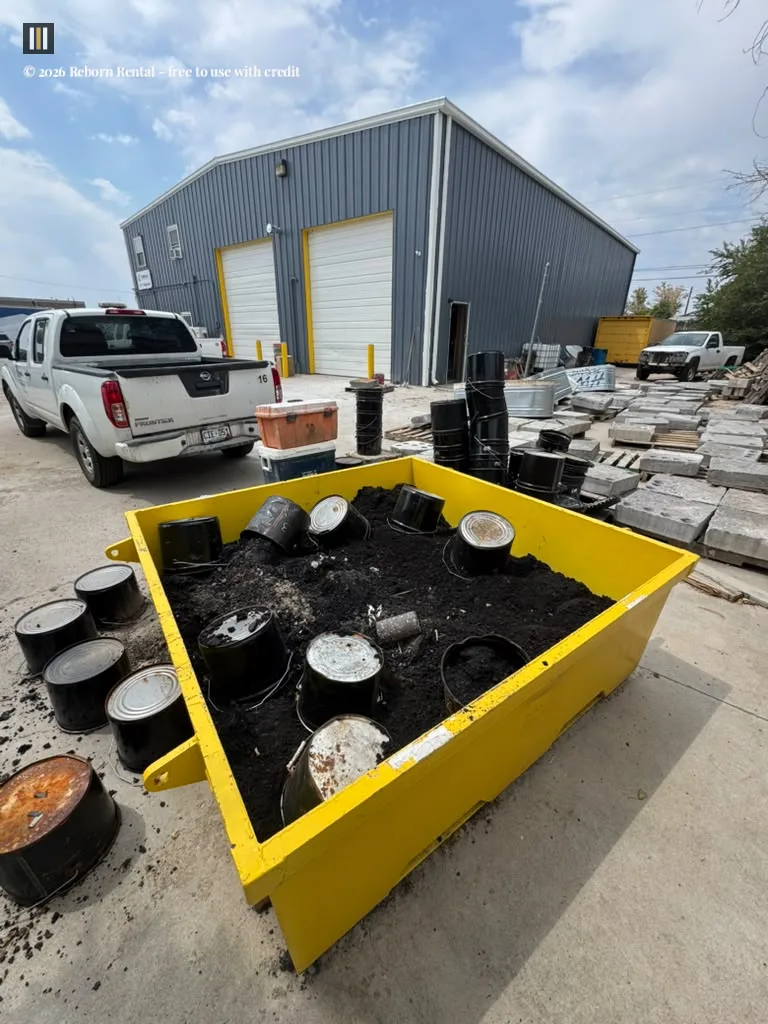
Our solid-welded steel pans provide structural containment that will not tear, puncture, or leak. The low center of gravity prevents tipping, even when struck by minor chute movements. By routing all chute and pump rinses into a sealed pan, your site supervisor keeps stormwater documentation clean, protects local drainage basins from pH spikes, and eliminates the expensive post-pour excavation needed to remediate buried concrete slurry.
Frequently Asked Questions
Review answers to common contractor questions below. For additional details regarding logistics and account structures, consult our frequently asked questions page.
What does it cost to rent a concrete washout container in Colorado?
Rental rates depend on the capacity you select. The 310-gallon low-profile pan is $26 per day, $140 per week, or $532 per 4-week period. The 441-gallon high-capacity pan is $29 per day, $175 per week, or $588 per 4-week period. Haul and swap service is a flat $300 inside the C-470 loop, plus $8.99 per mile beyond it.
How does the drop, use, and swap model work?
We drop an empty, watertight steel pan at your designated jobsite location. Your concrete subs and pump operators wash out into the pan throughout the pour. When the container reaches capacity, you contact our team; we drop a clean replacement pan and haul away the full container in one seamless visit.
Can pans be picked up after normal business hours?
Yes. While our regular operating hours are Monday through Friday from 9:00 AM to 6:00 PM Mountain Time, we accommodate after-hours self pickup and drop-off at our yard with advance notice for a $35 after-hours fee.
What is your cancellation policy?
Cancellations are free up to 5 business days before your scheduled delivery. Cancellations made after that window incur a charge of 50% of the reservation cost, excluding delivery fees.
How far do you deliver from Denver?
We deliver across the entire Front Range. Deliveries and swaps carry a flat $300 fee inside the C-470 loop. Beyond C-470, service is billed at $8.99 per mile. Deliveries over 200 miles are quoted as long-haul via email.
How can I track my delivery?
Contact our support team with your Order ID, and we will provide live driver tracking and location updates directly to your field phone.
What payment methods do you accept?
We accept all major credit cards, Klarna, Apple Pay, Google Pay, and ACH transfers. We do not accept cash.
Do you offer discounts for bulk orders?
Yes. If your project requires more than 20 units or extends beyond 6 months, contact our sales department for a customized rate quote.
Secure Your Washout Pan
Need one on site? Call (720) 734-9337 for a live quote — we will text you the order link before you hang up.