
Subcontractor vs. GC: Who Coordinates Concrete Washout on Site?
Direct Answer: While concrete trade subcontracts often assign clean-up duties to the trade contractor, the general contractor holds ultimate legal liability for stormwater compliance under Colorado Department of Public Health and Environment (CDPHE) permits. On multi-pour commercial sites, general contractors avoid regulatory fines, cross-contamination, and logistical disputes by centralizing site-wide concrete washout containment rather than leaving containment methods to individual subcontractors.
Key Takeaways
- The regulatory burden stays with the GC: Even if a subcontract specifies that a concrete contractor must handle trade waste, an illicit discharge or unlined pit failure triggers enforcement actions directly against the general contractor holding the stormwater permit.
- Centralized containment eliminates duplicate costs: Providing a shared 441-gallon watertight pan allows foundation, flatwork, masonry, and pump truck crews to wash out in a single controlled location without cluttering the jobsite.
- Discharge height determines pan sizing: Chute washouts and standard mixer trucks can clear taller bins, but pump trucks with low-clearance rear hoppers require low-profile containers (14-inch rim height) to avoid mechanical interference or chute spills.
- Direct billing simplifies site transfers: Establishing a master services agreement streamlines orders across multiple Front Range projects using scheduled swap-and-haul dispatches.
Table of Contents
- SWPPP Liability: Why the General Contractor Holds the Risk
- Discharge Method Dictates Pan Selection: 310 vs. 441
- Centralizing Containment: Multi-Sub Pan Placement Logistics
- Streamlining Multi-Site Operations with a Master Services Agreement
- Pricing, Swaps, and Payment Logistics on the Front Range
- Frequently Asked Questions
SWPPP Liability: Why the General Contractor Holds the Risk
On any commercial or civil construction site in Colorado covering one acre or more, operations fall under the CDPHE Colorado Discharge Permit System (CDPS) general permit for stormwater discharges associated with construction activities. The permittee named on that document is almost always the general contractor or site developer. When a ready-mix driver or pump operator washes residual slurry onto unprotected soil, inspectors cite the permit holder—not the sub-tier driver.
Concrete wash water is caustic, typically carrying a pH of 12 or higher. Allowing slurry to contact bare subgrade causes direct infiltration into shallow groundwater and compromises structural soil properties. If uncontained wash water flows across an impervious surface into a municipal storm sewer or curb inlet, it constitutes an unpermitted illicit discharge. State and local inspectors have the statutory authority to stop work or issue immediate civil penalties against the primary project permit.
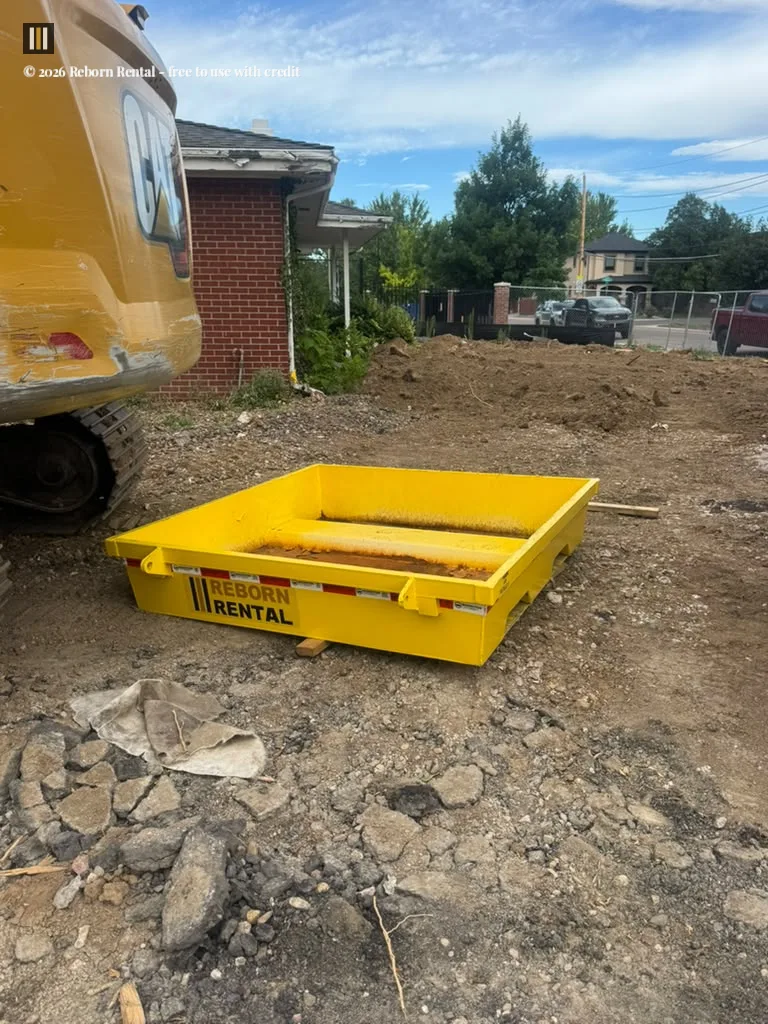
Leaving washout execution to trade subcontractors routinely introduces three critical jobsite breakdowns:
- Subcontractor trade pits: Subcontractors frequently dig unlined pits or line shallow excavations with thin plastic sheeting. Heavy winds tear the plastic, or trackhoes snag the liner during placement, allowing caustic liquids to seep into the ground.
- Abandonment at trade handoff: When the foundation sub finishes their scope and demobilizes, they often leave slurry-filled pits or makeshift bins behind. The GC must then pay out of general conditions to remediate the area before flatwork crews arrive.
- Perimeter containment breaches: Multiple subs placing small containment boxes across the site increases vehicle tracking across soil, destroying perimeter silt fences and requiring recurring maintenance on inlet protection devices.
By stepping in and contracting a centralized concrete washout service Colorado superintendents can enforce a single, clean compliance station for every trade on site.
Discharge Method Dictates Pan Selection: 310 vs. 441
Containment selection must match the specific equipment discharging into the pan. Mismatches between equipment discharge heights and pan side walls lead to chute spillage or driver refusal to wash out. Reborn Rental provides two specific watertight steel pan configurations engineered for concrete operations across the Front Range.
The 310-Gallon ‘Small’ Pan (Low-Profile)
The 310-gallon Small washout pan measures 72 inches wide by 72 inches long by 14 inches high. Its distinguishing technical characteristic is its low 14-inch wall profile. This design is engineered specifically for equipment with low ground clearance:
- Rear-hopper pump trucks: Boom pumps and line pump trailers carry rear hoppers that sit low to the grade. A standard high-walled bin or tall dumpster cannot slide beneath the hopper gate. The 14-inch rim allows pumps to back up and discharge aggregate wash water directly into the pan without building dirt ramps.
- Tight urban footprints: On infill projects or sites with constrained access lanes, low-profile pans take up minimal vertical clearance and simplify direct positioning by equipment operators.
- Elevated pour decks: Where crane picks place containment onto elevated parking structures or commercial decks, the low profile maintains stability and clear line-of-sight during operations.
The 441-Gallon ‘Large’ Pan (High-Capacity)
The 441-gallon Large washout pan shares the same 72-inch by 72-inch footprint but features 24-inch side walls. This yields 441 gallons of liquid volume, making it the standard choice for multi-sub, high-volume production pours:
- Mixer truck chutes: Standard ready-mix discharge chutes pivot at a sufficient height to discharge directly over 24-inch walls without auxiliary ramps.
- Multiple consecutive trucks: Higher liquid capacity accommodates multiple truck cleanouts—including chutes, hoppers, and finishing tools such as a bull float or hand float—before requiring a swap.
- Shared commercial use: Because it holds 42% more material than the low-profile unit, it serves as an ideal centralized station where structural, slab, and curbing crews share a single washout point.
Centralizing Containment: Multi-Sub Pan Placement Logistics
When a general contractor assumes management of concrete washout, pan positioning dictates jobsite efficiency. A single 441-gallon pan can successfully serve structural foundation crews, exterior flatwork subs, line pump operators, and curb-and-gutter contractors if positioned correctly within the site logistics plan.
Site superintendents should apply three core rules when establishing a shared washout station:
1. Locate on All-Weather Ingress/Egress Corridors
Do not place the washout pan deep inside an uncompacted dirt floor where trucks can get bogged down during wet Front Range spring conditions. Place the pan adjacent to a compacted base course access road, near the site tracking pad. This ensures ready-mix drivers can wash out immediately before departing onto public roads, eliminating the risk of tracking caustic residue across the jobsite.
2. Maintain Regulatory Setbacks from Sensitive Receptors
Standard municipal and state Best Management Practice (BMP) guidelines mandate that washout facilities must be situated at least 50 feet away from storm drain inlets, surface waters, drainage ditches, and retention basins. If site constraints make a 50-foot buffer impossible, you must surround downgradient storm structures with hardened inlet protection and ensure the containment pan is 100% watertight and elevated on solid ground.
3. Protect Subgrade Integrity
Never set washout pans on prepared subgrades, structural building pads, or permeable sub-base layers. Ready-mix chute cleanout produces high-velocity water that can splash if drivers wash out carelessly. Keep pans positioned on durable ground where accidental overspray will not compromise the bearing capacity or subgrade density required for structural slabs.
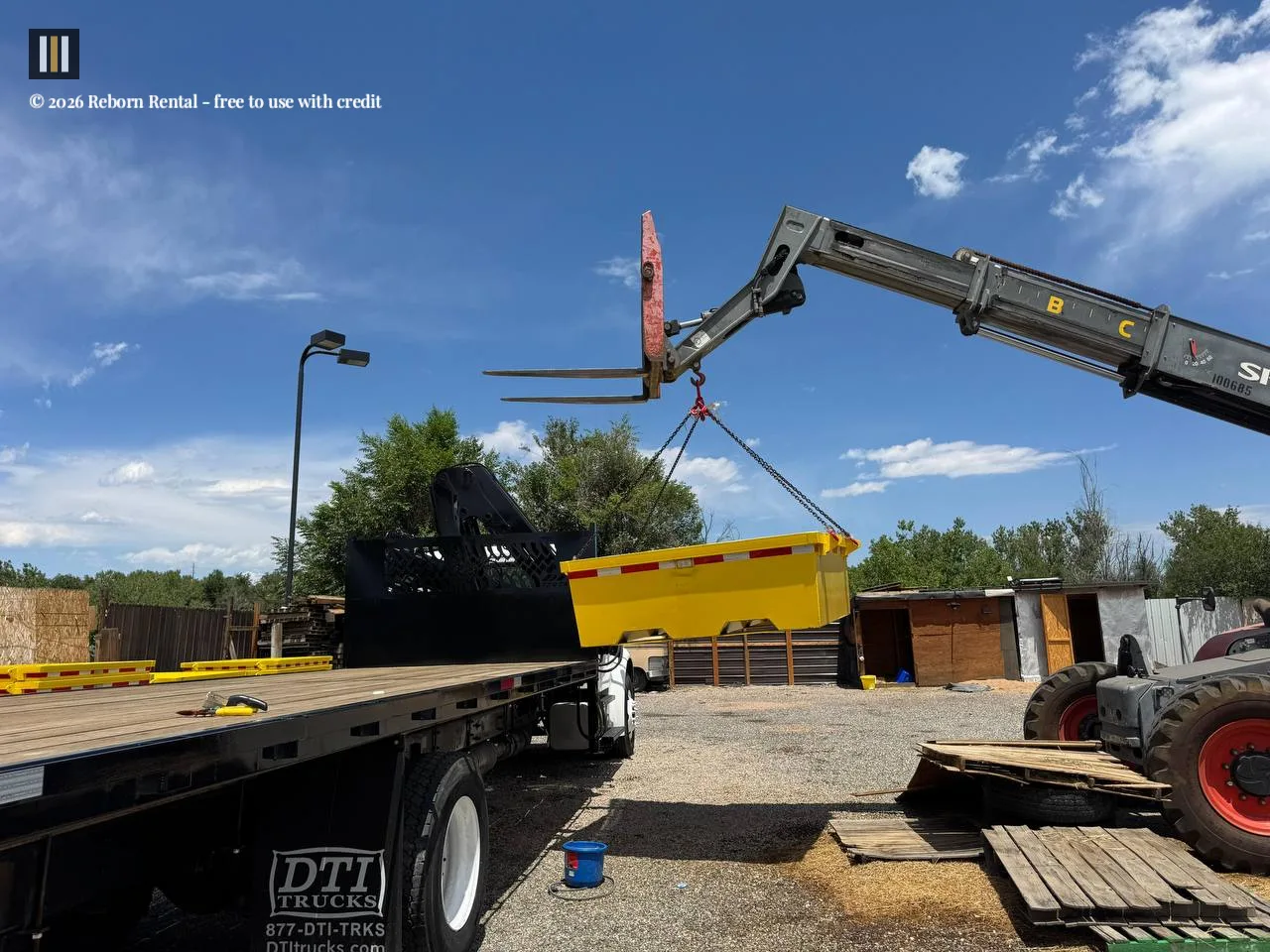
Streamlining Multi-Site Operations with a Master Services Agreement
When individual concrete subcontractors supply their own washout units, billing arrives fractured across dozens of pay applications. General contractors frequently lose track of invoice charges buried within trade contractor equipment billings. Setting up centralized management directly with Reborn Rental simplifies site management across your portfolio.
By choosing to set up an MSA or dedicated account, general contractors secure standardized pricing and responsive logistics across all ongoing projects along the Front Range. An MSA offers specific operational advantages:
- Single point of contact: Project managers and field superintendents can dispatch drop-offs, swaps, and final removals through a dedicated operations channel without negotiating separate contracts for every new phase.
- Consolidated accounting: Invoicing clearly ties monthly pan rental and swap fees to specific project cost codes, allowing straightforward back-charging to subcontractors when required by project specifications.
- Standardized compliance documentation: Having uniform, watertight steel pans across all project sites guarantees your third-party SWPPP inspectors and municipal regulators see identical, approved containment systems regardless of which site superintendent is running the job.
Pricing, Swaps, and Payment Logistics on the Front Range
Field operations depend on transparent costs and reliable equipment turnover. Reborn Rental operates on a straightforward rental and swap model with zero long-term contract lock-in.
Pan Rental Rates
- 310-Gallon ‘Small’ Pan (72x72x14): $26 per day | $140 per week | $532 per 4-week billing cycle.
- 441-Gallon ‘Large’ Pan (72x72x24): $29 per day | $175 per week | $588 per 4-week billing cycle.
Swap-and-Haul Service Rates
When slurry reaches within 4 inches of the pan rim, call for a swap. Our concrete washout swap and disposal service operates under a transparent regional pricing structure:
- Inside the C-470 loop: Flat $300 swap fee per pan. This covers prompt delivery of a clean replacement pan, rigging, loading of the full unit, hauling, and compliant disposal.
- Beyond the C-470 loop: $8.99 per mile per swap across the broader Front Range.
- Long-haul (over 200 miles): Quoted individually via email to match project requirements.
Review additional detail on our fees and surcharges schedule. Working dispatch hours run Monday through Friday from 9:00 AM to 6:00 PM Mountain time. For crews working off-hours, self pickup and drop-off is available for a $35 after-hours fee with advance notice. Accepted payment methods include major credit cards, Klarna, Apple Pay, Google Pay, and ACH. Cash is not accepted.
Frequently Asked Questions
Should the GC or the concrete subcontractor provide the washout containment?
While contracts can assign clean-up execution to trade contractors, the general contractor holds legal responsibility for environmental compliance under the site’s stormwater permit. General contractors who manage the washout directly eliminate unlined pit failures, ensure continuous compliance across all trades, and prevent trade handoff disputes when multiple concrete contractors work the same project.
Can multiple subcontractors share a single 441-gallon pan on a commercial site?
Yes. A single 441-gallon pan positioned along a primary site access corridor easily accommodates ready-mix trucks, pump trucks, and finishing crews from different trade contractors. Superintendents simply coordinate routine swaps based on pour volume to maintain adequate freeboard capacity.
How does an MSA simplify billing across multiple Front Range job sites?
A Master Services Agreement standardizes daily, weekly, and monthly rates while establishing dedicated lines for order dispatch. This eliminates redundant onboarding paperwork for each pour, provides uniform jobsite compliance across your company, and consolidates invoicing directly to specific project cost codes.
What is your cancellation policy?
Cancellations are free up to 5 business days before the scheduled delivery date. Cancellations made after that window incur a fee equal to 50% of the reservation cost, excluding delivery fees.
How far do you deliver from Denver?
We deliver across the Colorado Front Range. Deliveries inside the C-470 loop are billed at a flat $300 per swap. Deliveries beyond the C-470 loop are billed at $8.99 per mile per swap. Deliveries over 200 miles receive custom long-haul quotes upon request.
What payment methods do you accept?
We accept major credit cards, Klarna, Apple Pay, Google Pay, and ACH transfers. We do not accept cash payments.
Can I self-pick-up or self-drop-off on a weekend or outside working hours?
Yes. Self-pick-up and self-drop-off outside our regular working hours (Monday through Friday, 9:00 AM to 6:00 PM Mountain time) is available with advance notice for a $35 after-hours fee.
Do you offer discounts for bulk orders?
Yes. We offer custom volume pricing for projects requiring over 20 units or rental durations extending past 6 months. Contact our team to review your site schedule and get a custom quote.
Coordinate Your Front Range Jobsite Washout
Not sure which pan fits your setup? Call us at (720) 734-9337—we’ll talk it through and quote you on the spot.