
Washout Pan vs. Dug Pit: Which Concrete Washout Solution Wins?
Key Takeaways
- Machine time adds up fast: Digging, staking, and backfilling a pit burns 2 to 4 equipment and operator hours ($300 to $600) before accounting for materials or disposal.
- Liner failures create liability: A 10-mil poly liner tears easily under aggregate impact or chute strikes, leading to an illicit discharge of caustic water (pH 12+) directly into the subgrade.
- Rental keeps crews on production: Renting a 310-gallon Small washout pan at $26/day with a flat $300 swap eliminates manual shovel labor and equipment diversion.
- Footprint matters: Earthen pits take up valuable site laydown space; compact steel pans sit flush on existing grade without earthwork permits or grade restoration.
Table of Contents
- Select Your Pan Capacity Before Pour Day
- Honest Trade-Off Comparison: Pan vs. Dug Pit
- Equipment and Labor Math: Excavator Hours vs. Pan Rentals
- The Vulnerability of Poly Liners: Punctures, Leaks, and Fines
- Why Local Front Range Service Wins on Speed and Flexibility
- When Does a Dug Pit Still Make Sense?
- Frequently Asked Questions
- Ready to Switch?
Select Your Pan Capacity Before Pour Day
Choosing an engineered containment system starts with matching the container to your site discharge method. Concrete washout cannot be treated as an afterthought once the ready-mix truck arrives on the subgrade. You need to verify discharge heights, available clearance, and total pour volume before equipment rolls onto site.
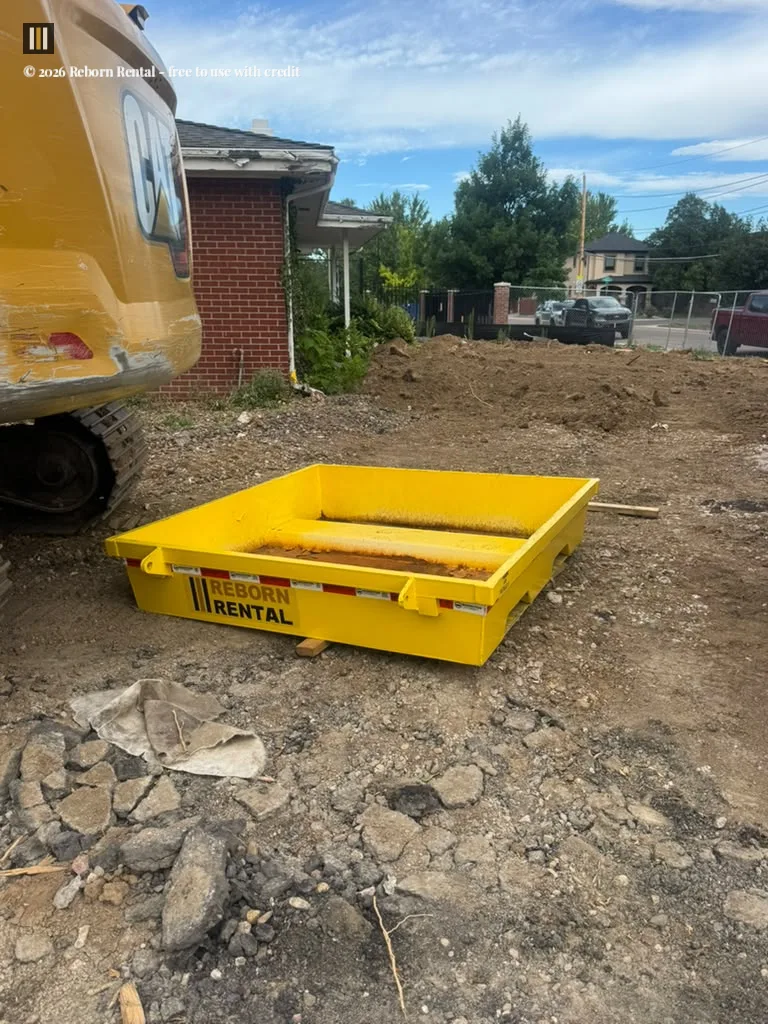
For pump trucks, line pumps, and projects with restricted vertical clearance, the standard choice is the 310-gallon Small washout pan. Built with dimensions of 72″x72″x14″, this low-profile unit allows ready-mix chutes and pump truck rear-hoppers to discharge straight in. You do not need to build earthen ramps or place the pan into an excavated depression to get adequate chute pitch. It fits into tight structural footprints, slab-on-grade staging areas, and parking garage decks where equipment clearance is strictly limited.
For commercial footings, large structural placements, and multi-truck civil pours, the 441-gallon Large washout pan provides the necessary capacity. Measuring 72″x72″x24″, this container handles high-volume mixer cleanouts, extending the operating duration between hauls. Choosing the correct capacity upfront ensures the rim maintains required freeboard, preventing caustic slurry from splashing over the edge during high-velocity hopper washdowns.
Honest Trade-Off Comparison: Pan vs. Dug Pit
Contractors often assume that digging a hole in the dirt costs nothing because the iron is already on site. When you track actual machine hours, non-billable labor, material purchases, and regulatory risks, the math tells a different story. Here is how an earthen pit compares directly to a purpose-built watertight steel pan.
| Operational Metric | Site-Dug Earthen Pit | Steel Washout Pan Rental |
|---|---|---|
| Setup Time & Iron | 1 to 2 hours of excavator or skid steer time | 0 machine hours; dropped directly on grade |
| Material Costs | 10-mil poly roll, sandbags, stakes, warning signs ($150-$200) | Fixed rental rate ($26/day Small, $29/day Large) |
| Labor Commitment | 2 laborers trenching, grading, and securing liner (2-3 hours) | 5 minutes to establish clear truck access |
| Containment Integrity | High puncture risk from rock, chutes, and boot cleats | Solid watertight steel containment |
| Site Footprint | Large (requires sloped berms, buffers, and barricades) | Compact 6′ x 6′ total footprint |
| Stormwater / BMP Risk | Frequent tears lead to soil infiltration and citations | Engineered BMP (Best Management Practice) compliance |
| Decommissioning | Mucking out slurry, hauling plastic, backfilling, compacting | Call for haul; flat $300 swap inside C-470 loop |
Equipment and Labor Math: Excavator Hours vs. Pan Rentals
Look at the actual hours billed to your job cost code when creating a temporary pit. Excavating a 10′ x 10′ pit with proper perimeter berms ties up a backhoe or mini-excavator for roughly an hour. At standard Front Range fully burdened rates ($120 to $160 per hour for operator and machine), that cut costs $140 immediately. Next, two laborers spend at least an hour unrolling plastic, anchoring the edges with soil or bags, and staking the perimeter. At $45 per hour loaded labor, that adds $90.
The plastic itself is an unrecoverable cost. A roll of compliant 10-mil polyethylene, alongside sandbags and perimeter safety fence, runs roughly $150 to $200 per pit. Before the first truck washes down its chute, you have invested over $380 in direct expenses.
The expensive phase occurs during removal. After hydration binds the slurry into heavy solids, those solids must be broken up and removed. Operators rarely scoop a pit cleanly without tearing the plastic into the spoil pile. Once plastic is commingled with concrete waste, many aggregate recycling yards reject the load, forcing you to pay higher tipping fees at municipal landfills.
Mucking out the pit, loading a dump truck, hauling the waste, ripping out the torn plastic, and backfilling the void to match subgrade compaction takes an additional 2 to 3 equipment hours. That adds another $300 to $450 in equipment time. Total all-in cost for one earthen pit routinely climbs between $700 and $1,100.
In contrast, using a 310-gallon pan costs $26 a day or $140 a week. When full, a concrete washout swap and disposal service handles the removal for a flat $300 within the C-470 loop. There is zero time spent with an excavator bucket picking at the dirt, zero landfill surcharge for plastic contamination, and zero backfilling required.
The Vulnerability of Poly Liners: Punctures, Leaks, and Fines
An earthen pit relies entirely on the integrity of a plastic sheet. In the field, standard subgrade across the Denver Metro and Front Range contains angular gravel, fractured rock, and hard clay clods. When an excavator bucket presses plastic against rough base course, tears can develop before the concrete truck even arrives.
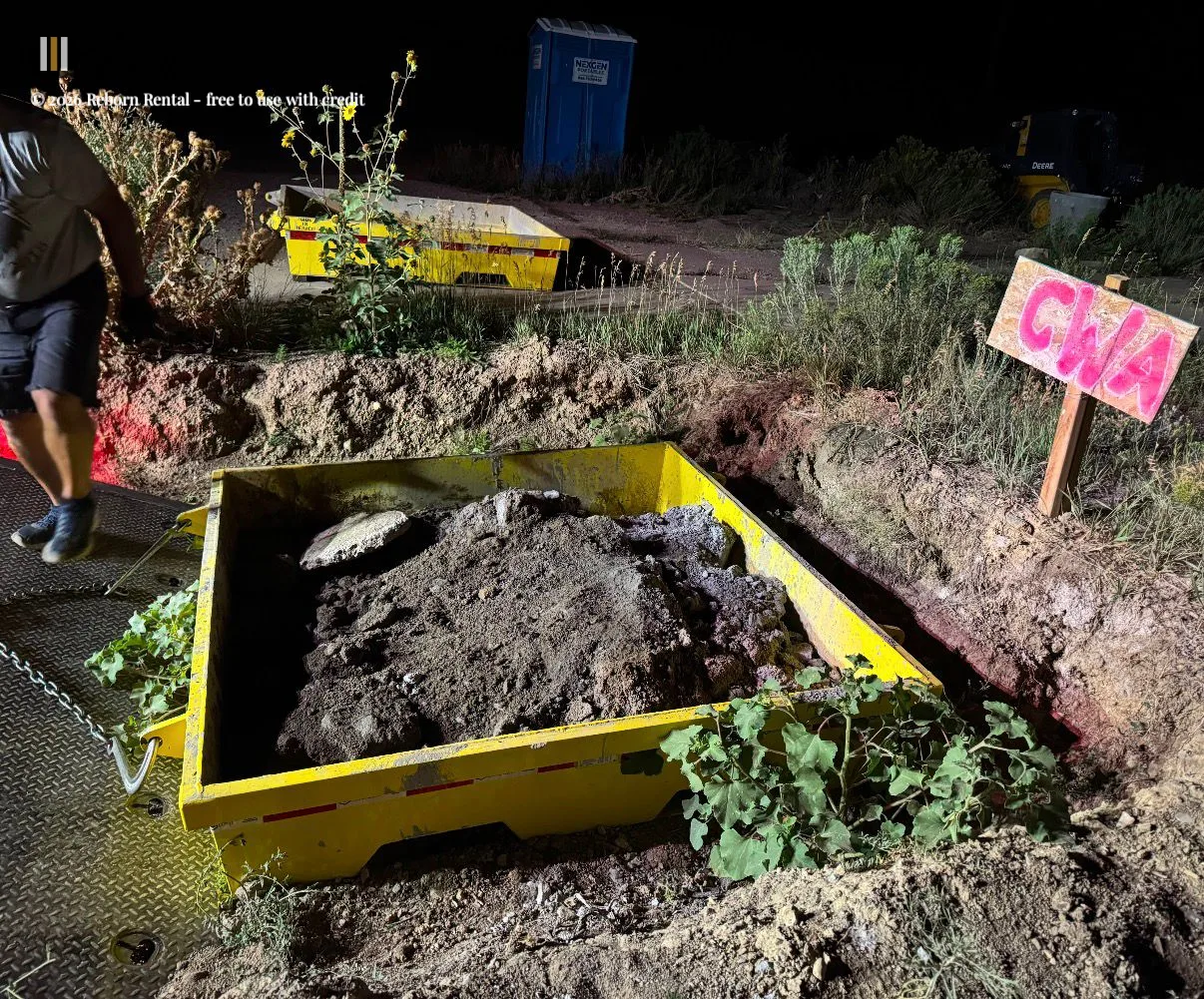
During cleanout, heavy aggregate washing down the chute impacts the liner with high velocity. A dropped chute scraper, concrete shovel, or a driver stepping into the pit tears 10-mil poly immediately. Once punctured, concrete wash water escapes through the liner via infiltration into the uncompacted soil below.
Concrete slurry water is not muddy runoff; it has a corrosive pH between 12 and 13 due to calcium hydroxide produced during cement hydration. The Colorado Department of Public Health and Environment (CDPHE) and the EPA classify uncontained slurry escaping into the ground as an illicit discharge under stormwater regulations. An inspector identifying a leaking pit will issue a non-compliance notice or stop-work order for failure to maintain an adequate Best Management Practice (BMP).
A water-tight, heavy-gauge steel pan eliminates soil infiltration. The wash water, aggregates, and fine cement particles stay contained inside the unit until haul-away. If an environmental inspector walks the site, you show a self-contained structural steel unit with zero chance of ground absorption.
Why Local Front Range Service Wins on Speed and Flexibility
When concrete is pouring, site conditions change quickly. If your washout containment fills up mid-pour, work stops until drivers have a legal chute rinse location. National waste brokers and rolled-metal suppliers often require days of notice, rigid multi-week rental agreements, or routed dispatches that do not match pouring schedules.
Reborn Rental focuses directly on the Colorado Front Range, running a straightforward drop, use, and swap system. Our primary operating model eliminates paperwork hurdles: there is no long-term lease contract locking you down. You pay for the days you use the container on site, call when it is full, and we bring an empty replacement pan.
Pricing is transparent with no hidden line items. The swap-and-haul service is a flat $300 per pan within the C-470 loop. If your jobsite sits beyond C-470—whether up in Longmont, down in Castle Rock, or out east in Aurora—we charge a clear $8.99 per mile per swap. For extended work over 200 miles away, we provide direct long-haul quotes via email. Detailed line items and transport terms are openly documented on our fees and surcharges page so you can budget pour costs accurately.
Quotes are handled on demand. While our operations yard runs Monday through Friday from 9:00 AM to 6:00 PM Mountain time, our quote line is answered 24/7 at (720) 734-9337. If you need weekend staging or off-hours site access, self pickup and self drop-off can be arranged with advance notice for a straightforward $35 fee.
When Does a Dug Pit Still Make Sense?
Steel washout pans offer superior containment and cost efficiency on standard building sites, but earthen pits can still have a role in specific edge cases. Being honest about those scenarios helps superintendents make practical site decisions.
If you are pouring thousands of yards on an isolated agricultural or civil project far outside municipal stormwater boundaries, where transport logistics make container delivery difficult, an unlined or lined earthen pit may be practical. If the site already has dedicated earthmoving equipment running all day, massive open acreage, and zero risk of runoff reaching storm sewer networks or shallow water tables, digging an expansive temporary basin can work.
However, for commercial building sites, residential subdivisions, urban infill, bridge decks, and highway pours governed by strict stormwater management plans, earthen pits carry too much financial and regulatory risk. The labor spent mucking out sludge and repairing torn plastic quickly overtakes the modest rental cost of a steel pan.
Frequently Asked Questions
Is renting a washout pan cheaper than digging a pit on site?
Yes, for the vast majority of jobs. Digging, lining, maintaining, mucking out, and backfilling an earthen pit requires 2 to 4 equipment hours and several hours of crew labor, costing between $700 and $1,100 per cycle. A 310-gallon steel pan rents for $26 per day with a flat $300 swap inside the C-470 loop, eliminating labor overhead and equipment wear.
What hidden labor costs come with maintaining an earthen washout pit?
Hidden costs include unrolling and staking poly liners, resetting perimeter sandbags after high winds, manually shoveling dried concrete solids out of torn corners, and separating plastic debris so recycling facilities accept the spoil piles. If the pit overflows, crew members lose billable hours shoveling slurry by hand.
How fast can a replacement pan be swapped to prevent pour delays?
We schedule swaps on demand across the Front Range. You can call the quote desk at (720) 734-9337 to schedule your swap directly. For continuous large pours, keeping a secondary pan on site or scheduling staged swaps prevents ready-mix trucks from waiting.
How far do you deliver from Denver?
Delivery and swaps are a flat $300 inside the C-470 loop. Beyond C-470, service is billed at $8.99 per mile. For projects over 200 miles away, we provide a custom long-haul quote via email. Check our frequently asked questions for additional logistical guidelines.
What payment methods do you accept?
We accept all major credit cards, Klarna, Apple Pay, Google Pay, and ACH transfers. We do not accept cash payments.
Ready to Switch?
Stop burning machine time digging out temporary dirt pits. Get an engineered, watertight washout container dropped right at your pour location. Reach out to get a live quote on equipment staging—there is no contract lock-in, and we swap on demand when you are full. Call (720) 734-9337 to speak with our dispatch desk today.