
Roll Off Containers: A Practical Guide for Contractors
Saturday morning, the phone starts buzzing before the pour crew is even on site. The foreman is staring at a patch of ground, a tight gate, a truck route, and a concrete washout pile that's growing faster than anyone planned. The question isn't just “what size container do we need,” it's whether the truck can get in, whether the load will stay legal once it's wet, and whether the washout setup will pass inspection when the job wraps.
What Contractors Need on a Saturday Morning
A roll off job rarely falls apart because someone chose the wrong-looking box. It usually breaks down because the crew treated it like a simple volume question and ignored the rest of the setup. By the time the driver arrives, the site may already be boxed in by grades, forms, deliveries, parked equipment, or a lane that looked wide enough on paper.
Saturday morning is where the problems show up fast. Container size, truck access, weight, and washout handling all shape the same outcome, which is whether the waste gets off the job without slowing the work down. Roll off containers are a big and growing part of the waste logistics market, valued at USD 7.2 billion in 2025 and projected to reach USD 10.4 billion by 2036 with a 3.4% CAGR (Fact.MR).
Practical rule: If the box fits the debris but the truck cannot reach the spot, the rental still fails.
A foreman does not need theory on a busy morning. He needs a way to decide whether the job calls for a standard debris box, a concrete washout container, a lighter-duty setup, or a different placement plan altogether. The rest of the guide keeps those decisions tied together, because that is how the job works in the field.
How Roll Off Containers Work and Why They Look the Way They Do
A roll off container is basically a giant steel drawer that slides on and off a truck bed. The truck uses a cable, winch, or hook system to pull the container onto the chassis for transport, then roll it back off at the site. That mechanical setup is the reason these containers have the shape they do, with an open top, strong sidewalls, a rear door, and rails built to take repeated loading and tipping.
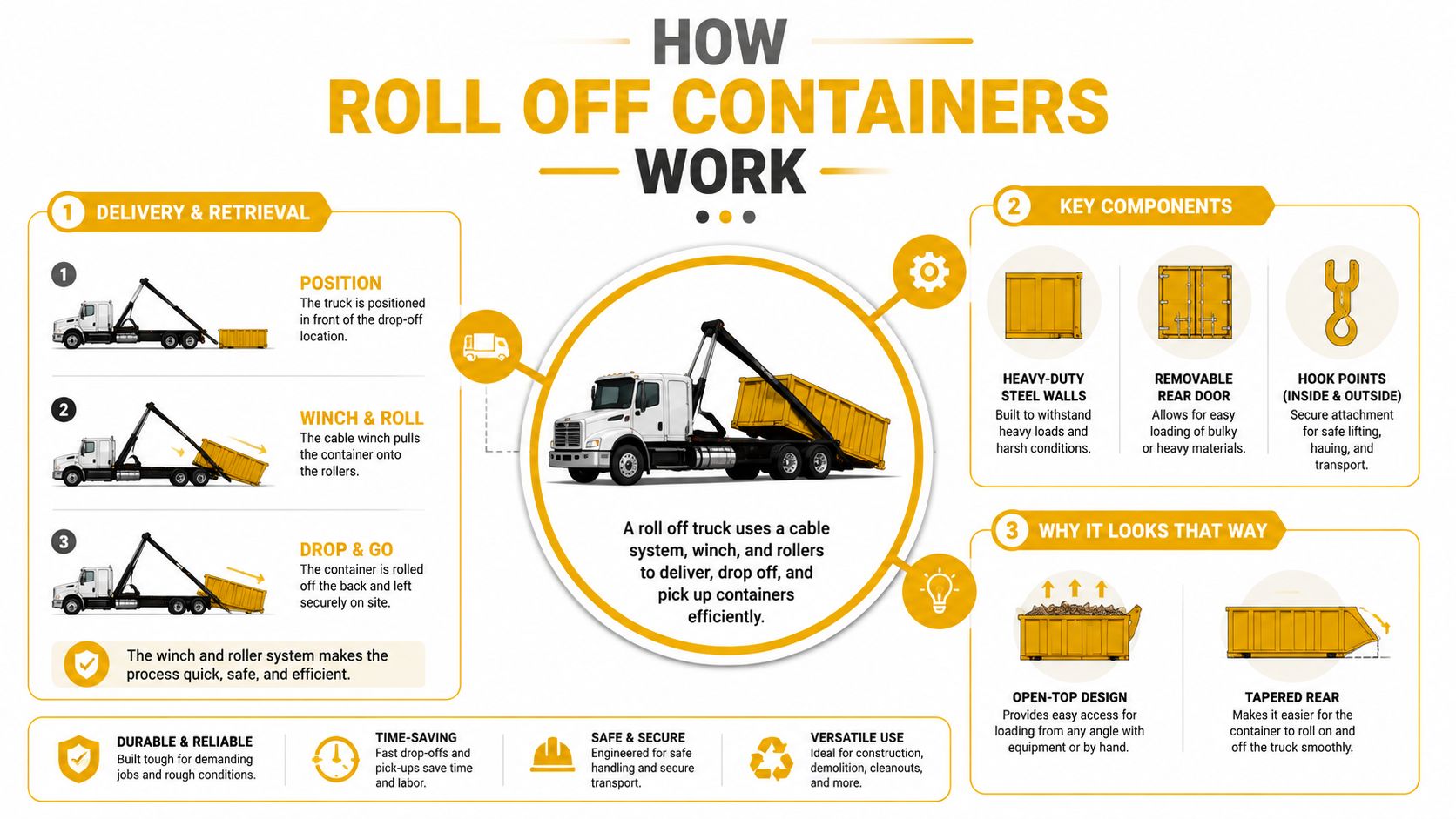
The parts that matter
The steel frame isn't decoration. New York City guidance for roll-on roll-off containers calls for ANSI Z245.30 compliance, a 3-inch taper along the full container length, 6" x 2" steel long rails with at least 1/4" wall thickness, and 8-inch-diameter rear rollers with grease fittings. It also keeps the overall container width and height to roughly 96 inches in major North American settings, with a 23-foot chassis length limit in NYC guidance (NYC DSNY guide).
Those details matter because the truck has to slide the body on and off without hanging up. The open top makes loading easy for loose debris, and the rear swing door gives crews a way to walk material in or use equipment to push it in. The tapered shape helps the unit move cleanly on the truck and improves the tipping angle when it's emptied.
Why contractors use them
Roll offs show up on construction, demolition, roofing, and large cleanout jobs because they handle bulky, irregular waste better than smaller bins. They're also easier to stage near a work zone, which keeps crews from hauling debris across the whole site. The design is simple, but the mechanics are strict, and that's why a roll off that looks “close enough” can still be the wrong fit.
The market numbers back up how central this category has become. Independent research places the broader roll-off container market at USD 5 billion in 2025 with growth to over USD 8 billion by 2033 at a 6% CAGR, and says the top 10 manufacturers may control roughly 60% of global share (Data Insights Market). That's a mature industrial category, not a niche accessory.
Standard Sizes, Capacities, and the Yard Size Trap
People talk about roll off containers by yard size because it's the fastest shorthand. That shorthand helps, but it also causes bad bookings when crews treat yardage like payload instead of volume. A bigger box doesn't automatically mean a better box, especially when the waste is dense or wet.
Common sizes at a glance
| Yard Size | Approx. Empty Weight | Best Fit For |
|---|---|---|
| 20-yard | 3,945 lb | Medium renovations, mixed construction debris, smaller demo jobs |
| 30-yard | 4,593 lb | Larger remodels, heavier cleanup loads, bigger renovation phases |
| 40-yard | 5,265 lb | Major demolition, high-volume debris, large commercial projects |
Those approximate empty weights come from a manufacturer's published roll-off brochure (Wastequip brochure). Another published build list shows some 40-yard units at about 7,820 lb depending on configuration, which is a good reminder that construction details change the final number (Wastequip brochure).
Why the biggest box can be the wrong answer
The heavier the container, the less payload margin you have left for debris. Bigger bodies need more steel in the floor plate, side sheets, and cross-members, and that adds strength at the cost of truck efficiency. On a dense load, that matters fast. Concrete rubble, wet demolition debris, or mixed material can push legal hauling weight long before the container looks full.
Field rule: Pick the container for the material density first, then think about volume.
That's the trap. A 40-yard unit can give you more space, but it also invites people to keep filling until the top looks manageable. The right question is not “how much room do I want,” it's “how much weight can this material legally become once it's wet, compacted, or mixed with fines?” For many crews, that answer changes the size decision completely.
Concrete Washout Containment as a Specialized Use Case
Concrete washout isn't regular debris hauling. It's a separate job with a separate risk profile, because the slurry is alkaline and can contaminate soil and runoff if it's handled like ordinary trash. The washout container has to capture liquid, keep it from escaping, and sit close enough to the pour that crews will use it instead of improvising.
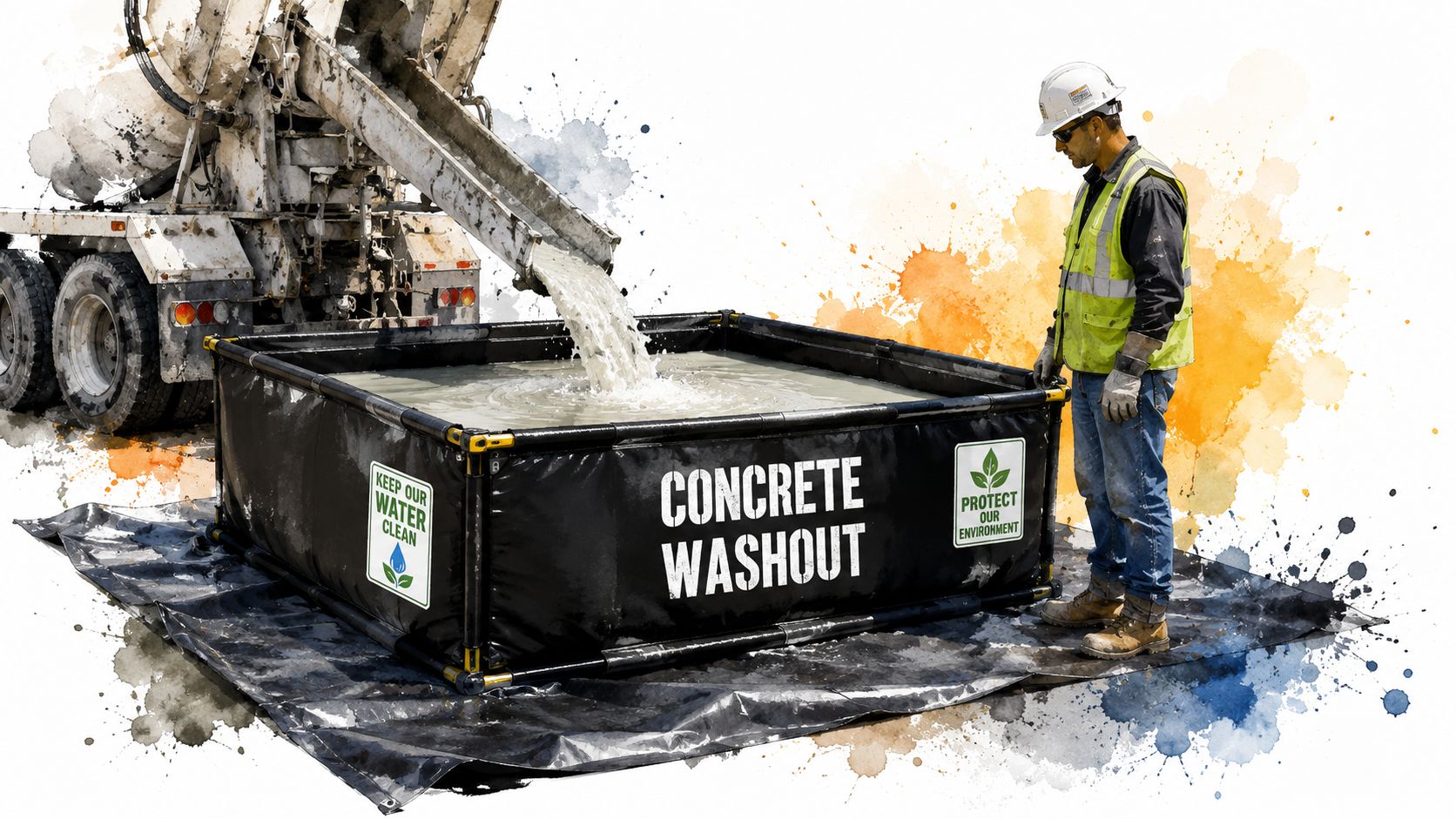
What makes washout different
A general roll off is built for bulk waste. A concrete washout container is built to hold slurry, fines, and water without leaking. That's why a watertight design and proper placement near the mixer matter so much. If the crew has to walk too far or dump into a makeshift spot, the site ends up with splatter, tracking, and cleanup that should never have been necessary.
Specialized washout pans also come in sizes that match pour volume instead of generic debris volume. One container option is listed at 72 inches by 72 inches by 24 inches, with about 441 gallons of capacity and roughly 18.25 tons of load rating. A shorter 14-inch depth version is listed at about 310 gallons, which makes more sense for smaller pours and retrofit work. Those dimensions show how washout gear is designed around slurry management, not just open-air bulk storage.
The jobsite logic
If a crew is doing a big slab or repeated pump cleanout, the washout container needs enough capacity to avoid overflow between pickups. If the job is smaller, a lower-profile option can keep access easier and reduce wasted space. Either way, the container should be part of the pour plan, not something someone remembers after the first truck arrives.
When washout is handled correctly, the site stays cleaner, the risk of contamination drops, and the foreman isn't fighting dried concrete in the wrong place later. That's the value. It keeps the pour area orderly while the crew keeps moving.
Regulatory and Environmental Compliance Without the Headache
Most crews don't want a lecture on stormwater rules. They want to know what will get them in trouble. The short version is simple, washout water is treated as industrial wastewater, and inspectors want to see that it's contained, not allowed to run into soil, drains, or unprotected ground.
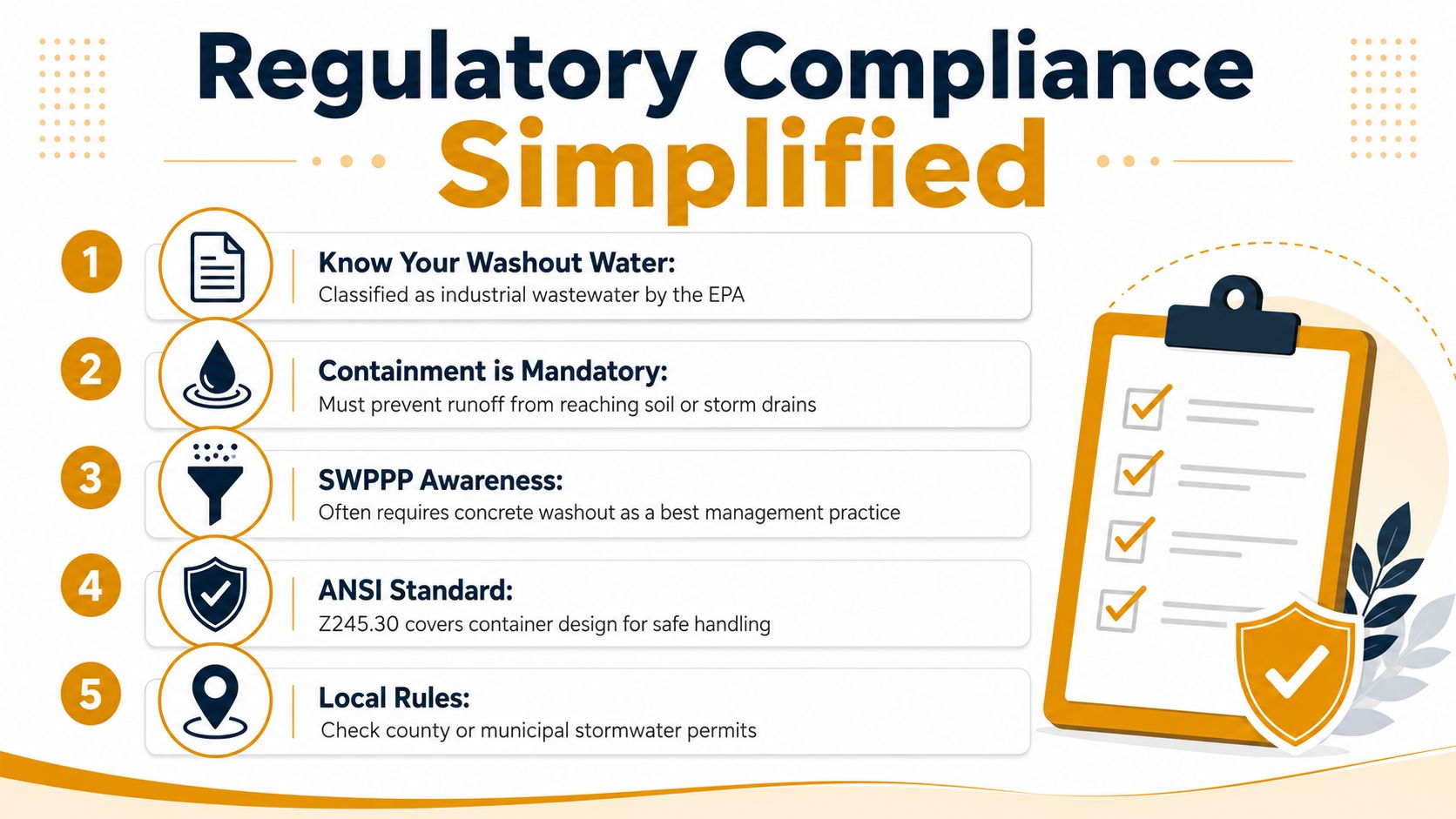
The rules that matter on site
A contractor usually only needs to keep five things straight. First, the washout area has to contain the slurry. Second, the site plan should account for SWPPP expectations where they apply. Third, the container or pan should be built and used in a way that matches ANSI Z245.30 as the recognized handling baseline for roll-off construction (NYC DSNY guide).
Fourth, local stormwater permits can add their own requirements. Fifth, the crew has to keep the container from becoming an accidental discharge point. That sounds obvious, but in the field it usually means checking whether the pan is positioned correctly, whether runoff can reach it, and whether the disposal plan matches the material in the box.
Why this isn't optional
Washout missteps can create project delays, rejected closeout paperwork, or enforcement problems. The bigger problem is that these mistakes are usually preventable. When the washout setup is chosen with compliance in mind, the crew doesn't have to improvise a solution after the pour is already underway.
Simple standard: If the slurry can leave the containment area by gravity, splash, or tracking, the setup needs to be fixed before the next mixer comes in.
The safest approach is to ask the rental provider whether the container is intended for washout use, what containment features it has, and what the pickup expectations are once it's loaded. That conversation takes a minute. Cleaning up a compliance problem takes a lot longer.
Access, Delivery, and Why the Truck Matters More Than the Box
A lot of failed deliveries start with the site, not the container. The truck needs room to reach the placement point, line up, set down the body, and then come back later to pick it up. Independent facility-planning guidance notes that roll-off trucks typically need direct contact with the container, about 18 to 24 feet of overhead clearance, and a total pickup length of roughly 52 feet (UNC facilities guidance).
The hidden blockers
A narrow gate can stop the whole job. So can a steep approach, soft ground, parked equipment, low wires, scaffold braces, or a ceiling overhang that looked harmless until the truck was already on the street. Even when the container itself is the right size, the truck geometry can make the placement impossible.
The other part crews miss is securement. Once the container is on the ground, safety guidance says it has to be blocked and secured against forward, lateral, vertical, and rear movement (Colorado Industrial Recycling guide). That isn't paperwork theater. It's what keeps the unit from shifting on a slope or creeping under load.
What a foreman should check first
- Approach room: Can the truck line up without backing through traffic or over soft fill?
- Headroom: Is there enough overhead clearance for the lift and tilt path?
- Turning space: Can the driver make the angle without clipping equipment or fencing?
- Ground condition: Will the truck sink, lean, or lose traction at the set point?
- Pickup path: Will anything block retrieval after the container is full?
Don't assume the box size is the problem. On most crowded jobs, the site is the problem.
That's why the best rental conversations start with a site walk, not a size guess. If the approach is wrong, the container never gets used. If the approach is right, even a busy site can keep moving.
Pricing, Surcharges, and Reading a Rental Quote
A roll off quote usually looks simple until the line items start stacking up. The base rate covers the container itself, but delivery, pickup, terrain, mileage, and rush timing can change the actual price fast. A low daily headline only helps if the rest of the quote is clear.
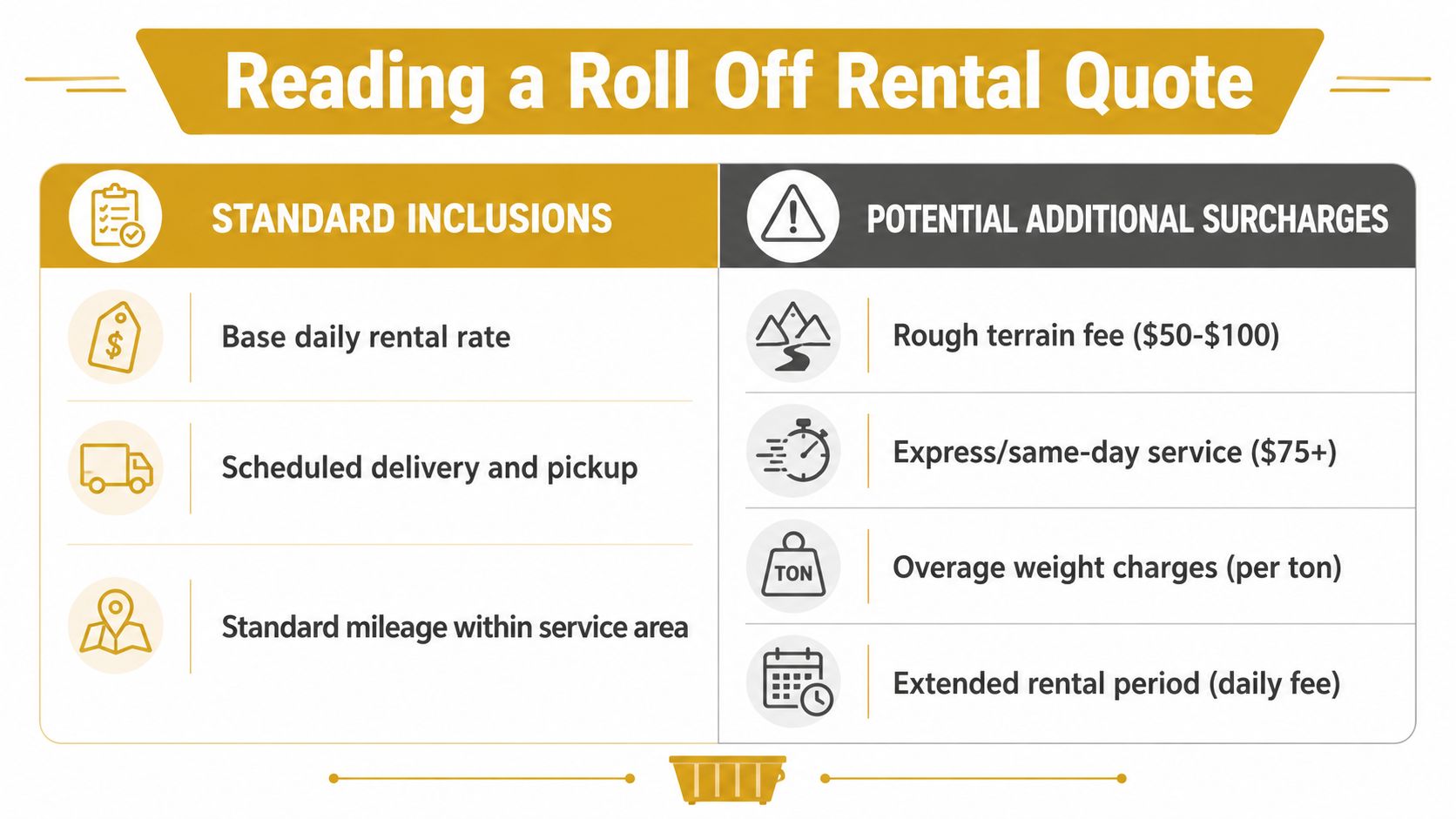
Read the quote line by line
A transparent rental quote should separate the base daily rate, scheduled delivery and pickup, and standard mileage inside the service area. It should also make the extras obvious. Examples include rough terrain fees, express or same-day service, overage weight charges, and an extended rental period.
Here's the practical part. If a quote is cheap up front but vague on delivery conditions, the invoice can surprise you later. If the site has rough access or the job needs a fast turnaround, the added charge should be visible before the truck rolls.
Questions worth asking before you book
- How long is the rental period? Know when the clock starts and when it ends.
- What tonnage is included? Volume is not the same as legal weight.
- What happens if the load is heavy? Ask about overage charges before concrete or wet debris goes in.
- Is pickup included? Don't assume it is if the quote is fragmented.
- What does cancellation cost? Bad weather and permit delays happen.
Reborn Rentals' published pricing notes are a good example of why transparency matters, because the model starts at $25 per day and discloses additional charges for delivery, rough terrain, and express orders. That kind of straight language helps crews budget without guessing at the final number.
The Contractors Checklist Before You Book
Before you place the order, run the same quick check every time. First, match the container size to the material density, not just the pile size. Second, confirm whether the job needs a concrete washout container instead of a general debris box.
Then walk the access path. Look at overhead clearance, turning room, ground condition, and pickup space, because the truck is usually the limiting factor. Finish by checking compliance needs, delivery timing, and quote line items so you're not surprised when the bill comes in.
If the truck can get in, the load stays legal, and the washout stays contained, the rental usually goes smooth.
Good container planning is a small jobsite habit with a big payoff. It keeps the pour moving, helps the crew stay clean, and cuts the odds of a last-minute scramble that burns time and money.
If you're lining up a pour, a demo phase, or a cleanup that needs the right container on time, Reborn Rentals has the kind of washout-focused equipment and straight pricing that helps crews stay organized. Visit Reborn Rentals to see what's available, confirm the fit for your site, and get a cleaner plan in place before the truck rolls.