
Roll Off Truck Rentals Guide for Contractors
A lot of crews run into the same problem at the worst possible time. The pour is on the board, demo debris is still sitting in a pile, the access lane is tighter than anyone remembered, and someone asks where the concrete washout is supposed to go. That's usually when people realize they didn't rent a “dumpster.” They rented a moving part of the jobsite.
A roll off setup only works when the truck, container, placement area, pickup path, and waste stream all fit together. If one piece is off, the container lands in the wrong spot, the truck can't swing in, the load ends up overweight, or slurry gets dumped where it never should have gone.
Treat this like field planning, not office paperwork. A good rental call starts with a few practical questions. What material are you loading, how heavy is it, where can the truck sit, and is concrete washout being handled in a separate containment system? Get those answers first, and most of the usual headaches shrink fast.
Introduction to Roll Off Truck Rentals on Active Jobsites
On an active jobsite, timing is everything. You might need a container for framing scrap in the morning, a swap after interior demo, and a clean area near the pour where slurry stays out of the debris box. That's why experienced supers don't think about roll off truck rentals as a metal box with wheels showing up at the curb. They think of it as a site service with choreography.

Here's where newer PMs often get tripped up. They focus on container size first, when the first question should often be access. If the truck can't enter cleanly, lift cleanly, and leave without tying up the whole site, the right size on paper won't save you.
What the rental really includes
A roll off rental usually means three things working together:
- Truck service: A driver brings the container, sets it down, and later returns for pickup or swap.
- Container use: The box stays on site while your crew loads debris.
- Disposal movement: The provider hauls the full container out when your loading phase is done.
That sounds simple, but every one of those steps can go sideways if the material in the box doesn't match the plan.
Practical rule: General debris and concrete washout are not the same disposal workflow, even when they happen in the same work zone.
Where concrete changes the plan
This is the gap many rental guides miss. A roll off container handles a lot of construction waste well, but wet concrete, slurry, and wash water need separate containment. If crews rinse tools, pump parts, or chutes into a standard dumpster, you can end up with cleaning charges, damage, and a mess that creates environmental problems.
That's why smart site planning separates two needs early. One container for debris. One contained area or washout pan for wet concrete byproducts. Once you see those as different lanes, your rental decisions get easier and cleaner.
How Roll Off Truck Rentals Work and Why the System Exists
A roll off system makes more sense if you stop thinking of the truck as the trash bin. The truck is really the shuttle, and the container is the swappable cargo pod. The truck brings a box, leaves it behind, and comes back later to take that box away or trade it for another one.
That simple swap model is why the system stuck.
The basic mechanics
The truck arrives with an empty container, places it on site, and drives away. Your crew fills the container during a defined phase of work. When it's full, the truck returns and loads it back onto the chassis for transport.
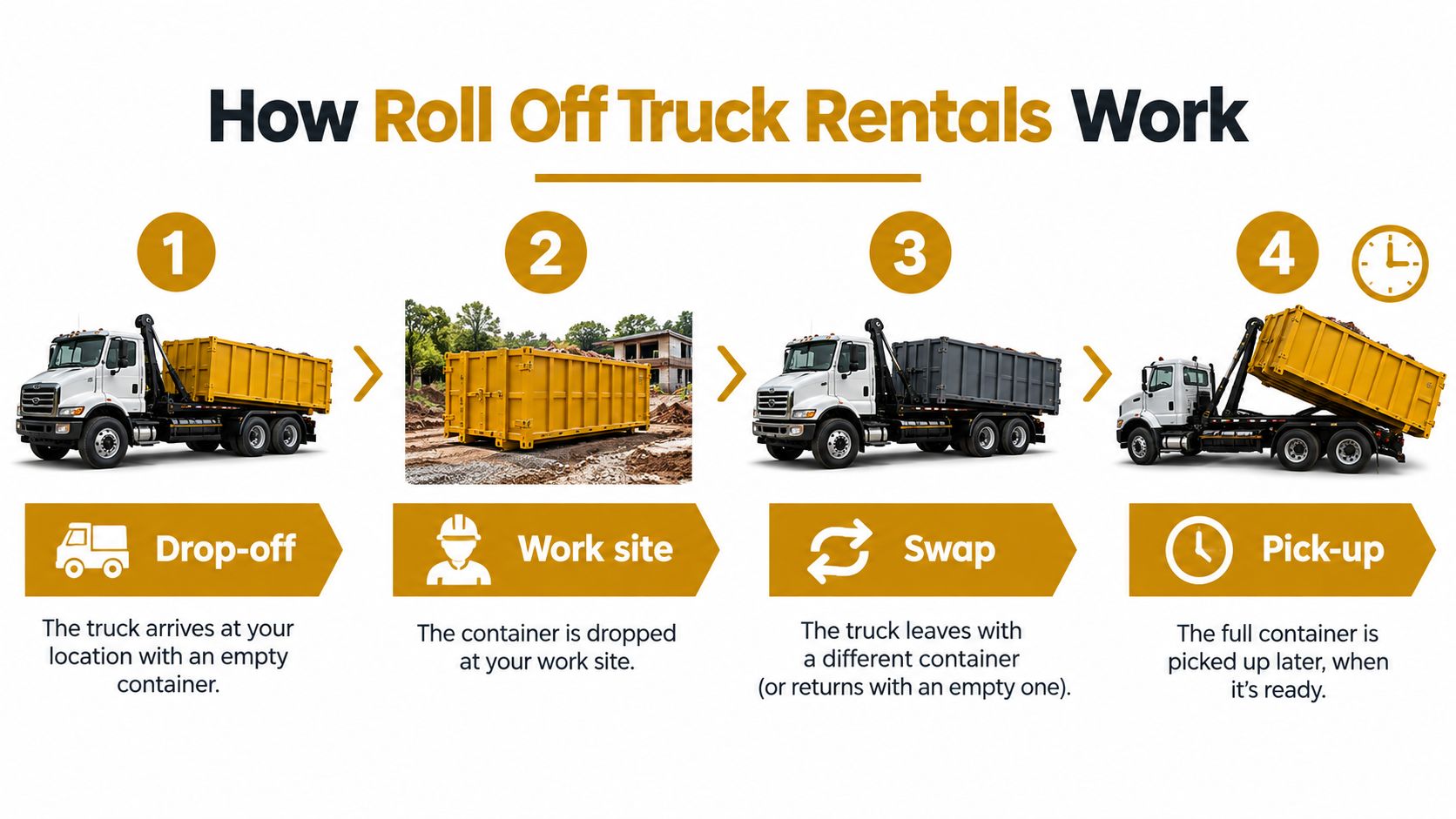
That interchangeability is the whole point. Industry history traces the roots of the system to the 1930s, when George Dempster developed the Dempster Dumpster lift system, with modern roll off trucks arriving later in the late 1950s for large removable containers used in construction, demolition, and commercial waste work, as described in Waste Advantage Magazine's history of the roll off truck.
Why the model became standard
Contractors needed a way to keep debris moving without parking a truck on site all day. The removable container solved that. One truck could serve multiple projects because it didn't have to wait while crews loaded material by hand over several hours or days.
That matters more than it sounds. On a busy schedule, the ability to drop, leave, and return saves staging space and keeps hauling assets moving.
The roll off model became common because it matched real field conditions. Work happens in bursts, and debris leaves in batches.
What problem it solves on site
Roll off truck rentals are especially useful when debris volume is temporary but heavy enough to require organized hauling. Think tenant improvement, roofing tear-off, selective demo, or new construction cleanup. In each case, the site needs short-term containment that doesn't become a permanent fixture.
A few practical examples make this clearer:
- Interior renovation: The crew needs a container close enough for labor efficiency, but not blocking deliveries.
- Exterior demo: The box may need to sit near the tear-down zone, then move once framing starts.
- Multi-phase work: One container can be swapped out without redesigning the whole site circulation plan.
Why standardization helps PMs and supers
Standard container handling gives you predictable operations. Drivers know how the pickup works. Suppliers know what equipment pairs with what box style. Field teams can plan loading windows, cleanup pushes, and swap timing with fewer surprises.
That predictability is the quiet advantage of roll off truck rentals. They're not glamorous. They're just one of those systems that keeps a project from getting bogged down in its own debris.
Choosing the Right Size and Capacity for Your Load
Picking the right container starts with a simple truth. Heavy material fills weight before it fills space. Light material does the opposite. That's why the same box that works fine for wood scrap can become a bad choice for broken concrete.
A lot of mistakes happen because teams choose by volume only. They look at pile size, not load density.
Start with the material, not the container
Ask what's going in:
- Mixed construction debris: Drywall, wood, packaging, light demo.
- Dense inert material: Concrete, masonry, dirt, asphalt, block.
- Wet byproducts: Slurry, wash water, chute rinse, pump cleanup.
That third category is where many jobs get sloppy. Wet concrete byproducts usually need separate containment, not just “some room left in the dumpster.”
What the truck can safely handle
Truck specs matter because the container doesn't move by magic. Typical roll off truck builds for 18 to 22 foot containers use a rear axle capability around 46,000 lb, a raised dump angle near 47°, a hoist length of roughly 279 7/16 in, and a truck body weight of about 7,562 lb, according to Big Truck Rental's roll off truck specifications overview.
Those numbers tell you something practical. The truck's hoist geometry and axle capability set real limits on what can be lifted, transferred, and dumped safely. In field terms, if you overload a container with dense material, the issue isn't just disposal cost. It can become a loading and transport problem.
Field check: When the load is concrete-heavy, assume weight is the first limit until your hauler says otherwise.
Use a simple selection method
Think through the load in this order:
- Material type first. Mixed trash, clean fill, or wet concrete byproduct.
- Weight second. Ask whether the material is likely to hit the allowable load before the box looks full.
- Handling method third. Will the material dump cleanly, or does it need separate containment?
Here's a practical comparison.
| Container Size | Best For | Weight Consideration | Watch Out For |
|---|---|---|---|
| Smaller roll off container | Tight sites, light renovation debris, short cleanup phases | Usually easier to manage on access-constrained jobs | Fills quickly during demo bursts |
| Mid-size roll off container | Mixed construction debris, framing scrap, general renovation waste | Good balance when material is not overly dense | Can become overweight if crews mix in masonry or concrete |
| Larger roll off container | Bulky but lighter debris, broad cleanup pushes, commercial renovation trash | Volume helps when waste is loose and not dense | Easy to overload visually with long materials |
| Dedicated heavy-material container | Concrete, block, asphalt, other dense debris if accepted by provider | Weight becomes the main constraint before volume | Don't treat it like a general trash box |
| Separate washout pan or containment unit | Slurry, wash water, tool rinse, pump and chute cleanup | Different handling need than debris hauling | Should not be substituted with a standard dumpster |
Where people get confused
Crews often lump concrete into one category. But there's a big difference between broken cured concrete and wet washout material. One may fit a heavy debris disposal stream. The other needs containment that won't leak, cake up a dumpster, or create runoff risk.
That's why some contractors use a debris container plus a dedicated washout pan on the same job. If the site includes both demolition and active concrete work, that split usually makes more sense than forcing one container to do two jobs.
What Drives Cost and How Transparent Pricing Works
A quote can look cheap right up until the job starts producing the wrong kind of waste.
That happens a lot on concrete jobs. A PM prices one roll off for debris, then the crew starts washing out chutes, pump parts, buckets, and tools. Now the site has two disposal streams instead of one. Dry debris goes one way. Wet slurry and wash water go another. If that split was not defined at the start, the budget usually drifts fast.
The practical way to price a rental is to separate the moving parts before you compare vendors. A roll off quote is really a stack of smaller decisions: how long the box stays, what goes in it, how heavy the load gets, how many times the truck has to move, and whether concrete washout needs its own containment plan.
The main cost drivers
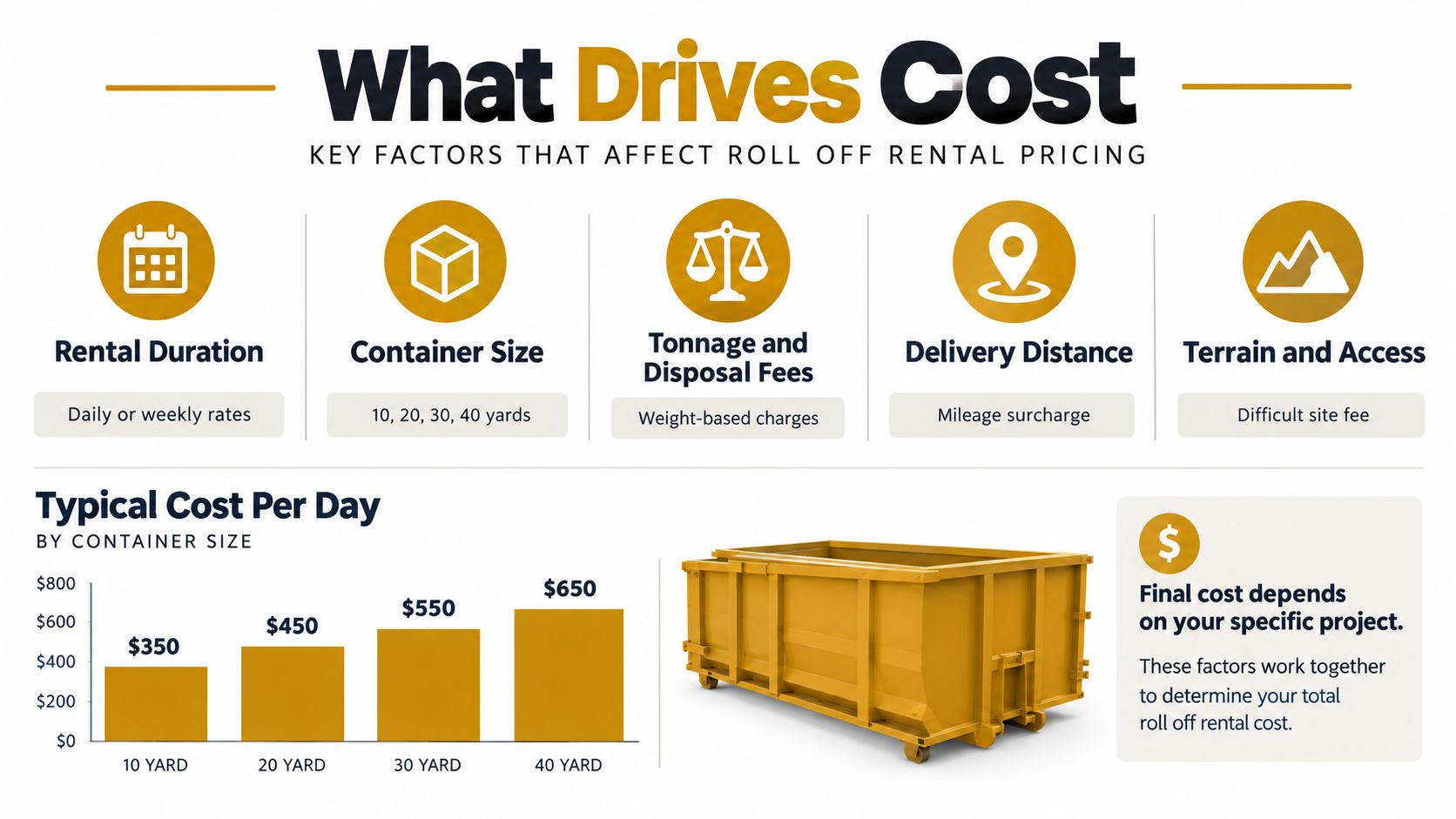
A few variables drive most of the number on the page:
- Rental duration: More days on site usually means a higher base charge.
- Container size: Size affects hauling assumptions and how the provider prices the equipment.
- Weight and disposal handling: Dense material, special waste streams, and contaminated loads often cost more to process.
- Delivery distance: Longer travel can raise transport charges.
- Access conditions: Tight placement areas, soft ground, or difficult approaches can add labor, time, or equipment needs.
- Swap frequency: A box that fills and gets exchanged multiple times can cost more than a longer single-container rental.
- Separate washout containment: Active concrete placement often calls for a washout pan or containment unit in addition to the debris container.
One point causes a lot of confusion. Broken cured concrete and concrete washout do not price the same way, because they do not move through the same disposal process. A heavy debris box may work for cured chunks if the provider accepts that material. Wet washout usually needs its own pan or containment unit because it can create leakage, contamination, and cleanup issues inside a standard dumpster.
How to compare quotes without guessing
Ask every provider the same plain questions and write the answers side by side.
- What does the base rate include? Delivery, pickup, and the standard rental window should be clear.
- How is weight billed? Ask where the limit sits and what happens if the load runs heavy.
- What materials are excluded or treated separately? Concrete washout needs to be named directly.
- What triggers extra charges? Common examples include return trips, rejected loads, difficult placement, or rush service.
- Is a washout pan quoted separately from the roll off? If concrete crews are active, it should be.
That last question saves headaches. A standard dumpster quote can look complete while leaving out the washout side entirely. Reborn Rentals uses separate pricing language for washout containment rentals, with pricing starting at $25/day, plus notes about delivery, rough terrain, and express-order charges, as noted earlier. Whether you use that vendor or another one, the lesson is the same. Debris hauling and washout containment should appear as separate line items if the job has both.
A practical budgeting habit
Build your estimate like a field checklist, not like one lump sum:
- Base container rental
- Planned rental period
- Expected swap or haul count
- Disposal assumptions by material type
- Weight exposure for dense debris
- Access-related charges
- Separate washout containment for active concrete work
A roll off and a washout pan work like two different buckets in the budget. One handles solid debris. One handles slurry and rinse water. Combining them on paper often leads to the same mistake in the field.
Read the fee language before booking
Plain language matters more than a low headline rate.
If a provider cannot explain how they bill overweight loads, mixed material, rejected contents, concrete contamination, or extra service trips, keep asking questions before dispatch. The goal is a quote you can manage on site. Transparent pricing means you know what the truck is hauling, what disposal path each material follows, and where extra cost starts.
Delivery Pickup Logistics and Site Prep That Prevents Delays
A roll off delivery can fail before the truck even reaches the drop point. The gate may be wide enough, but the turn isn't. The path may be clear, but the overhead isn't. The pad may look firm, but it won't hold under load after rain.
That's why site prep has to match the truck, not just the container.
Know the truck's operating footprint
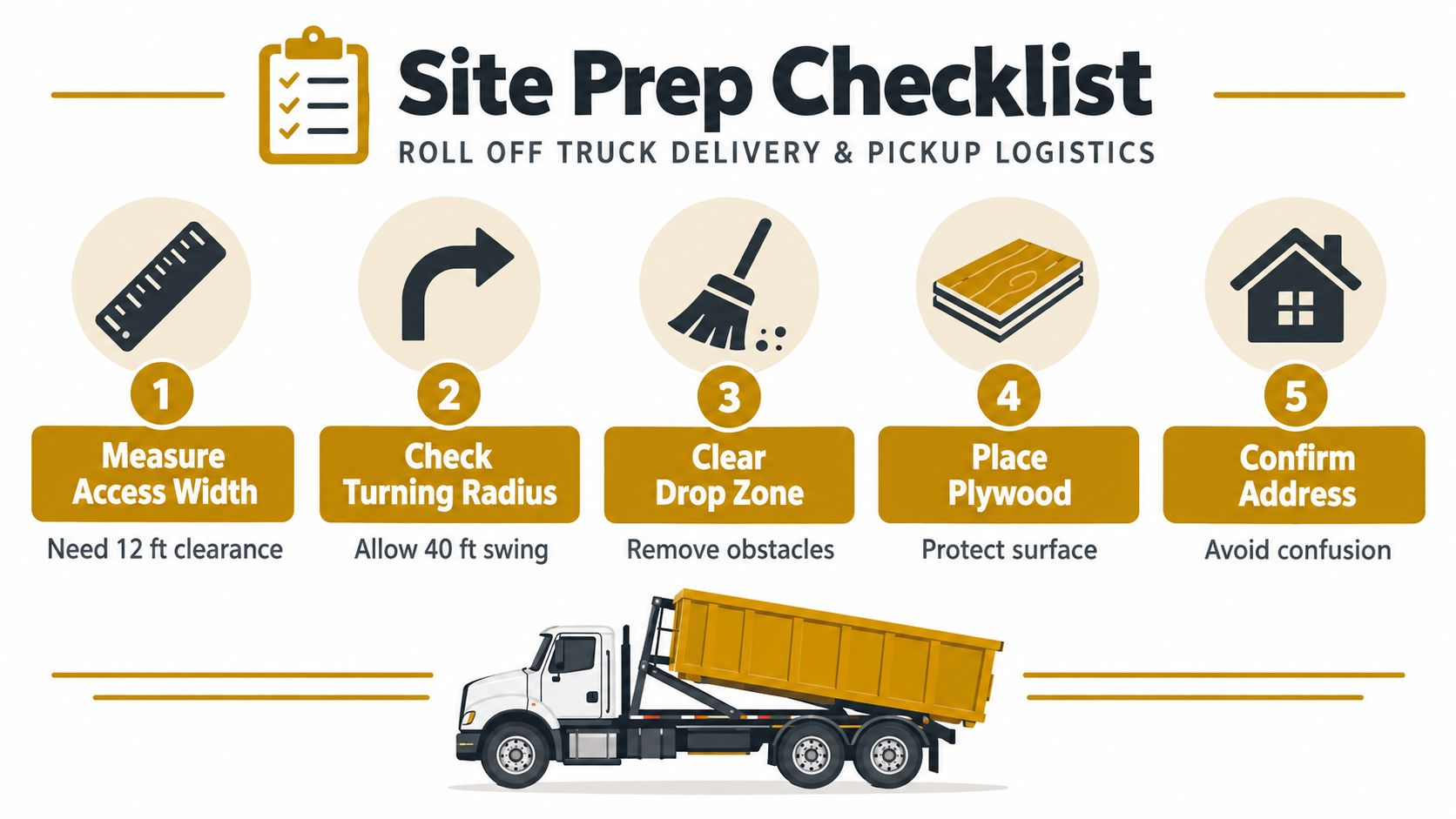
Facility planning guidance gives a good picture of the space these vehicles need. Roll off service vehicles are listed at 34 ft 9 in in truck length, with a 27 ft wheelbase, a 65 ft turning radius, and about 52 ft total length when picking up a container, along with 18 to 24 feet of overhead clearance, according to the University of North Carolina service vehicle planning guide.
Those dimensions explain why a site can look accessible on paper and still be a problem in the field. Pickup is the big moment. The truck isn't just parking beside a box. It needs room to align, lift, and pull the container onto the chassis.
What to check before the driver arrives
Walk the route like you're driving the truck yourself.
- Gate and path width: Don't just measure the opening. Check parked vehicles, fencing, and stacked material that narrows the route.
- Turning movement: A truck may enter the site but still fail to line up for placement or pickup.
- Overhead conflict: Watch for power lines, scaffold, tree limbs, canopies, and temporary protection.
- Ground condition: Soft subgrade, fresh paving, or broken asphalt can become the issue.
Place the container where work and pickup both make sense
Crews usually want the box as close as possible to the work face. Drivers usually want the cleanest straight approach. You need both.
A good placement spot does three jobs:
- it's easy for labor to reach,
- it doesn't block deliveries or emergency movement,
- and it leaves enough room for later pickup.
Don't place a container where it's convenient to load if it'll be miserable to retrieve.
Separate debris loading from washout activity
Concrete work adds one more planning layer. Keep the washout pan or containment area close enough for the crew to use, but far enough from the debris container that no one starts treating the dumpster like backup washout space.
A short prep list helps:
- Mark the drop zone: Paint, cones, or layout stakes help prevent material creep into the truck path.
- Protect the surface: Use appropriate protection where the provider recommends it.
- Keep the pickup lane open: Remind trades that “temporary storage” in front of the container becomes a failed pickup.
- Assign one contact: The driver needs one person who can answer placement questions fast.
Good logistics feel boring when they work. That's the point.
Permits Environmental Compliance and Concrete Washout Best Practices
Compliance on a debris job and compliance on a concrete job overlap, but they aren't identical. The truck has its own operating rules. The site has access and placement rules. Then concrete washout brings stormwater and containment concerns into the picture.
If you bundle all of that under “dumpster rental,” you'll miss something important.
Truck compliance and operator reality
Roll off trucks commonly fall under commercial motor vehicle rules when they exceed 10,001 lbs GVWR, which brings them under FMCSA requirements tied to CDL use, pre-trip inspection, DVIR, and annual DOT inspection, as summarized in Fleet Rabbit's roll off truck maintenance and compliance checklist.
For a contractor, the takeaway is simple. These are not casual pickup-and-drop vehicles. They're regulated commercial units, and that's one reason providers care so much about safe access, staging, and pickup conditions.
Permits and site control
Permit rules depend on location and placement. If the container sits in the public way, permit questions can come up quickly. If it stays fully within the site, the issue may shift toward internal traffic control, owner requirements, or project-specific environmental plans.
What matters in practice is that the PM checks early, not after delivery is booked.
A basic field checklist helps:
- Street placement: Verify whether local permit approval is needed.
- Private site placement: Confirm owner rules, fire lane restrictions, and access controls.
- Project documents: Check SWPPP notes and environmental requirements before the first pour.
Concrete washout is a separate compliance workflow
This is the part many teams underestimate. Concrete washout is not just ugly water. It's a distinct material handling issue. Rental guidance on concrete disposal warns that putting washout into a standard dumpster can trigger major cleaning fees or damage, and it notes that concrete-related loads may require special handling and sometimes separate clean-fill rules, as explained in Trash It All's guidance on concrete in a dumpster.
That distinction changes your site plan.
Use a contained washout setup when crews are generating:
- chute rinse,
- pump cleanup,
- tool wash water,
- wet slurry from finishing or cutting operations.
Better washout habits in the field
A few habits go a long way:
- Set one designated area: Crews use washout correctly when it's obvious and close enough to use.
- Keep it contained: Don't let slurry migrate toward inlets, soil, or traffic areas.
- Don't overfill: The container has to remain manageable through the whole pour cycle.
- Cover or secure when idle: That helps reduce accidental contamination from other site activity.
- Dispose of hardened waste correctly: Once cured, the remaining material may belong in a different disposal stream than the liquid phase did.
The big lesson is straightforward. A standard dumpster is for debris. A washout pan is for washout. Treat those as separate lanes, and compliance gets much easier.
Common Use Cases and When to Choose a Different Solution
A superintendent sets a 30-yard roll off by the trailer on Monday. By Wednesday, the box is doing its job. Broken drywall, pallet wrap, scrap lumber, and demo debris are all in one place instead of spread across the site. Then the concrete crew rinses chutes and tools and looks for the nearest container. That is the moment a good debris plan can turn into a disposal mistake.
Roll off truck rentals work best when the waste stream is dry, bulky, and predictable enough to load in batches. They are built for the steady churn of demolition, roofing tear-off, tenant improvement work, and new construction cleanup. If the material can be tossed, stacked, and hauled as jobsite debris, a roll off usually fits the phase well.
Where roll off rentals make sense
Use this system when the container needs to act like a staging point for debris before haul-off:
- Commercial renovation: Drywall, metal studs, ceiling tile, flooring, and packaging pile up fast.
- Demolition phases: Crews can load continuously, then swap the container without shutting the whole area down.
- New construction cleanup: Trash shows up in waves, and a removable box matches that stop-and-start pace.
- Roofing projects: Tear-off material is bulky, messy, and easier to contain close to the work area.
When another containment method is the better call
A roll off is one tool, not the whole plan.
Some materials need their own lane because they behave differently in transport, disposal, or compliance review:
- Concrete pours and finishing work: Use a washout pan for slurry, chute rinse, and tool wash water. A debris dumpster is the wrong container for that stream.
- Dense inert loads: Concrete, brick, block, or clean fill can exceed what a mixed-debris setup is meant to handle. Ask for a container and haul plan matched to heavy material.
- Small punch-list or retrofit work: If one crew is generating very little waste, a full-size roll off can be more container than the phase needs.
- Tight-access sites: If the truck cannot enter, turn, or place the box safely, you may need a smaller container strategy or a different pickup method.
The practical question is simple. Are you dealing with debris, or are you dealing with a separate waste process?
That distinction matters more on jobs with active concrete work. Dry scrap and broken packaging can share a roll off. Wet slurry and rinse water should not. They need containment that keeps liquid and sediment controlled until proper disposal. Treat it like two traffic lanes on the same jobsite. One lane moves debris out. The other contains washout so it does not foul the dumpster, the ground, or the haul ticket.
Industry reporting continues to point toward tighter expectations around sorting, disposal visibility, and C&D recycling practices, as noted in Dumpsters.com reporting on 2026 CDRA insights. The field lesson is straightforward. One container for everything creates cost and compliance problems faster than it saves time.
If you remember one rule, use this one: a roll off container handles debris removal. Concrete washout needs its own containment plan.
If your project has both debris hauling and active concrete work, line up both containers before delivery day. Reborn Rentals provides washout pans and related delivery options for the separate slurry-handling workflow covered here. To sort out the washout side clearly and book equipment with upfront pricing, visit Reborn Rentals.