
Spill Containment Berm Rental: A Practical 2026 Guide
You've got the truck staged, the washout pan is too small, and the pour is already on the board. The superintendent wants a fix before first mud, the concrete crew wants somewhere to dump slurry, and nobody wants to be the one explaining a containment spill to the owner or the inspector. That's where spill containment berm rental stops being a line item and becomes the thing that keeps the job moving.
Why Berm Rentals Exist and Who Uses Them
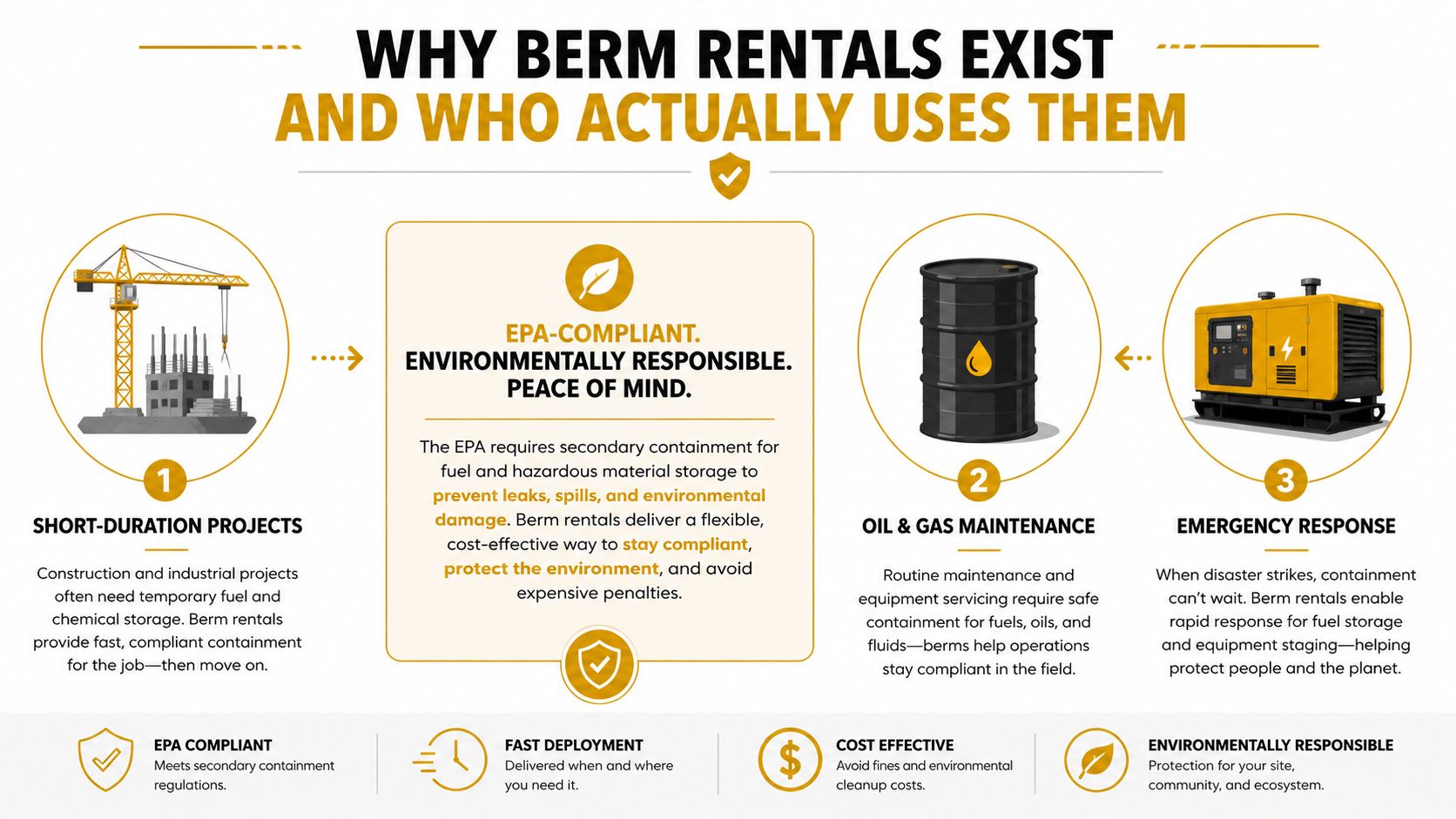
A foreman on a muddy jobsite usually doesn't start the day thinking about containment. He starts with a hose, a pump, a generator, a tanker, or a concrete chute that is already making a mess, then realizes the work zone needs a place for liquid to go that isn't the dirt, a ditch, or the storm drain. That is the main reason berm rental exists. It gives crews a temporary containment footprint without forcing them to buy and store a permanent asset they may only need for a few weeks.
The market is already showing steady demand. One recent estimate values the global spill containment berm market at USD 159.72 million in 2025, rising to USD 173.86 million in 2026 and reaching USD 303.22 million by 2032, with a 9.59% CAGR over that period. Another study projects about $0.4 billion in 2025 and $0.6 billion by 2034 with 5.2% CAGR, and says North America holds 39% of global revenue in 2025, all from the same market brief on the sector's expansion and regional demand (GII Research market overview). That scale matters because it shows this is not a niche panic-buy category, it is a repeat-use industrial rental segment.
Who uses berm rentals
Oil and gas crews use them for fueling, transfers, and maintenance work. Utility teams use them under generators and washdown points. Concrete crews use them for washout and slurry control, especially when a pump or chute is moving fast and the pad is already crowded. Construction and industrial maintenance teams rent them because they need secondary containment for a short window, not a permanent installation that sits unused after the job closes.
Practical rule: if the work is temporary, the contamination risk is real, and the site footprint changes by the week, rental usually beats ownership.
Ownership also creates the wrong kind of friction. You buy once, then store, inspect, clean, repair, and depreciate it between jobs. Rental shifts that burden into a predictable job-cost expense, which is easier to carry on a short-duration project and easier to justify when the containment need is tied to a specific pour, fuel transfer, or shutdown window.
Sizing a Berm Without Guesswork
The cheapest mistake is the one that looks fine on the quote and fails on the pad. A berm that's too small, or too shallow, can satisfy nobody, not the foreman, not the inspector, and not the accounting team that now has to eat a second delivery. The right sizing workflow starts with the actual footprint, not the label on a catalog page.
Start with the equipment footprint
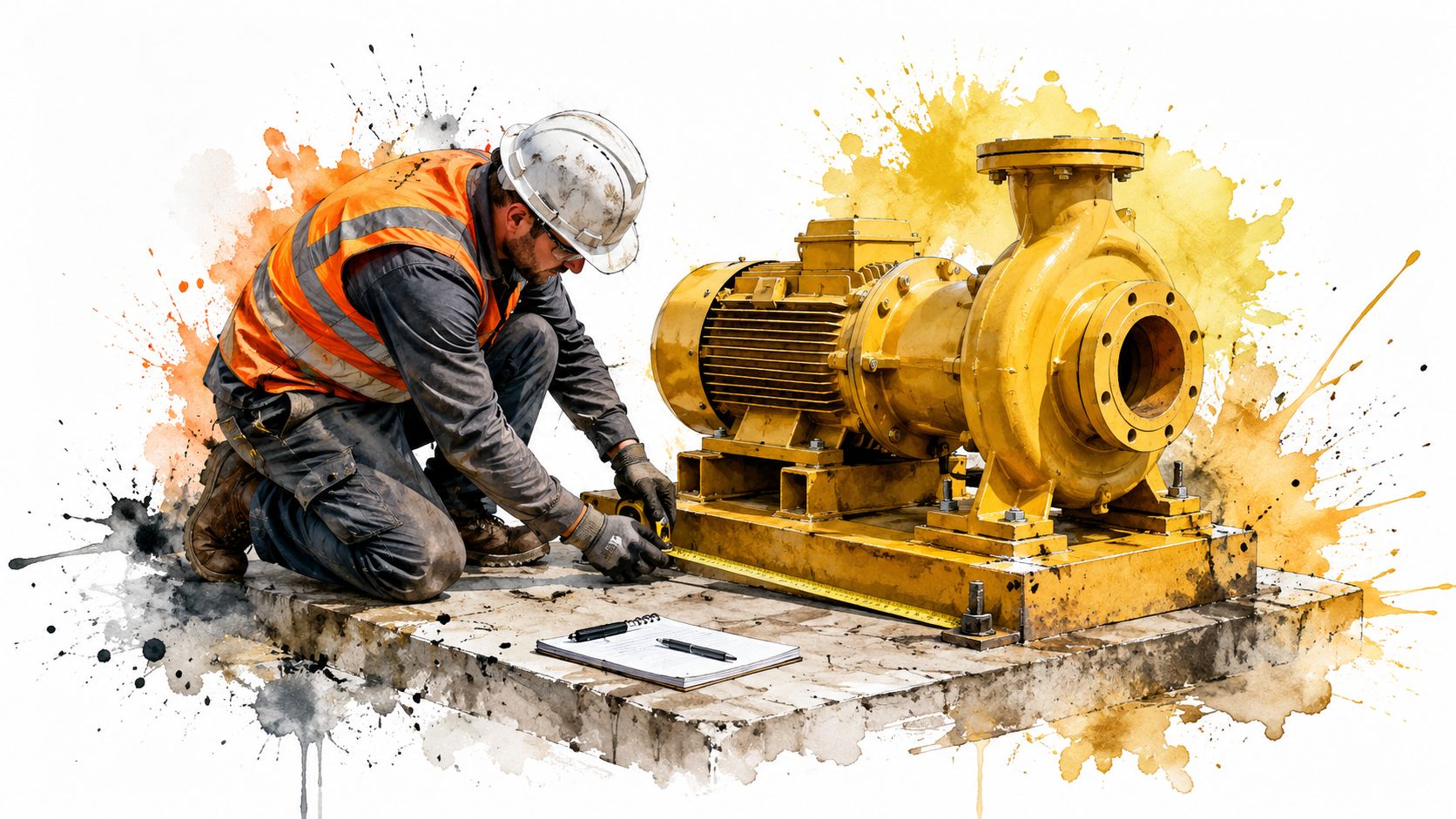
Measure the equipment or work zone, then add about 4 ft to both the length and width for working clearance, as recommended in the sizing workflow from the rental-markets source (4 Spill Containment sizing guidance). That clearance matters because crews don't work edge-to-edge in practice. Hoses cross corners, operators step in and out, and a berm that fits only on paper becomes awkward the minute a pump skid or hose reel needs room.
Then size the berm for at least 110% of the largest single contained volume. That rule keeps the project from depending on a perfect day, a perfect pour, or a perfect fuel transfer. It also gives you a line of defense if someone asks why the containment volume wasn't built right at the edge of capacity.
Use the wall-height conversion before you order
One useful benchmark says a 1 ft wall provides 7.48 gal per square foot (4 Spill Containment sizing guidance). That conversion is what lets a foreman move from gallons to footprint without guessing. If the work call for a certain contained volume, the wall height and floor area have to work together, because a low wall can choke off capacity even when the floor looks large enough.
Here's the way crews usually think through it on Monday morning:
- Measure the footprint. Grab the actual dimensions of the skid, pan, tote zone, or washout area.
- Add working clearance. Build in the extra room around the edges so hoses and boots aren't fighting the wall.
- Check the largest single volume. Use the 110% rule before you talk to the vendor.
- Match wall height to the task. If the wall is too low, the footprint number is meaningless.
A concrete washout setup and a fueling-staging setup can look similar from a distance, but they don't behave the same. Washout loads can be messy and fast-moving, while fueling is usually about clean transfer control and access for the nozzle. The right size is the one that fits the job you're running, not the one that looked large enough in the catalog photo.
Choosing the Right Berm Type for the Job
Berm type drives the rental cost, not just the line on the quote. A rig that works beautifully under a stationary washout station can be a headache around vehicles, and a drive-through model can be overkill for a small generator pad. The wrong choice usually shows up later as damaged walls, extra handling, or a berm that has to be swapped after it's already on site.
Match the berm to the movement on site
Rigid hard-wall berms make sense where the equipment mostly stays put, like concrete washout under a chute or a tank-transfer point with controlled access. They hold shape well and are a good fit when crews need a clear boundary and don't want the walls flattening under foot traffic.
L-rod Insta-Berms are a practical rental choice for short-term containment where setup speed matters and the footprint is fairly defined. A published Canadian marine-response rental schedule lists a L-Rod Insta-Berm 20 ft x 50 ft at $225 per day, which is a useful reality check for daily-rate expectations (Basic Concepts rental guidance). That doesn't mean every berm should cost the same, it does mean the market treats temporary containment as a real daily expense, not a throwaway add-on.
Foam-wall portable berms work well when the site needs easy deployment and some forgiveness in handling, especially for fueling a generator or setting up around maintenance gear. They're lighter to move, but they're not the right answer if the site is rough, sharp, or loaded with repeated equipment traffic.
Drive-through configurations are the choice when vehicles need in-and-out access, such as pipeline tie-ins, tank swap work, or a fueling lane where the truck can't be lifted over the wall every time. The trade-off is that access-friendly designs often bring more complexity, and complexity tends to show up in setup time and inspection discipline.
The right berm saves money by preventing the second rental.
Berm type vs job scenario
| Berm Type | Best Use Scenario | Key Trade-off |
|---|---|---|
| Hard-wall berm | Concrete washout, fixed transfer points | Strong containment, less forgiving on rough handling |
| L-Rod Insta-Berm | Short-duration maintenance, defined pads | Fast setup, daily rate adds up if the job runs long |
| Foam-wall portable berm | Generator fueling, mobile maintenance work | Easy to move, less ideal for harsh traffic |
| Drive-through berm | Vehicle access, pipeline tie-ins, fuel truck entry | Better access, more setup and control needed |
Durability also matters if you're managing a rental fleet or repeating work across jobs. One rental-industry guidance source says a QuickBerm used in normal rental activity is reported to last 3 to 5 years or about 30 to 50 rentals on average (Basic Concepts rental guidance). That benchmark explains why a clean, undamaged berm can keep coming back into service across dozens of jobs, while a mistreated one gets expensive fast.
Booking Delivery and Reading the Price Sheet
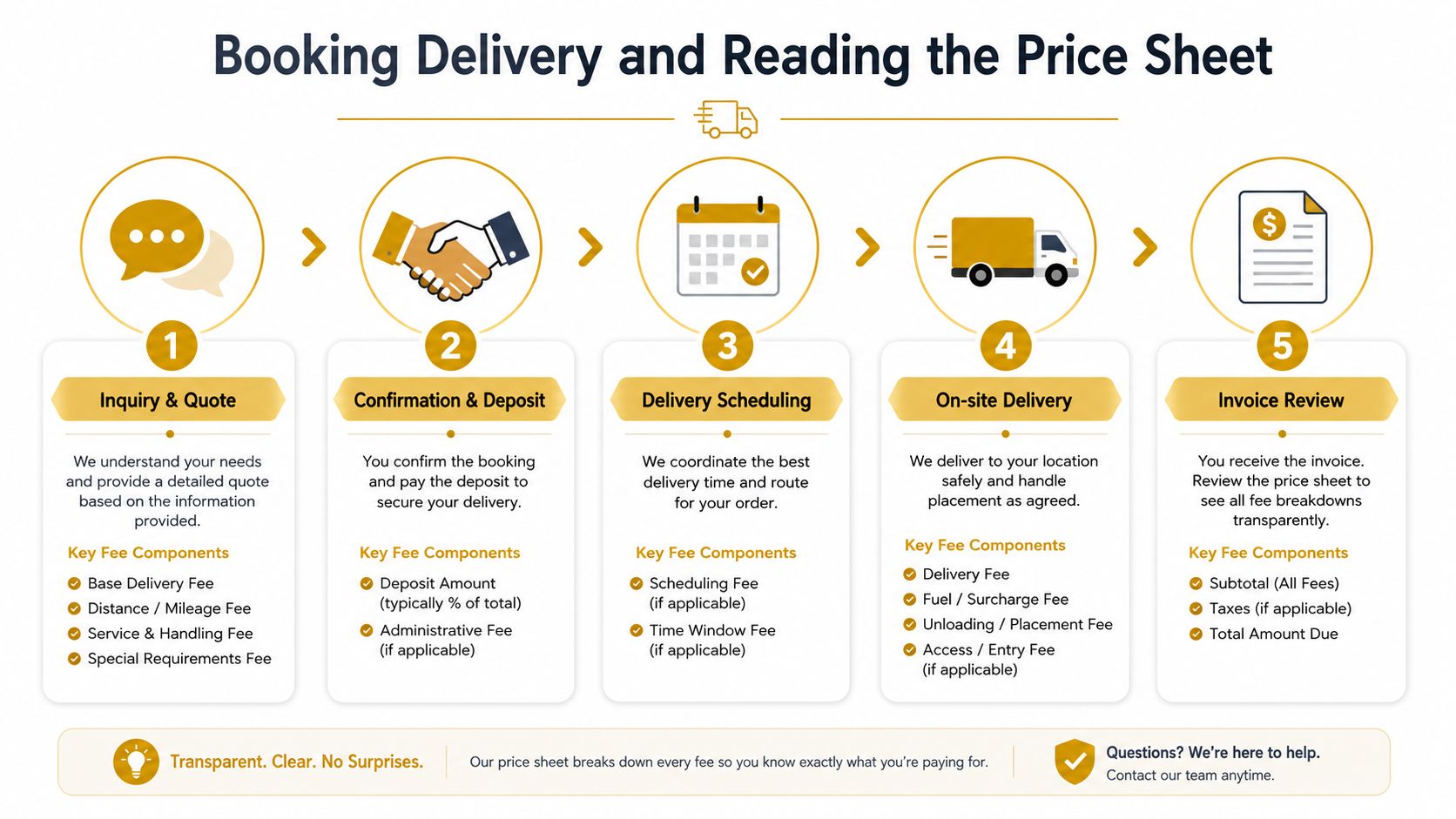
The daily rate rarely surprises anyone who has rented equipment before. The shock comes from everything wrapped around it, delivery, pickup, rough-ground handling, quick-turn requests, and the cleaning line when the berm comes back dirty. If you don't read the price sheet like a job-cost sheet, the final invoice can easily outrun the quote.
Treat the booking like a control list
Reborn Rentals uses a three-step checkout flow, Cart → Details → Checkout, which is a clean way to think about any rental order, even if you're booking elsewhere. Add the right berm to the cart, lock in the dates and location, then make sure the final checkout reflects what the site needs, not what looked convenient while you were moving fast.
The price sheet usually has more than a base rate. Expect to see separate treatment for delivery and pickup, rough-terrain conditions, express timing, and return-condition issues. Those are not small details. They are often the difference between a job that came in clean and a job that looks fine until the final invoice lands.
Confirm the hidden cost stack in writing
The smartest thing a foreman can do is ask for the fees before the truck rolls. That means getting the rental company to state what counts as normal wear, what triggers decontamination charges, and what happens if the site is muddy or the access road is uneven. If the berm has to be cleaned because it came back with oil sheen, hardened concrete, or residue, the return line can stop looking like a simple rental and start looking like a service job.
Use this as the booking checklist:
- Delivery window: confirm when the truck is supposed to arrive, not just the day.
- Pickup timing: spell out when off-rent starts so billing doesn't drift.
- Terrain conditions: tell the vendor if the site is mud, gravel, slope, or slab.
- Cleanup responsibility: confirm who handles decontamination and how it gets billed.
- Damage and repair terms: know what gets counted as normal use and what doesn't.
Practical rule: if it isn't written down before delivery, assume it can show up on the invoice later.
The goal is simple. Make the quote match the actual site. That one habit saves more money than trying to win on the cheapest daily rate.
Staying Compliant With SWPPP and EPA Rules
A SWPPP consultant doesn't need a speech. They need to see that containment fits the job narrative and that water, slurry, fuel, and runoff aren't escaping the work zone. Secondary containment exists to capture leaks or spills before they contaminate soil, groundwater, or nearby ecosystems, and it's part of the broader spill-control plan on industrial sites (ATRIUM Digital on secondary containment).
What the consultant wants to see
The berm should match the project's actual spill risk. If the largest credible event is a fuel transfer, the containment has to reflect that. If the site is a concrete washout, the berm should keep slurry inside the footprint and away from stormwater pathways. That's the point where good rental practice and compliance practice line up.
Documentation matters too. The rental paperwork, the site plan, and the inspection log should all tell the same story. If one document says containment is under the fueling area and another says the generator moved last week, the consultant is going to ask questions. On larger infrastructure jobs, that usually lands on the SWPPP consultant or EPCM team to verify that the containment asset matches sequencing, access, and the stormwater controls already written into the project plan.
Keep the compliance trail simple
State and local rules can add their own requirements, such as liner specs or weekly inspections, so the field crew should never assume the rental solves the whole compliance picture by itself. The rental only works when the berm is inspected, maintained, and used the way the plan says it will be used. That means no washout overflow, no fuel staging outside the boundary, and no shortcuts when the crew gets busy.
A clean compliance file usually includes:
- Site alignment: the berm location matches the SWPPP or spill-control plan.
- Containment fit: capacity is sized for the largest credible event.
- Inspection record: someone checked the berm during the rental period.
- Use discipline: liquids stayed inside the containment footprint.
- Return condition: the berm went back clean enough to avoid dispute.
When those boxes are checked, the berm supports the project instead of creating a paper trail problem.
Deploying Monitoring and Returning the Berm
A berm that arrives on site isn't ready until the crew sets it up correctly. Dirt, sharp stone, standing water, and a sloppy seam are the usual reasons a new rental turns into a problem before lunch. The deployment routine is simple, but it has to be done the same way every time or the containment can fail when the job gets busy.
Set it up like the return bill is already on the table
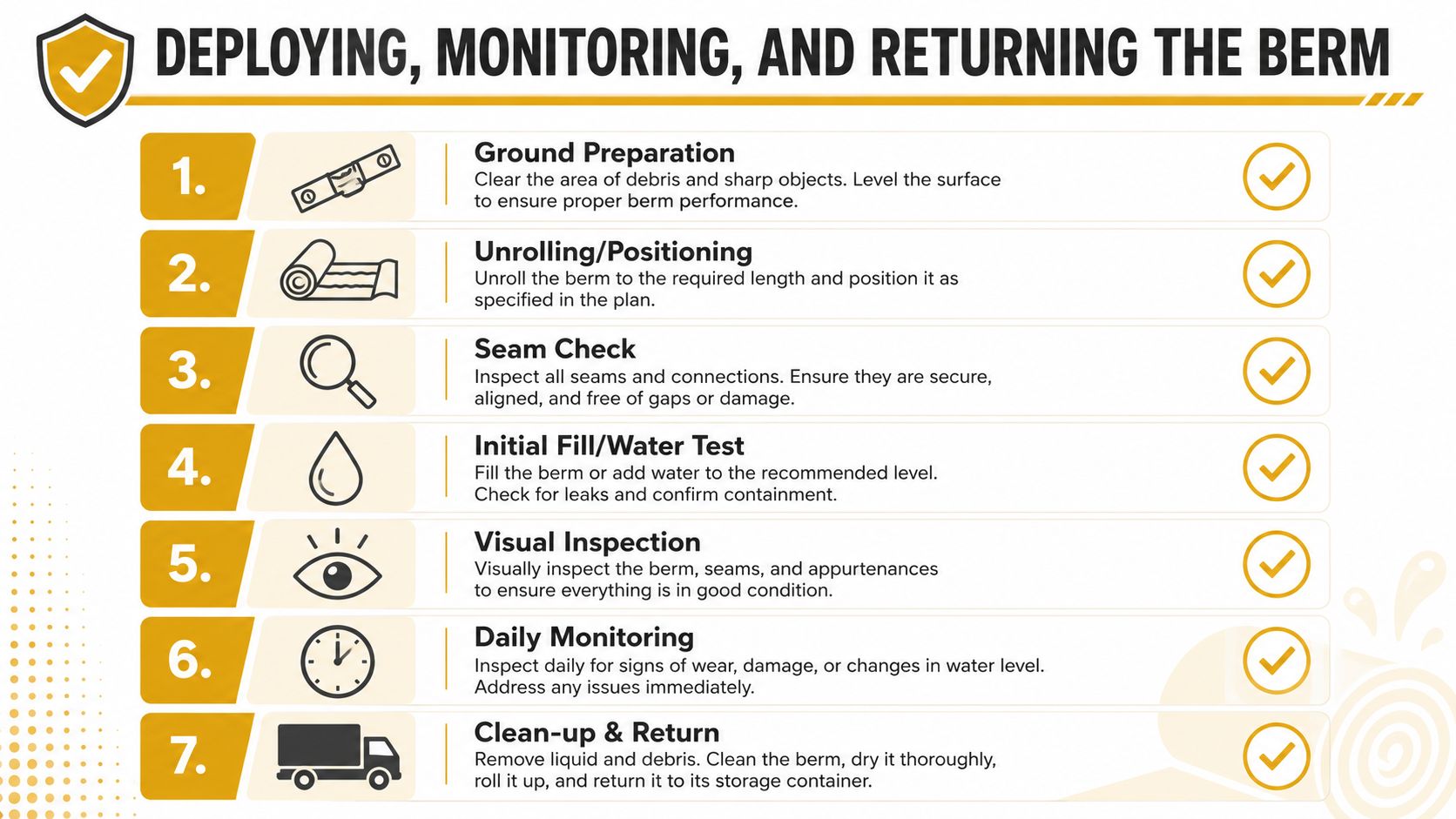
Start with ground prep. The pad needs to be level enough to support the berm and free of debris that can puncture the material or distort the walls. Then unroll or position the berm, check the seams, and do a quick visual fill or water test before anybody assumes it's ready for the pour or fueling shift.
Once the liquid hits the berm, monitoring becomes part of the work. Someone needs eyes on the containment during concrete pours, transfers, or fueling windows, because the problem isn't just overflow, it's also the slow leak nobody noticed until the floor was already wet. New crews usually do better when one person owns the berm check, instead of assuming whoever is closest will see it.
Return it clean enough to avoid a dispute
End-of-rental cleanup is where first-time renters get surprised. Many rental schedules treat decontamination and repair as separate from the daily rate, so a berm that comes back with chemical residue, oil sheen, or hardened concrete can trigger extra charges. That's why the handback has to be treated like a closeout task, not a cleanup afterthought.
Before pickup, drain standing liquid, remove loose solids, and take photos of the condition from multiple angles. Photograph the seams, the floor, the walls, and the area where residue tends to hide. If you can show the berm's condition at return, you've got a much better defense if the rental company says damage or cleaning was needed.
Practical rule: if the berm came back dirty, assume the rental company will inspect it as closely as you should have.
A simple crew rhythm works well, check it on install, check it during use, and check it again before pickup. That habit keeps the return clean and the invoice easier to defend.
Common Mistakes and a Pre-Booking Checklist
The expensive mistakes are usually boring. Someone sizes the berm from the catalog photo instead of the footprint, someone ignores wall height and loses capacity, someone forgets decontamination is separate, and someone assumes delivery or rough-terrain fees won't matter because the base rate looked fine. That's how a reasonable rental turns into a bad invoice.
The market is still moving up, not flattening out. The global spill containment berm market projections point to steady growth through 2032 and 2034, which fits what crews already see in the field, more short-duration containment, tighter environmental expectations, and more projects that need temporary assets instead of permanent installations (GII Research market overview).
Pre-booking checklist
- Measure the footprint. Don't guess from the equipment label.
- Check wall height. Low walls reduce usable capacity.
- Confirm cleanup terms. Ask what happens if the berm returns dirty.
- Lock delivery and pickup in writing. Timing affects cost and crew planning.
- State the site conditions. Mud, slope, and rough access can change the bill.
- Verify compliance fit. Make sure the berm matches the containment task.
If your next job has a pour, a fuel transfer, a washout point, or temporary staging near stormwater, don't wait until the crew is already moving material. Book the containment with the same discipline you'd use for the pump or the generator, and you'll avoid the usual scramble.
Reborn Rentals helps crews keep concrete washout clean, controlled, and easy to manage with specialized containment rentals built for real jobsite use. If you need a straightforward way to line up compliant short-term containment for your next pour or retrofit, visit Reborn Rentals and get the right setup on the schedule before the work starts.